After more than thirty years of boating and fishing from an inlet with almost no commercial traffic, I relocated about 35 miles north to Gateway Marina at the mouth of the Shrewsbury River in Highlands, New Jersey. I’ve always been a recreational fisherman who prefers center-console boats, and for many years Point Pleasant was my home port. That coastline has a modest commercial fishing presence—trawlers and clammers—but it’s dominated by recreational craft and relatively tame navigation. Moving into the approach channels to New York Harbor and Port Newark changed everything.
Suddenly I was running to fishing grounds that lie amid one of the busiest commercial ports in the world. Tankers and container ships the size of skyscrapers transit these waters, ferries stream commuters back and forth, and a constant mix of tugs, barges and workboats operate on tight schedules. Add a high concentration of recreational vessels and you have a complex, potentially hazardous environment that demands different skills and equipment than the quieter inlets I was used to.
I learned that lesson quickly. While heading to a spot off Atlantic Beach—between Sandy Hook and the Ambrose ship channels—an unexpected fog bank rolled in from the ocean. I turned on the radar that came with my new electronics suite, but visibility collapsed to about 20 yards. Targets on the screen that I hadn’t seen before suddenly filled the display: channel buoys reflecting like small boats and enormous blips that were ships. One freighter was so close its foghorn nearly knocked me off my feet, yet I couldn’t make out the hull. The situation was disorienting enough that I stopped the boat outside the channel, took a breath, and had a laugh at myself when a line from The Wizard of Oz popped into my head—I definitely wasn’t in Kansas anymore.
Operating a recreational boat in a major port elevates the importance of basic seamanship and situational awareness. If you don’t understand the Rules of the Road and the handling limitations of large commercial vessels, you can get into serious trouble fast. Equally important is having proper navigational electronics on board—a chartplotter, radar and AIS are essential—and knowing how to use them. Since that fog encounter I run the radar on clear days to match screen targets to real-world objects so I recognize them quickly if visibility drops. Training and practice with your equipment will repay you when you need it most.
My longtime friend Capt. Brian Rice of Jersey Devil Charters, who grew up fishing these waters and regularly runs recreational-for-hire boats, stresses the same points. “Running recreational boats like my 32 Contender presents challenges and can be dangerous,” he says. “Understanding the Rules is really just the beginning. There is a lot to know about ships, tugs, barges, high-speed commuter ferries and even naval vessels. The largest ships simply cannot see a small boat when it’s directly in their path and closer than 300 to 500 feet. Even if they can see you, a harbor pilot can’t stop a big ship quickly—at 10 knots it can take roughly a mile to come to a stop, and at very slow speeds those ships lose maneuverability. Big ships also make wakes that look deceptively tame but can swamp a small boat if you get too close.”
If you plan to fish inside the harbor, be vigilant for large ferries—especially the Staten Island ferries. There are five of those vessels, each about 300 feet long, and they make roughly 117 trips across the harbor on a typical weekday. Smaller commuter ferries and fast passenger boats also crisscross the Hudson and East Rivers. These ferries generally hold their course and speed and have deep drafts that generate significant wakes; they won’t stop or deviate much for a recreational boat.
Watch closely for tugs, barges and workboats. When a tug is pushing or towing a 300-foot barge through narrow channels—like the Raritan Reach, a popular fishing area—there is little room for the commercial vessel to maneuver. You must keep clear; in most situations the commercial operation has the right of way. A tug with a tow will display specific light patterns from its superstructure, but the barge itself may show only a small white bow light at night, making it hard to see. Never position your boat between a tug and its barge.
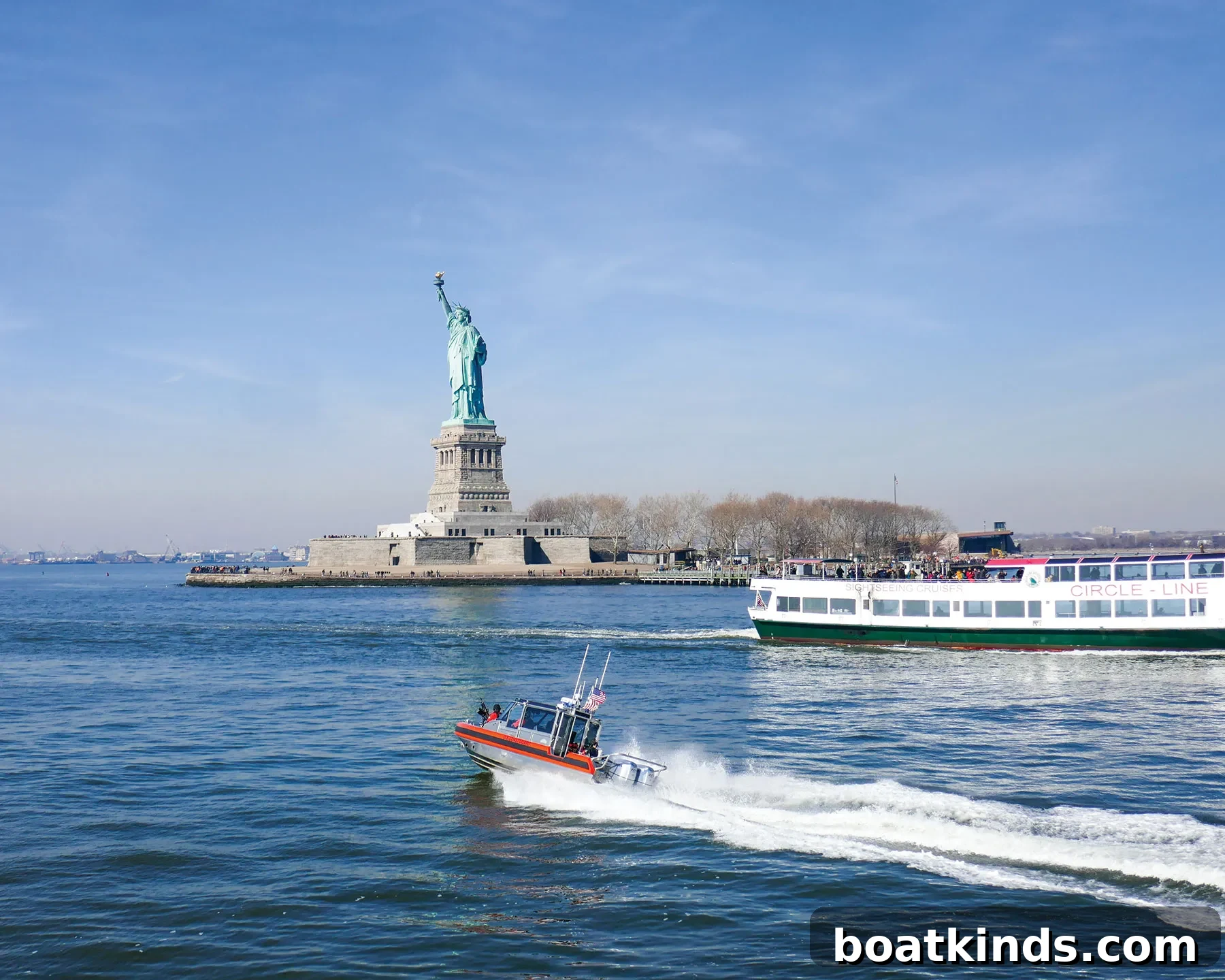
Other navigational hazards include places like Diamond Shoals, north of the Verrazano Bridge, where hundreds of barges may be moored and create a congested anchorage. South of the bridge, large ships often lie at anchor and swing with tides and winds. Pay attention to white buoys and other markers that designate restricted areas—the safety zone around an ammunition pier and the exclusion zone around the Statue of Liberty are enforced strictly. After dark, the sheer volume of shore lights in every direction can be disorienting, and radar returns become harder to interpret. Many experienced anglers who fish after sunset add a FLIR or thermal-imaging camera as an extra layer of safety.
Running a recreational boat in a busy port has been a steep learning curve, but it has also opened new fishing opportunities and unforgettable sightseeing. The key is to respect the hazards, know the Rules of the Road, equip your boat with reliable electronics, and practice using them in benign conditions. With proper preparation and vigilance you can enjoy great fishing in these unlikely places while keeping you and your crew safe.
This article was originally published in the January 2022 issue.