
I have long considered Gardiner’s Bay, at the east end of Long Island, New York, one of the region’s most special cruising grounds. For centuries Native Americans, early colonists, baymen and even pirates recognized its value; today recreational boaters continue that tradition. After sailing these waters for four decades, I still find the bay’s beauty and variety of coves and harbors endlessly rewarding. The many protected anchorages and nearby attractions ashore make Gardiner’s Bay ideal for a weekend escape or a longer cruising trip.
The bay sits about 20 statute miles southwest of New London, Connecticut, and roughly 54 miles southwest of Newport, Rhode Island. Gardiner’s Island lies to the east, Three Mile Harbor and East Hampton to the south, Shelter Island to the west, and the towns of Orient and East Marion to the north. The bay extends roughly 10 miles north-to-south and about 8 miles east-to-west, offering a compact but diverse cruising area.
Newcomers should be aware of a few navigation considerations. There are some shallow areas, particularly near the Shelter Island shore, but most of the bay ranges from about 20 to 50 feet deep. If you arrive from the east, the best entrance lies north of The Ruins and south of Plum Island. Boats approaching from the north must contend with Plum Gut, which can produce some of the swiftest currents along the East Coast. When strong winds blow against the tide, waters can become steep and roiling; take extra care when transiting. Once through, several excellent destinations await.
Gardiner’s Island
One of the bay’s most unique features is Gardiner’s Island. You can anchor in Cherry Harbor on the island’s west side and appreciate an area that has remained largely unchanged since the 17th century. The 3,300-acre parcel has been in the Gardiner family since 1639 under an original British land grant. Landing ashore is prohibited, even below the mean high tide line, and onshore security monitors vessels in the anchorage, so plan accordingly.
If the wind shifts from the southwest, consider anchoring in Tobaccolot Bay on the island’s southern shore, just south of Eastern Plain Point. These quieter waters offer solitude, abundant birdlife and pristine shoreline vegetation. On the island’s higher ground you can still find concrete pillboxes used historically for submarine observation during wartime.
The southern channel around Gardiner’s Island is straightforward for powerboats but demands careful navigation under sail because it winds around several sandbars. I typically circumnavigate the island under sail in about four hours; solo passages require attention and patience.
The Hamptons and Three Mile Harbor
For a combination of upscale dining, boutique shopping and cultural attractions, head to Three Mile Harbor and the Hamptons. The harbor’s narrow but navigable channel opens into a large, well-protected anchorage. Several marinas on the eastern shore provide dockage, fuel and services with convenient land access. From the harbor you can arrange ground transportation to Amagansett, East Hampton, Bridgehampton or Montauk for restaurants, galleries and more.
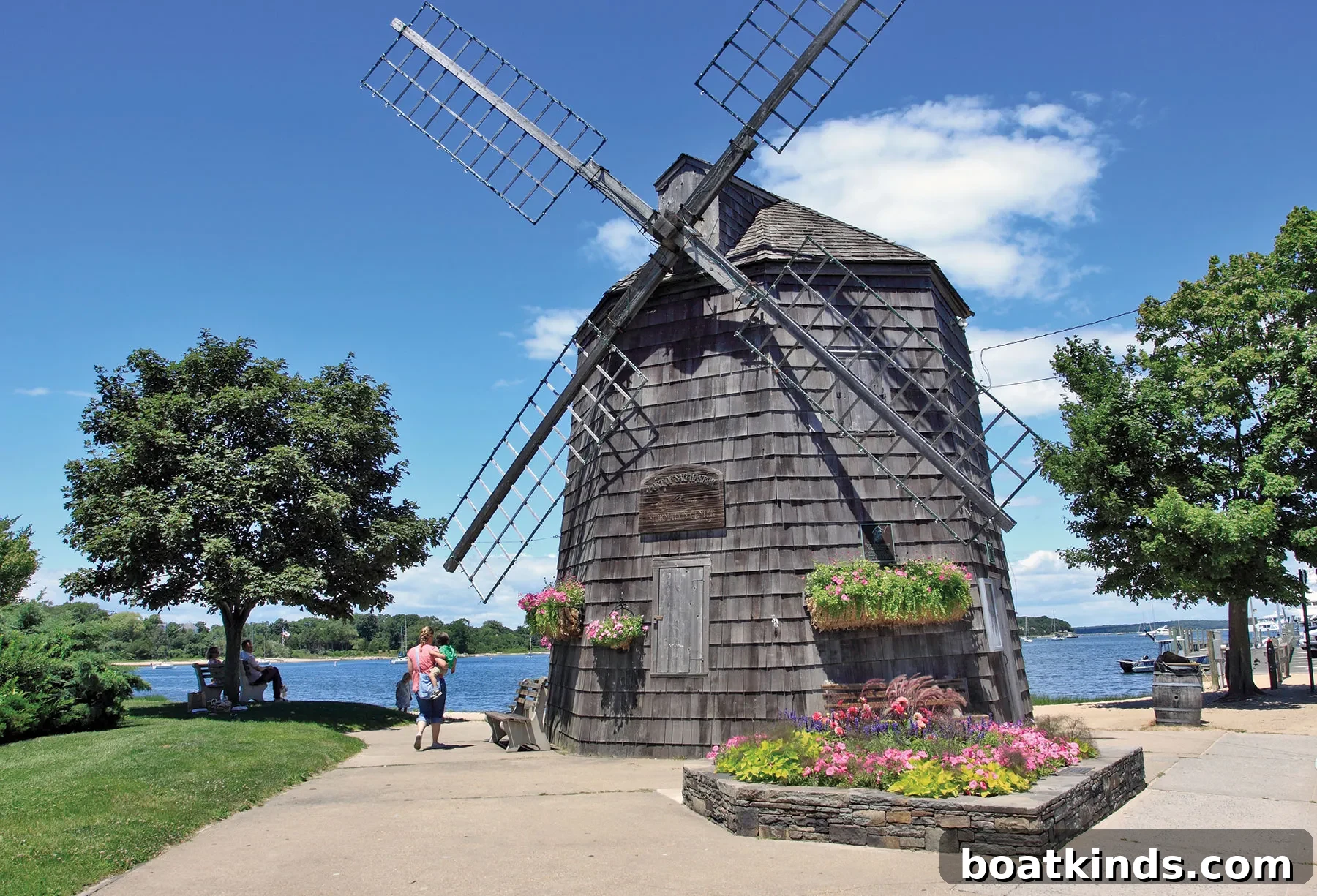
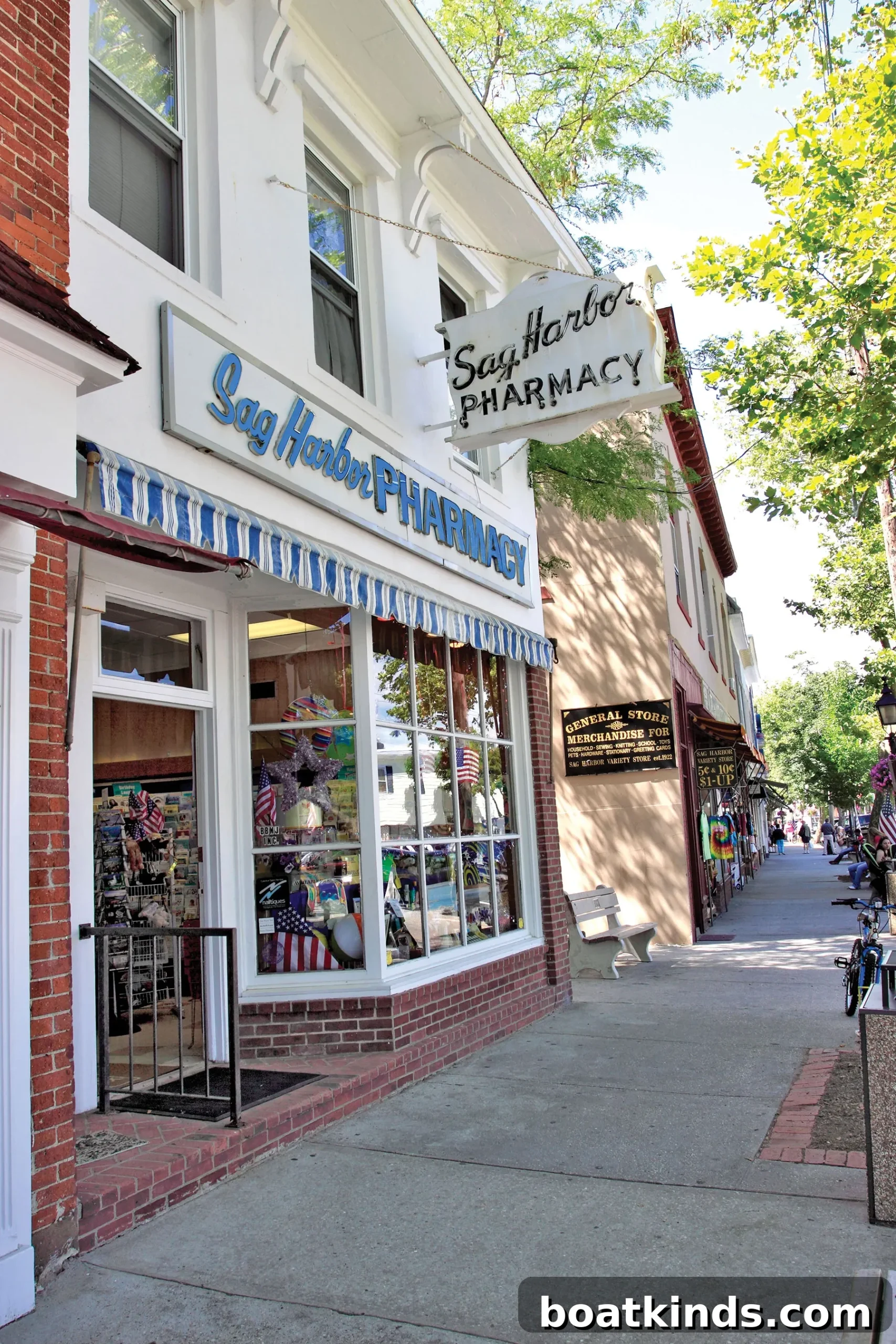
If you travel southwest from Gardiner’s Bay into Northwest Harbor, you can anchor or moor within easy walking distance of Sag Harbor. This historic whaling port has a lively downtown, the Whaling and History Museum and numerous Main Street shops. A short stroll into residential streets reveals many handsome historic houses and a sense of the town’s maritime past.
Shelter Island
Directly west of Gardiner’s Bay, Shelter Island offers multiple harbors and anchorages to explore. Coecles Harbor’s entrance is a narrow gap between a sandbar and a sand point, but it is well marked; the controlling depth is around 10 feet and the anchorage lies southeast of Taylor’s Island. Coecles Harbor Marina and Boatyard, builders of the Shelter Island 38, operates as a full-service yard on the western shore—check depths and tidal conditions, especially if you have a full-keel vessel.
On Shelter Island’s southern shore, West Neck Harbor provides a calm anchorage near a sandspit where dinghy landings and shelling are easy. To the north, The Island Boatyard offers slips, fuel, a restaurant and a popular bar. Dering Harbor on the northern shore is the island’s main anchorage; with a controlling depth near 20 feet it is busy and well used. Yacht club members should check for reciprocal agreements with the Shelter Island Yacht Club for transient moorings and launch service.
Piccozzi’s dock provides fuel and supplies, and the nearby small town landing gives dinghy access to local shops, restaurants and services. The Chequit Inn is a longtime favorite, while Stars Café is popular for breakfast. For a deeper exploration of Shelter Island, rent a bike at Piccozzi’s and ride into the 2,000-acre Mashomack Preserve. Well-marked trails range from short walks to multi-hour hikes; the bluffs on the blue trail afford sweeping views of Gardiner’s Bay. Menhaden Beach is known for good swimming, and family-friendly Wades Beach offers lifeguards and facilities.
Greenport and the North Fork
From Dering Harbor you can access a ferry to Greenport, unlocking much of the North Fork for winery visits, local dining and provisioning. Greenport has numerous restaurants and bars; its long history is reflected in establishments such as Claudio’s, which dates back to the 1870s and offers dockside dining. The village is also a good spot for provisioning and maritime supplies—Preston’s is a reliable source for boat gear.
Gardiner’s Bay and its adjacent cruising grounds combine natural beauty, protected anchorages and easy access to varied shoreline attractions. Whether you’re seeking solitude at a quiet bay, the liveliness of Sag Harbor, or the beaches and preserves of Shelter Island, the area rewards sailors with rich scenery, history and dependable cruising options.
This article was originally published in the April 2022 issue.