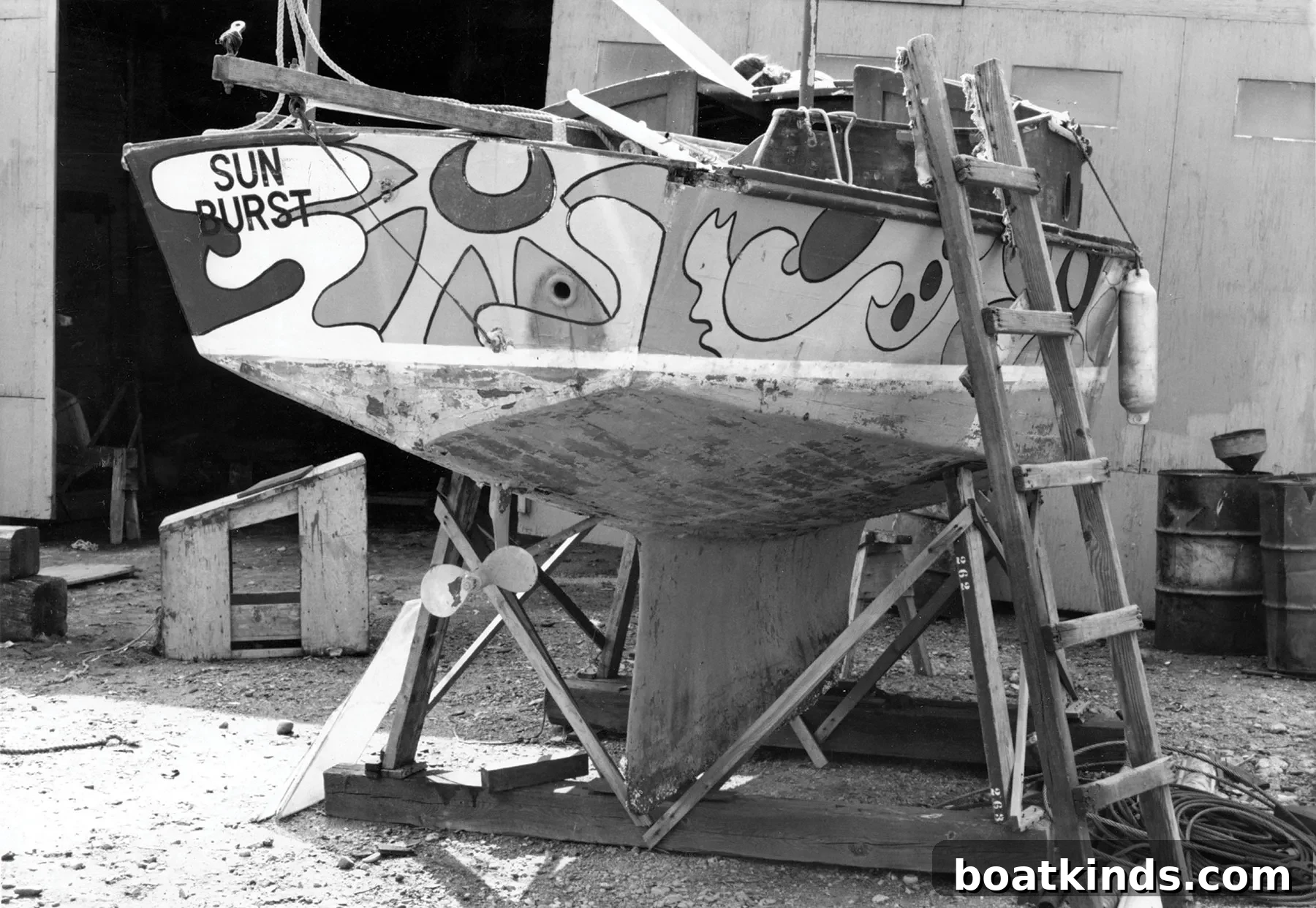
The old sloop caught our attention the moment we saw her. Her hull lines were pleasing, but what really stood out was an outrageous paint job—wild, clashing colors that looked more at home in Haight-Ashbury than on any yacht. Somebody with an artistic streak, and perhaps a taste for experimentation, had deliberately thumbed their nose at yachting convention. Beneath the paint, however, the boat told a different story: seams beginning to open where she had been left exposed to the elements, and the unmistakable feel of a vessel whose best years were behind her.
It was 1971. Between the two of us—my friend Dan Moreland and I—we had sailed dinghies, worked a wooden skiff and run a waterski boat on our home waters near Rowayton, Connecticut. We loved being on the water and had devoured voyaging narratives like Joshua Slocum’s Sailing Alone Around the World. We were hungry for adventure and thought we had enough experience to start. We had also worked at McMichael’s Boatyard in South Norwalk, sanding and painting wood, putting seams, waxing fiberglass, varnishing brightwork, stepping and unstepping masts, and launching and hauling boats. In short, we were learning the crafts of boat maintenance in a suburban yard.
Back then, unpaid bills often meant abandoned boats could be auctioned to recover storage fees. By September the word around the yard was that Sunburst would be sold. On auction day Vinny Coccoli, the yard manager, opened the bidding at $370—the amount owed in storage. Nobody else raised a hand. For $185 each, grinning, Dan and I became boat owners. Vinny, a chain-smoking Italian mechanic with a generous heart, let us keep the sloop at the yard and gave us access to the shop, crane, and a winter slip. He didn’t share our grand cruising dreams, but he made them possible.
The sloop was a 1947 Pennant built by F. Schneider in College Point, New York. Pennants were straightforward below decks without being Spartan. Our 24-foot boat had two bunks, a Wilcox Crittenden marine toilet, a two-burner alcohol stove and a tiny galley sink with a hand pump. The spars and sails were essentially intact and she came with an anchor and an assortment of gear. Built with an oak frame, white cedar planking and mahogany cabin trim, Pennants featured hard chines, V-hulls and iron fin keels—innovative for their time yet simple to construct. Our boat measured 8 feet on the beam and drew 3 feet 9 inches. A small 3/4 jib was set on a club for self-tacking, the mainsail had roller reefing at the gooseneck, and the long boom required a boomkin to carry the backstay. There were no sheet winches. Sitting in that dusty cockpit, we imagined her riding a sea.
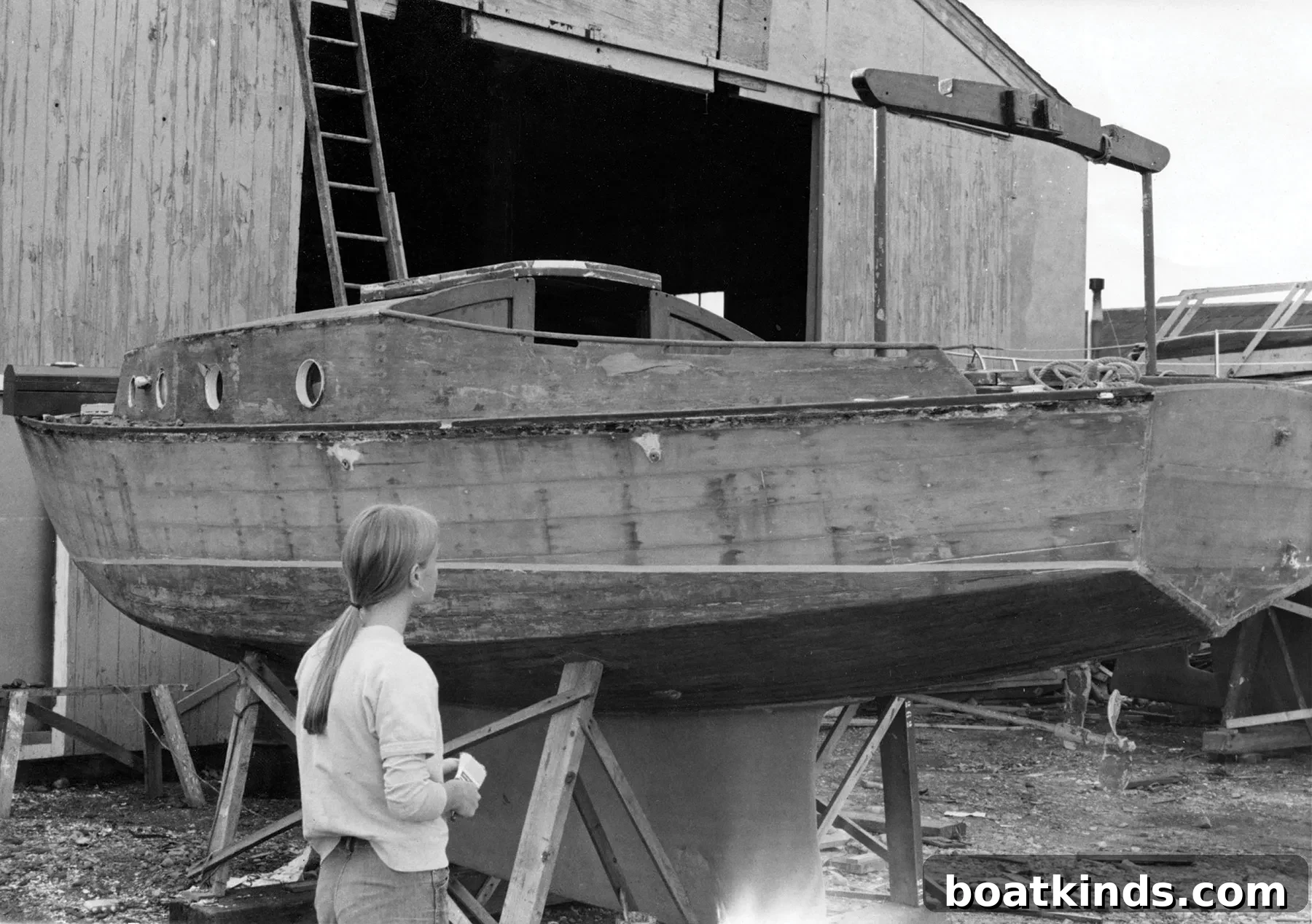
Restoring an abandoned wooden boat requires grit. We started by stripping the paint, planning a new scheme: glossy black topsides, a yellow boot-top and a red bottom. Stripping paint let us inspect the hull properly. The planks looked sound; the garboards needed attention, and the hull would require underwater seam compound, but no extensive recaulking. The most serious rot was in the toerail. We replaced it with stair-tread nose molding from the lumber yard and added a half-round oak rubrail just beneath. Both were bedded and fastened with silicon bronze screws.
As autumn turned to winter our first big worry was whether she would float in a slip all winter. We chose a wet slip as the cheapest option and sealed the seams with compound as best we could. With no money for a bubbler to keep river ice away, we improvised: we collected discarded Christmas trees and placed them around the hull to break up ice, a folk remedy that at least made us feel we had tried everything.
We kept working throughout winter—sourcing parts, borrowing tools and asking experienced hands for advice. Inside the shop we varnished spars: boom, jib club and tiller, laying on eight coats in places. As the weather warmed we varnished the mahogany cabin sides and the new oak rails only to discover oak takes varnish differently than other woods and darkens more quickly. That flaw would show up later.
Curious friends began to visit the yard. Like Tom Sawyer convincing kids to whitewash a fence, we enlisted help—especially from friends who wanted to be part of the project. Inevitably, that enthusiastic, inexperienced labor came with mishaps: a girlfriend shook an expensive quart of varnish and ruined it with bubbles. We were outraged at first, then saw her crestfallen look and realized we were taking ourselves too seriously. Restoring a boat was supposed to be rewarding, not an exercise in self-importance.
Our ambitions were modest but hopeful: perhaps sail the length of Long Island Sound and visit Cape Cod or Nantucket. First we had to get the engine running. The sloop came with a small Blue Jacket Twin gasoline inboard, a kin of the Atomic Four. We changed the oil, drained stale fuel, installed a new filter and replaced points and plugs, but the engine wouldn’t start. Fixing ignition is tricky for novices; when we removed the distributor to investigate the timing, we discovered the distributor gear was difficult to re-mesh once turned over, and things quickly deteriorated. Lacking funds for a mechanic, we eventually removed the gas tank (which sat in my parents’ basement for decades) and bought a used 7.5-hp Elgin outboard, mounting it on a bracket instead.
Sea trials came in the summer of 1972. Under sail she was lively on a reach, but she stubbornly refused to point well to windward—shapeless sails and imperfect trim were partly to blame. When pressed hard the fin keel torqued the keelson and the garboards leaked. Over the season we adjusted expectations and dialed back our cruising plans.
Still, we sailed her as much as we could. Under a reefed main she could limp along when the jib alone wouldn’t drive her to windward. We practiced anchoring, retrieving moorings, docking, and handling squalls. Those local cruises across Long Island Sound—never more than 25 miles from our mooring—built seamanship and confidence even if they fell short of ocean passages.
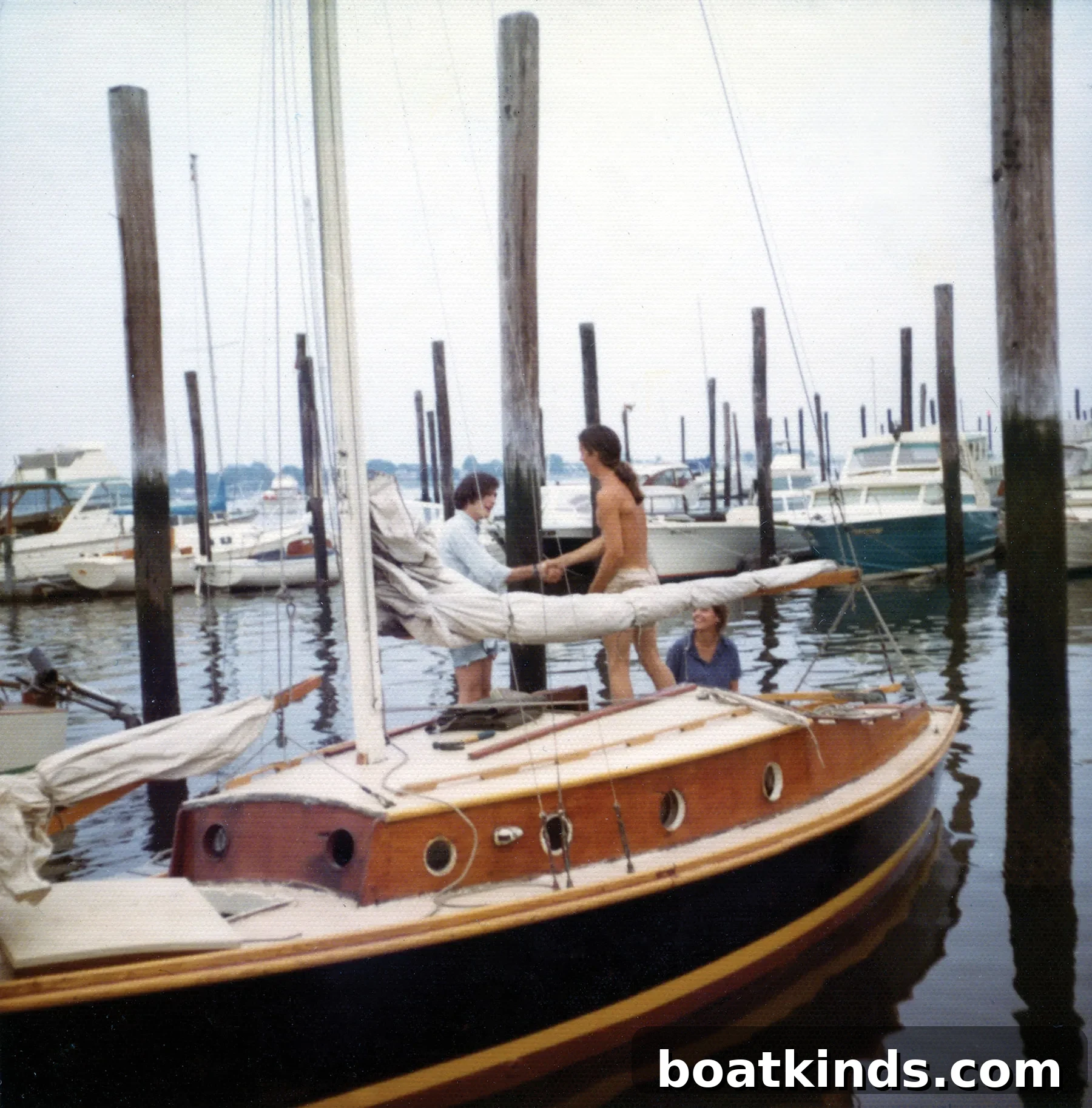
After two years we sold the boat, which we had renamed Jury Rig, and made a small profit. We never did pack a month’s worth of provisions into her lockers, and the overnight cruises with girlfriends never materialized, but there were no regrets. The experience taught us more than any classroom could have.
The broader story continued. Dan pursued a lifelong career on large sailing vessels, earning an Unlimited Master’s license in Steam, Motor and Sail at a young age, directing restorations of historic ships, working commercial tugs, and sailing around the world multiple times as captain of the barque Picton Castle. I spent a decade licensed as Mate and Master on big schooners in the western Atlantic, logged thousands of miles, then went ashore to teach and write maritime histories. I restored a classic 36-foot yawl with my wife, later moved to fiberglass and campaigned a Valiant 40 to the Caribbean several times, and eventually embarked on a multi-year voyage from New Hampshire to New Zealand. That teenage ownership of a 1947 Pennant—the hard lessons, the triumphs, the embarrassments—whet our appetites and set us on paths we still follow. Jury Rig was a small but crucial first cup from which we were fortunate to drink deeply; she was, in every sense, a great first boat.
This article was originally published in the June 2022 issue.