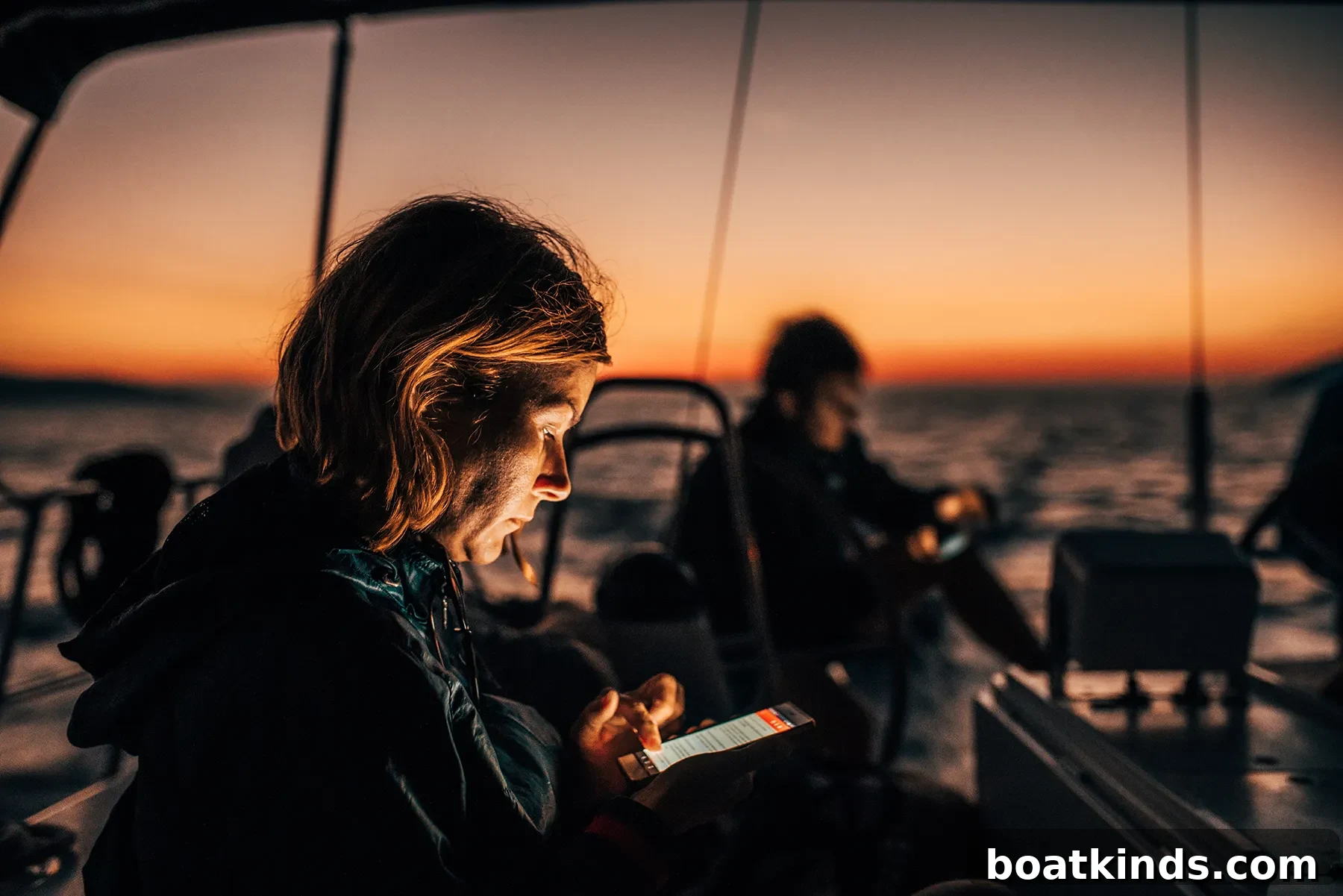
Captain Greg Thornton has spent more than a decade delivering yachts and working with nearly every kind of electronic navigation system. Because he routinely boards unfamiliar vessels, he keeps the Navionics app on a tablet in his gear bag. “You’re jumping on a boat blindly, and rather than having to get a specific map or program, Navionics caters to that diversity,” he says.
On a recent delivery of a 100-foot Swan from Sint Maarten to Rybovich Marina in West Palm Beach, Florida, the yacht’s radar was the only working instrument. Thornton credits having Navionics on his tablet with allowing him to navigate without reverting to manual plotting with a Ritchie compass. He also relies on Garmin’s In-Reach satellite messenger for communications and, when cellular coverage is available on larger yachts, uses the MarineTraffic app for AIS overlays. Thornton frequently consults Navionics forums for local updates; before a run to New Smyrna Beach, Florida, user reports warned him of recent sand shifting and shoaling that could affect deep-draft vessels.
Navigation and boating apps have grown in popularity because they provide up-to-date charts, crowd-sourced local knowledge and affordable alternatives to expensive chartplotters. Where a basic standalone chartplotter can cost several hundred dollars, apps like Navionics can be installed on a smartphone or tablet for a modest annual fee. Other apps combine navigation with social features, fishing tools, weather forecasting and marina reservations, making them essential tools for modern recreational and professional boaters.
Navionics
Navionics is popular for its intuitive interface and features that make navigation accessible to anyone familiar with map apps. Core strengths include dock-to-dock auto-routing, community-contributed SonarCharts, daily downloadable chart updates and clear on-screen displays. The app supports crowd-sourced data from ActiveCaptain and can show AIS targets when connected to an onboard receiver. SonarCharts Live captures your depth soundings in real time and contributes them to a shared layer that improves charts for all users. These capabilities make Navionics a practical backup or complement to a vessel’s primary electronics.
Aqua Map
Aqua Map has gained traction by integrating Waterway Guide and ActiveCaptain points of interest to highlight marinas, anchorages, hazards and navigational features. It includes an anchor alarm to monitor position while at rest and offers lifetime updates for U.S. and Canadian charts. Aqua Map Master, an optional add-on, provides overlays of U.S. Army Corps of Engineers (USACE) survey data, AIS and instrument displays, and enhanced route planning through Route Explorer.
For users of the Intracoastal Waterway, Aqua Map Master’s depth reporting, hazard alerts and bridge information are especially useful. The app brings USACE surveys directly onto charts, enabling captains to see recent surveyed depths and find the deepest channels—data that historically was available only on district sites or as Google Earth files.
KnowWake and Argo
KnowWake and Argo blend navigation with social networking, giving boaters a way to find friends and popular spots on the water. Similar to Waze on land, these apps display the locations of other users, show no-wake zones, channel markers and depth information, and offer point-to-point routing. Argo Basic is free and shows nearby users and friend locations; members build profiles that include draft, speed and fuel usage to aid trip planning. An Argo Premium tier is expected to add enhanced weather, tidal data and offline charts.
Boaters often use these social-navigation apps to plan routes before departure and to coordinate meetups. Users can save and share trips, receive live reports of hazards and marine life, and use community updates to make safer decisions while underway.
Dockwa
Dockwa functions like OpenTable for boaters, enabling real-time marina and mooring reservations from a mobile device. The app simplifies booking transient slips, paying fees, arranging fueling stops and managing seasonal or annual dockage. For cruisers who need guaranteed stopovers, Dockwa reduces uncertainty and streamlines the arrival process.
Windy
Windy is a professional-grade weather app that visualizes wind, waves and other marine weather parameters. It offers detailed forecasts, wind maps, gust data and directional indicators—useful for sailors, surfers, kiteboarders and anyone who needs accurate wind and wave information for route planning.
Tropical Tidbits
Tropical Tidbits is a go-to resource for Atlantic tropical weather and hurricane analysis. Created by meteorologist Levi Cowan, the site and app aggregate forecast models, satellite imagery, current storm tracks, historical data and surface/ocean analyses. Many boaters consult Tropical Tidbits for detailed model runs and visualizations when monitoring potential tropical systems.
CBP ROAM
CBP ROAM is a free U.S. Customs and Border Protection app that allows recreational boaters to report arrivals to U.S. authorities via smartphone or tablet. The app can be used to submit vessel information, crew/passenger details and passport photos, and it supports video inspections in lieu of face-to-face interviews in many cases. For returning U.S. vessels over 30 feet, a DTOPS sticker is required. Using CBP ROAM can streamline international arrivals and reduce the need for on-site inspections.
When relying on any mobile device, consider its vulnerabilities: most phones and tablets are not waterproof and can overheat in direct sun. Captain James Marshall of Reliable Yacht Deliveries prefers larger screens for planning and situational awareness, using Navionics on a 15-inch laptop to supplement a vessel’s multifunction display during offshore deliveries. He also emphasizes balancing electronics with visual observation. On a trip to Bimini where the channel had shifted due to shoaling, extra buoys were added and local boaters showed the true channel. “Had I just gone to where the chart was and not seen the other buoys, we probably would have run aground,” Marshall says. “Get your head out of the boat. Look around at everything else that’s going on.”
This article was originally published in the July 2022 issue.