The Sailing Museum Opens in Newport’s Historic Armory
On a clear May day in downtown Newport, Rhode Island, a ribbon-cutting ceremony marked the public opening of The Sailing Museum inside the old Armory on Thames Street. The nonprofit museum, created as an educational showcase for the sport and culture of sailing, welcomed donors, community leaders and sailing enthusiasts who helped bring the project to life.
The museum’s arrival in Newport capped a two-decade effort led by sailing figure Gary Jobson. “This is the culmination of the hard work Gary put in, and here we are about to enter a fantastic museum dedicated to the sport we all love,” museum President Gus Carlson said at the opening. City officials also applauded the decision to locate the museum in Newport, emphasizing the regional value of sailing. “Rhode Island is the Ocean State, and sailing is a sport of enormous social and economic importance to us,” said Lt. Gov. Sabrina Matos.
Jobson, reflecting on the long journey to establish the museum, said the idea had been with him since the late 1990s. He recalled shopping the concept to several cities and explained that a period of personal challenge sharpened his resolve to make it happen. Progress accelerated in 2017 when Newport offered the Armory as a home for the museum; in 2019 the organization purchased part of the building and began major renovations to convert the 1894 stone armory into a modern, interactive cultural destination.
Jobson’s connection to Newport runs deep and is rooted in a lifetime devoted to competitive sailing. His experiences include multiple America’s Cup campaigns aboard the 12-metre Courageous, membership in the New York Yacht Club, and leadership roles with the Herreshoff Museum and IYRS School of Technology and Trade. “Newport is ingrained in me,” Jobson said, underscoring the personal significance of placing the museum in a city with such rich maritime traditions.
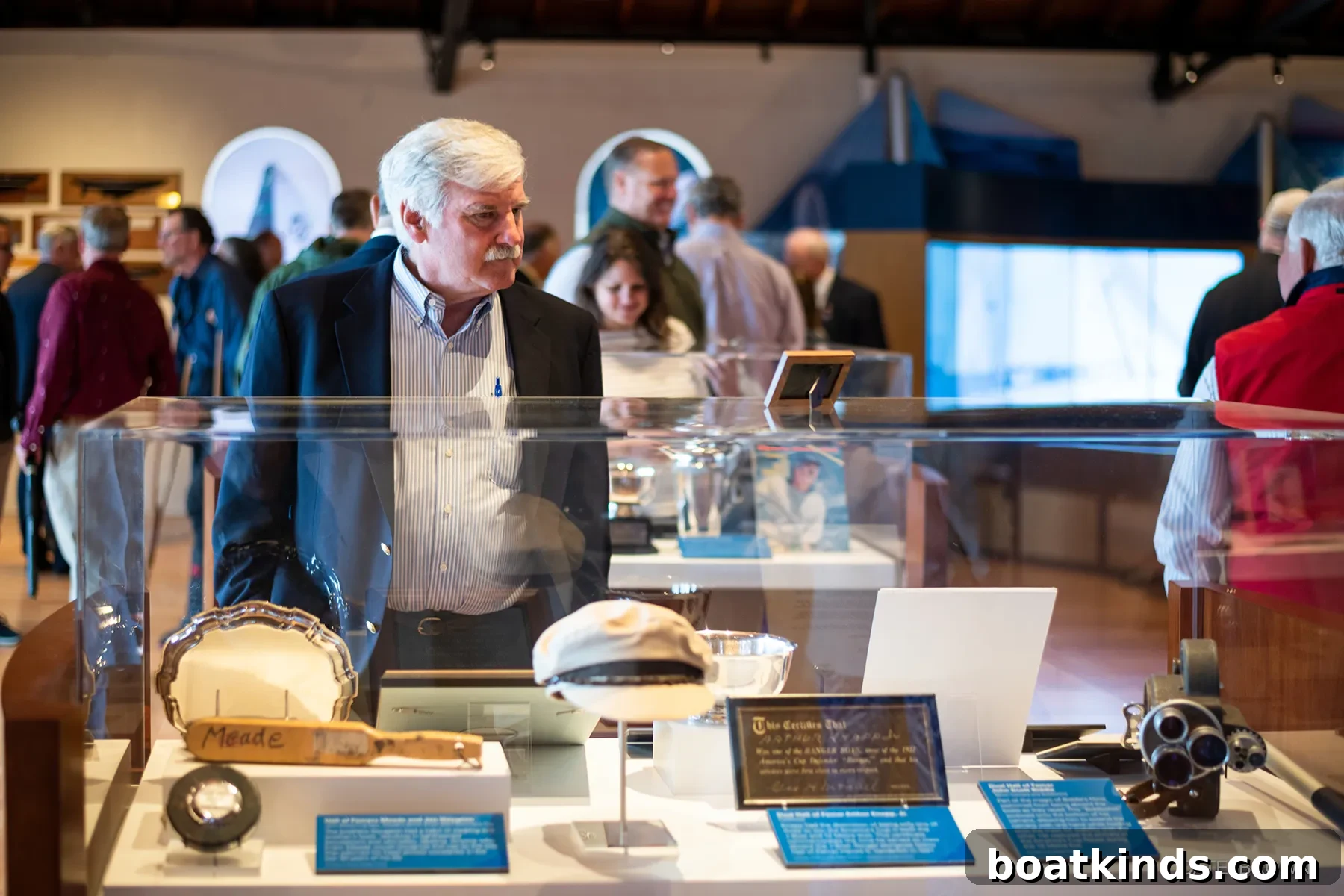
Housed within the fortress-like stone walls, The Sailing Museum offers about 8,500 square feet of curated exhibits that trace the history and evolution of sailing as sport and pastime. Galleries honor the America’s Cup Hall of Fame and the National Sailing Hall of Fame while a strong emphasis on technology and interactivity brings the stories to life for visitors of all ages.
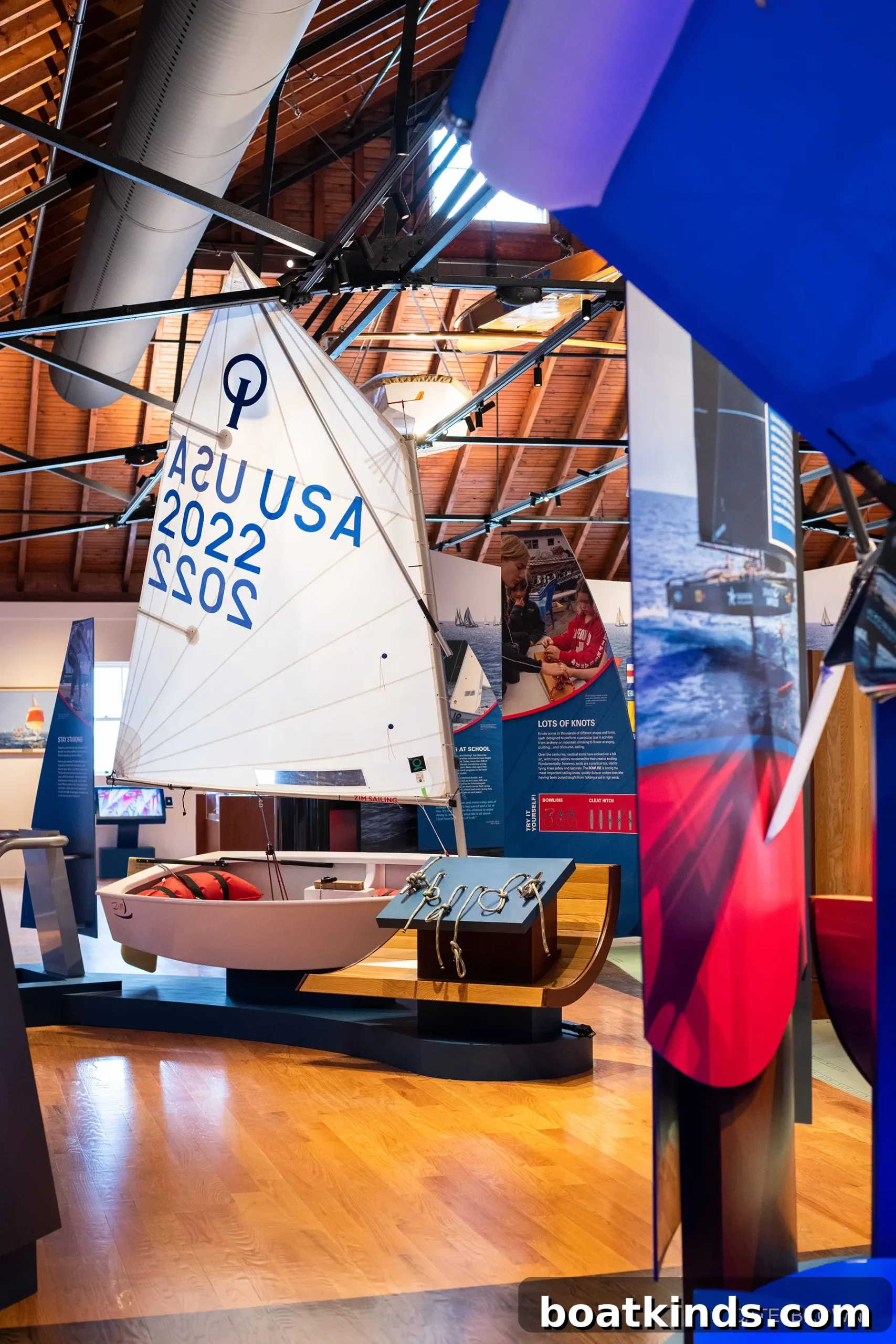
Upon entering, guests receive a wristband that unlocks a series of hands-on experiences. Visitors can take the helm of a replica sailboat and practice handling different points of sail using a tiller simulator, design custom burgees and boats digitally, and collaborate with others to “race” a virtual vessel. These immersive features make complex sailing concepts accessible and engaging while demonstrating why the sport can be both thrilling and team-oriented.
One striking centerpiece is a full-size J/24 with one side removed to display the interior of hull number one, Ragtime. Stuart Johnstone, chief of marketing and business development for J/Boats, stood beside the display and described the careful reconditioning that honored this iconic design. The exposed hull offers an unusual and revealing look that even experienced sailors find compelling.
Another standout is a domed viewing space that recreates the onboard intensity of SailGP’s 50-foot foiling catamarans. The exhibit simulates high-speed maneuvers and the physical choreography of a crew shifting across the deck during 40-knot turns, conveying the raw speed and athleticism behind top-level sail racing. Suspended from the ceiling, a full-size Moth foiling sailboat highlights the personal, high-performance side of modern sailing and often sparks conversations among younger visitors imagining their first foiling craft.
Beyond full-size boats, the museum displays an extensive collection of half-hull models, historic photographs and video presentations that celebrate classic yachts and landmark moments in sailing history. Importantly, these materials are presented in dynamic, interactive ways rather than as static museum pieces, helping to connect past achievements with contemporary practice and technology.
The Sailing Museum will operate year-round, with the possibility of brief closures in January and February for exhibit refreshes. Visitors arriving by water can use the Newport Harbor Shuttle and take advantage of public dinghy dockage at the Ann Street Pier. Museum leaders describe the opening as a strong beginning with plans to expand and enrich exhibits over time.
“It’s a good start, and it’s going to keep getting better,” Jobson said. For anyone who loves sailing or wants to understand why the sport matters to coastal communities, a visit to The Sailing Museum in Newport provides an informative, entertaining and immersive introduction to sailing’s past, present and future.
This article was originally published in the August 2022 issue.