
Sandy Williamson and Dan Kirsch list Beverly, Massachusetts, as their home, but they’ve spent far more time at sea in recent years. Living aboard their Outer Reef 610, they covered roughly 20,000 miles in just under five years, voyaging from Florida to Maine three times, spending a summer in Nova Scotia and several winters and springs in the Bahamas. Plans to cruise the Pacific Northwest were interrupted by COVID-19, and when their first grandchild arrived they decided to spend more time ashore and sold the Outer Reef. Not long after, however, they found themselves back in the market—this time searching for a smaller trawler with a semi-displacement hull. Their search led them to the Pacific Northwest, an area many regard as the birthplace of this style of boat.
The term “trawler” traces its origin to commercial fishing vessels, and early recreational trawlers were often utilitarian, converted workboats. Over time, however, builders transformed the style to meet owners’ expectations for comfort and livability, borrowing features from modern motoryachts while retaining the trawler’s core attributes: dependable offshore performance, long-range capability and efficient cruising. Today’s trawlers generally fall into two hull categories: full-displacement hulls that typically cruise at about 9 knots or less with excellent fuel economy, and semi-displacement hulls that allow higher speeds while still delivering efficient miles per gallon.
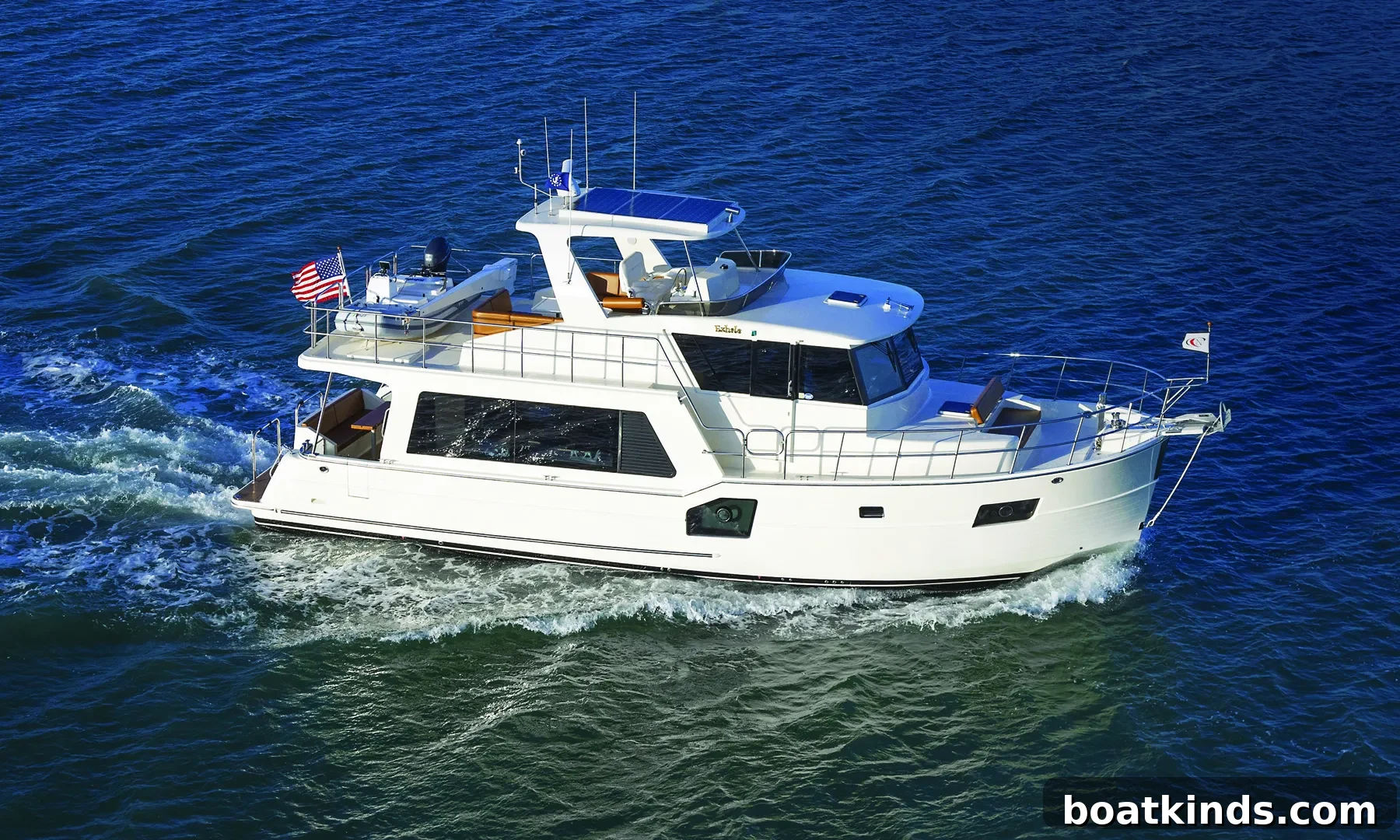
Williamson and Kirsch favored the additional speed of a semi-displacement design, which led them to the North Pacific 53 Euro Pilothouse Motoryacht—a larger iteration of the builder’s 49 Euro Pilothouse introduced in 2021. They accepted delivery in September and christened her Sandana. Unlike their previous 61-foot yacht, which had twin 500-hp engines, Sandana is powered by a single 600-hp diesel. The couple appreciated the simpler power arrangement and the more manageable size: “We had the 5,000-square-foot house, expecting people to come visit us. No one came,” Kirsch quips.
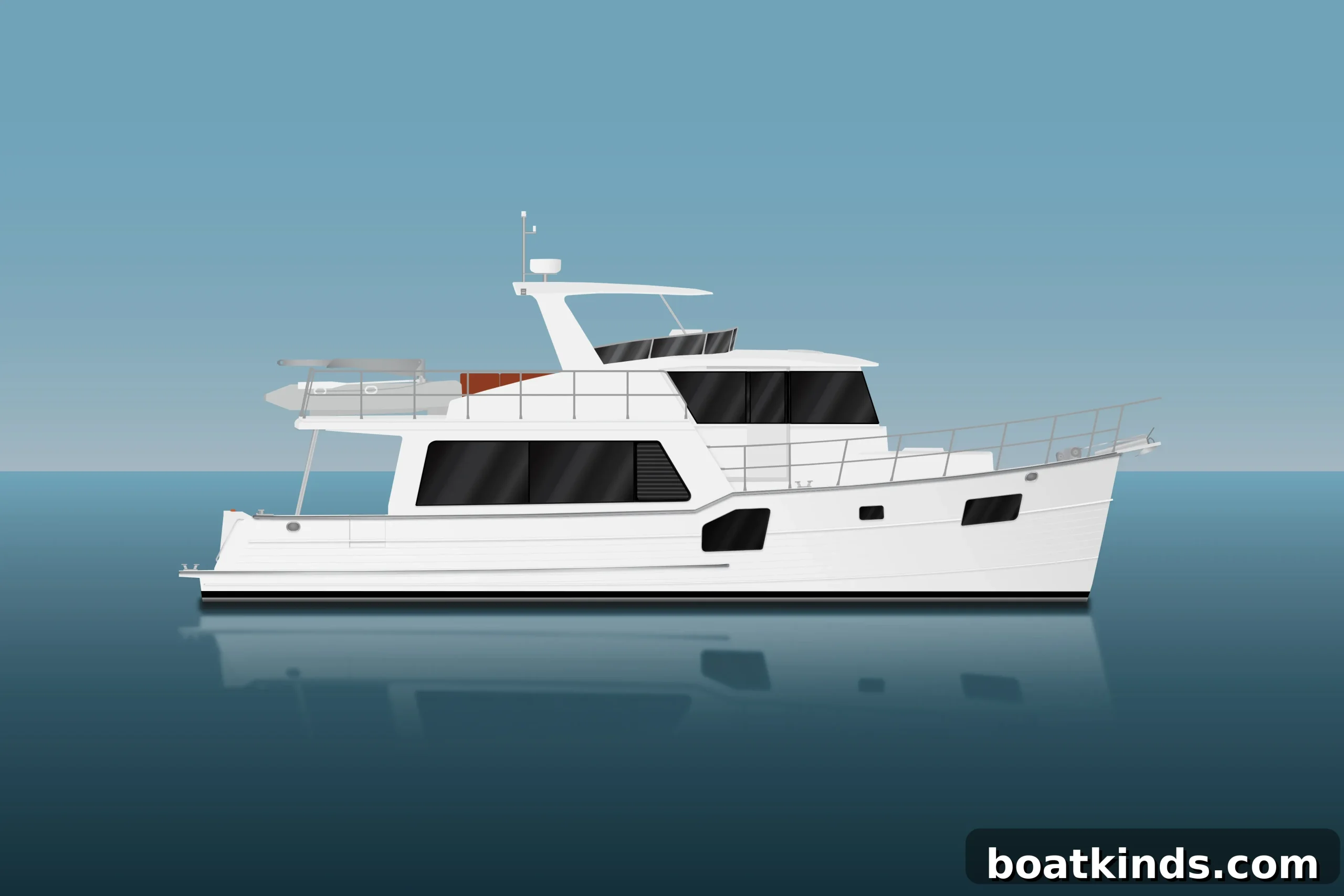
The 53 Euro Pilothouse attracted the owners with its contemporary aesthetic and thoughtful interior appointments. North Pacific’s Euro series blends classic trawler lines with modern finishes—ash accents, Wenge treatments and an aft-positioned galley in the main salon that encourages socializing. “The majority of the company’s boats look traditional with plenty of teak, but we like the 53 for features like the ash accents, Wenge treatments and the galley that’s positioned aft in the main salon,” Williamson explains. Kirsch points out that the boat’s gathering spaces are unusually roomy for its length overall: “Everybody will want to congregate in the galley with the aft doors open to the cockpit.”
Trevor Brice, president of North Pacific Yachts, describes the 53 as “a fresh take on the trawler,” combining trawler capability with motoryacht-level amenities and modern updates throughout.
Performance figures underline the balance between speed and efficiency. Sandana can reach a top speed of 14 knots with a range of about 300 nautical miles. Cruising at 10 knots extends range substantially—to around 1,400 nautical miles—and at 9 knots Kirsch reports roughly 1 mile per gallon as the engine “sips fuel,” a key advantage for long passages.
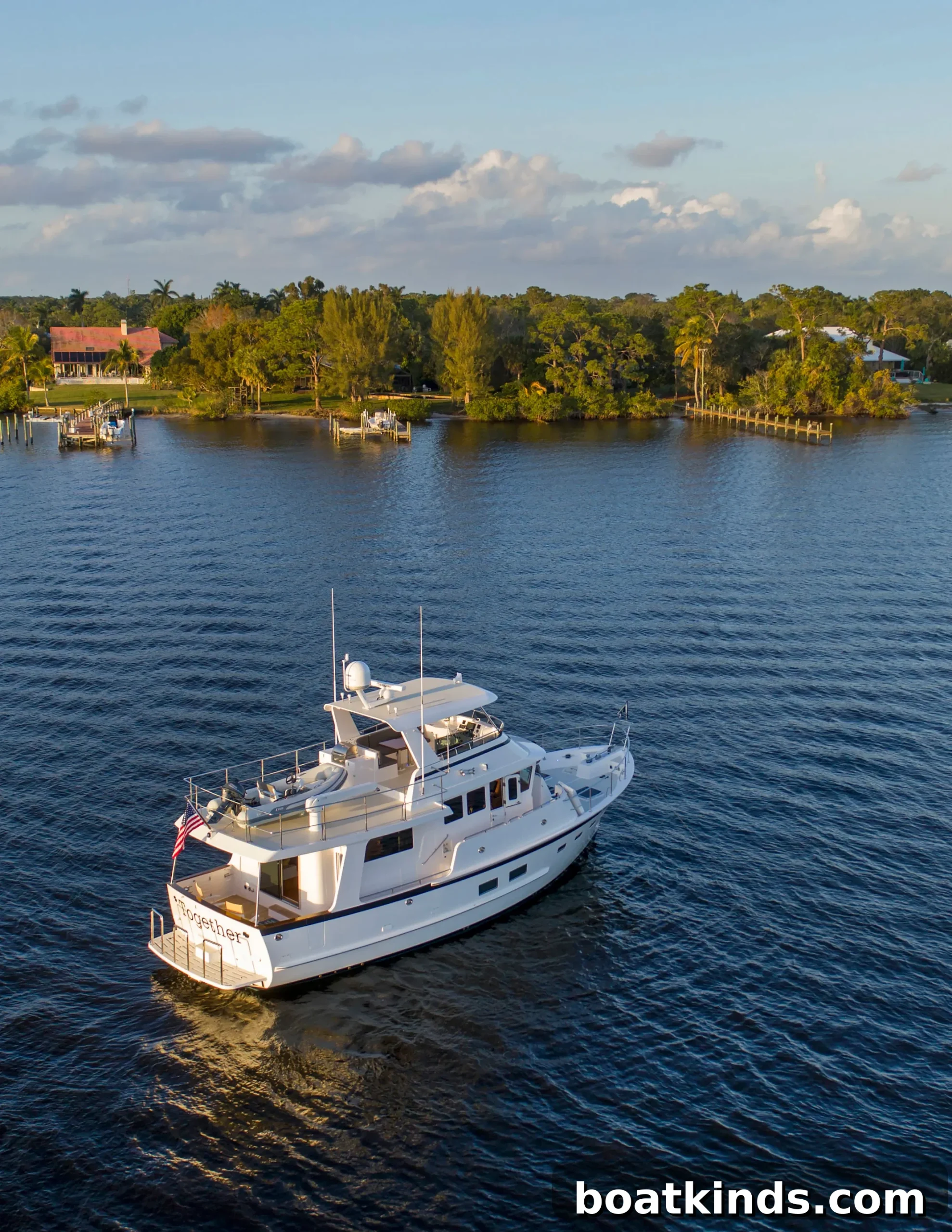
On the opposite end of the design spectrum, the Kadey-Krogen 60 Open exemplifies a traditional full-displacement trawler reimagined for liveaboard comfort. “Instead of having stairs all over the place, we have a single-level main deck,” says Tucker West, Kadey-Krogen’s president and CEO. The aft cockpit, salon and galley are on one continuous level, with accommodations below reached by a short flight of steps to ensure privacy and separation between public and private spaces.
Kadey-Krogen maximizes interior volume on the accommodations deck: the amidships master stateroom offers a king berth and en suite head; a VIP forward has a queen berth; and a port-side guest cabin features twin berths. The builder also prioritized machinery space, providing more than 8 feet of headroom in the engine room.
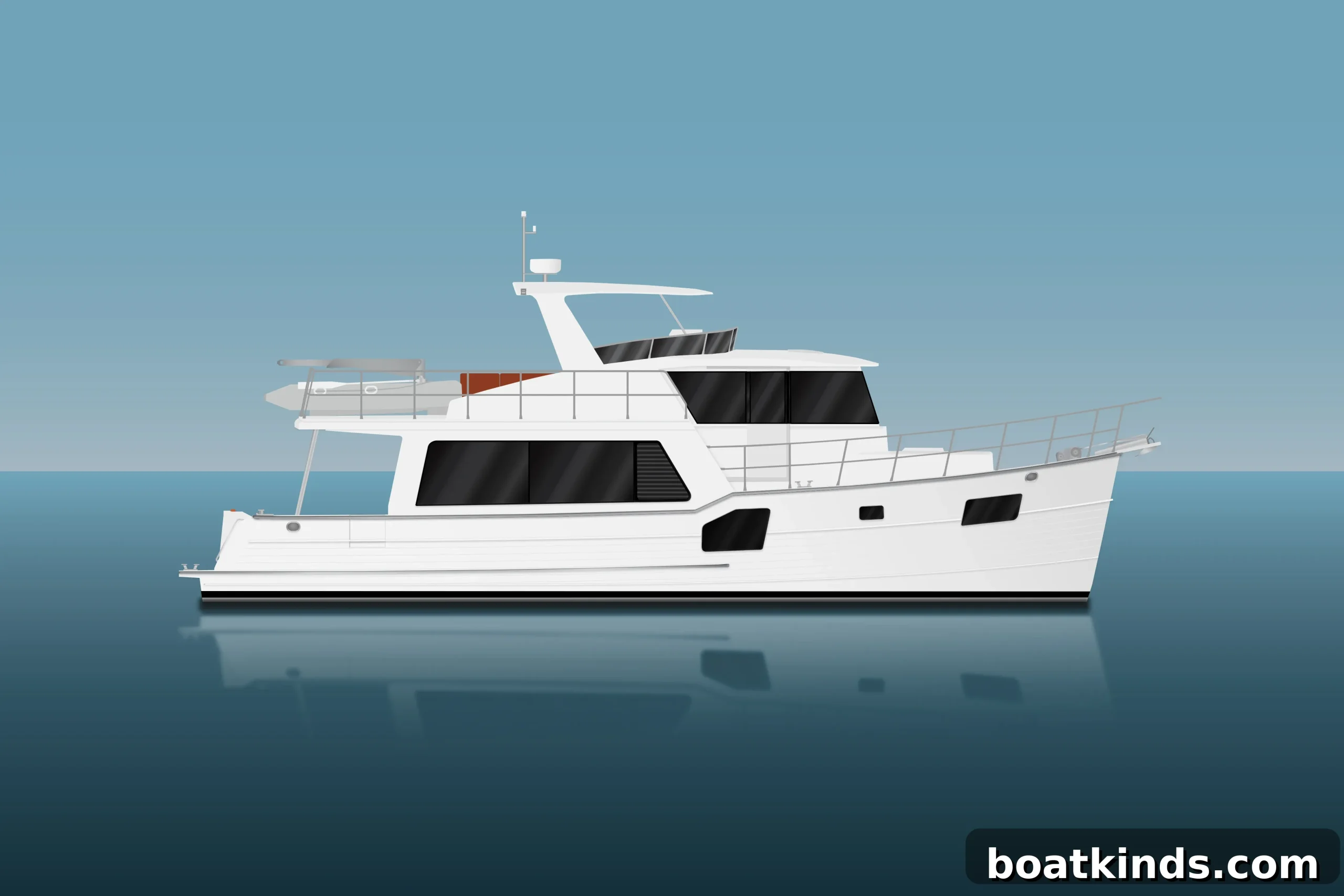
With twin 200-hp diesel inboards, the 60 Open tops out at about 10.3 knots and has a reported range near 714 nautical miles. On economical settings—around 1,200 rpm and 6.6 knots—the range increases dramatically to roughly 4,005 nautical miles. Kadey-Krogen’s customer-focused approach allows meaningful customization: the owner of Hull No. 1 opted to replace a cabin with a double-office layout, for instance. Inside, finishes favor lighter American cherry rather than traditional teak, along with larger windows and opening ports to brighten and ventilate belowdecks. Quality components, like a Stidd helm seat on the flybridge and Sub-Zero and Wolf appliances in a galley described as New York apartment–sized, underline the builder’s emphasis on long-term liveaboard comfort.
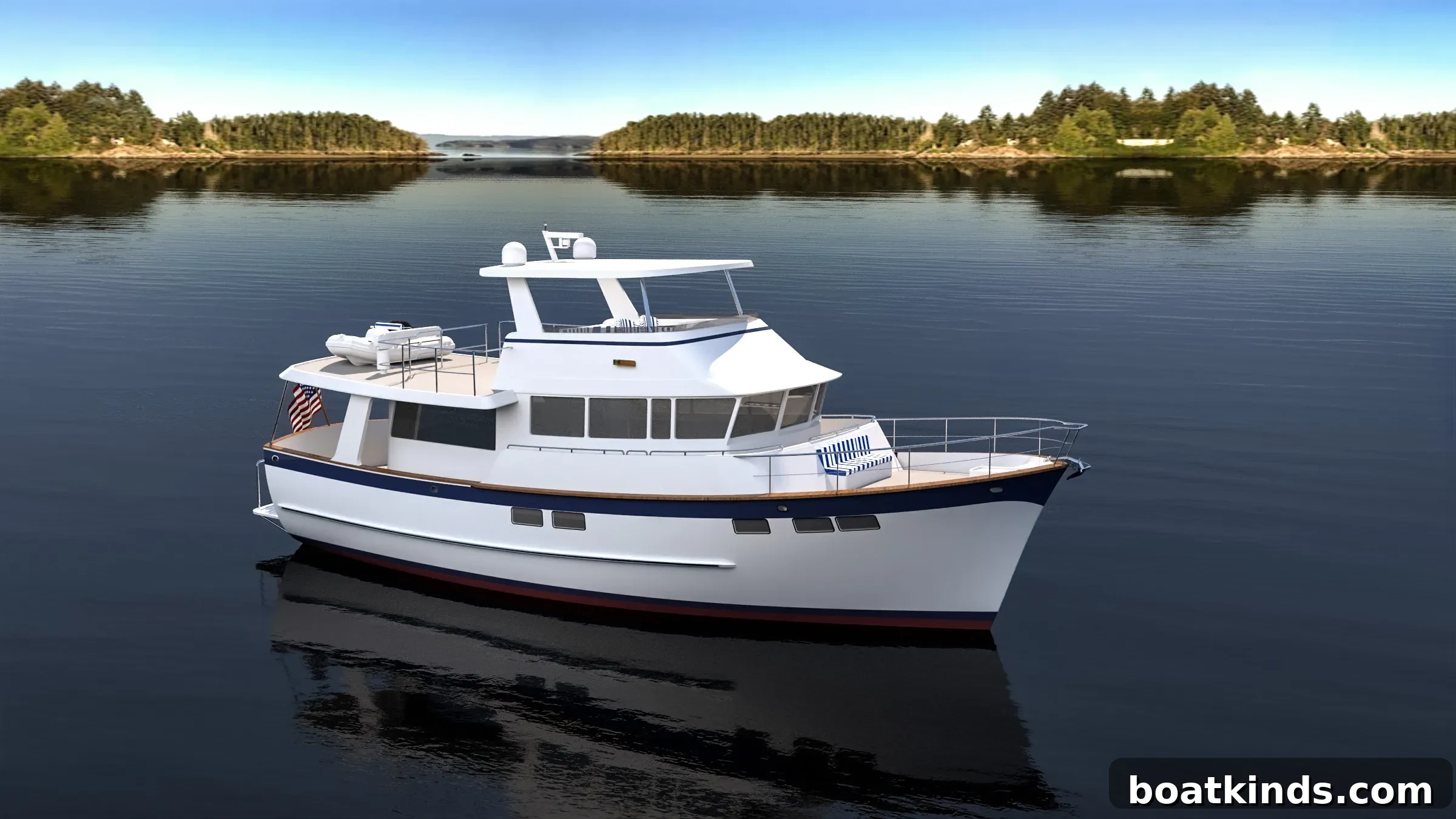
Smaller contemporary trawlers continue to evolve as well. The Helmsman Yachts 43E Pilothouse brings a modern interpretation to the trawler aesthetic, pairing traditional materials such as teak and holly decking and meticulous brightwork with a more angular, contemporary profile. Built in China to the American Bureau of Shipping standards, the 43E is compact enough for easy handling by a couple yet designed for extended cruising. Powered by a single 380-hp Cummins QSB diesel, the boat’s top speed is estimated around 11.3 knots with a range near 260 nautical miles; at a slower displacement pace near 6 knots, range extends to over 3,020 nautical miles. The 2021 redesign expanded the salon, added seating and a day head on the main deck—useful touches rarely found in this size class—and provides two staterooms below along with a convertible salon settee for occasional overnight guests.
The Northern Marine 57, refreshed for recent seasons, also demonstrates how incremental updates can significantly improve livability. An updated 57 introduced larger hullside windows, vaulted overheads with salon headroom exceeding 9 feet and an asymmetrical deck that “bumps out” the interior living area. Newer systems such as hydraulic bow and stern thrusters and integrated vessel monitoring bring modern reliability to a classic full-displacement platform. “We view a trawler as a moving city making its own water, making its own power,” says Stuart Archer, Northern Marine’s general manager and naval architect.
That enduring appeal is on display in the cruising plans of owners like Jeff and Kara Wiper. Jeff, who first crewed on extended Pacific Northwest cruises as a teenager, fulfilled a longtime dream after retiring from general contracting by buying a 2005 Northern Marine 57 Pilothouse. They brought Apogee to the builder’s Anacortes yard in 2021 for an extensive refit: heated floors in the heads, new soft goods and countertops, a fiberglass hardtop over the bridge and redundant systems for reliability—dual generators, water pumps and charting stations among them. After the refit, their shakedown cruise covered about 4,000 miles, including the Inside Passage to Juneau and seven weeks in Prince William Sound. The couple found the boat manageable for two and plan to head south to Mexico for further exploration—proof that modern trawlers continue to deliver long-range capability, comfort and the freedom to cruise for months or years at a time.
This article was originally published in the November 2022 issue.