

Every hour of every day, thousands of airline pilots perform a routine that, at first glance, seems almost ritualistic. Just before landing the flying pilot lowers the landing gear and three green lights illuminate. The other pilot confirms by asking, “Landing gear down?” and the flying pilot replies, “Check — three down and green.” They both saw the lights the moment they came on, yet they still ask and receive verbal confirmation.
This habit is not limited to the landing gear. Nearly every action in commercial aviation is confirmed by the pilot next to you. Regardless of experience or seniority, pilots rarely flip a switch without a verbal check from a second set of eyes. The Federal Aviation Administration enforces many of these procedures because pilots and regulators recognize a clear truth: people make mistakes. Experience does not eliminate forgetfulness or error. When mistakes can cost lives, you reduce risk by using lists and confirming actions every time.
Human Error Is a Misleading Phrase
Calling an accident “human error” is often dismissive and unhelpful. It implies blame and suggests that whoever made the mistake is uniquely careless. In reality, forgetting details, overlooking cues, and making cognitive errors are part of being human. We all do it. The critical point is that these predictable human behaviors must be anticipated and mitigated in any high-risk activity.
On a boat, as in aviation, you should expect that people will make mistakes. The purpose of checklists is to relieve the burden on memory and attention so that predictable mistakes don’t turn into disasters. A good checklist reduces reliance on perfect recall and ensures essential steps are completed every time.
Three Types of Lists for Boating Safety
In aviation, checklists are often categorized as normal and non-normal (emergency) procedures. For boating, a practical approach is to use three types of lists: condition and preparedness (before you leave), emergency (when things go sideways), and after-docking/anchoring (post-trip checks).
These three lists correspond to the moments that matter: before you depart, during an emergency, and after you return. Each list serves a distinct purpose in preventing problems or ensuring you discover them early enough to fix them.
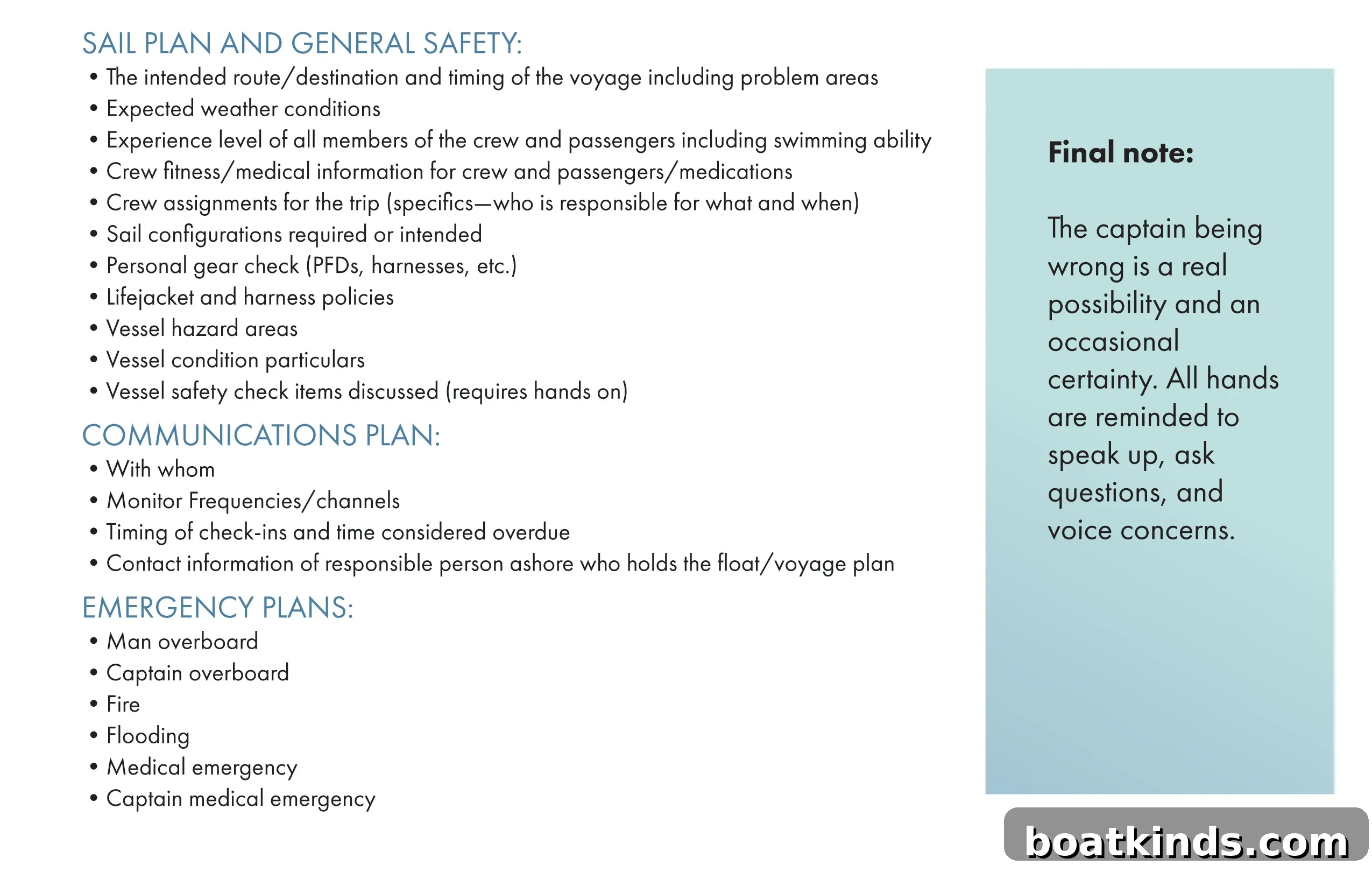
Before-You-Leave: Presail Preparation
Start with the basics the manufacturer recommends for your vessel—regular maintenance, engine checks, fuel, oil, and equipment inspections. These are the foundational “gas and oil” checks and should be done per your owner’s manual. If you haven’t read that manual thoroughly, make that a priority.
Beyond manufacturer items, create trip-based lists for passengers and provisions: sunscreen, water, food, clothing, navigation charts or apps, and safety gear. But the most commonly missed checklist is the final presail safety check: a concise, mandatory run-through of safety-critical items just before casting off. This preparedness checklist is the best defense against preventable emergencies.
Your presail checklist should feel deliberate and slightly burdensome—that’s the point. It forces you to confirm the essentials each time. Complement that with a presail safety brief: a quick discussion with everyone onboard about safety procedures, locations of lifejackets and emergency gear, roles in a man-overboard situation, and plans for unexpected weather.
When Things Go Sideways: Your Quick Reference Handbook
Pilots carry a Quick Reference Handbook (QRH) for non-routine and emergency procedures: smoke in the cabin, engine failure, and so on. You should create a similar emergency QRH for your boat. Write down step-by-step procedures for likely emergencies—man overboard, steering failure, engine problems, flooding, fire, and medical issues. Keep this QRH handy and practice it so the steps become familiar.
Forgetfulness under stress is common. Numerous man-overboard investigations show that captains often forget steps they intended to follow. A well-structured, practiced emergency procedure reduces that risk. If an incident is serious enough to warrant a “pan pan,” it deserves a written procedure in your QRH.
After-Docking: Post-Trip Checks
After you return, use a checklist to verify the condition and location of safety gear, electronics, and consumables. This is the best time to discover missing, damaged, or expired items. If a personal locator beacon (PLB) or lifejacket battery is damaged, find out now and replace it before the next trip. Discovering a problem just before departure makes it far more likely you’ll postpone fixing it.
Post-trip checks also help you maintain the vessel and reduce long-term wear. Document any anomalies noted during the trip so maintenance can be scheduled, and make a short list of items to restock or repair before you cast off again.
Practical Steps: Make Checklists and Use Them
If this feels like a lot of homework, that’s intentional. Commercial aviation’s safety record is built on discipline and consistent use of checklists. Checklists are a free, proven tool to prevent human fallibility from producing tragedy. One pilot asks another to confirm green lights because we all know a red light can be missed.
Before you leave the dock, write down everything you don’t want to forget. Create emergency procedures while you’re calm. Conduct a presail brief with everyone aboard. After returning, inspect and document the condition of safety gear. Boat like a pilot: accept that you are human and fallible, and use simple, repeatable checklists to protect yourself and your passengers. That habit will dramatically increase the odds that you and your crew arrive safely at your next destination.