
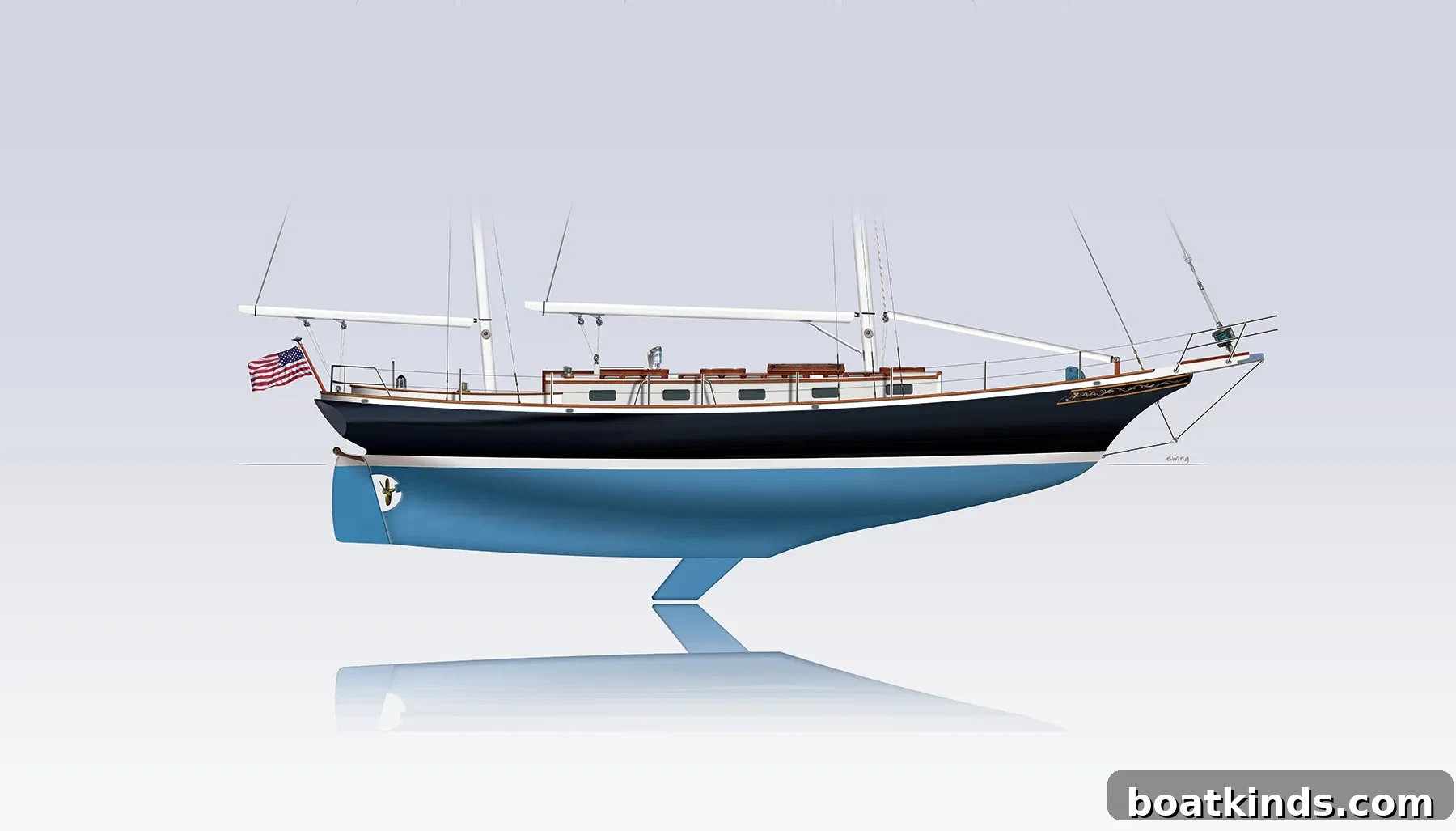
Cherubini 44 — Timeless Lines and Practical Cruiser Design
When fine boatbuilding and thoughtful naval architecture come together, the result is a vessel that continues to turn heads and reward owners for decades. The Cherubini 44 is exactly that kind of boat: a classic-looking cruiser with deliberate design choices aimed at seagoing comfort, performance and longevity.
John E. Cherubini began his formal studies in naval architecture as a teenager at the Westlawn School of Yacht Design in 1938. Though his career later included aviation engineering and hands-on work building small outboard boats at the family yard, Cherubini never lost his focus on yacht design. By the time the first Cherubini 44 launched in 1977 he had already made a significant mark on American boatbuilding, including early designs for Hunter Marine such as the Hunter 25 and a succession of models that followed.
Rather than building the 44 at Hunter, Cherubini’s family yard on the New Jersey side of the Delaware River produced this design. The Cherubini 44 shows a clear lineage to classic yachts — reportedly drawing inspiration from L. Francis Herreshoff’s Tioga II (later renamed Ticonderoga) — yet it integrates practical features for modern cruising. The boat’s modest bowsprit and pronounced clipper bow give it a distinctive prow, while a graceful sheer line sweeps aft to a gently curved, aft-angled transom.
Deck and cockpit layout reflect a focus on comfortable long-distance sailing. The helm is deliberately separated from the main cockpit area, creating a less crowded working space and allowing crew and guests to occupy the cockpit without interfering with steering. The ketch rig places the mizzen mast at the aft end of the main cockpit, offering sail plan flexibility: easier balance under various wind conditions, more canvas combinations for heavy-weather sailing, and simpler reefing and sail handling for shorthanded crews.
The long, low trunk cabin preserves a classic profile while providing a well-lit, ventilated interior. Watertight bronze portlights punctuate the cabin trunk, and original boats were fitted with custom built-down lockers and comfortable cabins below. Construction combined a fiberglass hull and a molded cockpit with a cold-molded marine plywood deck and cabin top, plus solid mahogany cabin sides — choices that balanced structural integrity, aesthetic warmth and historic boatbuilding traditions. In 2007 a Mark II version introduced a fully molded fiberglass deck and deckhouse, reducing maintenance and improving long-term watertight durability.
Performance and sea-kindly behavior were priorities in the Cherubini 44’s design. The boat was laid out with a 40-foot waterline, translating to a theoretical hull speed of about 8.47 knots — respectable for a heavy-displacement cruiser of its era. A relatively narrow beam of 11 feet, 6 inches keeps the hull long and slender, which helps the boat track efficiently and maintain momentum on passages. Stability and stiffness come from an in-keel lead ballast of approximately 12,000 pounds, providing a predictable righting moment when conditions build.
Shallow-water cruising and access to anchorages often off-limits to deeper-draft yachts were considered as well. The Cherubini 44 used a shoal keel with a centerboard, giving a maximum draft of 8 feet, 10 inches when the centerboard was down and a minimum draft of 4 feet, 10 inches with it raised. This configuration blends the performance benefits of a deeper foil when needed with the access and flexibility of a shallow draft for cruising in coastal and tropical waters.
Cherubini Yachts built 35 examples of the 44, and the sight of one slipping through a moderate sea demonstrates why the design has endured in the hearts of traditional-minded sailors. It’s a boat that communicates its intentions through form and function: classic aesthetics married to practical systems and construction choices aimed at reliable cruising.
For sailors who value graceful lines, sensible deck arrangements and a hull that favors comfortable, efficient passages, the Cherubini 44 remains a compelling choice. Its combination of traditional styling, thoughtful interior arrangements and seaworthy underbody makes it a memorable example of late-20th-century American yacht design.
This article was originally published in the December 2023 issue.