NOAA Forecasts an Extremely Active 2024 Atlantic Hurricane Season
Forecasters at NOAA’s National Weather Service are predicting a markedly active 2024 Atlantic hurricane season, driven by a rare alignment of three major climatological factors. In the agency’s May outlook, NOAA projected 17 to 25 named storms, with 8 to 13 expected to strengthen into hurricanes and four to seven of those reaching Category 3 or higher. The agency assigned a 70% confidence to those ranges and an 85% probability that the season will be above normal.
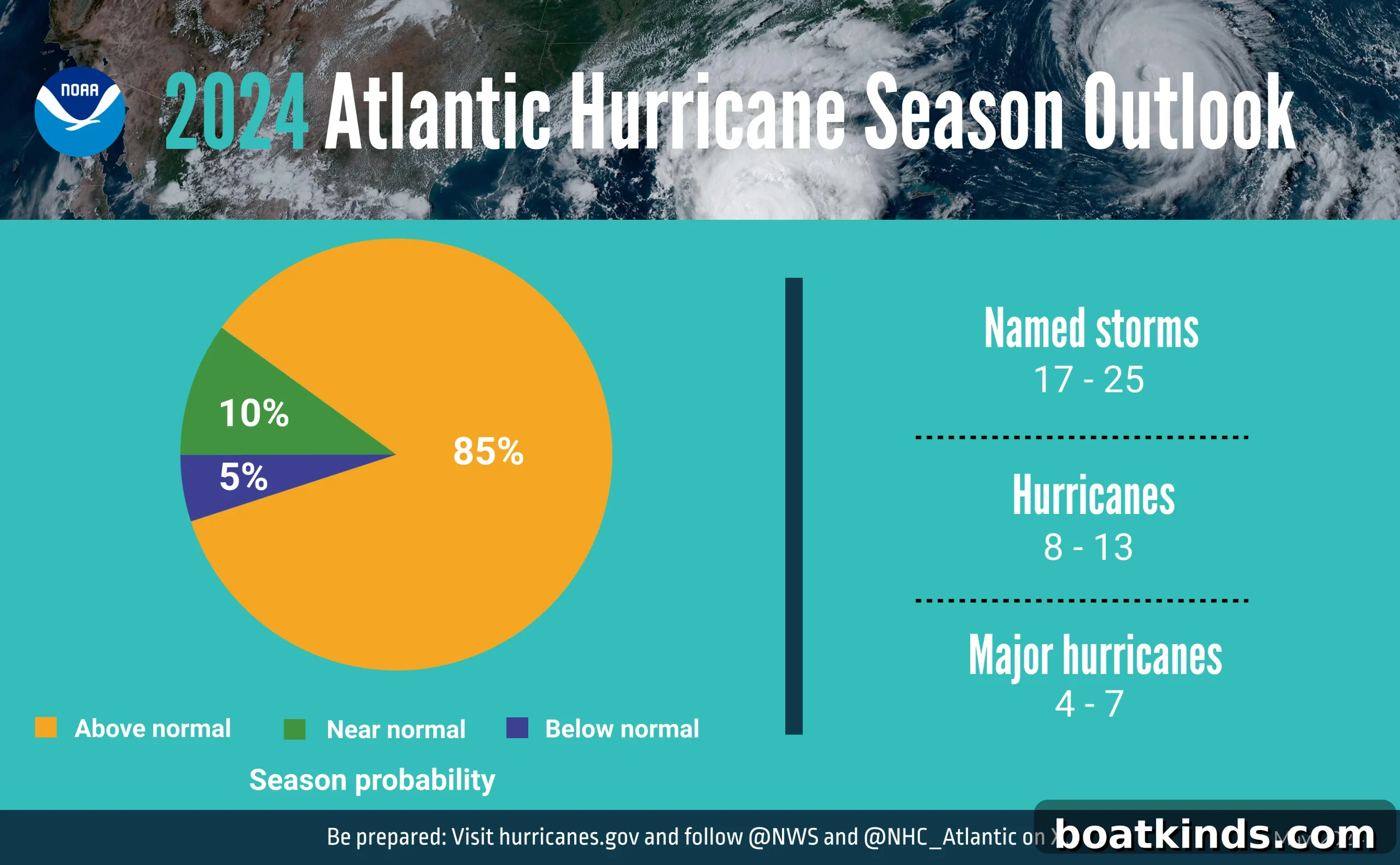
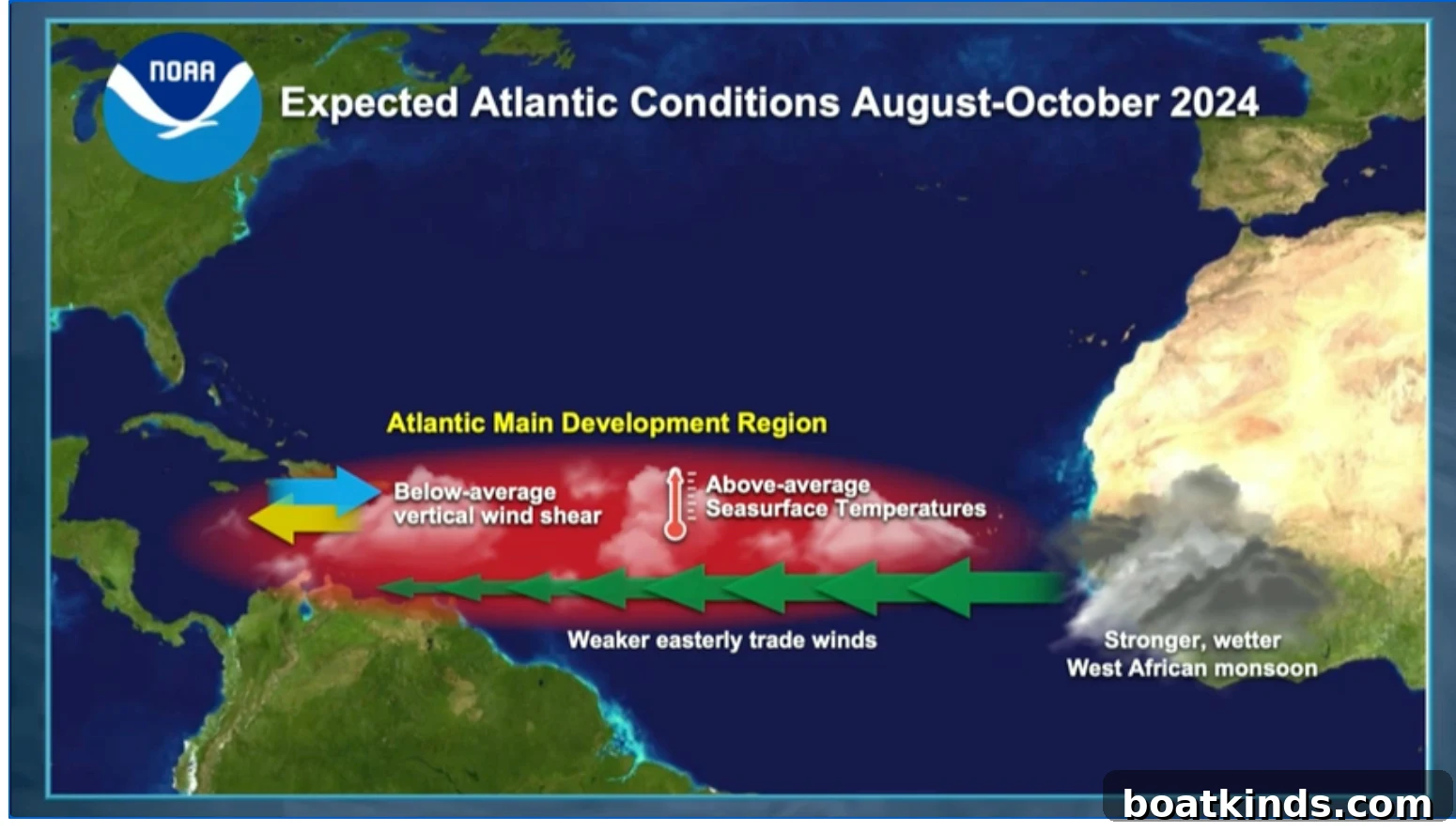
NOAA forecasters identified the three primary forces behind the forecast: the expected development of La Niña in the Pacific, unusually warm Atlantic sea surface temperatures, and an anticipated above-normal West African monsoon. La Niña typically reduces vertical wind shear across the tropical Atlantic, allowing storms to organize and intensify. Warm ocean waters provide the energy that fuels tropical cyclones, while an active West African monsoon often launches the tropical waves that can grow into long-lived, powerful storms.
“We’ve seen a lot of seasons where we have a warm ocean but too much shear, or you don’t get an African monsoon,” NWS Director Ken Graham said when announcing the forecast. “It’s all coming together. This is a situation where you combine factors…everything has to come together. All the energy in the oceans, check; an active African monsoon, check; don’t expect a lot of shear, check.”
Lead seasonal forecaster Matt Rosencrans noted Atlantic temperatures are running 1–2°C above normal—levels more typical of August and substantially warmer than comparable periods in 2005 and 2010. He added that temperatures in primary storm development regions are roughly 120 days ahead of where they usually would be, which can extend both the early and late portions of the hurricane season and contribute to higher overall activity.
NOAA’s May outlook also projects the second-highest Accumulated Cyclone Energy (ACE) for a May release—the ACE index measures the combined strength and duration of tropical storms and hurricanes, effectively quantifying seasonal wind energy. A high ACE value typically signals a season with numerous or long-lived intense storms.
Graham stressed preparedness, noting how quickly powerful storms can intensify and impact land. “Every Category 5 storm that made landfall in the U.S. in the last 100 years was a tropical storm or less three days prior. The big ones are fast,” he said. “You look at a season like this, you could see some pretty strong storms with this forecast…they don’t care about timelines. Preparedness is everything. On those Category 5s, the average lead time was 55 hours.”
He also urged focusing on storm impacts rather than only category, because the Saffir–Simpson scale reflects wind speed but does not capture other hazards. Between 2013 and 2023, NOAA data show that 90% of hurricane-related fatalities were water-related—57% from rainfall, with a substantial share occurring in vehicles. Inland flooding from heavy rain can be as hazardous or worse than conditions at the coast.
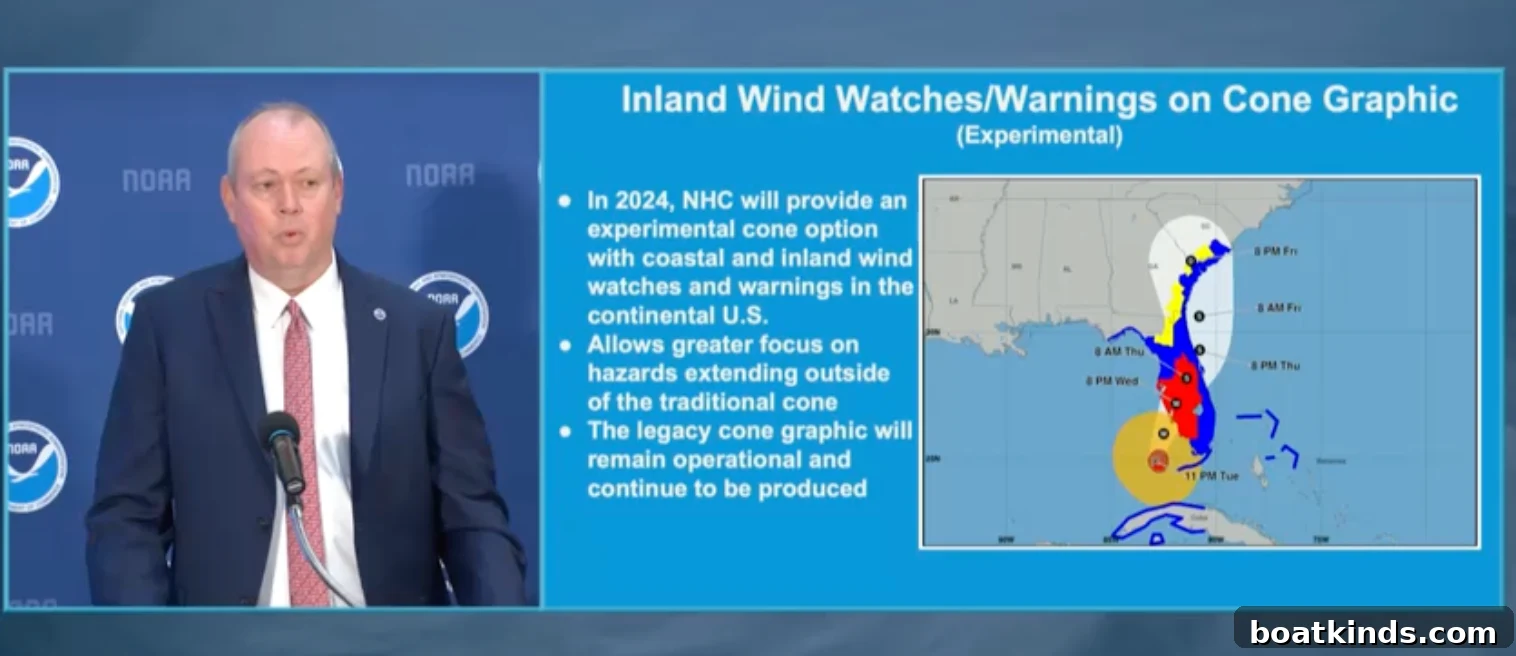
To help communicate inland impacts, NOAA has introduced an experimental addition to the familiar “cone of uncertainty” that displays potential impacts inland as well as probable landfall zones. This is part of an effort to make risk more understandable and actionable for people away from the immediate coastline.
NOAA Administrator Rick Spinrad highlighted recent investments in forecasting and observing systems. New tools include expanded Flood Inundation Mapping and next-generation radar improvements funded through federal infrastructure initiatives. NOAA will also add the Modular Ocean Model (MOM6) to its Hurricane Analysis and Forecast System to better represent ocean effects on hurricane intensity, while the SDCON model will estimate the probability of rapid intensification.
Observations will expand as well. This season NOAA plans to deploy up to a dozen Saildrones—uncrewed surface vehicles that can provide one-minute real-time observations—along with Directional Wave Spectra Drifters (DWSDs) released from hurricane hunter aircraft during storms. A new lightweight dropsonde will also be used in developing tropical systems to deliver real-time wind and atmospheric data.
NOAA’s Climate Prediction Center will issue an updated Atlantic seasonal outlook in early August, ahead of the historical seasonal peak. Communities in hurricane-prone regions are advised to review preparedness plans, stay informed through official forecasts, and be ready to act quickly if storms develop—especially in a season NOAA expects to be exceptionally active.