It’s difficult to fully capture the Fort Lauderdale International Boat Show experience in words. Spread across seven distinct locations and roughly three million square feet of exhibition space, the show overwhelms the senses in the best possible way. From compact kayaks and state-of-the-art electronics to center consoles bristling with horsepower, superyachts, and even submarines, FLIBS presents a full spectrum of the boating world that appeals to every kind of maritime enthusiast.
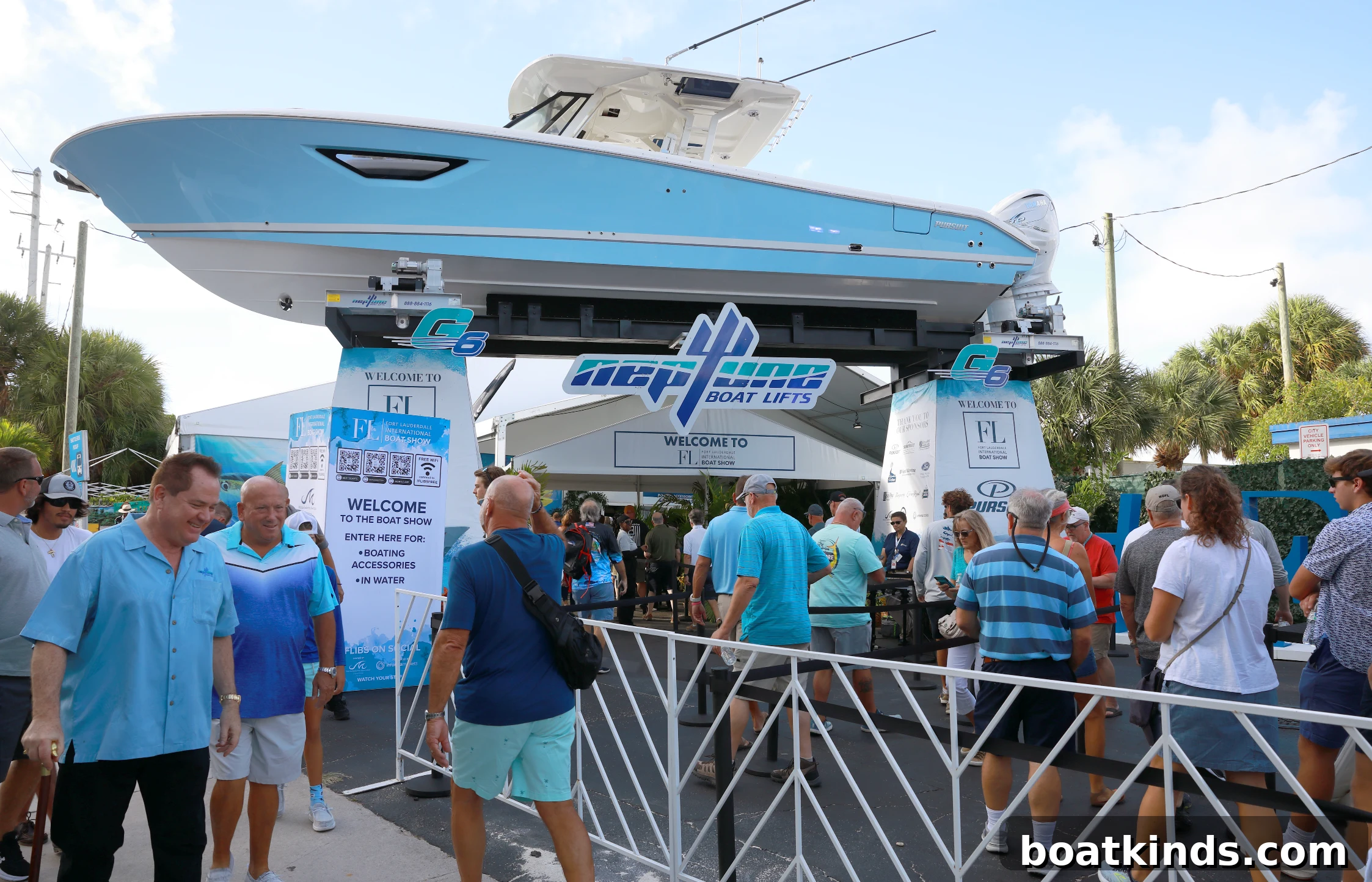
A sharply dressed European visitor with a leather satchel heading for an upper-deck soiree on a superyacht will casually pass a pontoon owner in flip-flops and a tank top. The diversity of attendees—collectors, weekend cruisers, industry professionals, and first-time boat shoppers—creates an inclusive atmosphere where the common thread is a love of the water.
During warm daylight hours, the show hums with energy: engines purr, vendors demonstrate gear, and attendees compare layouts, performance specs, and design choices. Yet many regulars say the true enchantment arrives at dusk. As the sun dips below the horizon, the illuminated silhouettes of yachts and megayachts transform the shoreline into a glittering city on the water. That evening skyline is a memory many boaters describe as essential—a vivid reminder of why people are drawn to boating culture.
If you haven’t attended the Fort Lauderdale International Boat Show before and are planning to go in 2024, visit the official FLIBS website for schedules and ticketing information. Before finalizing your itinerary, check our story Dock Stars on page 50 for details about the latest models making their debut and to spot notable boats you won’t want to miss.
Florida’s Finest
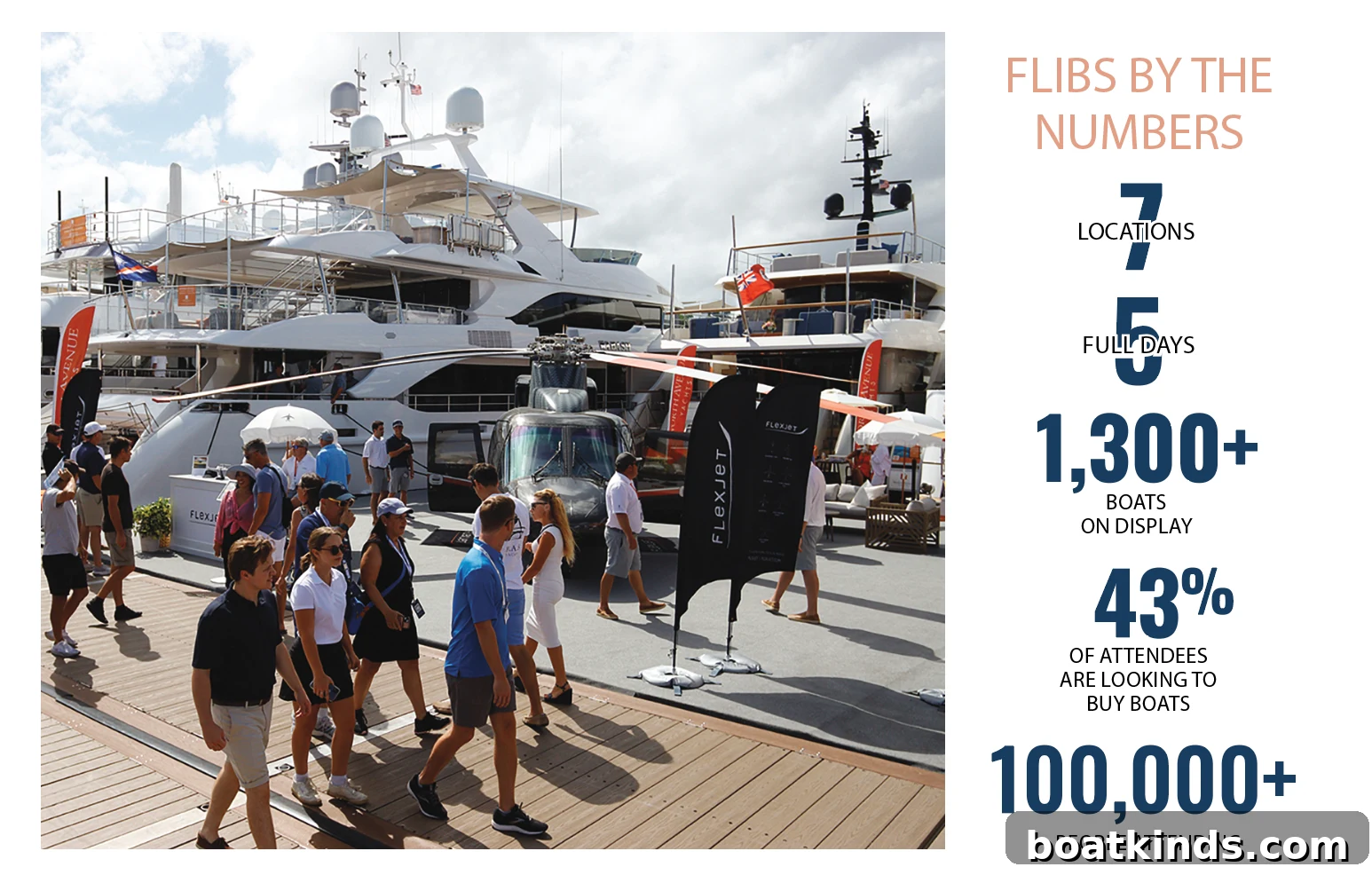
October brings a cascade of boat shows up the East Coast, but the flagship event is unmistakably the Fort Lauderdale International Boat Show. In 2024, the show expects more than 100,000 visitors who will converge on the so-called Yachting Capital of the World to tour nearly 1,000 boats in the water, plus as many as 300 additional vessels displayed on land. Exhibits span a wide range: small tenders and personal watercraft sit alongside sportfishing center consoles and megayachts that stretch well beyond 200 feet.
FLIBS has evolved dramatically since its modest start in 1959 at a small armory. Over subsequent decades, the event relocated several times before establishing a long-term presence at the Bahia Mar Yachting Center in the late 1970s. From there it steadily expanded to include the Swimming Hall of Fame, Las Olas Marina, Pier 66, and the Broward County Convention Center. Those additions helped FLIBS grow into the largest in-water boat show in the world, drawing more exhibitors, more models, and more visitors each year.
“We’re really excited about this year because the construction at Pier 66 will be complete,” says Andrew Doole, president of the U.S. Boat Shows division of Informa Markets, the organizer behind FLIBS. “They’ve spent billions renovating the property, so we’ll have another fabulous venue for the event. The Las Olas location will have its new, state-of-the-art marina up and running too.” Those facility upgrades promise to improve both exhibitor displays and visitor experiences.
Other 2024 enhancements include an expanded Designers Pavilion within the Superyacht Village, where the show’s largest vessels are showcased. The enlarged pavilion allows more design-focused exhibitors to participate and increases the number of seminars covering topics such as sustainable practices and project management during a yacht build. These sessions are useful for owners, designers, and industry professionals seeking deeper insight into high-end yacht ownership and construction.
The show’s Windward Club returns for 2024 but in a new location at the Hall of Fame Marina, occupying a larger, more comfortable space. Doole describes it as “like a first-class lounge” where visitors can enjoy breakfast, lunch, or a quiet break with air-conditioned seating and a relaxed bar area—an upgraded option for attendees who want a premium on-site experience.
Navigating the multiple venues can be time-consuming because the show draws such large crowds. To ease congestion, organizers are adding capacity to the convention center parking hub and expanding the water taxi fleet. “We transport tens of thousands of people by water,” Doole notes. “Many prefer to travel by boat instead of rubber tires,” which also highlights the practicality and appeal of arriving by water at a show centered on boating.
Exhibitor participation and inventory levels are rising compared with recent years. “Yes, exhibitor numbers are on the rise,” Doole says. “And so is inventory. The pandemic days of scrambling to find boats for a show are over. There will be more new models and brokerage boats, especially larger models.” For buyers and browsers alike, this means a broader selection across sizes and price points.
Doole, who has nearly 40 years of experience in the boat industry, offers practical advice for attendees: research in advance and plan a route through the venues that prioritizes your interests. He recommends allowing at least two days to experience the show—there’s simply too much to absorb in a single visit.
This article was originally published in the October 2024 issue.