
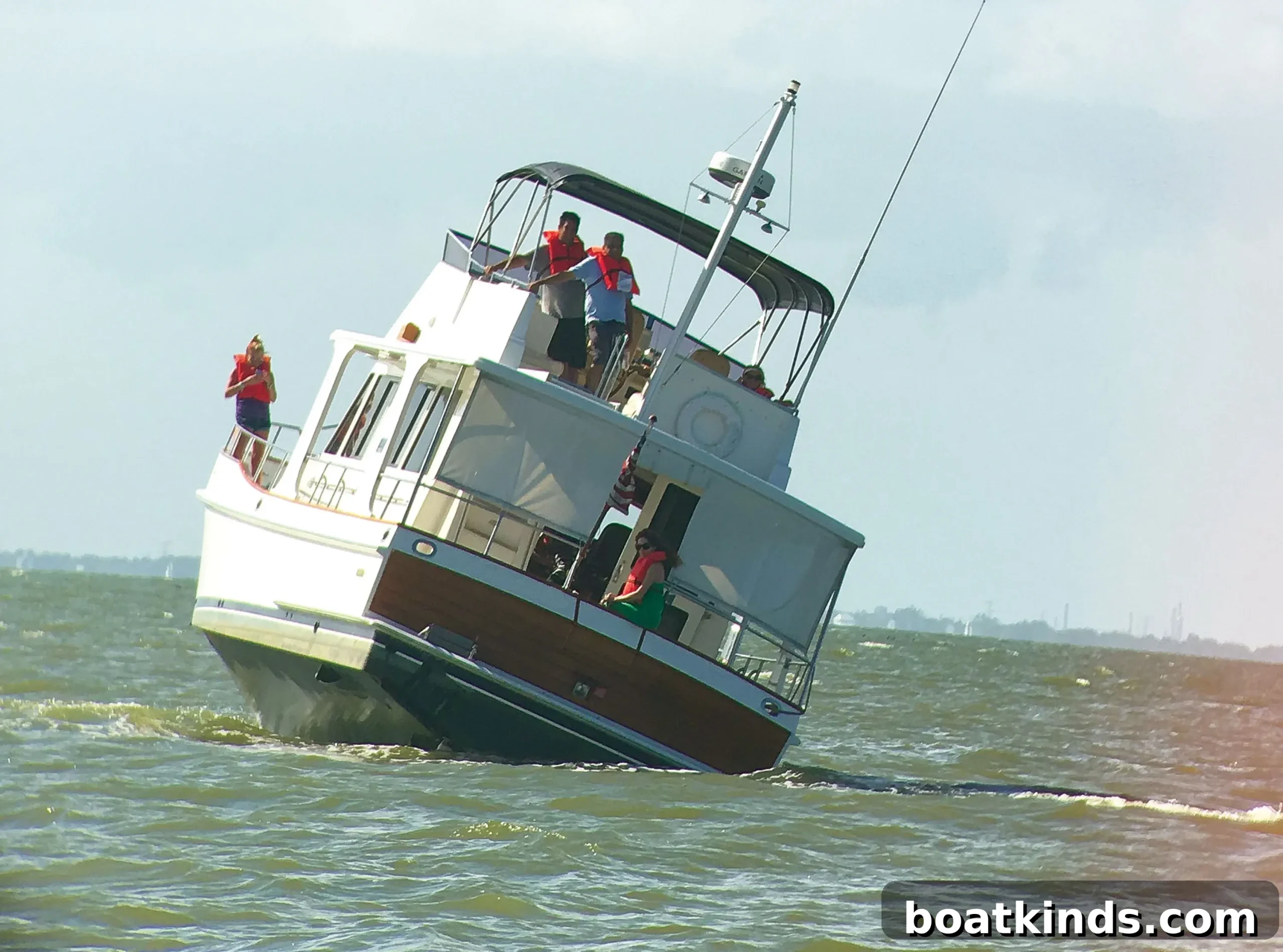

There’s a long-standing joke among mariners: on Chesapeake Bay, if you haven’t gone aground, you haven’t left the dock; in Maine some sailors quip they know every rock because they’ve hit most of them. Grounding a boat isn’t inevitable, but anyone who spends enough time on the water will likely face it at least once. When it happens, the best outcome is a minor inconvenience — not danger, damage, or embarrassment in front of onlookers.
Experienced skippers tend to approach grounding with a clear head. If life or limb are at risk, the priorities are simple: call for help, don life jackets and act sensibly. For the many groundings that are not emergencies, a calmer, systematic approach is more effective. A practical way to think about the problem is to separate factors into two groups: those beyond your control and those you can influence, at least somewhat.
Things Not In Your Control
Tide: Tidal conditions are among the most important uncontrollable factors. If there is no tide where you are, your options narrow to lightening the boat or calling for assistance. When a tide is present, know whether it’s rising or falling — that knowledge will shape your plan. A rising tide often offers the best chance of refloating, particularly with calm weather or an offshore breeze. A falling tide, by contrast, usually prolongs the problem.
The tidal range also matters. A 2-foot range limits how much the situation will worsen before improving; a 12-foot range can make things far worse as the boat may heel over and take on water before enough buoyancy returns. Hull configuration is another key element: flat-bottomed boats tend to stay upright as the tide falls, while fin-keel vessels can list and sit on their sides, complicating recovery. Equally relevant is whether you’re aground on sand or a jagged pinnacle — sand may shift and free you, while rock can cause serious damage.
Different tidal cycles affect your timing. Semidiurnal tides (two highs and two lows) and diurnal or mixed regimes change how long you might wait for a favorable tide. Spring and neap phases of the moon create predictable differences in the high-water heights; the lunar cycle can mean several feet’ difference at some locations.
Wind and weather: Wind direction relative to the obstruction is critical. If the wind is blowing off the hazard, it can help you float free with a rising tide. A wind blowing onshore will likely push the boat farther up, making anchors and other measures necessary to stop further movement. Wind strength also affects water levels in semi-enclosed waters and lakes — wind-driven set-up or seiches can raise or lower levels temporarily, helping or hindering refloating efforts.
Barometric pressure: Atmospheric pressure influences water levels as well. High pressure tends to suppress sea levels and may reduce predicted tides; low pressure can raise levels, as seen in storm surge situations. These effects can be meaningful in bays, sounds and large lakes.
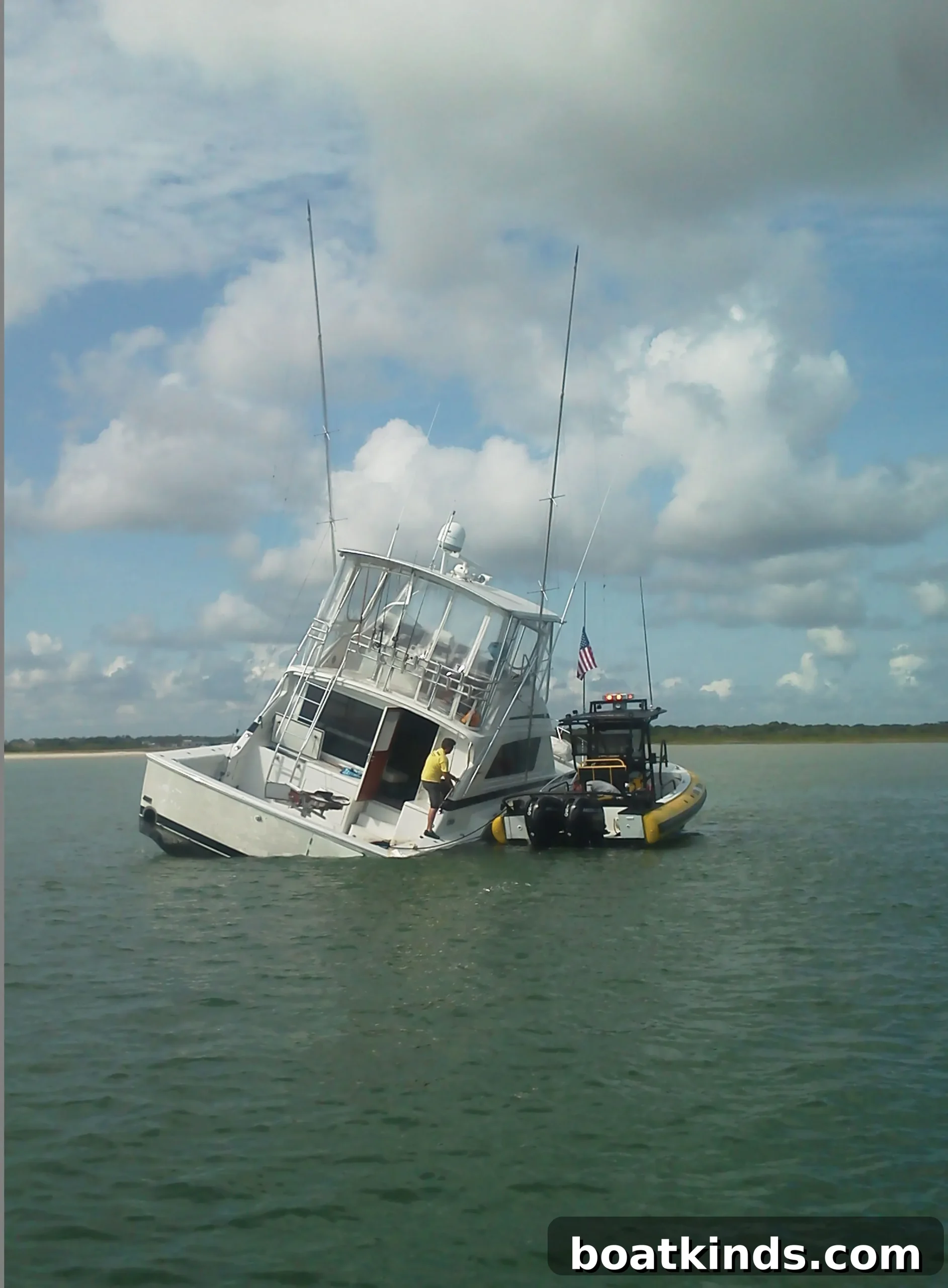
Things In Your Control, Somewhat, Possibly
Backing off: One of the first tactics to try is simply using the engine to back off. A passing swell or wave can provide the lift needed for the prop to grab and pull the hull free. Caution is required: if the cooling-water intake is out of the water, you risk overheating the engine; silt can also clog intakes. Monitor engine temperature and bilge conditions closely while attempting this maneuver.
If you have sails and the wind direction is favorable, using sails to heel the boat or to generate forward thrust can reduce draft and assist in freeing the vessel. Sheets eased just enough to create a proper heel can make a measurable difference.
Locate deep water: Before you free the boat, figure out where the deeper water lies to avoid going aground again. Depth sounders are often unreliable when you’re already aground; they may read zero or an inaccurate depth. A lead line remains a simple, effective tool: sound around the hull to map the nearest channel. If conditions allow, send a dinghy with a lead line to find a safe path to deeper water. If you’ve left a lead line at home because it seemed antiquated, this is a lesson many sailors learn the hard way.
Shift movable weights: Changing the boat’s trim can immediately change draft. Move people and loose gear toward the stern or bow as needed, and consider offloading heavy items such as a dinghy, portable water tanks or other removable weights. Even moving passengers across the boat has freed many vessels in light groundings.
Kedging and anchors: Kedging is a traditional, effective method for self-recovery. Row or use a dinghy to carry an anchor and rode out to deeper water, set the anchor and use the windlass or winch to haul the vessel toward it. In the presence of an onshore breeze, running an anchor out and keeping it under tension can prevent further movement up the beach and may give you the mechanical advantage to pull free.
Handle anchors and small boats with care: a large anchor in a small dinghy is a stability risk. Instead, use a lighter “lunch hook” or suspend the anchor under the dinghy with a sacrificial line that can be cut if needed. Protect inflatable tubes from chafe when running rode under them.
Throughout recovery attempts, preserve calm and clear communication. Attitude matters: crews who remain composed and work methodically are far more effective than those who panic or argue. Minor groundings frequently resolve with a few smart adjustments.
This article originally appeared in the September 2017 issue.