
Each year hundreds of boaters make the seasonal migration along the Atlantic Intracoastal Waterway (AICW), heading south in the fall and returning north in the spring. Often called “The Ditch,” the route is a stitched-together chain of bays, sounds, canals and rivers that lets mariners avoid many offshore passages. The AICW traditionally begins at Mile Marker Zero in Norfolk, Virginia, and runs south to Key West, Florida, though some cruisers extend the route unofficially through the New Jersey Intracoastal Waterway and the Delaware and Chesapeake bays.
With more than two centuries of use, the Intracoastal Waterway has become a familiar corridor for coastal cruisers. Many regulars have completed five or more transits and approach each season with practical strategies to manage time and expenses. Below are veteran tips for reducing the biggest costs on this 4- to 6-week voyage, from fuel and routing to provisioning and outfitting.
Fuel
Fuel is one of the largest expenses on The Ditch, particularly for larger or twin-engine boats that can consume hundreds of gallons during the trip. Planning and efficiency matter.
Use guides and apps that track fuel prices, such as the Waterway Guide, which updates fuel-dock prices regularly. A BoatUS membership can yield discounts in many areas. Operational tactics to cut consumption include carrying rather than towing a tender to reduce drag, maintaining a clean, smooth hull, running a single engine at a time when practical, traveling at reduced speeds and timing passages to take advantage of favorable currents.
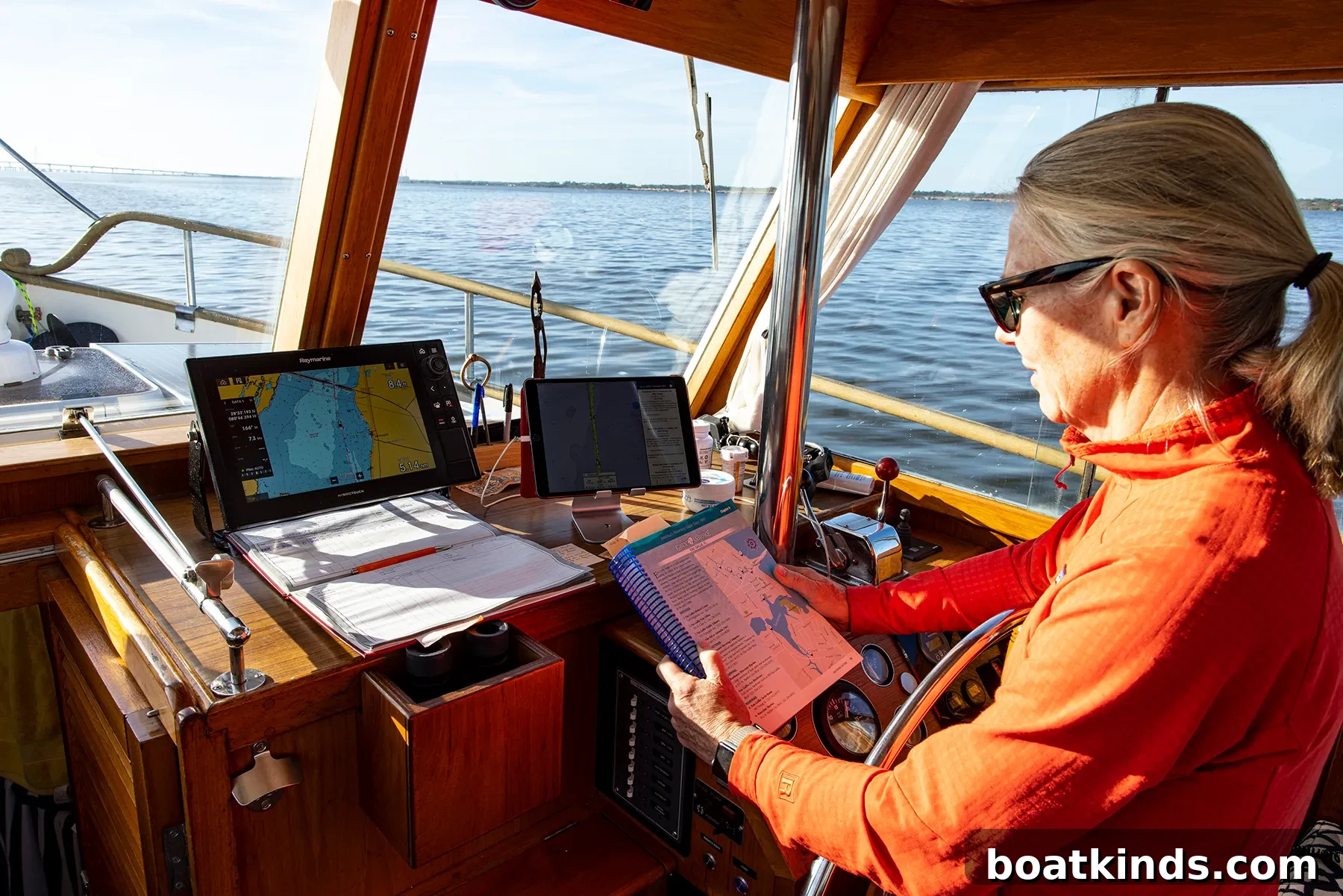
Kimberly Thomas, who completed her fifth ICW transit last fall aboard Pegu Club, her Bristol 29.9, advises, “Keep a steady speed and don’t fight the currents. Set an rpm and stick with it to optimize consumption. With good timing you’ll be able to ride with the current halfway to or past each inlet from the Atlantic.”
For sailors the ICW is rarely pure sailing—open stretches are limited to large sounds such as Pamlico and Albemarle. Motorsailing or setting a small jib can help, but most of the route requires long periods of slow motoring, so plan fuel needs accordingly.
Tom and Kathy Dove, who have run the ICW frequently on both sailboats and a Grand Banks 32 trawler, urge owners to understand their boat’s Speed/Length (S/L) ratio—the vessel speed in knots divided by the square root of the waterline length in feet. That figure helps identify the most fuel-efficient cruising speed. Dove gives a practical example: “I run at 1600 rpm, which gives me 6.64 knots or 7.64 mph at an S/L of 1.2, where I burn 1.6 gallons per hour giving me a 740-mile range. Anyone running a boat in displacement mode should know this data for their own vessel.”
Routing & Timing
Good routing reduces mileage and exposure to headwinds, shallow shoals and other delays. Experienced cruisers consult multiple sources: Cruisers Net and Notices to Mariners for official updates, ActiveCaptain for collaborative charting, and forums such as the Marine Trawler Owners Association or Trawler Forum for practical, experience-based advice. Many also use AquaMap and follow local contributors like Bob Sherer (Bob423) to learn about depth changes, off-station aids and hazard reports. Most of these services are free or low-cost.
Timing your departure matters as much as routing. Dove recommends leaving in late October when possible: “If you leave too late in the season it’ll be cold, forcing you to use a diesel heater. If you leave too early, you’ll need air conditioning run by a genset, so try to depart in the latter part of October. This should get you to Florida in a window when you won’t have to buy supplemental hurricane coverage for your boat insurance.”
Berthing
Most cruisers prefer daytime running along the AICW, covering 30 to 50 miles and stopping before nightfall. Marinas are convenient but costly, often charging $10 to $30 per linear foot. To save money look for anchorages, municipal docks, or mooring fields. The Waterway Guide lists free and low-cost dock options, and many marinas will provide shore services—showers, laundry, trash and pump-out—even to boats anchored or on a mooring in their field. That gives access to essentials without the full cost of slipping.
Amanda Spindel of Rasmus, a Hallberg Rassy 35, points to ICW Free Docks as a searchable resource for free dockage by state, but she recommends calling ahead to confirm availability. Chuck and Helen Fadely, who have completed multiple roundtrips, rarely stay in marinas except where they want local amenities—Charleston being a favorite for its food scene. They carry two anchors for secure holding and fenders with long lines for exposed city docks subject to wakes.
Set a realistic daily schedule to avoid fatigue and risky decisions. Dove limits runs to six or seven hours; stopping early increases the chance of finding a safe anchorage and avoids an unnecessary marina stay, especially when daylight is short.
Food & Entertainment
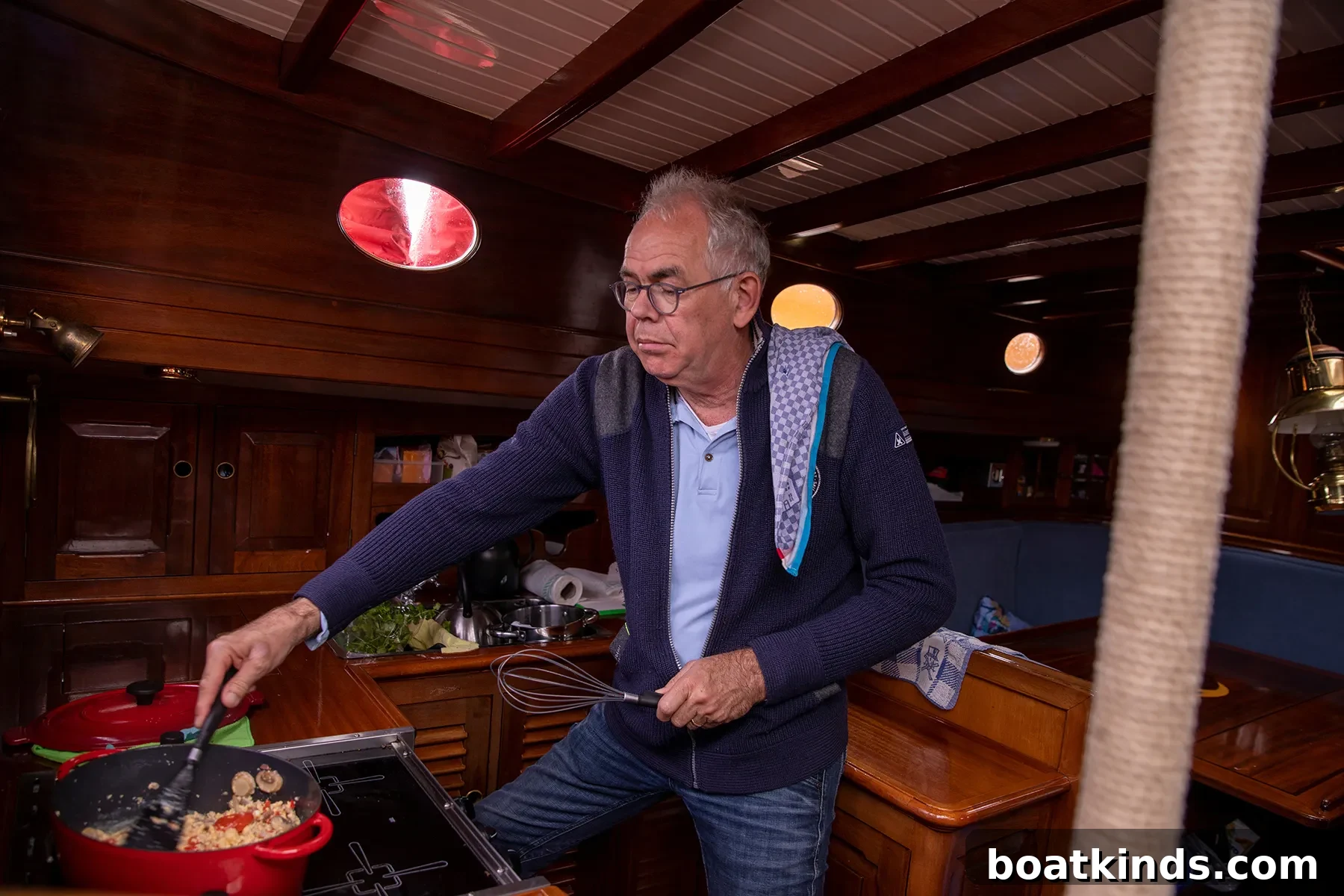
Provisioning and cooking aboard are major savings compared with dining ashore. Most towns along the ICW have large discount warehouses like Costco; if you have storage space on board, buy in bulk. Use mapping tools to locate stores and services along your route.
To cut travel costs, many cruisers use grocery delivery services such as Instacart to bring provisions directly to the boat, and Amazon Lockers to receive parts or gear—handy when a locker is located near a marina or town and holds packages for a short window. Social life aboard can be economical too: beach sundowners, potlucks and shared happy hours with cruisers are low-cost ways to enjoy company without relying on bars and restaurants.
Individual tolerances for cooking vary. As Dove admits, he and Kathy “are notorious non-cooks,” so they plan to eat ashore every few days while keeping breakfasts and simple meals aboard to balance cost and convenience.
Outfitting
Investing in systems that increase self-sufficiency pays off. Solar panels, lithium batteries and larger alternators extend time at anchor without needing a genset or marina power. For connectivity, many cruisers find cellular hotspots adequate for remote work and entertainment; full satellite systems are rarely necessary for ICW cruising. Thomas notes a practical plan: “We pay $90 a month for 180 gigabytes, which is plenty for our needs.”
Tablets and phones can supplement or replace some expensive multifunction displays by duplicating navigation screens. Dove describes his setup: “I like to run two iPads simultaneously, plus the boat’s MFD. I can have one zoomed in, the other out, and the third providing detailed notes from one of many resources because the Magenta Line [which is supposed to denote the ICW on the nav chart] is often missing or it doesn’t have enough water under it.”
Above all, slow down and enjoy the journey. Stretching out the passage saves money and turns the transit into a collection of day trips—time to savor sunsets, meet other cruisers and learn from those who’ve run the route before. “An ICW cruise is not that expensive and it highlights all our similarities rather than our differences,” says Thomas.
This article was originally published in the February 2024 issue.