
When a Registered Boat Becomes a Legal Nightmare: A St. Johns River Story
Tracy Lynn Tedesco learned, too late, how costly a single decision can be. As the family’s primary earner and bill payer, she registered a boat in her name that was effectively her husband’s. What could go wrong?
For a time the family of four lived aboard that leaky wooden cabin cruiser at Reynolds Park Yacht Center in Green Cove Springs, Florida. I keep my larger boat at that same marina, so I knew them and watched events unfold.
In March 2010 the vessel left the marina and soon sank while anchored on the St. Johns River. Tedesco was charged with abandoning a vessel, a first-degree misdemeanor carrying up to a year in jail. Although everyone who knew the situation agreed it was effectively her husband’s boat, she pleaded no contest and was placed on probation.
The terms of her probation proved impossible. Tedesco was battling breast cancer, and her family could not afford the fines and fees—much less the $2,000-plus required to salvage the boat, which probation mandated. She also missed a few days of court-ordered community service with the Salvation Army. Those lapses turned into a probation violation.

As a violator of probation, Tedesco was sentenced to 30 days in the Clay County Jail beginning Dec. 18. An intervening letter from Sheriff Jeff Cooke of Allen County, Kentucky, was received by the court on Dec. 28 and led to her early release on Jan. 6, 2011. The text of that letter is withheld in public records, and the connection to the Tedescos’ Kentucky ties remains unclear.
Cancer took Mrs. Tedesco five years later at age 52. Every holiday season leading up to that loss must have been clouded by memories of a cold jail cell and the separation from her young son Frankie and his older sister. That outcome feels fundamentally unfair.
Hurricane Matthew and a New Wakeup Call
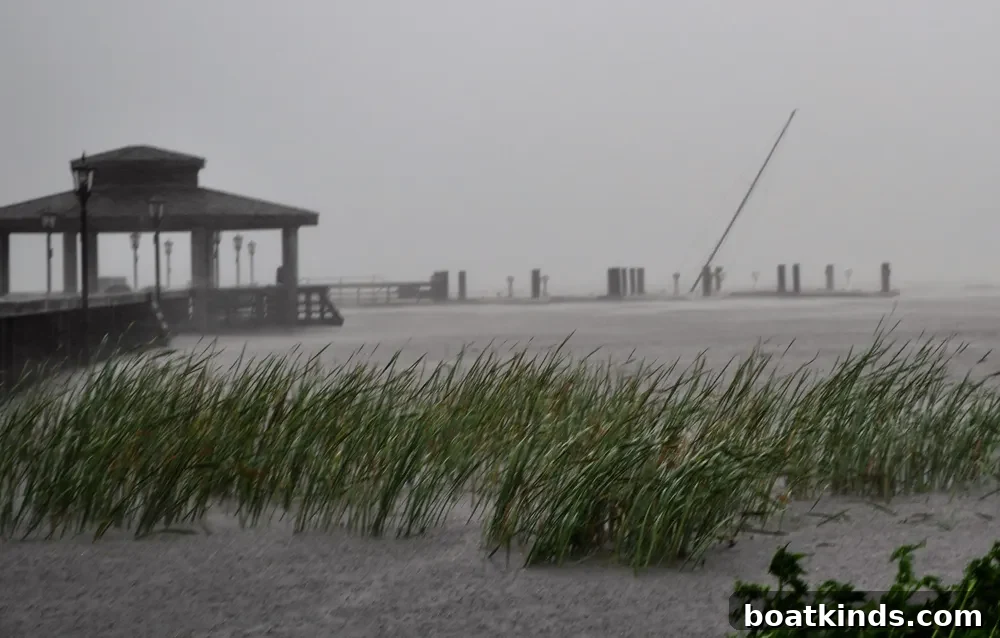
Fast forward to Oct. 7, when Hurricane Matthew pummeled the Atlantic Coast of Northeast Florida. Green Cove Springs endured sustained winds exceeding 60 mph; several boats broke free and some sank. Two of them were particularly notable: one was ours, and the other belonged to Mayor Pam Lewis and her husband.
The Lewises’ sailboat dragged anchor and sank against the city pier. Our small sailboat, which had no engine or fuel tank, also dragged anchor and sank a short distance beyond the pier into the river. From the start we never considered our boat abandoned. We marked her with large white fender balls to warn other boaters of the hazard.
Florida struggles with derelict vessels, but we intended to recover ours. The problem was timing: every salvor in a hundred-mile radius was mobilized to handle the insurance-funded recoveries of scores of boats sunk along the Intracoastal Waterway from St. Augustine to Daytona. Salvage resources were stretched thin.
On Oct. 17 the county sent a warning ordering us to remove the vessel within five days—an impossible deadline. My thinking at the time was simple: if the county could jail a hard-working mother fighting cancer for a nonviolent offense connected to a vessel she didn’t truly control, what chance did a couple of out-of-state owners have for patience?
Deputy Chris Castelli, a respected river officer, told us we’d get more time. We obtained a $1,400 quote from Monkey Fist Marine, a local salvor, but that company was engaged elsewhere with high-priority recoveries. Then Monkey Fist suffered a major setback: its workboat caught fire at Green Cove Springs Marina, injuring the owner and three others and destroying the boat. They were out of commission.
Friends and I tried to recover our boat ourselves, but we lacked the right equipment and horsepower. By December, Deputy Castelli’s tone hardened and he warned that we faced the same charges that had ensnared Tedesco. We explained Monkey Fist’s commitment to help, but Castelli pressed for a timetable.
Tough Talk, Practical Solutions
From a Gainesville hospital bed, still recovering from burns, the Monkey Fist owner promised our boat would be removed by the end of December. That wasn’t fast enough; Castelli insisted the vessel was a hazard to navigation and demanded removal within days. Eventually he gave us 10 days—but Monkey Fist couldn’t comply.
I contacted Tim Turbeville at Salter Marine in Green Cove. He agreed to help and followed through. Turbeville and his crew recovered our vessel and turned it over to Monkey Fist to be broken up for parts. Our thanks to them both—beers on us.
It turned out our boat, the Tattler, had settled among a cluster of pilings, the tops of which lay just below the waterline at low tide—likely remnants of an old steamship pier or shrimping platform. The fender balls we’d used to mark the sunken hull also warned boaters away from these hidden, potentially century-old hazards, so for a time the sunken Tattler actually made the river a little safer.
Accidents Waiting to Happen
I’ve navigated the St. Johns River for 15 years and knew roughly where other old pilings lay, including one only a couple hundred feet from the ramp used by the Sheriff’s Department. I told Deputy Castelli about these locations. He acknowledged that striking one of these pilings at moderate speed could be as devastating as a car crash—without seat belts or airbags.
Castelli maintained that such pilings are indicated on government charts, and therefore the county’s liability is limited. I pressed back: chart indications can be imprecise, and expecting every boater—especially someone on a jet ski—to consult a large NOAA chart while underway is unrealistic.
Castelli said he had suggested marking piling locations in the past, but county officials rejected the plan. Their concern was legal exposure: if the county marked some pilings as hazards but failed to mark others, it could conceivably face more liability than if it marked none at all. That logic puts institutional legal protection ahead of proactively reducing hazards for boaters.
What Should Be Done
This episode prompted me to write about how Clay County handles derelict boats and submerged hazards. The county’s strict enforcement—illustrated by the Tedesco case—prioritizes tidiness and legal defensibility. It should also prioritize public safety by taking steps to remove or clearly mark old pilings and other underwater hazards.
Clay County commissioners are set to consider repairs to the Shands Pier, another structure damaged by Hurricane Matthew. While they weigh that decision, they should also invest modestly in locating and removing submerged pilings that pose obvious risks. Doing so would protect the boating public and, in a small way, help make amends for the harsh treatment that harmed the Tedesco family.
Besides his role at the AIM Marine Group, Peter Swanson is a Coast Guard–licensed captain who has trained boaters and delivered vessels on both coasts. He served two years on the Harbor Commission for the town of Salisbury, Massachusetts, overseeing its portion of the Merrimack River.