
Blown Over: Testing Leopard Catamarans in Cape Town’s Stormy Seas
They don’t call it the Cape of Storms for nothing. I arrived in Cape Town, South Africa, with fellow nautical journalists Chris Dixon (Power & Motoryacht) and Jeff Moser (Passagemaker) to tour Robertson & Caine’s production facilities and sample the Leopard 40 PC, the company’s newest power catamaran. Unfortunately, the weather had other plans during our five-day visit.
Our first day began with clear skies and a guided tour of the production plants while the Leopard 40 PC underwent commissioning at a Cape Town marina.
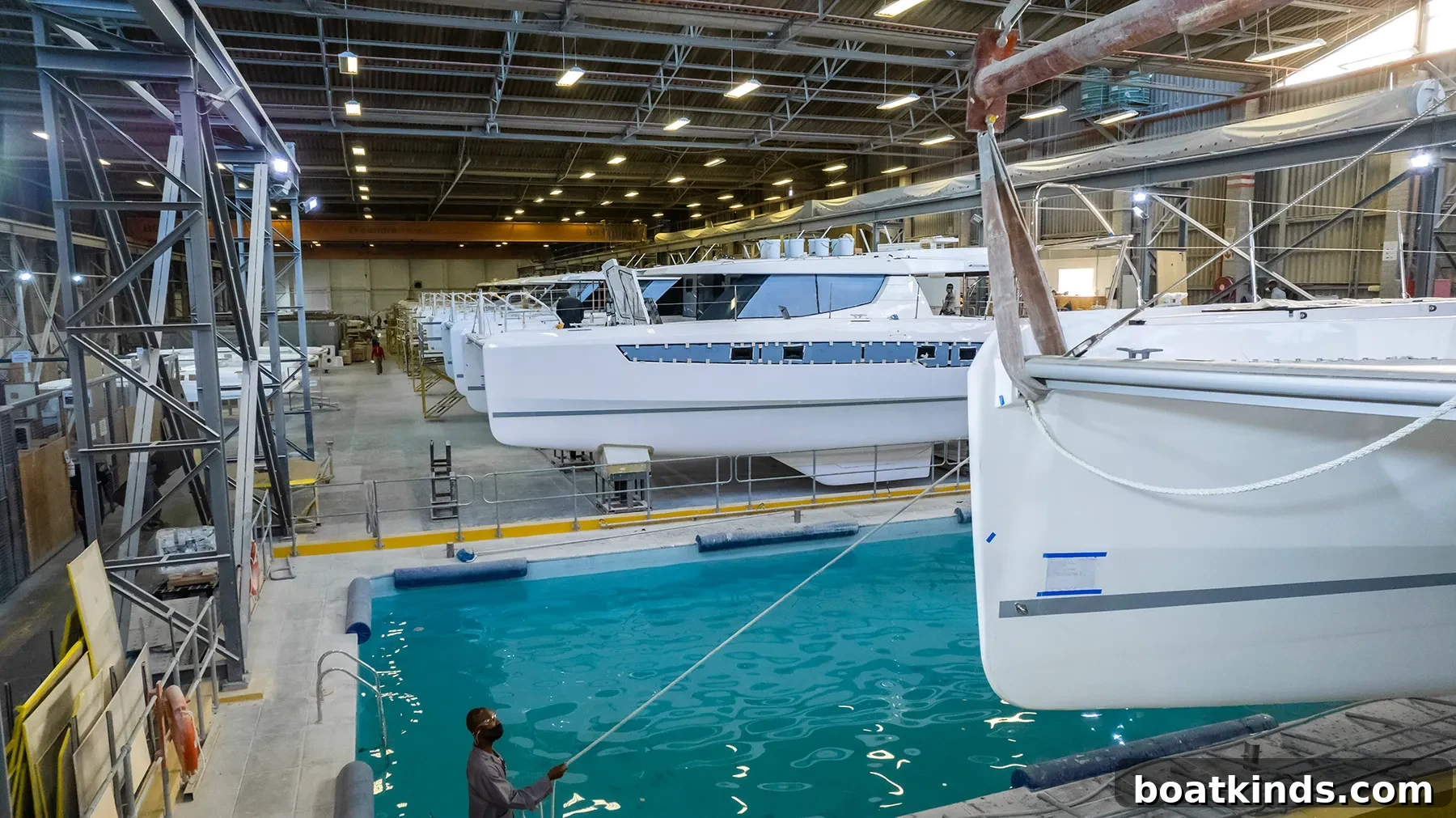
Founded in 1991, Robertson & Caine initially built custom racing yachts and production cruisers. Early racing successes like the 70-foot Maxi Broomstick and the Fast 42 Orion Express brought international attention. That exposure led The Moorings to partner with R&C in 1994 to produce sailing catamarans for its charter fleet. Since then, the yard has built more than 2,500 catamarans and now focuses exclusively on catamarans—sail and power—sold to The Moorings and private owners under the Leopard brand. Leopard was launched in 2000 in response to demand from people who wanted to own an R&C charter boat.
The yard’s builds are robust—hulls strong enough to take on the South Atlantic—and until roughly eight years ago many boats were delivered under their own power. Today, most are shipped by freighter. Leopard models share hulls with Moorings boats but offer larger owner staterooms, additional storage and owner-focused options like washers, watermakers and upgraded electronics. Leopard and Moorings boats are constructed side-by-side in the same factory; Leopards feature customizable layouts while Moorings boats maintain standardized specs for fleet uniformity.
Robertson & Caine currently produces six models for The Moorings and Leopard: three sailing catamarans—a 42-, 45- and 50-foot—and three powercats—the 53, 46 and 40 (the Leopard 40 PC was scheduled to debut at the 2023 Miami International Boat Show).
Across six factories, a predominantly non-white workforce of more than 2,000 moves newly molded hulls on carriages through assembly lines, fitting systems, decks and finishing touches. About 40 percent of production is powercats, and 55 percent of all cats are sold to private owners. In 2023 the yard planned to build more than 200 catamarans, most for export.
Inside the buildings the air was noticeably free of epoxy fumes. Rob Kamhoot explained that R&C uses vacuum bagging to produce hulls and decks, greatly reducing airborne epoxy. Many of the factory buildings are repurposed structures decades old, and with doors open and Cape Town’s brisk winds, natural ventilation keeps air moving through the shops.
Cape Town is one of the windiest cities in the world. The Cape Peninsula has a Mediterranean climate with dry summers, but winds can reach high speeds—sometimes up to 75 mph. Between October and March a persistent southeasterly, locally known as the Cape Doctor, sweeps across the peninsula.
“The wind is called the Cape Doctor because it blows all the pollution away,” Peter O’Hanlon, one of our hosts, said. The dry wind cools summer heat and can create the famous “tablecloth” over Table Mountain: condensed moisture that sometimes spills like tentacles over the mountain’s edges for a dramatic visual effect.
After our plant tour we had lunch on the Royal Cape Yacht Club terrace, then boarded a Moorings 464 intending to motor to Clifton, anchor off the beach and enjoy a sundowner at sunset. The plan unraveled quickly. As we left the harbor the tablecloth on Table Mountain was being shredded by strong gusts, and the Atlantic outside the harbor proved rough and unforgiving.
Bartolomeu Dias, the Portuguese navigator who first rounded the southern tip of Africa in 1488, called the region the Cape of Storms, later renamed the Cape of Good Hope. Early European sailors learned to respect the Cape’s challenging currents, treacherous shoals and sudden gales. Table Bay and False Bay offer natural harbors, but both are exposed to seasonal gales from different directions, making anchorage risky in the wrong conditions.
Offshore, a 15- to 20-knot northwesterly wind and 3- to 4-foot waves marched in from the Atlantic while an 8-foot swell pushed up from the Southern Ocean. The combination made seas sloppy and anchoring off Clifton impossible. The only viable shelter was the lee of Robben Island, the historic prison island where Nelson Mandela served much of his sentence.
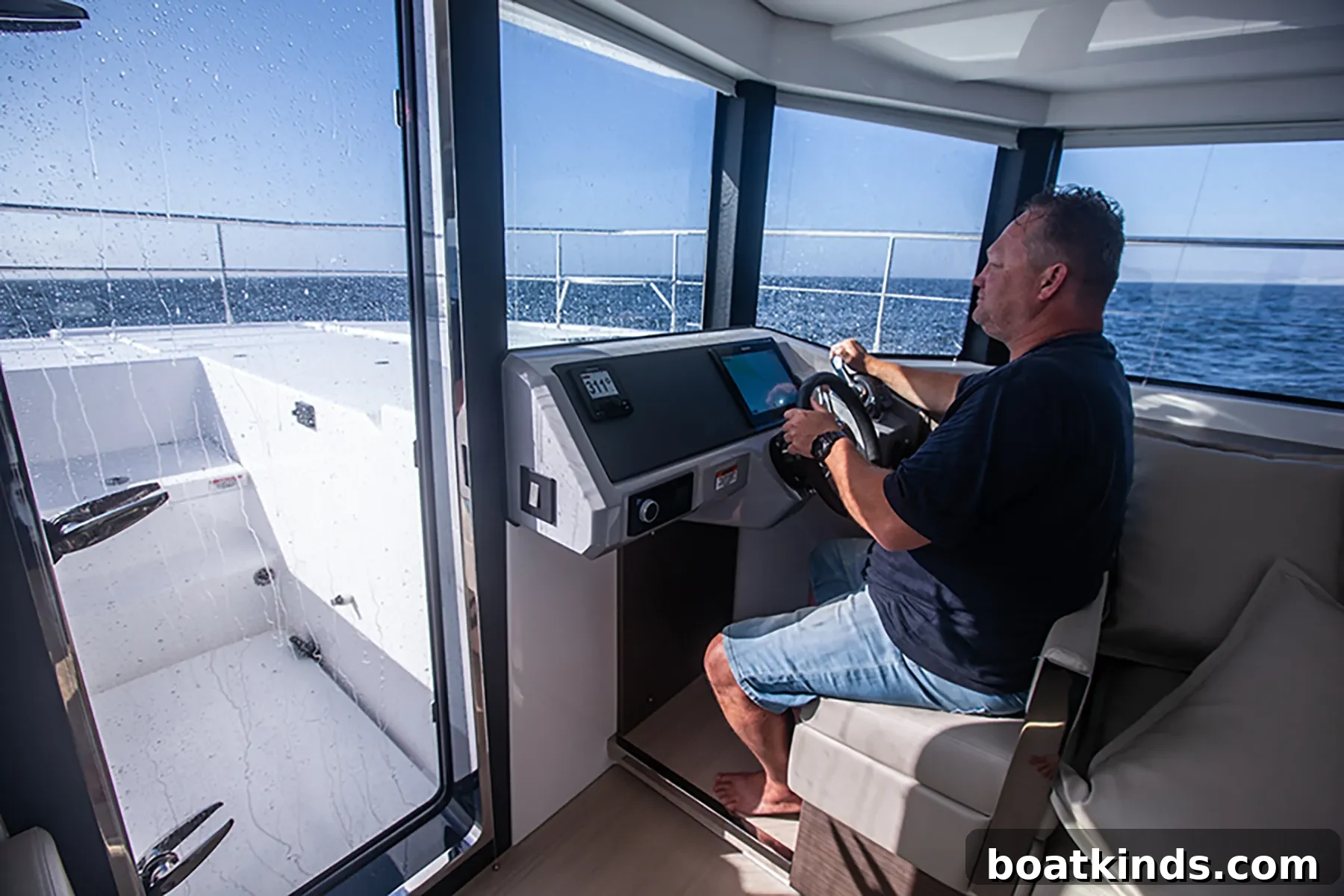
The six-mile ride to Robben Island into the oncoming sea was wet and rolling at 5 knots. Picking up speed to 18 knots smoothed the ride, but the flybridge still took several salty showers before Captain Martin Lourens and mate Theodore January retreated to the lower helm for comfort. The 464’s 24-foot beam steadied the motion and once in the island’s lee we finally had relief.
The downwind run back toward Cape Town felt calmer and almost idyllic as long lines of African sacred ibises drifted overhead. We anchored briefly off the Cape Town Stadium, built for the 2010 FIFA World Cup, but clouds swallowed the sunset and Table Mountain vanished behind a blanket of mist.
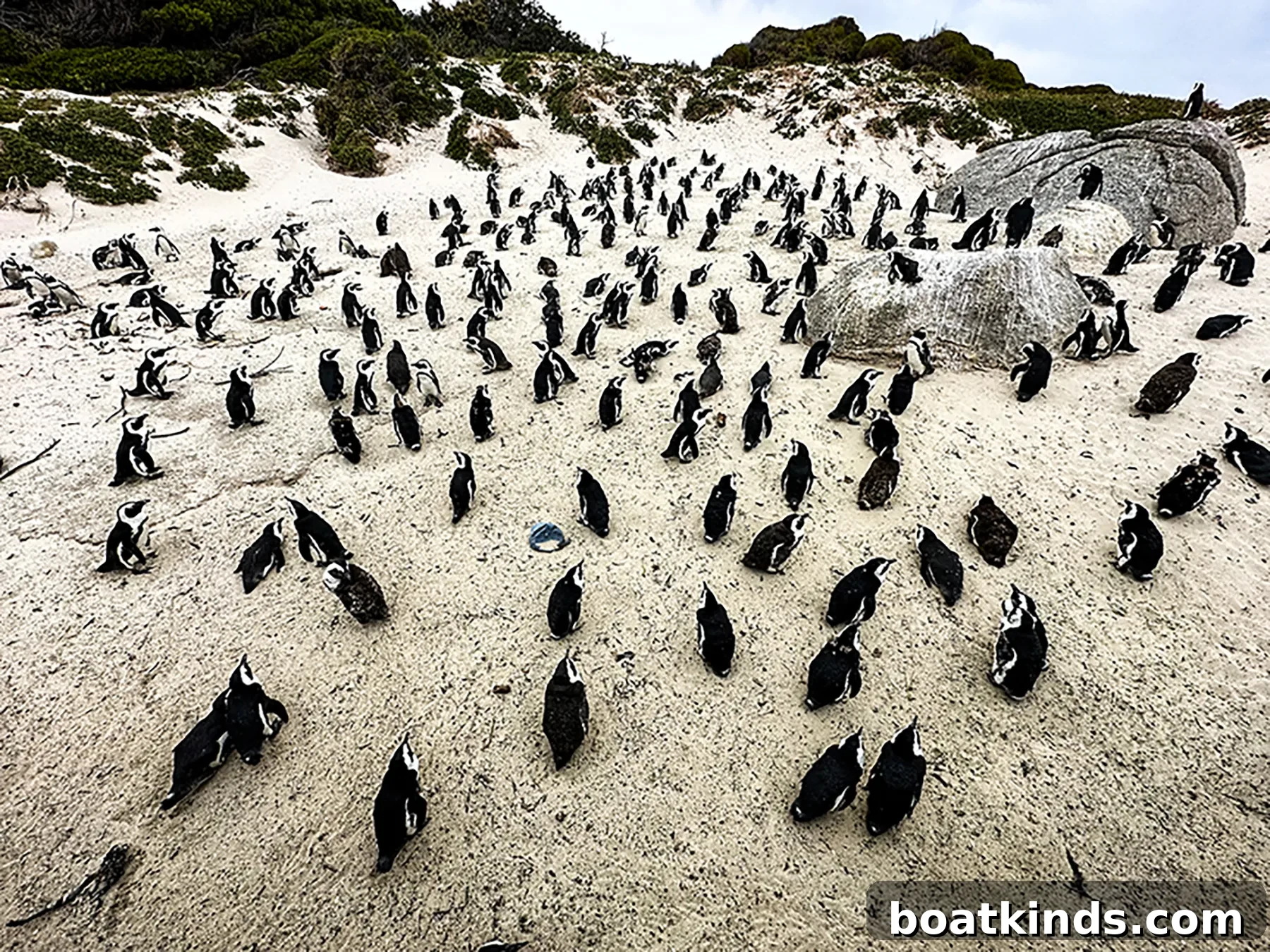
The next day the southeasterly had built into a fierce wind; only one of hundreds of sailboats dared to put to sea. White spray flew across waves like sheets, and at Chapman’s Peak my wife feared she might be blown off the cliffside as gusts whipped around the viewpoint overlooking Hout Bay. On False Bay the wind drove most African penguins ashore; those that did enter the surf turned their backs to the wind to protect themselves from blowing sand.
Day three brought a massive thunderstorm that turned day into night—two hours of lightning, howling winds and torrential rain that seeped into cottages. On day four a rare hailstorm pelted the Boland Mountains, prompting locals to marvel that conditions had gone so far beyond normal.
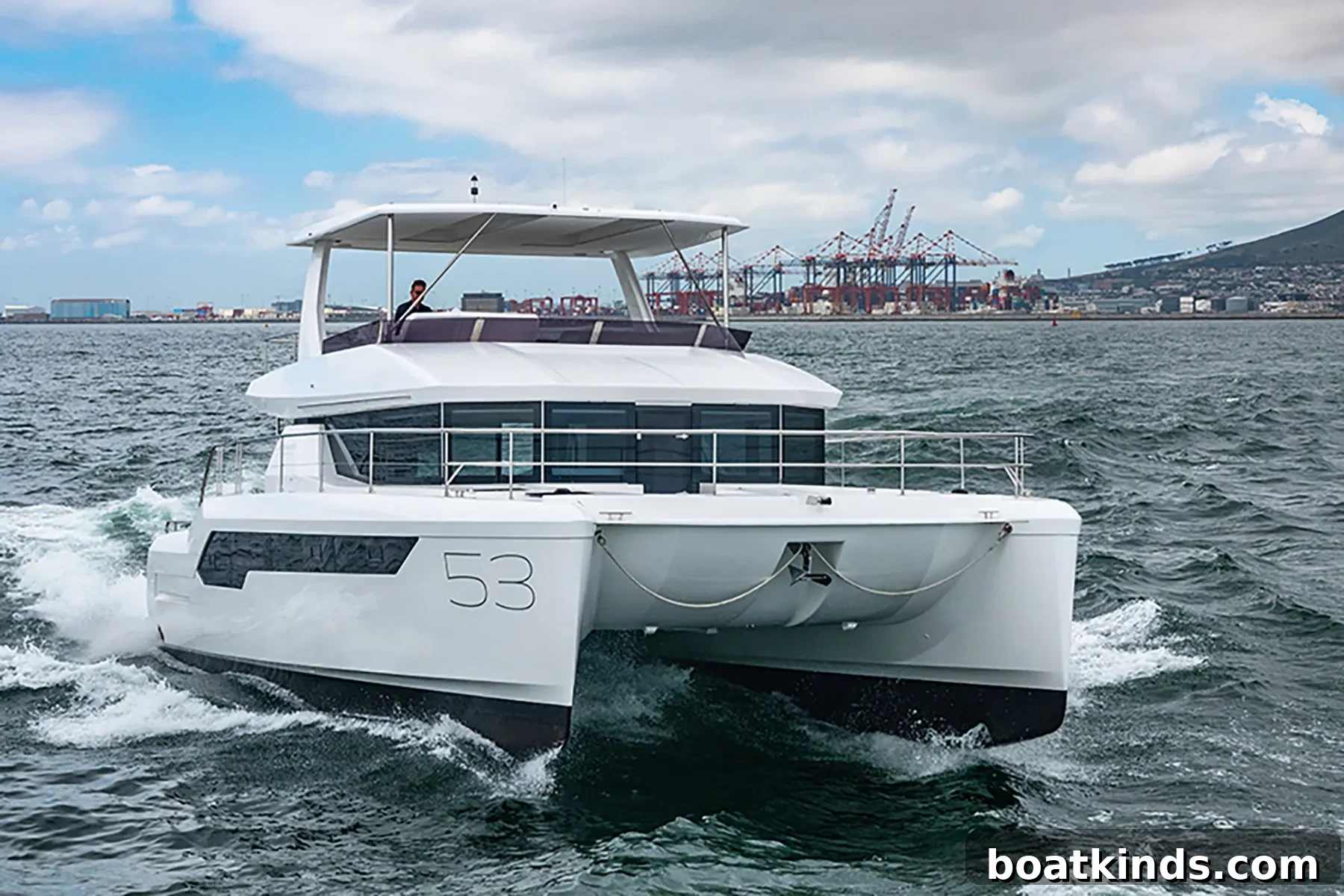
By the fifth day conditions moderated enough to go afloat, but the Leopard 40 PC commissioning was delayed by the earlier storms, and the boat couldn’t be tested in time to make its freighter departure for Miami. Instead we boarded a Leopard 53, whose sweeping starboard-hull master suite spanned nearly the entire length of the hull.
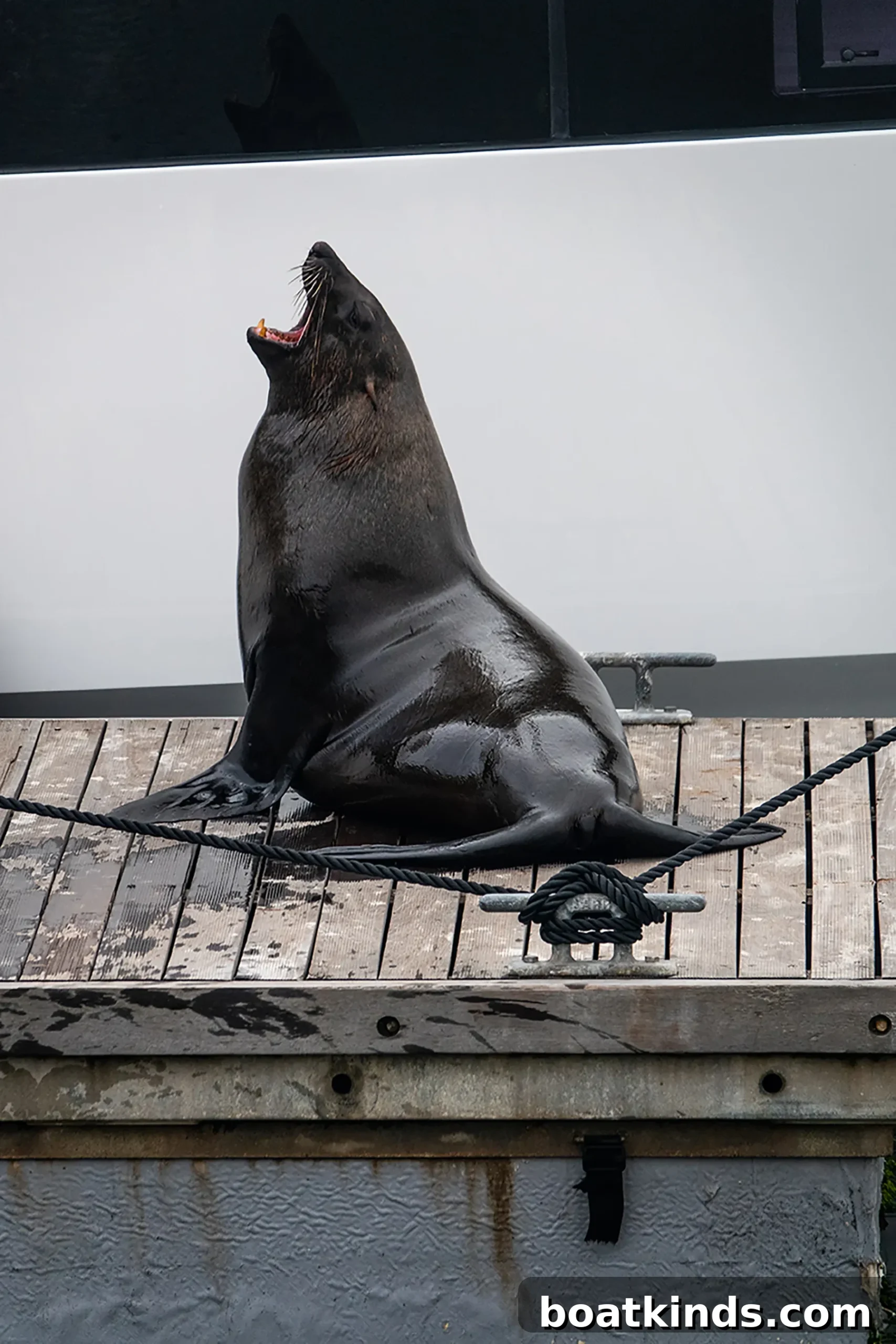
While waiting for two marina bridges to open, we watched Cape fur seals laze on the Victoria & Alfred Waterfront, groom with flippers and swim lazily. The seals and the harbor waters are part of the Table Mountain National Park Marine Protected Area. But the local marine ecosystem has shown stress: thousands of Cape fur seals died in 2021 and 2022, many malnourished. Scientists suspected domoic acid from algal blooms and warming waters, and changes in predator-prey dynamics—such as shifts in great white shark behavior—may also play a role.
Once offshore the sea was gentler, though still not flat. Low clouds obscured most of Table Mountain and Lion’s Head, and one mate called the conditions “nice”—a reminder that here, “nice” is relative. After running the Leopard 53 and the Moorings 464 along the peninsula toward Hout Bay, the skippers turned us back to port, and on the return we spotted a whale that rose to breathe, lifted its flukes, and dove away.
The Cape Peninsula is a striking place—beautiful and hypnotic—but its wind and storms can overwhelm. By the time most of our group departed, our host Rob sent a photo of a Royal Cape Yacht Club evening race: monohulls skimming across flat seas beneath a clear sky, Table Mountain and Signal Hill fully visible. “And now we have OK weather!!!” he wrote.
Even the Cape of Storms takes a day off now and then.
This article was originally published in the March 2023 issue.