
Wapama: The Last Wooden Steam Schooner of the Pacific Lumber Trade
Rescuing and restoring historic wooden ships keeps maritime heritage alive and connects modern audiences with the lives and labor of earlier generations. The story of the schooner Wapama—later renamed Tongass—is a vivid example: a hardworking steam schooner that served the West Coast lumber trade, carried passengers, weathered accidents, and ultimately became both a treasured museum piece and a lesson in the difficulty of preserving large wooden vessels.
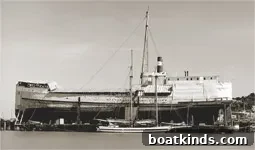
Built in Oregon in 1915 for the McCormick Lumber Co., Wapama was a 216-foot steam schooner designed to operate on the demanding West Coast routes between San Francisco and the Pacific Northwest. Capable of carrying more than one million board feet of lumber, she combined cargo capacity with passenger accommodations—fitted to carry 45 cabin passengers and another 15 in steerage. Her two masts supported cargo-handling booms that allowed her to load and unload lumber with a measure of independence at primitive or crowded lumber ports.
Steam schooners like Wapama occupied a distinctive niche in the Pacific lumber trade. Powered by steam engines while retaining the rigging and masts of traditional schooners, they were built to move heavy timber along a coastline with variable winds and limited handling facilities. Wapama’s service life, which extended over three decades, included regular trips from San Francisco to points north and south, and even as far as Alaska, reflecting the wide geographic span of the coastal lumber economy and the ship’s versatility.
Life at sea was often rugged. During her first year afloat, Wapama suffered two groundings without significant damage—common risks when navigating exposed coastlines and shifting bars. In 1917 she was involved in a collision with the steamer Doris and experienced another grounding a month later, again escaping serious harm. Her first major incident occurred in 1932 when her masts broke during loading operations, highlighting the stresses placed on wooden hulls and rigging in heavy commerce. The postwar years proved harsher: in 1947 she struck a Long Beach breakwater and began to leak, and later that year a collision with the steamer Reef Knot further damaged the vessel. Although the Coast Guard described her hull as being in fair condition, she was sold for scrap in 1948.
Wapama’s story did not end with the scrap-sale decision. Remarkably, she survived and in the 1950s became the centerpiece of the newly established San Francisco Maritime Museum. A four-year restoration followed, and in 1963 Wapama opened to the public as a museum ship, giving visitors a direct encounter with an important class of working wooden vessels and the engine-driven technology that powered them. The museum display included her triple-expansion steam engine and other machinery, which helped explain how these hybrid sailing-steam ships operated and how their crews worked ashore and afloat.
Despite the historical value and public interest, preserving a large wooden steam schooner proved expensive and technically difficult. Over the decades, a persistent leak worsened; maintenance costs mounted; and the specialized care these ships require was hard to sustain. In 1979 Wapama was placed on a barge for repairs that were repeatedly postponed because of funding constraints and logistical complications. She remained under a partial cover for years, exposed to weather and slow deterioration. Although designated a National Historic Landmark in 1985—recognition of her importance as the last of more than 200 wooden steam schooners that once served the Pacific lumber trade—efforts to save the hull ultimately fell short.
The dismantling process, carried out in stages, was completed in 2013. While the hull could not be preserved in its entirety, key artifacts survived: the ship’s triple-expansion engine and other significant pieces of machinery were retrieved and conserved for display at the San Francisco Maritime National Historic Park. These preserved elements allow visitors to trace the evolution of maritime technology and to appreciate the scale and labor of the coastal lumber industry even after the vessel itself was gone.
Wapama’s life—from active service to museum ship to dismantling—reflects both the cultural value and the practical challenges of maritime preservation. Her legacy endures through conserved machinery, museum interpretation, and the lessons learned about the resources required to maintain wooden ships for future generations. The schooner’s story remains a powerful reminder of the working waterfronts that shaped the West Coast and the ongoing need to support and plan for the long-term preservation of historic vessels.
October 2014 issue