
Chesapeake Bay Buyboats: Working Boats Turned Treasures
The Chesapeake Bay is renowned for its crabs, oysters, and the hardworking boats that have supported the region’s seafood industry for more than a century. Bugeyes, skipjacks, log canoes and deadrise workboats are all part of the Bay’s maritime heritage, and several key vessels are preserved and operated by the Chesapeake Bay Maritime Museum in St. Michaels, Maryland.
What Is a Buyboat?
Buyboats—also called deckboats, freight boats, packet boats or mast boats—stand out for their distinctive profile and sturdy hull design. Ranging from roughly 40 to 100 feet, these vessels were the delivery trucks of the Bay before bridges and highways connected many of the region’s communities. Designed for shallow water operations, buyboats hauled seafood, livestock, produce, building materials and passengers up and down rivers and creeks, and they played a vital role in the commercial life of the Chesapeake.
How Buyboats Supported Watermen
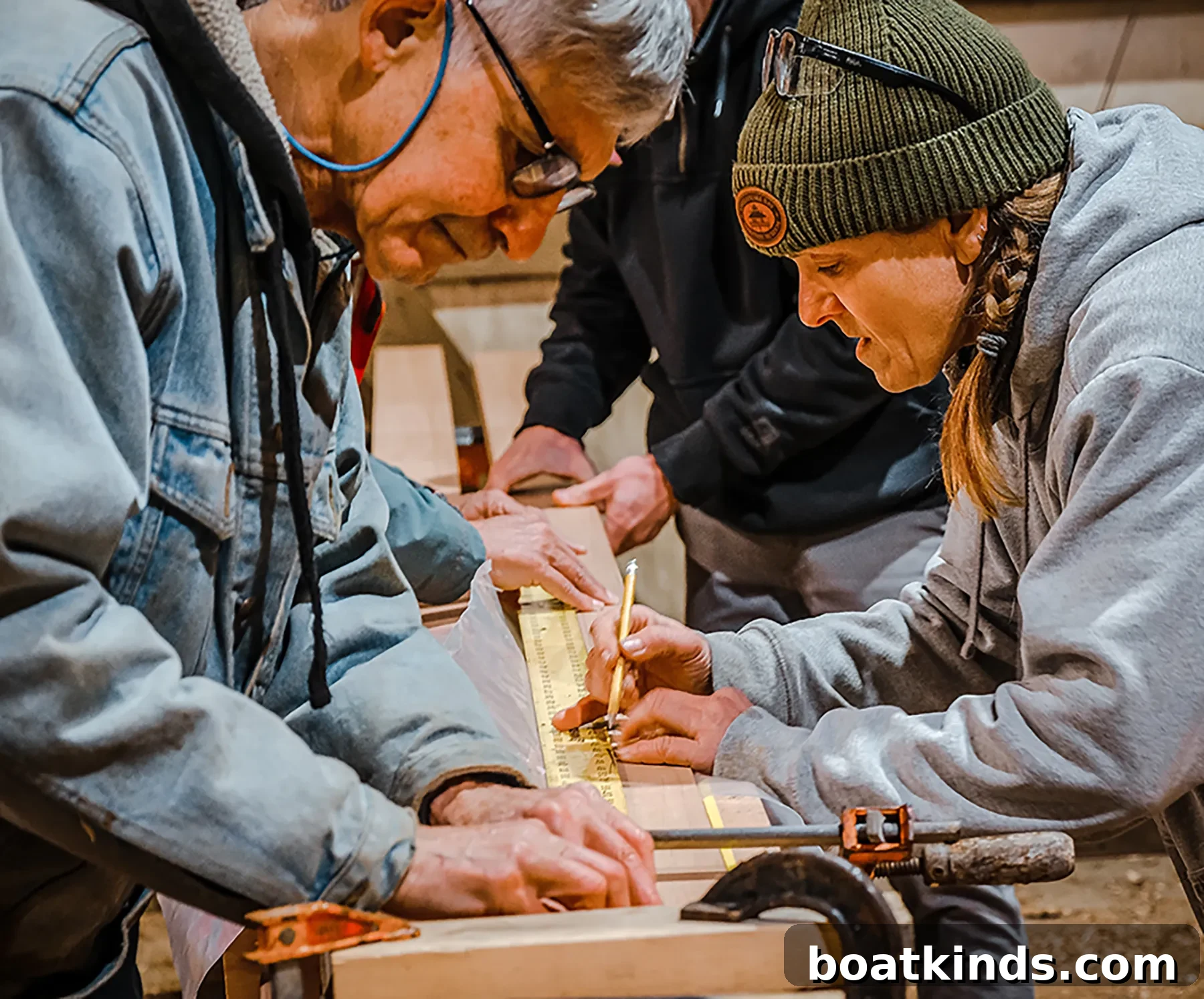
Buyboat captains often operated alongside fleets of workboats, buying crabs and oysters directly from watermen and then delivering the catch to local wharves and markets. This arrangement increased fishing ranges and productivity for watermen while creating a reliable wholesale channel for the seafood trade. In some regions, buyboats worked year-round; for example, in Virginia they were historically used for winter dredging of crabs, a demanding and sometimes hazardous task that kept these boats busy through harsh conditions.
Museum Fleet Highlights
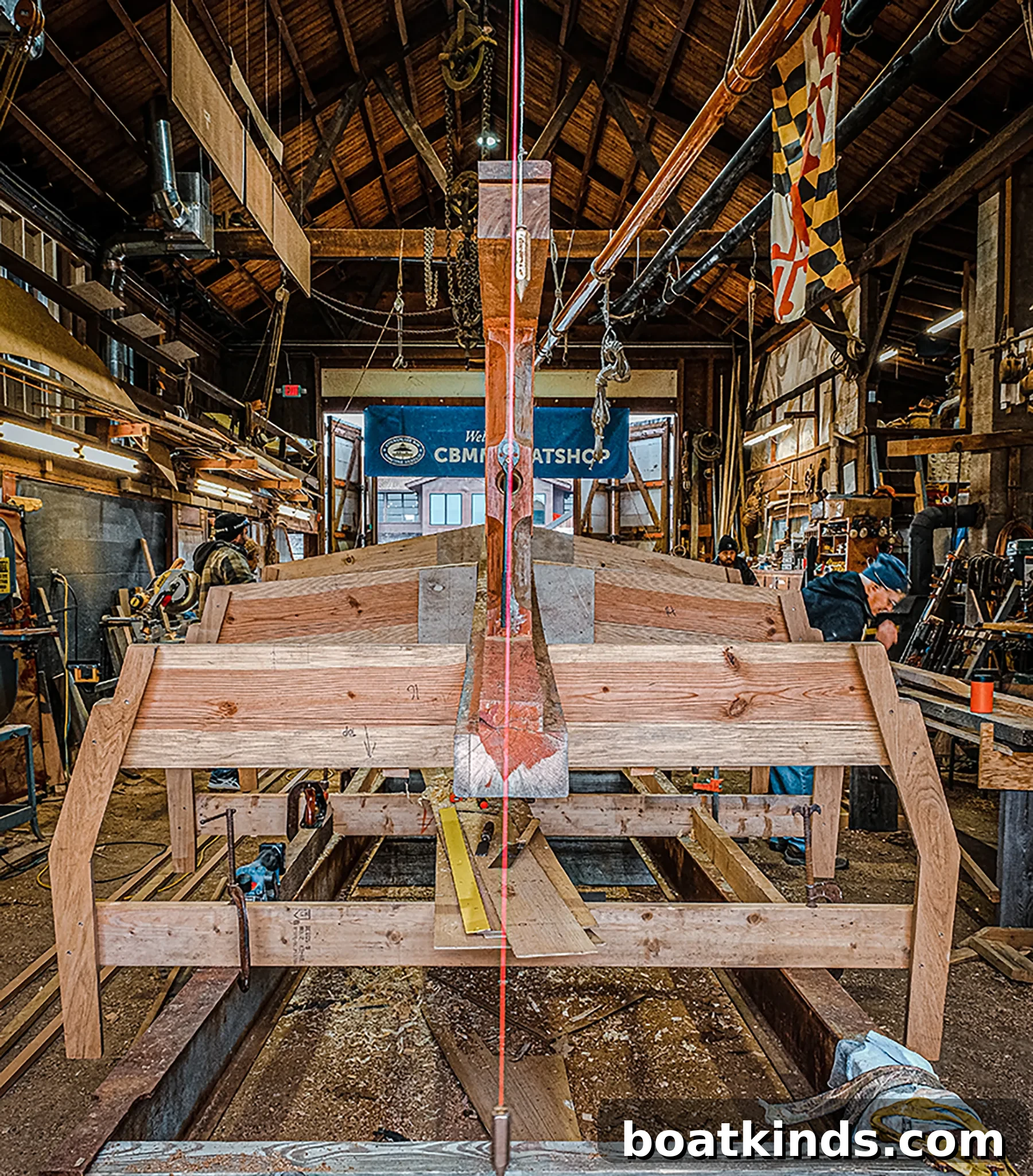
The Chesapeake Bay Maritime Museum maintains several remarkable buyboats. Each has its own story, and many have been restored for public education, cruises and special events. Their continued presence reflects both the craftsmanship of earlier generations and the dedication of preservationists who recognize the cultural and historic value of these workboats.
The museum’s 60-foot Winnie Estelle is a standout example. Built in 1920, she spent decades hauling seafood and produce throughout the Bay and later worked in the Caribbean as a charter and dive boat. After a long voyage back to Maryland, she was donated to the museum in 2014 and has since carried students and visitors on educational programs and day cruises. In 2022 she entered a comprehensive, stem-to-stern refit at the museum’s boatyard to ensure she remains seaworthy for years to come.
Choptank, built in 1938, is another buyboat receiving careful attention. Rebuilt in 2013, she is being upgraded to offer comfortable overnight cruises with new cabins, forecastle bunks for youth groups, an updated cabin sole and a full systems overhaul to meet Coast Guard certification. These upgrades aim to preserve the boat’s historic character while adapting her for modern passenger use.
Traditional Construction and Durable Designs
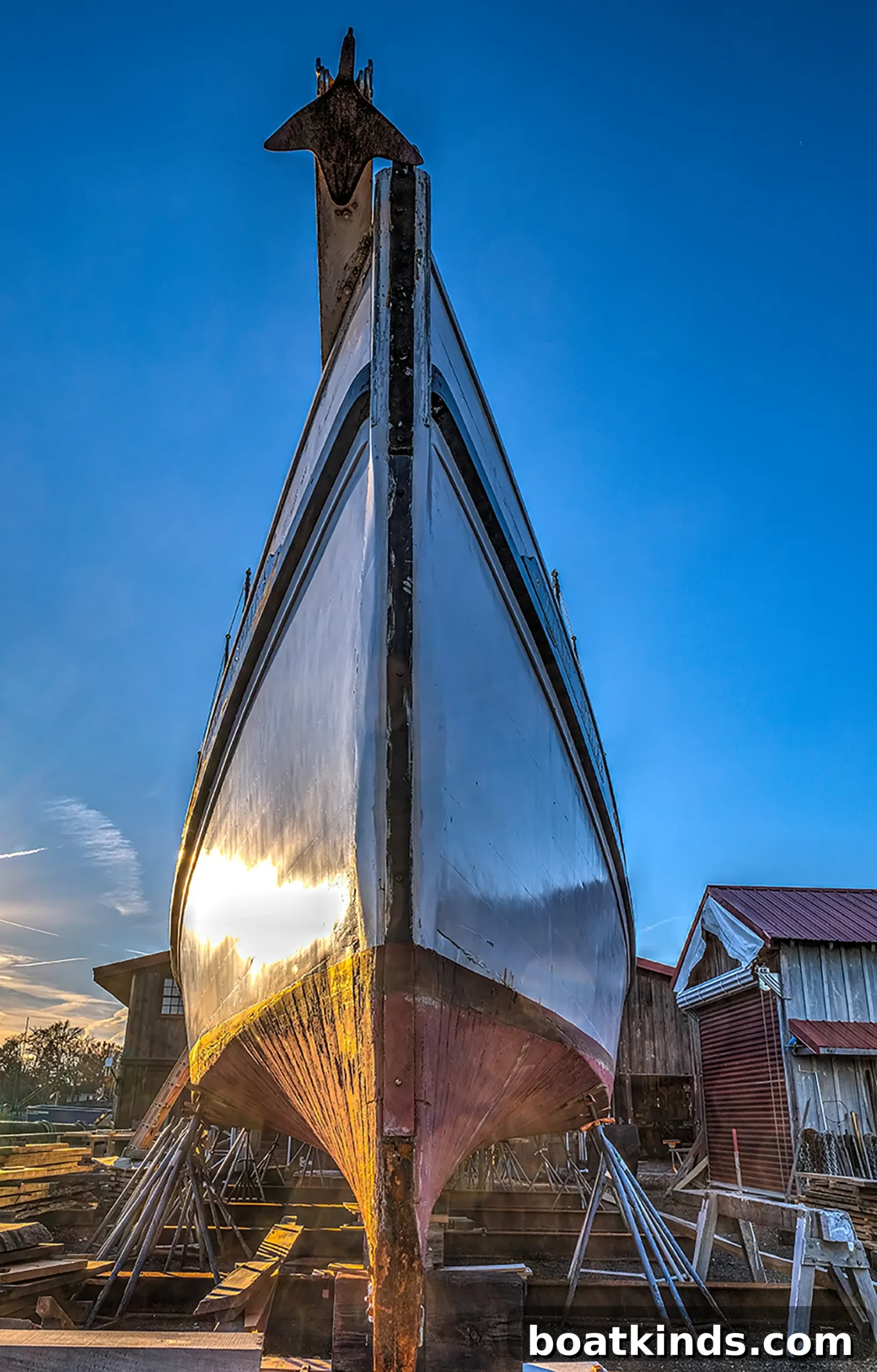
Many buyboats were constructed using a cross-plank bottom method, where short planks are fastened across the hull more perpendicular to the keel. This approach minimized the need for long steam-bent planks and suited the Chesapeake’s hard-chined hulls. Topsides were typically planked fore and aft, while some builders used an even older technique of hewing whole logs and fastening them fore and aft to form a single, strong hull.
The museum’s 51-foot Old Point, a crab dredger built in 1909 from seven large pine logs, demonstrates that rugged logged construction. Like many surviving buyboats, she remains a striking presence on the water and a testament to practical, long-lasting boatbuilding methods.
Designing a Modern, Smaller Buyboat: Mr. Dickie
While restoring large wooden buyboats requires major resources, smaller, thoughtfully designed boats can offer a practical alternative for private owners and for museums focused on education. Col. Grigg Mullen, Jr., a longtime museum volunteer, pursued just such an idea. Rather than purchase and restore another 60-foot boat, Mullen conceived a smaller, 36-foot buyboat that retains the character of the original craft while being more manageable for private use.
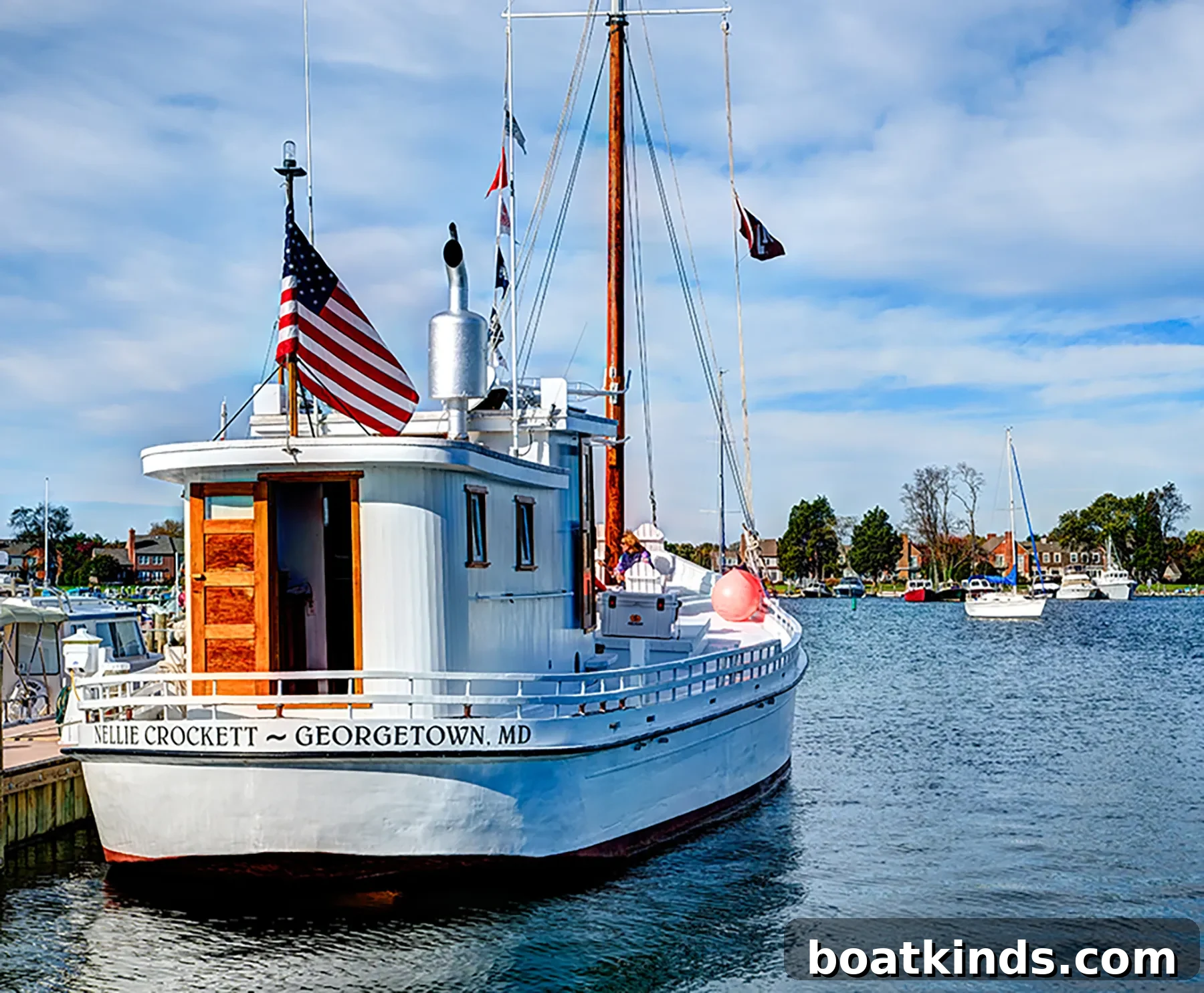
Mullen collaborated with naval architect Dave Wyman to adapt buyboat proportions for a shorter hull. Directly scaling down a 60-footer would have resulted in impractical features, so the design for Mr. Dickie includes key modifications: the pilothouse sole is lowered below the main deck to provide headroom while preserving the classic profile, and the 40-hp diesel sits forward of the pilothouse to reduce noise at the helm.
The name honors Dick Whaley and his wife Sue, neighbors of Mullen’s family on Maryland’s Eastern Shore whose influence left a lasting impression on him. Mullen’s earlier wooden boat, the 25-foot dovetail Miss Sue, helped spark the idea and the partnership that led to Mr. Dickie.
Mullen’s Craftsmanship and Community Work
Mullen brings a lifetime of woodworking and timber-framing experience to the museum project. As a past board member of the Timber Framers Guild and a founding member of the Timber Framing Engineering Council, he is committed to traditional building arts and to hands-on education. He has led numerous community projects and frequently volunteers in the museum boatyard, where his skills are welcomed by staff and apprentices.
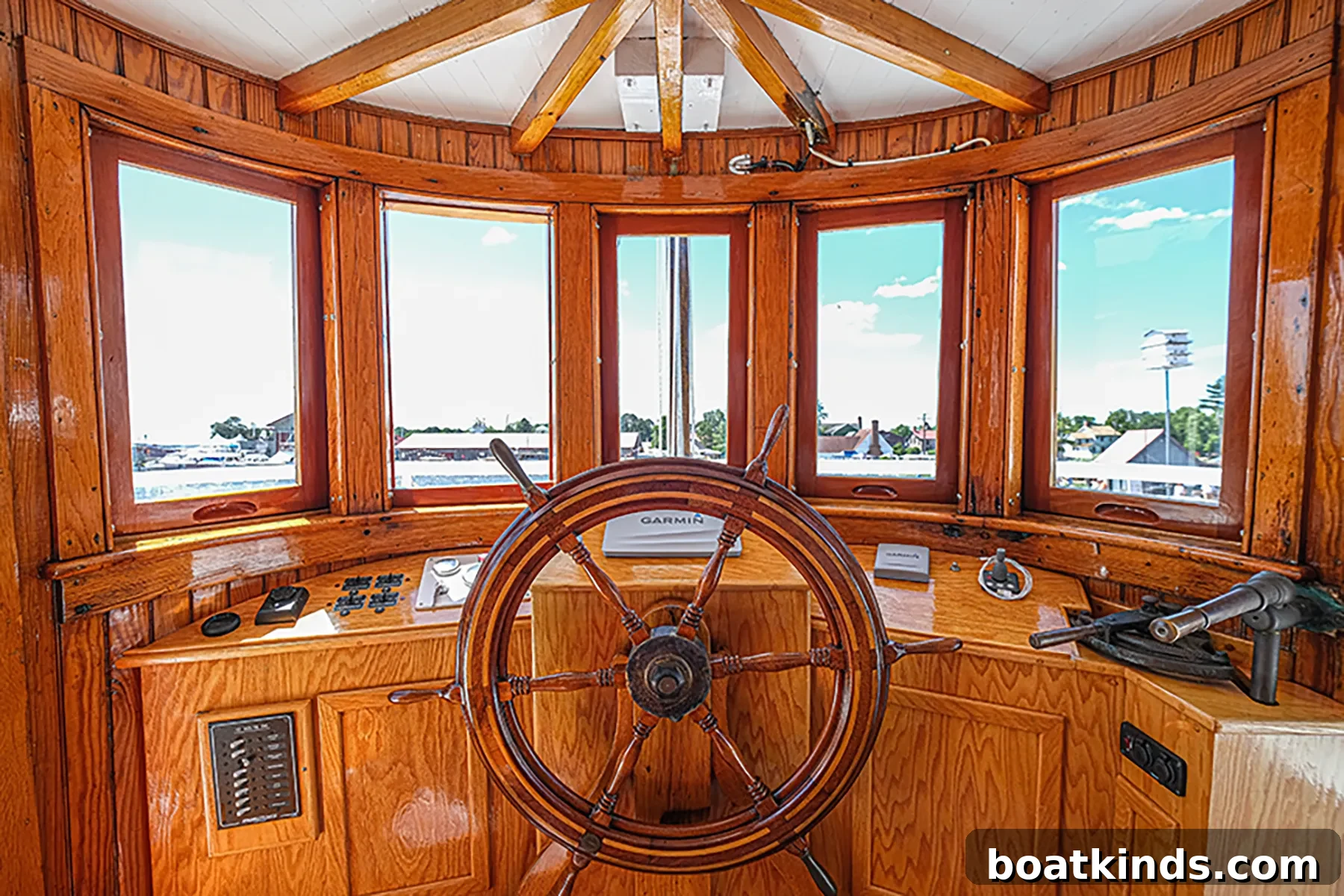
With Mr. Dickie nearing completion, the museum and its supporters hope the new boat will introduce more visitors—young and old—to the Chesapeake Bay’s maritime history. Whether restored to carry passengers on overnight cruises or built anew in the style of classic buyboats, these vessels keep alive a vital chapter of Bay culture and connect people with the region’s working-water heritage.
This article was originally published in the April 2023 issue.