
Leading the Next Generation: Capt. Todd Prestidge and Coast Guard Training at Cape May
Capt. Todd Prestidge, commanding officer of the U.S. Coast Guard Training Center in Cape May, New Jersey, oversees the entry point for the service’s enlisted workforce. Each year, his center welcomes roughly 100 new recruits each week for an intensive, eight-week basic training cycle. Operating about 40 weeks annually, the center will bring in approximately 3,750 recruits this year and expects that number to rise to near 4,000 next year. These figures place Coast Guard recruit intake in the context of other services: for comparison, the Army, Navy and Marine Corps accept substantially larger numbers, but Cape May remains the formative hub for the majority of Coast Guard enlisted personnel.
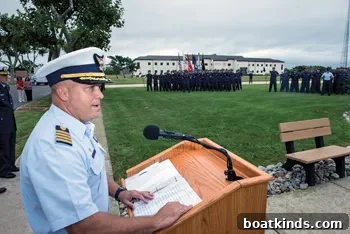
Boot camp at Cape May is where the service’s foundational values and standards are instilled. Prestidge emphasizes that recruits are being asked to serve something greater than themselves: “Service to nation supersedes self-interest,” he says. That message is central to every instruction and expectation enforced throughout the eight-week program. The goal is to create a disciplined, mission-focused force that adheres to consistent standards while being prepared for the demands of Coast Guard service.
Prestidge’s leadership has focused not only on standards and discipline but also on creating a professional, inclusive climate. During his 2 1/2 years running the training center, he has championed policies and practices that reinforce equal opportunity and human-rights protections for all recruits and staff. For those efforts, he received the Coast Guard’s 2015 Civil Rights Senior Leadership Award, recognizing his sustained commitment to fairness and a respectful command climate. A civilian awardee, Megan Allison, who directs judicial administration for the Coast Guard’s law judge program, received the same honor that year.
Central to Prestidge’s approach is a clear, stated expectation for the training environment: it must be free from discrimination, retaliation, harassment and intimidation on the basis of race, color, national origin, religion, disability, gender, sexual orientation, age or political affiliation. He makes several specific promises to recruits at the outset of their training. He tells them basic training will be difficult but worthwhile. He assures them the center will insist they meet Coast Guard standards while providing the support necessary to succeed. He promises safety and protection from assault or harassment, and he pledges fairness at every step. Those commitments are designed to build trust between leadership and the new trainees and to ensure the training environment is both rigorous and respectful.
The Coast Guard specifically highlighted Prestidge’s leadership in promoting recruit gender equality and fostering diversity among instructors. By ensuring a more inclusive instructor staff and emphasizing equal treatment during training, the command strives to maintain a positive and effective command climate—one that reflects the values of the service and prepares recruits to operate in diverse teams across missions.
A native of Texas with 26 years of Coast Guard service, Prestidge has observed institutional change over his career. He points to a recurring theme in military commentary about generational differences. Quoting a line that originally appeared in an Army manual from 1959—“Today’s youth is not like youth of the last generation”—he notes that concerns about youth, fitness and preparedness are not new. While past writings lamented shifts in lifestyle and physical standards, he believes those observations were relative to the era and do not necessarily mean decline.
Prestidge argues that modern recruits are different but not inferior. They have different experiences, communicate differently and often possess greater access to information. He sees that as an advantage: recruits ask thoughtful questions, demonstrate intelligence, and remain committed to public service. Rather than criticizing perceived softness, he advocates understanding what motivates today’s young people and using that understanding to train and mold them effectively. “I have immense faith in this generation coming down the pike,” he says, underscoring his confidence in their capability and dedication.
At its core, the training center’s mission is to shape recruits into capable Coast Guardsmen and -women who meet demanding standards while serving in an environment of respect and equal opportunity. Through firm expectations, clear promises to trainees, and a focus on inclusive leadership, Capt. Prestidge aims to leave a lasting, positive impression on those who begin their Coast Guard careers at Cape May.
This article originally appeared in the February 2016 issue.