
My First Collision and What the Rules of the Road Taught Me
I will never forget the first time I hit another boat. I was 19, sailing a Beetle Cat through the inner mooring field of Newport Harbor, trying to impress a girl who had come to visit. As a first-year apprentice at the IYRS School of Technology & Trades, I thought I knew enough to look confident. It was a warm June afternoon with blue skies and a 12–15 knot sea breeze. Sailing close-hauled, I found the boat unexpectedly set hard to leeward. Trying to correct the course, I panicked and tacked without enough headway. The boat went into irons and, with no steerage, the bow of my Beetle Cat struck the stern of a moored 40-foot sailboat, cracking the V-shaped bumkin that extended aft.
I felt crushed and embarrassed. Far from impressing anyone, I now had to admit the mistake. I returned to IYRS and called Clark, the program director, who came down on a launch to inspect the damage. He knew the boat’s owner and assured me IYRS would cover the repair. The owner was surprisingly gracious—he had already built a replacement bumkin and said it wasn’t a problem to install it.
On the ride back to campus, Clark asked why I looked so glum. I mumbled that I couldn’t believe I had hit the boat. He shrugged and chuckled, “Everyone hits a boat eventually. Lucky for you it was a small one.” His calm perspective helped, and as he inspected the Beetle Cat we discovered the real culprit: the centerboard trunk had swollen, keeping the centerboard from lowering more than a quarter of the way. That explained why the boat was being set so hard when I tried to sail upwind.
That collision humbled me in the same way a broken bone or a detention might. That summer I launched my career as a professional mariner, working as a freelance deckhand on charter boats in Newport. Over the next two years I earned permanent positions and advanced to mate. My responsibilities grew and so did my understanding of navigation and the Rules of the Road—the internationally adopted guidelines that govern safe maritime operation. By age 25 I had earned a 100-ton USCG captain’s license with a sailing endorsement and had taken formal training to prepare for the exam.
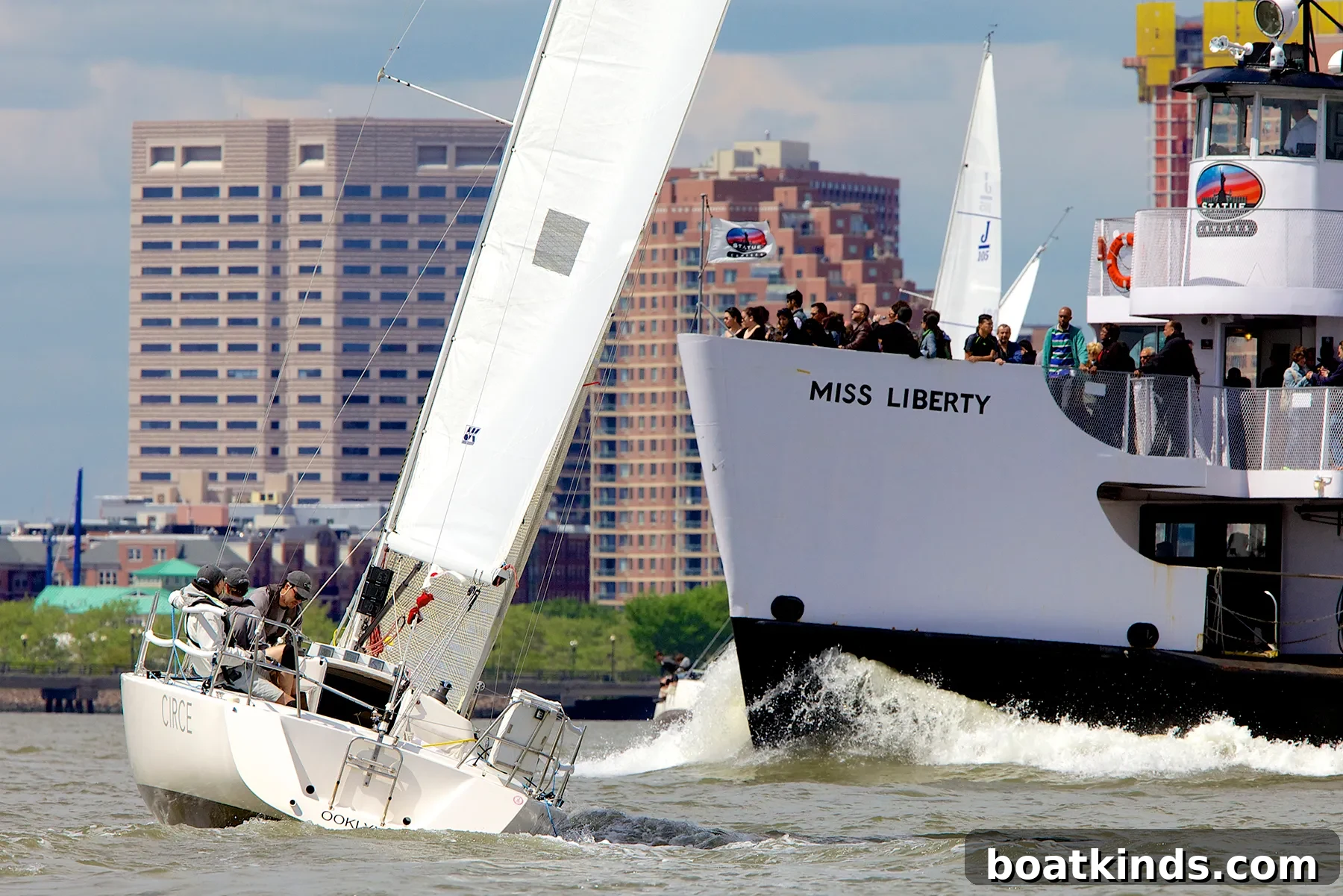
When I first sailed for recreation I heard an oversimplified rule: vessels under sail always have the right of way. That’s not correct. A sailing vessel generally has priority over a power-driven vessel, but that right is not absolute. Vessels engaged in fishing, vessels constrained by draft, vessels restricted in their ability to maneuver, law enforcement, towing operations, and vessels not under command take precedence in certain situations. One practical guideline I was taught—often called the rule of tonnage—is to steer clear of anything larger than your boat when crossing. It’s not a formal rule of the road, but it’s a useful safety mindset.
The Rules of the Road themselves are well written and accessible. There are 38 rules divided into six parts and five annexes. Part A contains definitions and vessel type classifications; a vessel “under sail” is defined as operating under sail alone, so a boat with sails set and its engine running is treated as a power-driven vessel. Part B covers steering and sailing rules, explaining give-way and stand-on responsibilities and what actions each vessel should take. Rule 18 provides a pecking order for right of way—starting with vessels not under command (NUC), followed by vessels restricted in their ability to maneuver (RAM), constrained by draft (CBD), fishing vessels, sailing vessels, and finally power-driven vessels.
Understanding these rules changed how I approached every situation on the water. Over two decades I’ve been involved in a few minor collisions—mostly on the racecourse and never while I was at the wheel—and I have witnessed many avoidable accidents. In my experience, the vast majority of collisions result from inattention, misjudgment, or a failure to take early, decisive action. Regardless of whether I have the legal right of way, I always prepare a practical plan to avoid a collision. Two right-of-way claims don’t stop a crash; preventive action does.
Practical collision-avoidance habits I recommend: maintain steerage and keep your boat in good mechanical condition, scan for traffic early, anticipate the actions of larger or restricted vessels, give way early rather than late, communicate intentions clearly when safe to do so, and practice conservative seamanship when visibility or control is compromised. Treat the rules as the baseline and safety as the priority.
If you want to study the regulations, look up the Amalgamated International and U.S. Inland Navigation Rules through official U.S. Coast Guard resources and other authoritative publications. Learning the rules and practicing collision-avoidance maneuvers builds confidence and reduces risk—two qualities every mariner should value.
This article was originally published in the March 2023 issue.