
Center console boats have steadily grown in size and popularity since Boston Whaler introduced what is widely regarded as the first production model. The 16-foot Nauset, launched in 1960 and designed by company founder Dick Fisher and chief designer Bob Dougherty, was essentially an oversized dinghy fitted with a hand-built mahogany console and center bench. Its defining feature was the ability to walk the deck from bow to stern on both sides of the console—simple, revolutionary, and the foundation for an entire category of boats.
Early center consoles were straightforward fishing platforms: uncluttered decks offering 360-degree access, powered by economical outboards that made them affordable to buy, operate, and maintain. They were practical workboats for anglers. Over time the design evolved dramatically. Advances in propulsion, electronics, materials, and onboard amenities transformed the center console into a versatile platform for fishing, family cruising, and offshore performance. One of the early innovators in larger center consoles was Mark Hauptner’s Ocean Master 31 in 1974, a rare exception until the 1990s when production boats over 30 feet became more common. Since then the market shifted, and today the 30- to 40-foot range is especially active.
BOSTON WHALER 360 OUTRAGE
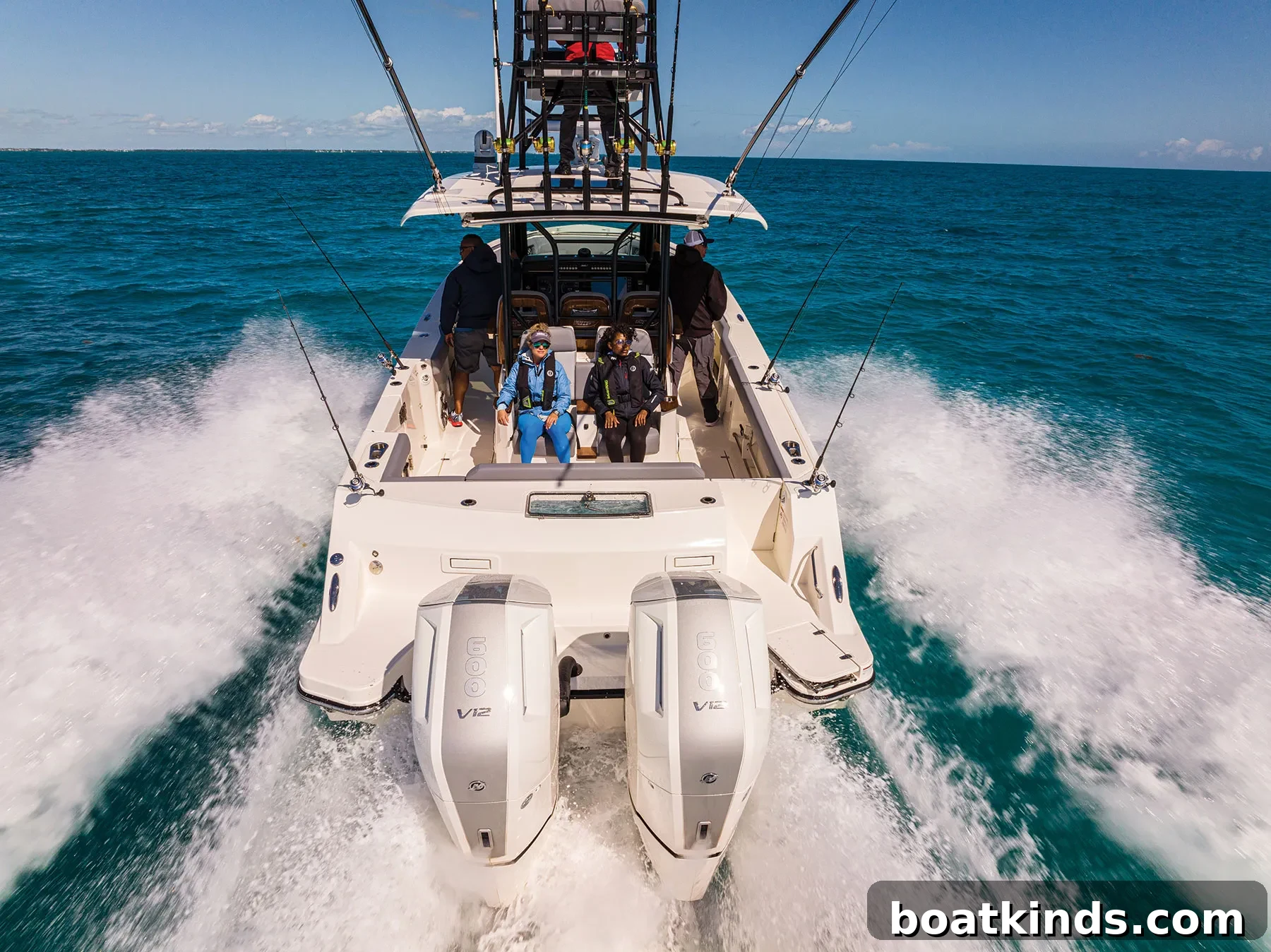
Although Boston Whaler originated the center console concept, its serious entry into the larger center console segment came with the 27-foot Outrage in 2001 after Brunswick Corporation acquired the brand. The Outrage featured a 24-degree hull and more comfort-oriented options, signaling a move beyond pure fishing utility. Customer demand led Whaler to expand the Outrage line to models from 23 to 42 feet, with several models over 30 feet—a clear reflection of where buyers are focused.
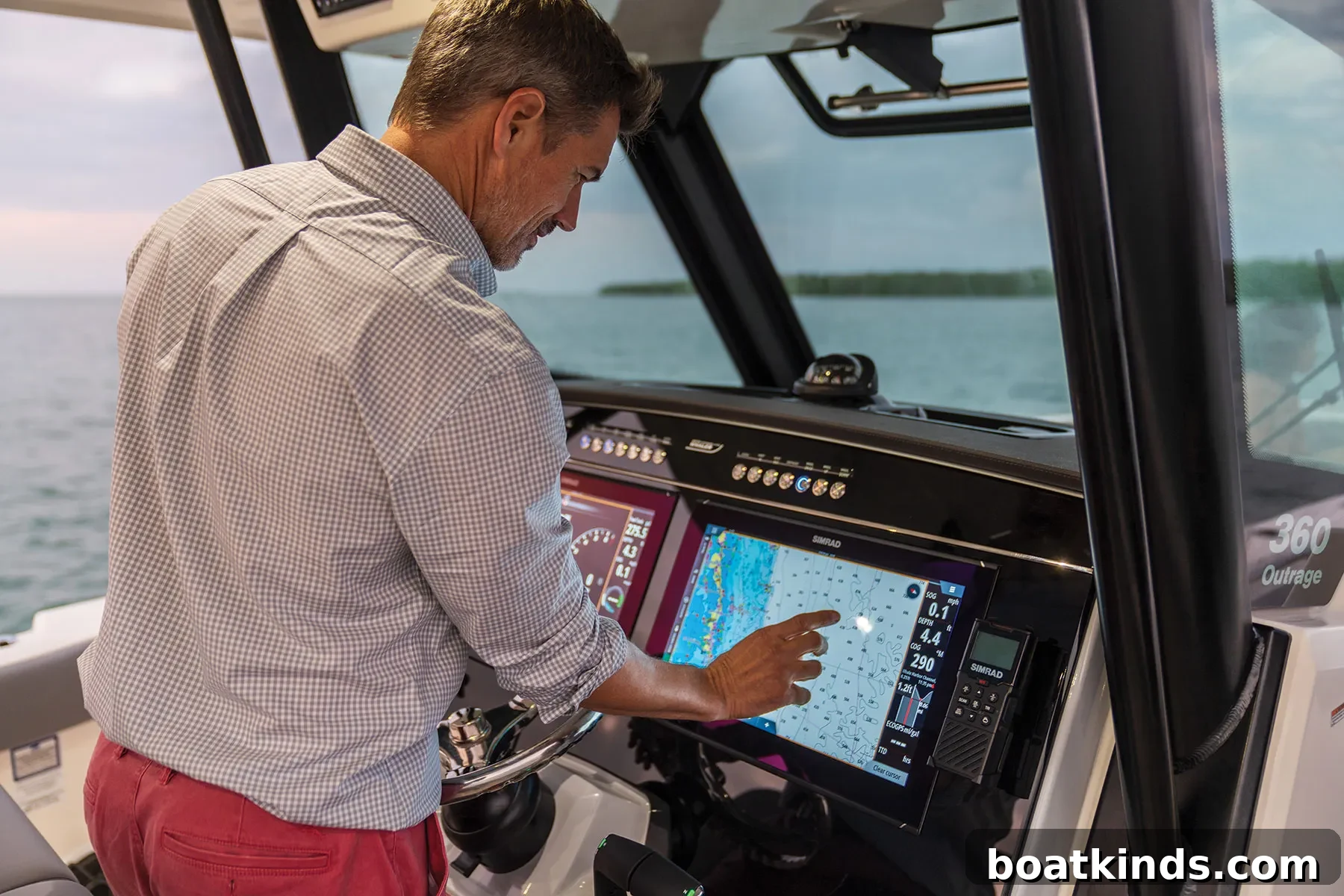
The new 360 Outrage, introduced in February, represents a ground-up redesign that integrates advanced technologies while emphasizing a comfortable, user-friendly experience. The 360’s clean lines and thoughtful layout allow owners to customize amenities from fishing-focused to exceptionally plush. Practical design touches include a centerline step and hardtop hatch for tower access, along with the brand’s “point of storage” approach that places lockers and compartments where they’re most useful. The cabin offers improved sleeping arrangements and more organized storage.
One standout is the Fathom inverter-based electrical system, which uses lithium-ion batteries to power the boat for extended periods without shore power or a generator. Combined with digital switching and a simplified graphical interface accessible through Simrad multifunction displays, the system lets operators monitor and control electrical systems seamlessly—an example of how modern center consoles are making complex systems intuitive and accessible.
SOLACE 32 CS
Solace is a relatively new builder—the company’s first model debuted in 2019—but it has deep ties to center console history. CEO Stephen Dougherty is the son of Bob Dougherty, one of the designers behind the original Boston Whaler Nauset. That lineage informs Solace’s approach to blending tradition with modern engineering.
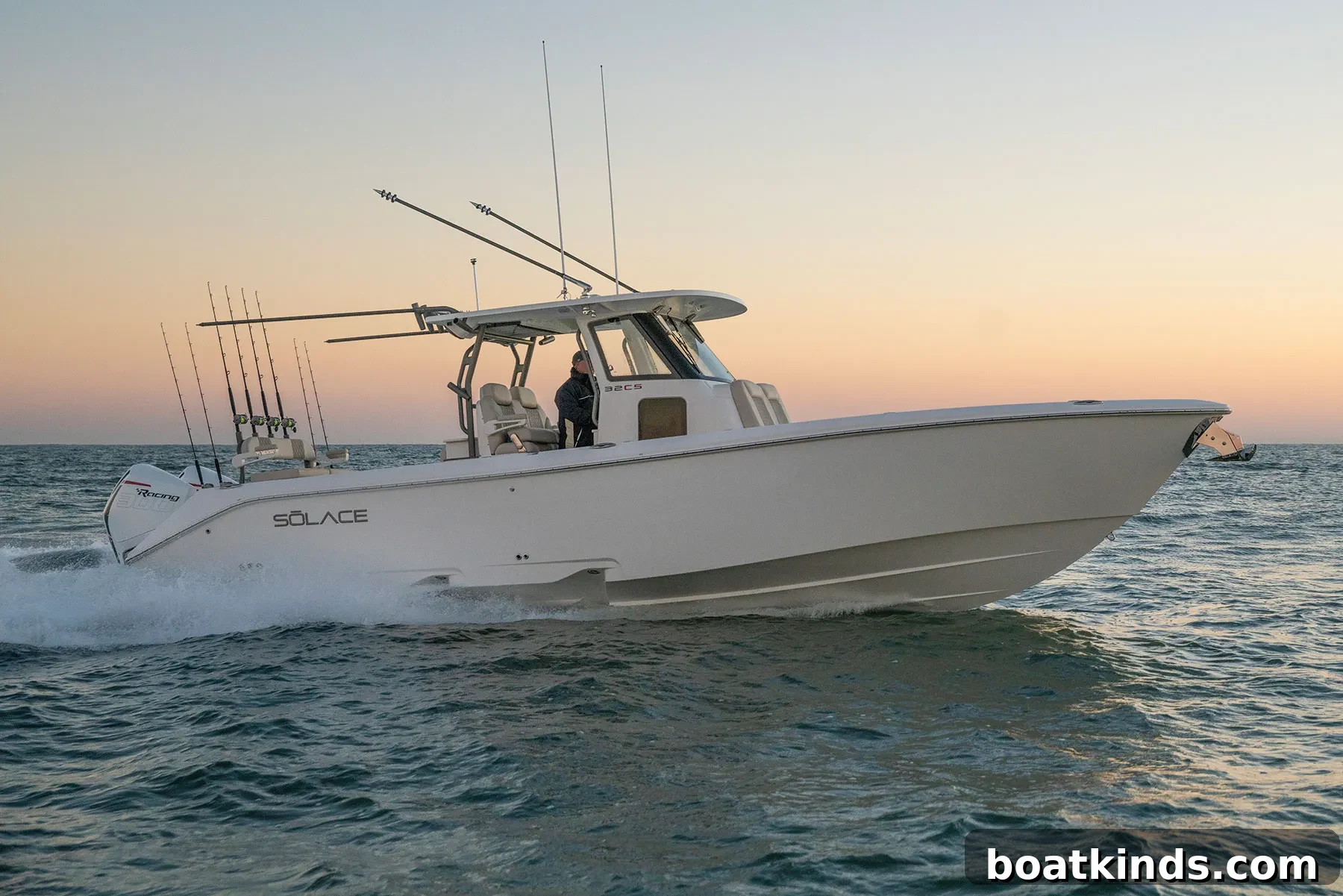
Solace’s president, Todd Albrecht, points out that the popularity of mid-30-foot center consoles reflects shifting owner preferences. Some buyers are moving up from smaller boats, while others are downsizing from larger yachts because newer center consoles under 40 feet now deliver the speed, range, and comfort needed for extended trips, including Bahamas runs. These boats also fit more easily in smaller slips, can be lifted or racked, and are cheaper to operate and maintain.
The Solace 32 CS takes advantage of high-horsepower outboards from manufacturers such as Yamaha and Mercury, enabling excellent performance with twin-engine setups instead of triples or quads. With twin 300-hp outboards, the 32 CS can reach about 60 mph. Its twin-step hull with chine rails enhances tracking and reduces slip in hard turns while deflecting spray away from passengers. The hull is built using high-tech composites—resin-infused Innerga hybrid carbon/glass cloth—to provide a strong, lighter structure that improves performance and fuel efficiency.
INVINCIBLE 33 CATAMARAN
Invincible Boats entered the market in 2007 and quickly pushed innovation with performance-oriented hulls. The company offers a strong lineup in the 30- to 40-foot center console segment, including both monohulls and power catamarans. According to Bill Cordes, Invincible’s vice president of sales, the availability of powerful outboards has made larger, high-speed center consoles practical and popular.
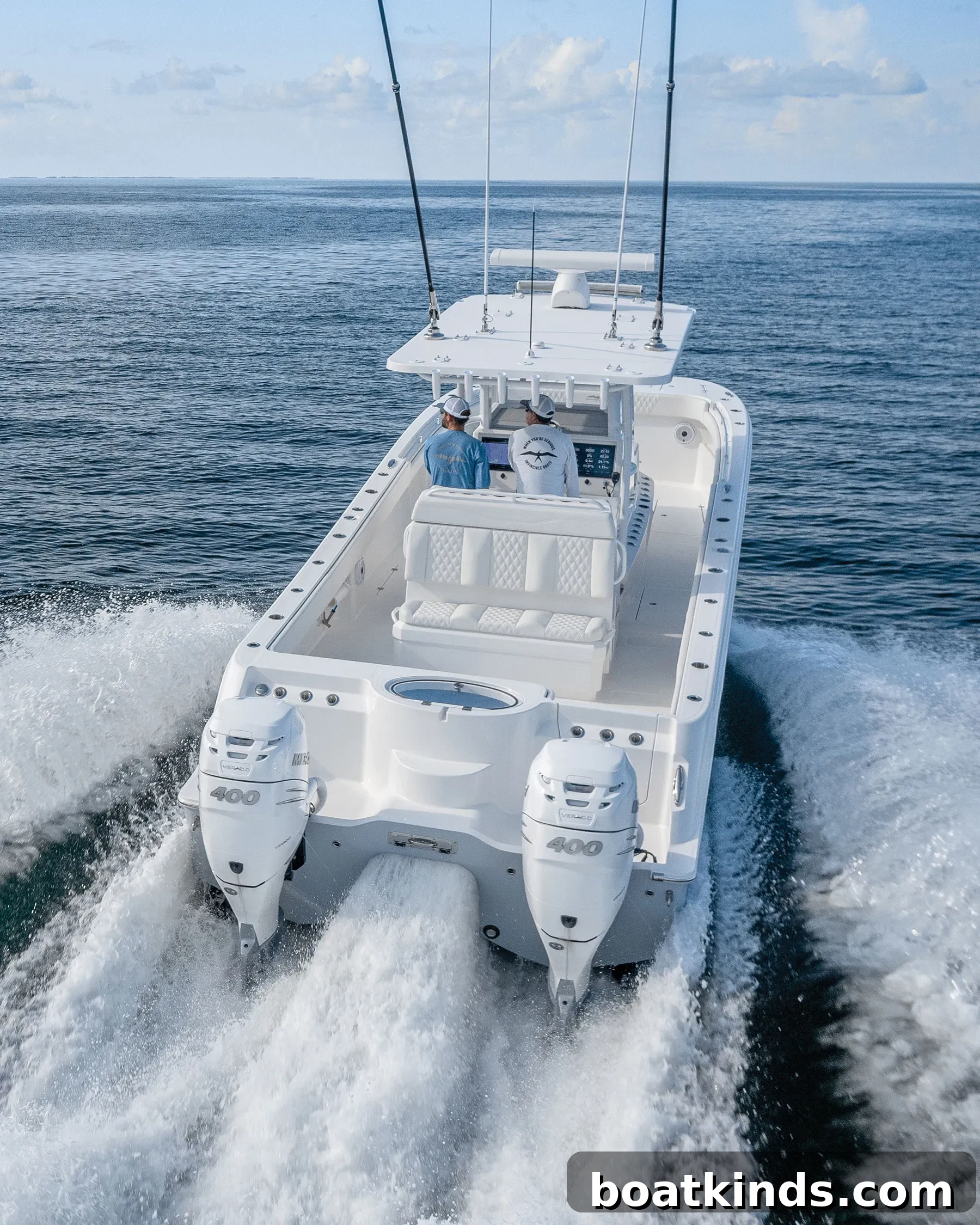
The Invincible 33 Catamaran is designed specifically for offshore fishing and showcases why power cats are gaining traction. Its Morrelli & Melvin semi-asymmetric hull reduces some of the handling quirks traditionally associated with power cats, delivering comfortable, confidence-inspiring performance even for less experienced operators. The catamaran design also carries a broad beam forward, offering more usable deck space than a comparable monohull.
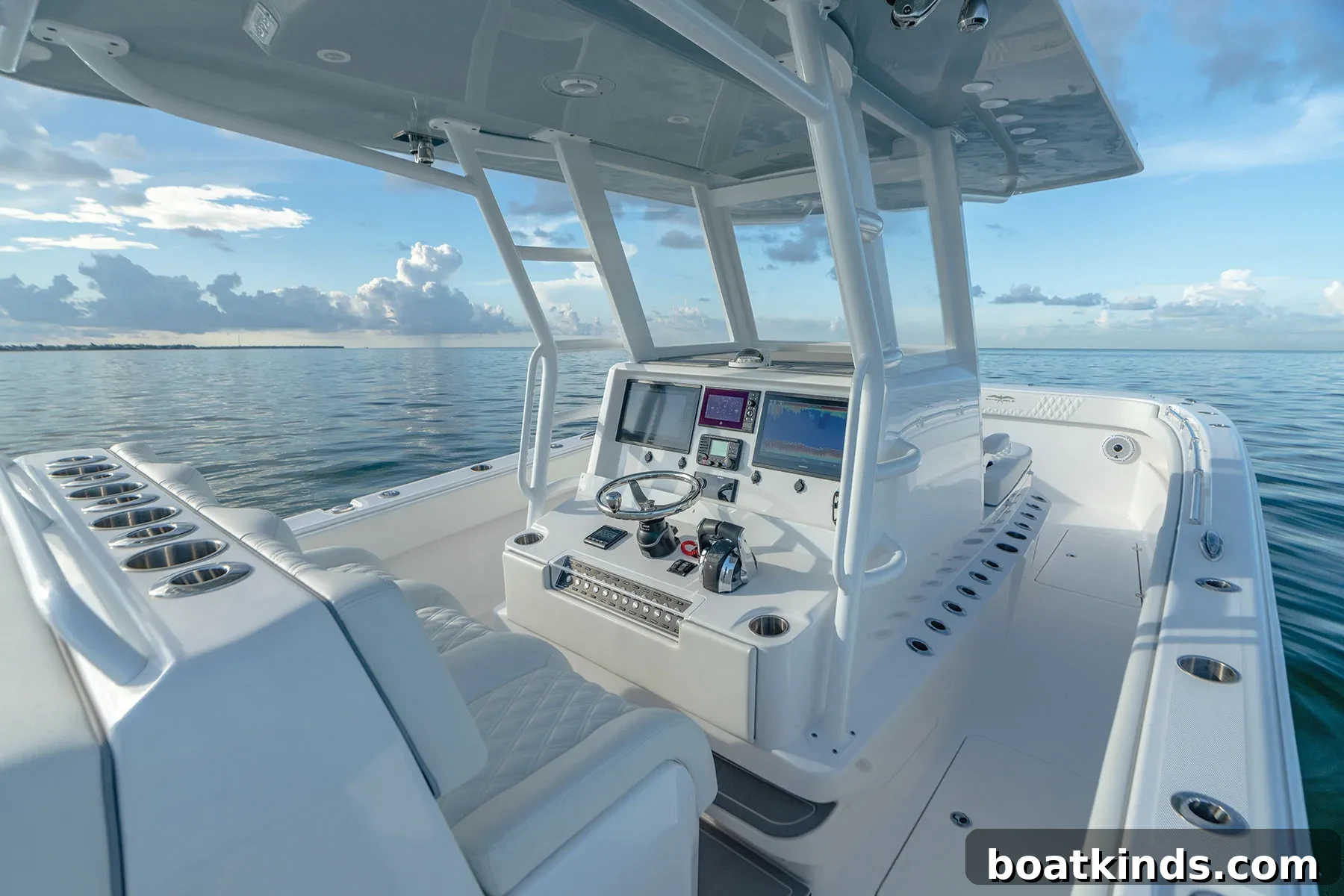
Onboard amenities include triple helm seating, a mezzanine bench, and forward lounge seating. The 33 is a twin-engine platform capable of handling up to 900 hp, offering strong offshore performance and a reassuring ride in rough conditions. For anglers, the boat combines performance and deck layout to make long-range offshore fishing more comfortable and effective.
REGULATOR 37 EVOLUTION
Regulator has built its reputation on deep-V hulls developed by Lou Codega, famous for producing the comfortable “Regulator ride.” Since introducing its first 26-foot center console in 1988, the company has remained dedicated to heavy-duty construction and seaworthy designs. Owner feedback has been central to Regulator’s evolution, and that input guided the development of the 37 Evolution.
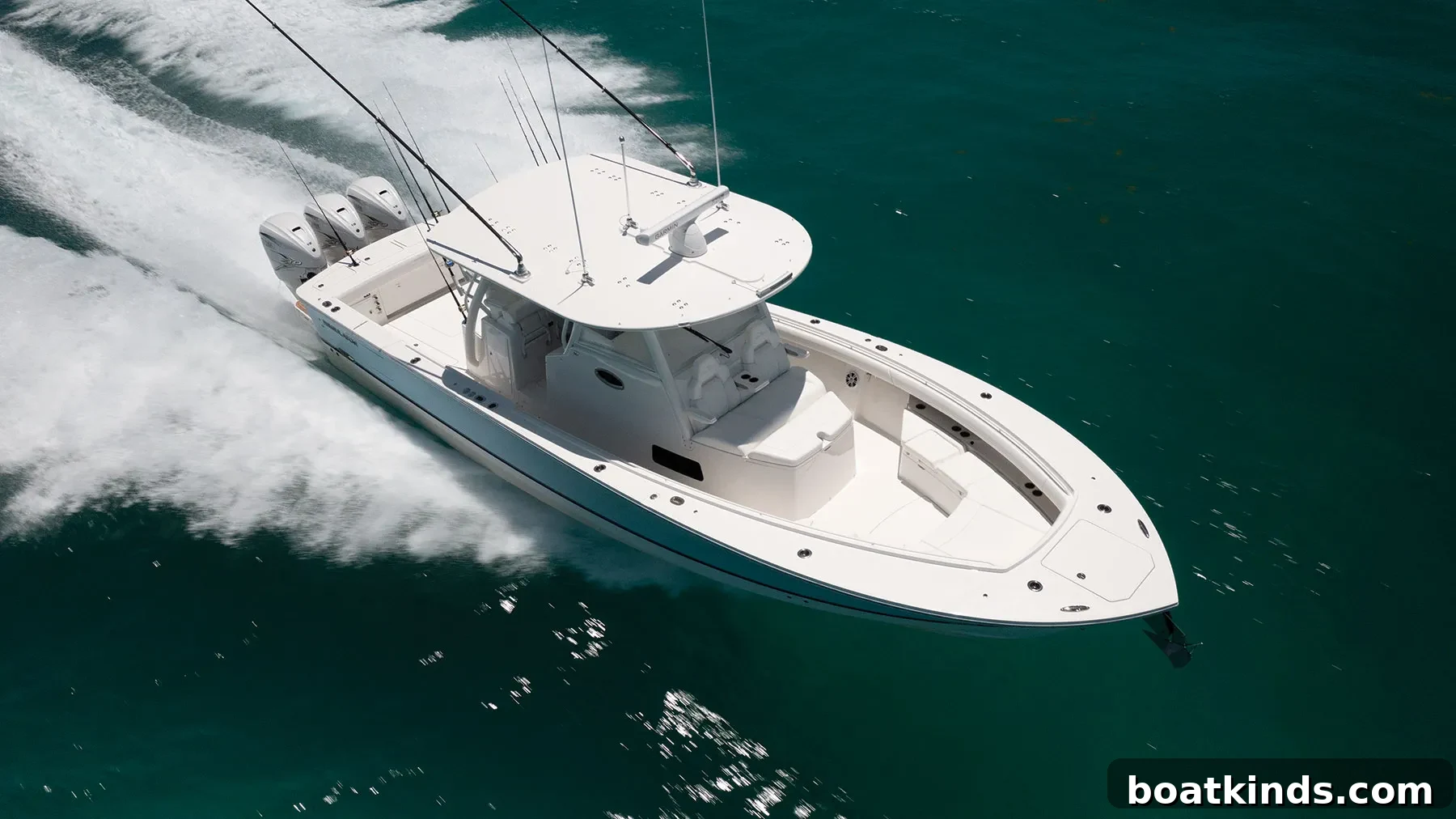
The 37 Evolution is Regulator’s most sophisticated model to date, featuring a taller sheer for increased interior volume, advanced mechanical and electrical systems, and durable construction meant to last decades. Notable design elements include an aft-facing mezzanine seat that lifts to reveal a dry locker housing breakers, batteries, air-conditioning compressors, and a Seakeeper 5 gyro. The cabin includes an enclosed head and galley, while anglers benefit from oversized fishboxes, a large transom livewell, abundant rod holders, and a hullside door for easy hauling of large fish. Triple Yamaha XTO 425 outboards on a bracket deliver strong performance, and the boat integrates digital switching and Zipwake trim control for precise handling.
Regulator’s My Helm software provides a single-screen graphical interface to control the boat’s systems, designed around a “three-click” philosophy so operators can access any function quickly. The system links with Yamaha’s keyless ignition, allowing owners to power up remotely via a key fob—another example of how modern center consoles aim for seamless, user-friendly operation.
FOUNTAIN 32NX
Fountain Powerboats set the standard in the high-performance center console niche, beginning with tournament-focused models in the 1980s and later introducing larger 34- and 38-foot designs that dominated offshore competition. The company was an early adopter of stepped hulls and multi-outboard configurations to achieve blistering speeds and exceptional handling.
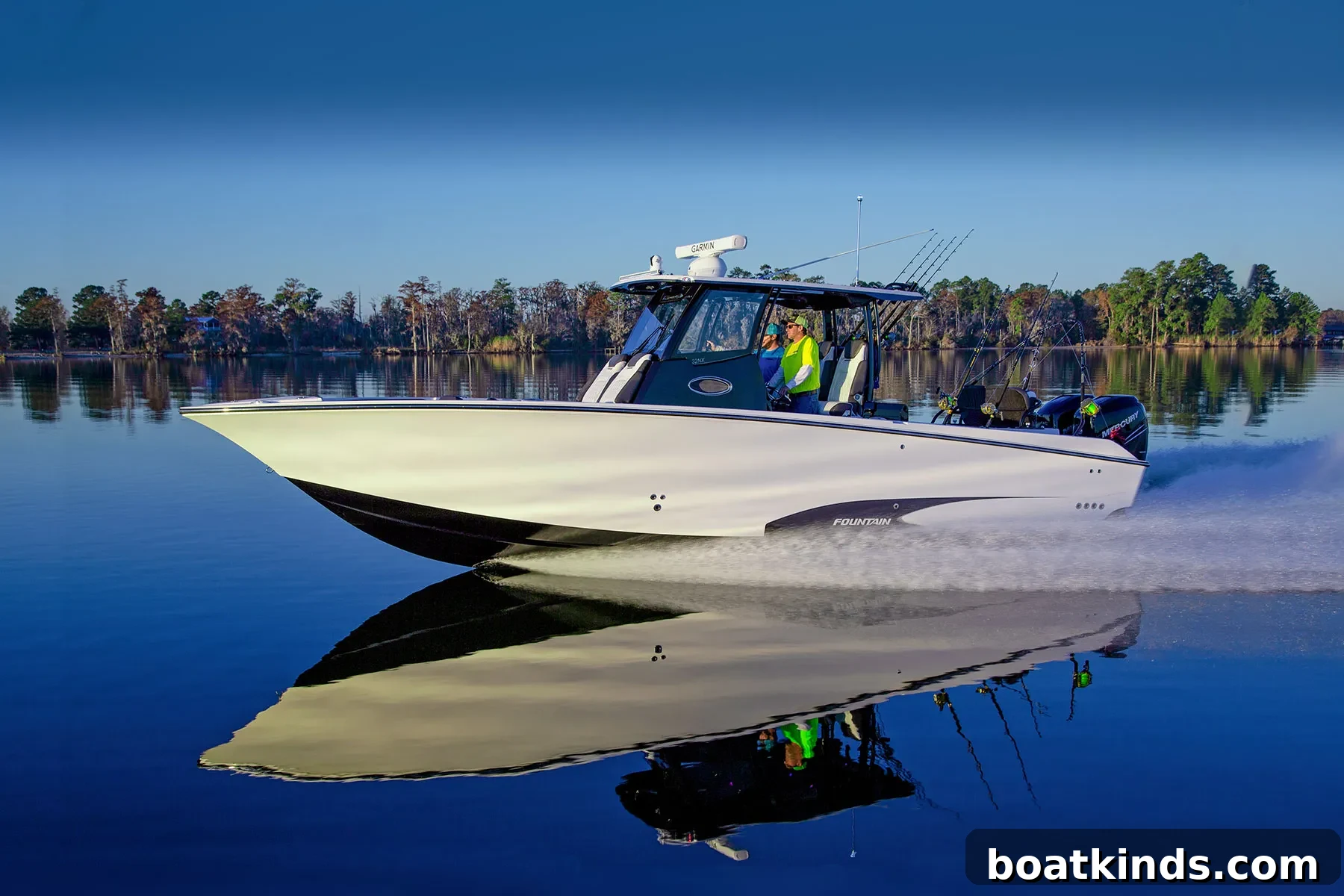
The new Fountain 32NX is a versatile, highly customizable model introduced at the Miami Boat Show. Company leadership emphasizes the boat’s “component” nature: it can be specified as a tournament-ready fishing machine with multiple livewells and top-tier electronics, or as a plush cruiser with expansive seating, premium audio, and cosmetic upgrades. Performance ranges widely depending on engine choice. The base twin-engine package uses Mercury 300M outboards to achieve about 61 mph, while an optional triple 450R package can push the 32NX to nearly 89 mph at wide-open throttle—highlighting Fountain’s heritage in speed-focused center consoles.
This article was originally published in the May 2022 issue.