
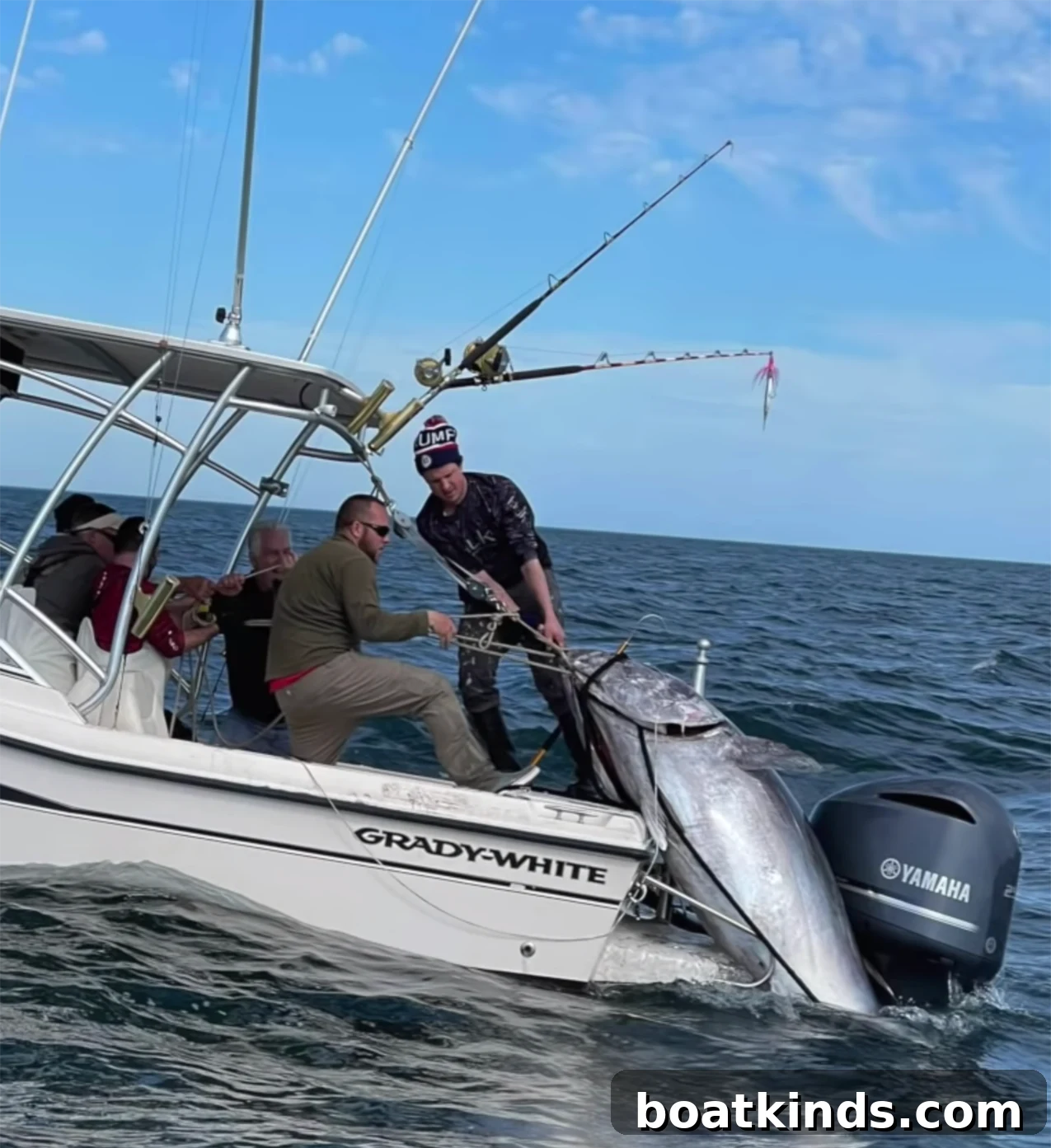
Massive Bluefin Tuna Brought Alongside a 23-Foot Grady-White off North Carolina’s Outer Banks
Josiah VanFleet and his crew experienced a once-in-a-lifetime catch when they battled a bluefin tuna measuring 114.5 inches off the Outer Banks of North Carolina. The fish was hooked and ultimately brought alongside VanFleet’s 23-foot, 2007 Grady-White 225 Tournament, after an intense, hours-long fight involving his friends and his 9-year-old son.
The Fight and the Challenges
The encounter was far from easy. The crew spent approximately two and a half hours battling the tuna, enduring powerful runs and long stretches of tension on the line. During the fight they suffered equipment failure when their initial reel broke, forcing them to transfer the line to another reel mid-battle. After subduing the fish enough to approach, they harpooned it—a common practice for securing very large pelagic fish—and even then needed the help of three crew members from a nearby accompanying boat to pull the tuna onto their vessel.
Landings like this test more than strength: they test teamwork, seamanship, planning and the limits of small-boat operations. On a 23-foot boat, space is limited and handling a fish of this size becomes a complex, physical operation. VanFleet’s account highlights the importance of preparation, strong gear, and experienced hands when targeting large bluefin on relatively small boats.
Measurements, Estimates, and Record Considerations
At Oregon Inlet the official weighing scales were out of service, so the crew could not obtain an official weight. Two local Coast Guard members stepped in to measure the tuna’s length and girth, and from those measurements they estimated the fish’s weight to be about 1,000 pounds. Because the fish was not weighed on a certified scale and because multiple people participated in the fight to land the tuna, it will not qualify as an official state record.
North Carolina’s current official state bluefin record stands at 877 pounds, a fish also caught in Oregon Inlet in 2017. For anglers seeking official records, organizations and state authorities typically require certified weighing procedures and adherence to specific angler and catch documentation rules. Without those elements, even extraordinary catches remain unofficial trophies and memorable stories rather than entry into the record books.
Reaction and Perspective
VanFleet appeared delighted with the catch despite the lack of official recognition. Posting on social media, he wrote, “Not bad for our first Bluefin.” He reassured friends and followers about their safety and good spirits, adding a humorous note that they have plans to get a bigger boat in the future. That reaction captures the mix of pride, relief and exhilaration many anglers feel after a dramatic landing—especially when it involves a family member and friends on a compact sportfishing boat.
Beyond the bragging rights, catches like this prompt reflection on safety and conservation. Handling very large pelagic fish requires experience to reduce risk to people and boats. Additionally, anglers and crews often work to ensure that regulatory requirements are respected, including size and season rules, reporting, and safe handling practices for the fish and the crew.
Final Notes
Whether or not a catch qualifies as a formal record, a 114.5-inch bluefin brought to a 23-foot Grady-White is a dramatic example of offshore sportfishing off the Outer Banks. It showcases the physical demands of landing giant tuna, the necessity of reliable equipment and backup plans, and the role teamwork plays in converting a hooked giant into a memorable accomplishment. For VanFleet and his crew, the day will likely remain a highlight of their fishing lives—and one that already has them talking about upgrading their boat for future adventures.