
Thor: A World War II Rescue Boat Coming to the Florida Holocaust Museum
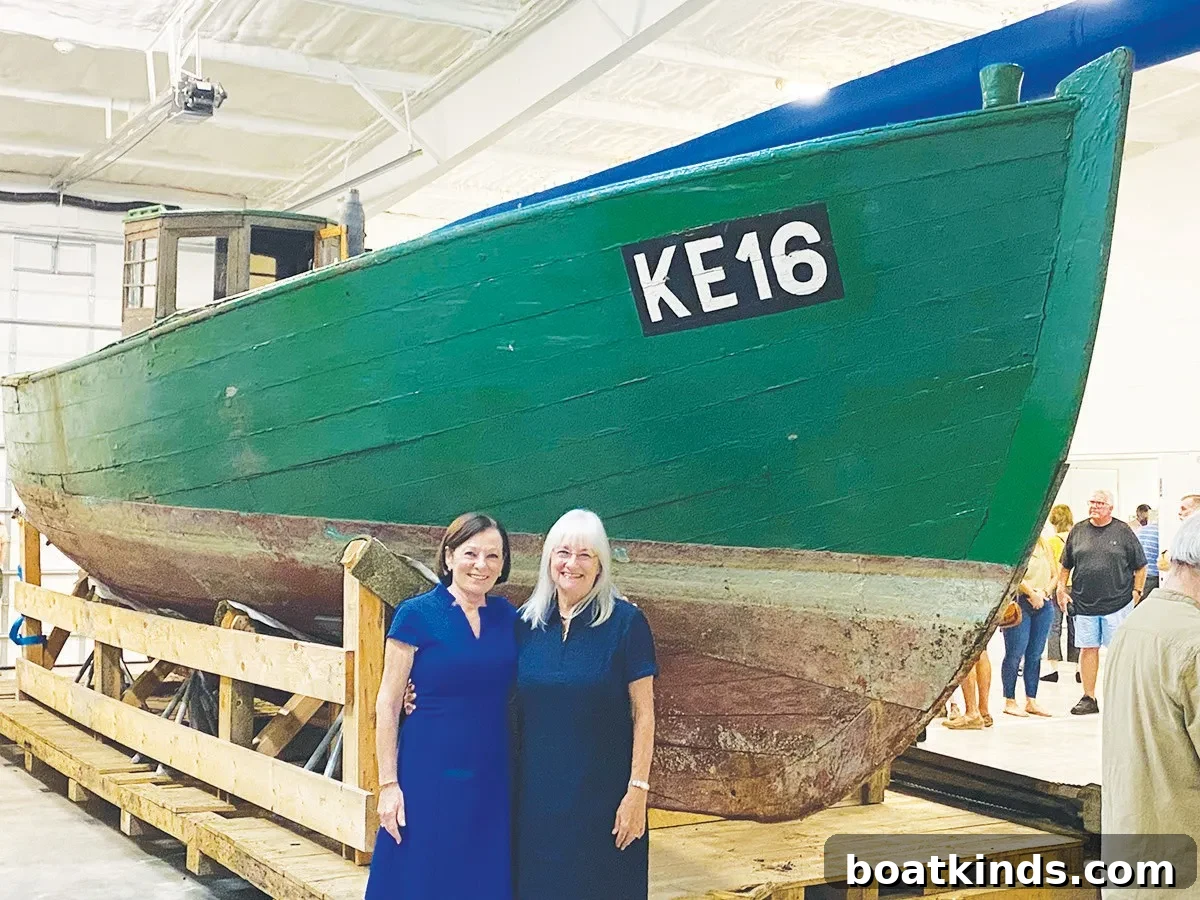
A 34-foot, 20,000-pound wooden fishing boat named Thor, one of the vessels used to ferry Jewish people out of Nazi-occupied Denmark during World War II, will soon be on display at the Florida Holocaust Museum in St. Petersburg, Florida. The boat’s arrival is intended to preserve an important story of rescue, community action and moral courage for museum visitors of all ages.
After Germany invaded Denmark in 1940, the Danish government resisted implementation of anti-Jewish legislation for several years. In the fall of 1943, however, German authorities announced plans to deport Danish Jews. In response, the Danish resistance movement and many ordinary Danish citizens organized a rapid, clandestine evacuation by sea. Over the course of a few days, they managed to carry 7,220 Jewish people and 686 non-Jewish spouses to nearby neutral Sweden by boat. These coordinated efforts represent one of the largest civilian rescue operations of the war.
Thor was among the small fishing vessels and other boats that took part in the evacuation. For decades the boat remained a piece of living history, and now two Tampa Bay residents — Margot Benstock and Irene Weiss — have played a central role in locating and recovering the vessel for public display. Both women are personally connected to that history: each has parents who escaped Denmark by boat during the rescue. They believe bringing Thor to Florida will create a powerful, tangible link between younger generations and the past, offering visitors an opportunity to reflect on what individuals and communities can do in times of moral crisis.
Stories from the evacuation underline the risks and human strain of those crossings. Many people being smuggled out of Denmark hid below deck in cramped, dark spaces to avoid detection by German patrols. Weiss recalls her father describing how those hiding places were even covered with fish to disguise them and the activity on board. “They put fish over him, ‘to disguise what they were doing,’” she told Bay News 9. “My father, when he went on the boat to Sweden, he’d already lost his whole family. I can’t even imagine what was going through his head.”
Benstock adds a vivid personal memory from her family’s journey: “All my mother said was that she was very claustrophobic. She was petrified the whole time.” These recollections make the history immediate and personal, turning statistics into human experience and illustrating the terror, courage and resilience of those involved.
For museum curators and the community members involved in the recovery, the goal is both preservation and education. Displaying Thor allows visitors to stand beside an actual vessel that carried refugees to safety, fostering empathy and a deeper understanding of how ordinary people responded to extraordinary danger. The exhibit aims to highlight themes of solidarity, moral choice and the impact of grassroots resistance.
At the moment, Thor is stored in a warehouse in Largo, Florida, while preparations continue for public exhibition. The Florida Holocaust Museum hopes to open the display within the year, offering programming that will contextualize the boat’s role in the Danish rescue and share first-person accounts from survivors and their families. Organizers emphasize that the boat is not just a historic object but a teaching tool to inspire visitors to consider how they might act when confronted with injustice.
The arrival of Thor in St. Petersburg will add a rare artifact to the museum’s collection and create a new focal point for conversations about courage, collective responsibility and the capacity of ordinary citizens to change the course of events. By preserving the vessel and sharing the stories tied to it, the museum and those who recovered the boat hope to ensure that the lessons of Denmark’s rescue efforts continue to resonate with future generations.