
Stewart Brand and Ryan Phelan: Restoring the Tugboat Mirene into a Floating Home
In the early 1980s, Stewart Brand and Ryan Phelan embarked on an unusual adventure together: turning a derelict tugboat into their home. The 64-foot Mirene had been launched in Oregon in 1912 to serve Alaska’s canneries. By the mid-1970s it had been left to decay in Sausalito Bay, California. Scavengers had stripped it almost bare. “The rudder was gone. The steering wheel was gone,” Brand remembers. “The whole engine room and the engine were gone.”
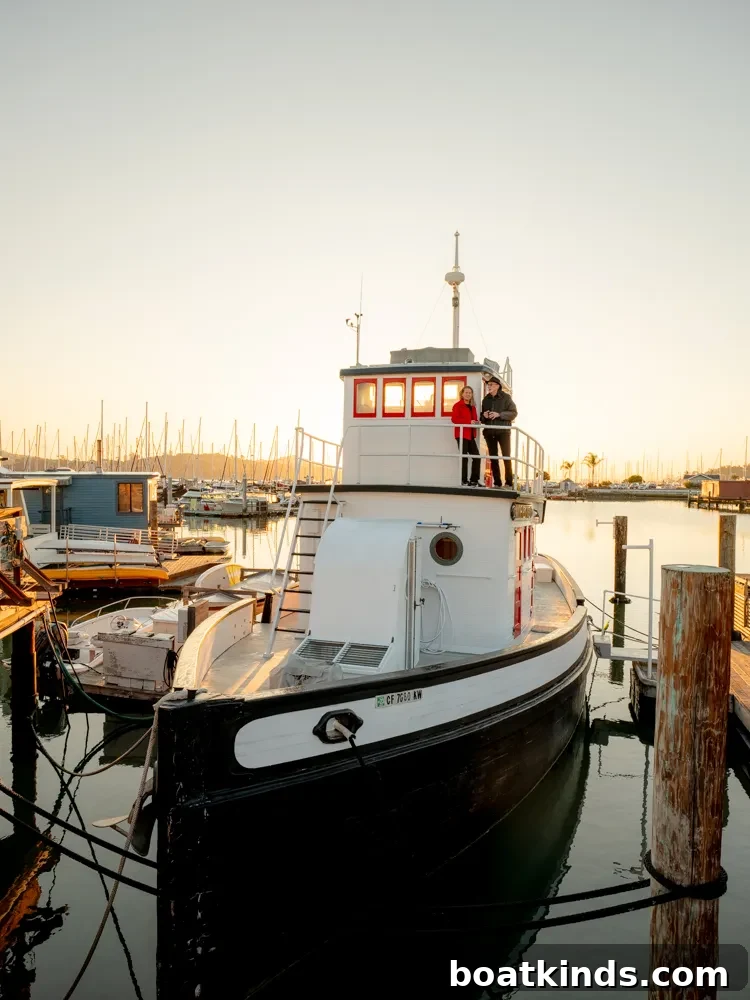
Despite its grim appearance, Brand and Phelan saw potential. Both were paying for their own housing at the time and wanted to live together. Brand, who had created the Whole Earth Catalog in the 1960s, was familiar with do-it-yourself culture and resourcefulness. Even after inspecting Mirene’s interior—where makeshift repairs and years of neglect were evident—they believed the boat could be restored.
“She was floating, but everything else was bad news,” Brand says. He recalls loose bulwarks, leaking decks, and crude attempts to manage water intrusion: “People had been living in it for years, but the way they dealt with leaks in the overhead and decks was to tack up Ziploc bags. The bags would turn yellow. It looked like there were bags of piss hanging from the ceiling.”
Still, the vessel’s structure gave them hope. The planking was solid, the frames were sound, and the hull remained strong. Mirene’s distinctive pocket windows were intact and largely functional. The owners’ asking price was $8,000—about $27,000 in today’s dollars—and the couple already had access to a community rich in maritime skills.
“We’d been denizens of the waterfront community for quite a while,” Brand told Soundings. “In Sausalito, maritime skills are everywhere. Wooden-boat building, concrete barges; there was no end of skillful people who we already knew. Some of them became our best friends. Over the years, probably 60 or 80 artisans have worked on Mirene in some form or another.”
Brand and Phelan handled some tasks themselves—stripping paint and oiling wood—but they quickly learned when to call in professionals. “Well, oil turned out to be a sticky, messy mistake,” Brand admits. “It’s all varnished now. We got experienced, skilled people to do that.”
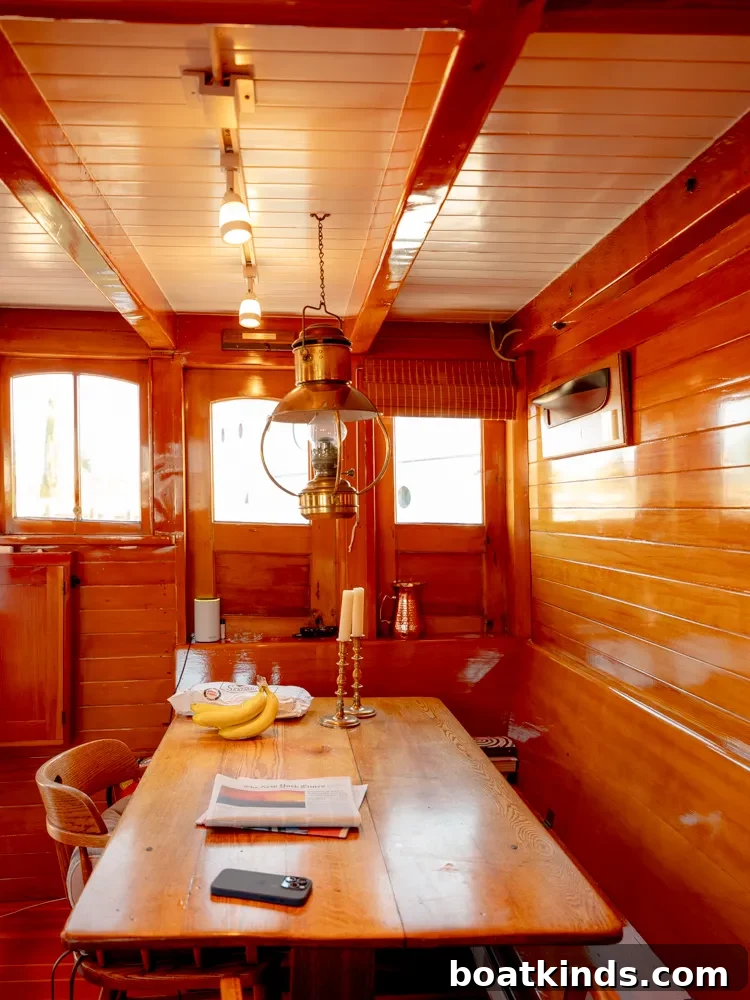
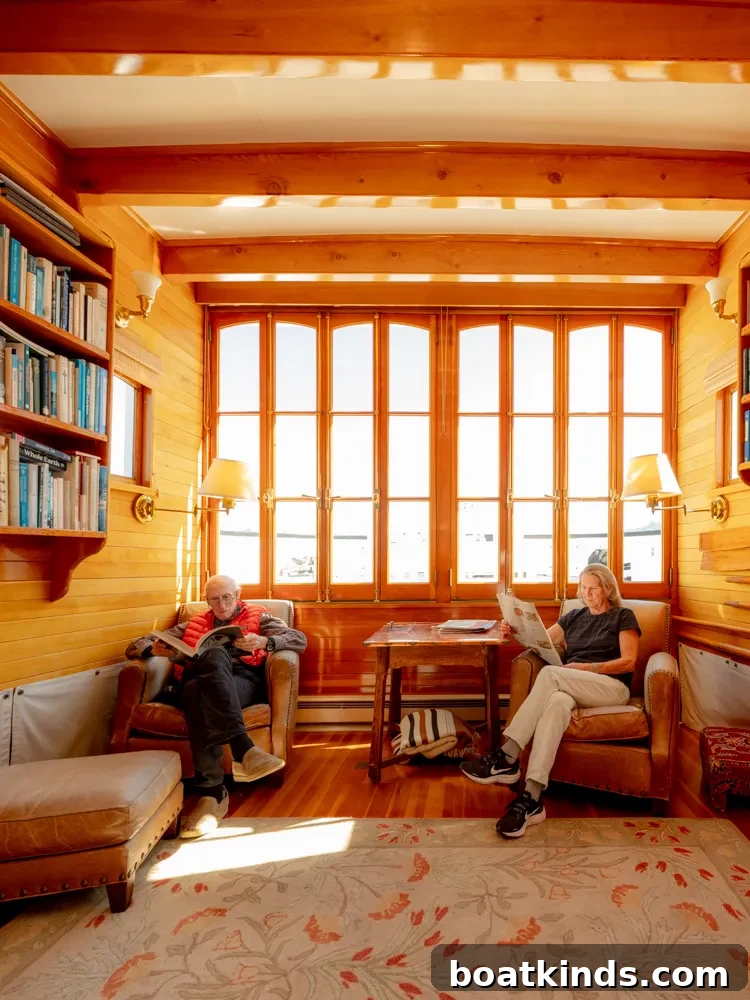
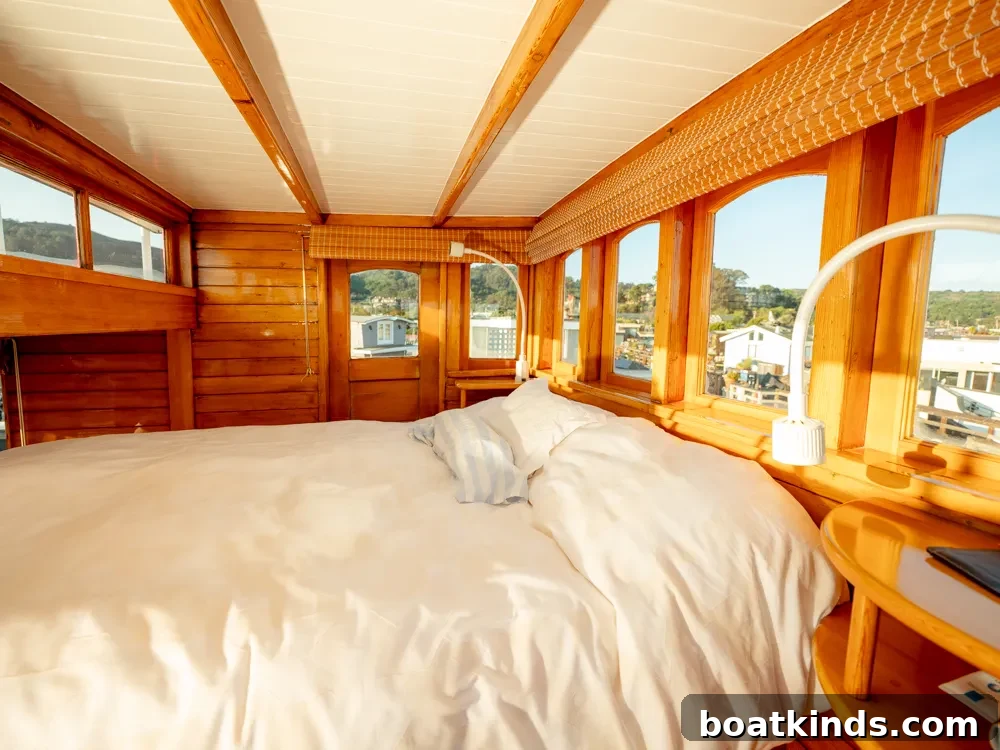
Over the years they converted Mirene into a comfortable floating residence. Asked about the number of staterooms, Brand laughs and clarifies the layout: “The living room is 450 square feet. That’s all the living spaces, the galley, the salon, the bedroom and bathroom, all of it.” The vessel’s tugboat heritage meant ample deck space—an attribute they purposely preserved through each renovation. “The thing we kept in our minds when we started living on it was that this thing could be brought back to life. It could be repowered,” he says. “We never did anything to obstruct that.”
In 1996 they installed an engine—a used 500-hp diesel they bought from the Sea Scouts for $500. It transformed Mirene from a stationary houseboat into a vessel capable of meaningful travel. “It just felt like screw it, let’s do it. Let’s go all the way,” Brand recalls. The sound and power of the engine were thrilling: “That big of an engine makes a wonderful, thunderous sound. When it fires up, it’s a big event. The boat shudders. It moves. You can feel it starting to muscle up to go somewhere.”
Their first cruise confirmed the success of the restoration. Everything worked, and Mirene produced a satisfying bow wave at 8 or 9 knots. Brand describes the simple pleasure of motion and changing scenery: “It’s wonderful when you’ve been living in a place where you look out the window and see the same thing, and then you go out and look out the window, and it’s Angel Island scrolling by. That never gets old. I can see why people get into endless cruising. The process of keeping going has a lot going for it.”
On outings, guests naturally gather on the flybridge for its panoramic views. Brand and Phelan explored the bay and beyond—navigating deltas, watching ball games from the water, and cruising under the Golden Gate Bridge while sounding Mirene’s horn. Their environmental values led them to experiment with biodiesel, but practical challenges—fuel availability and hard starting—meant they ultimately moved away from that approach. Both own electric cars, and Brand notes that their modest diesel use matters less in the broader context of their transportation choices.
Living aboard also offered resilience against some environmental risks. “What I liked about the tugboat was that we weren’t going to care about sea level rise or earthquakes, and we weren’t going to care about fire, which was the major event in the bay area and in the West, generally,” Brand says. “Those three issues went away, just by moving onto a boat.”
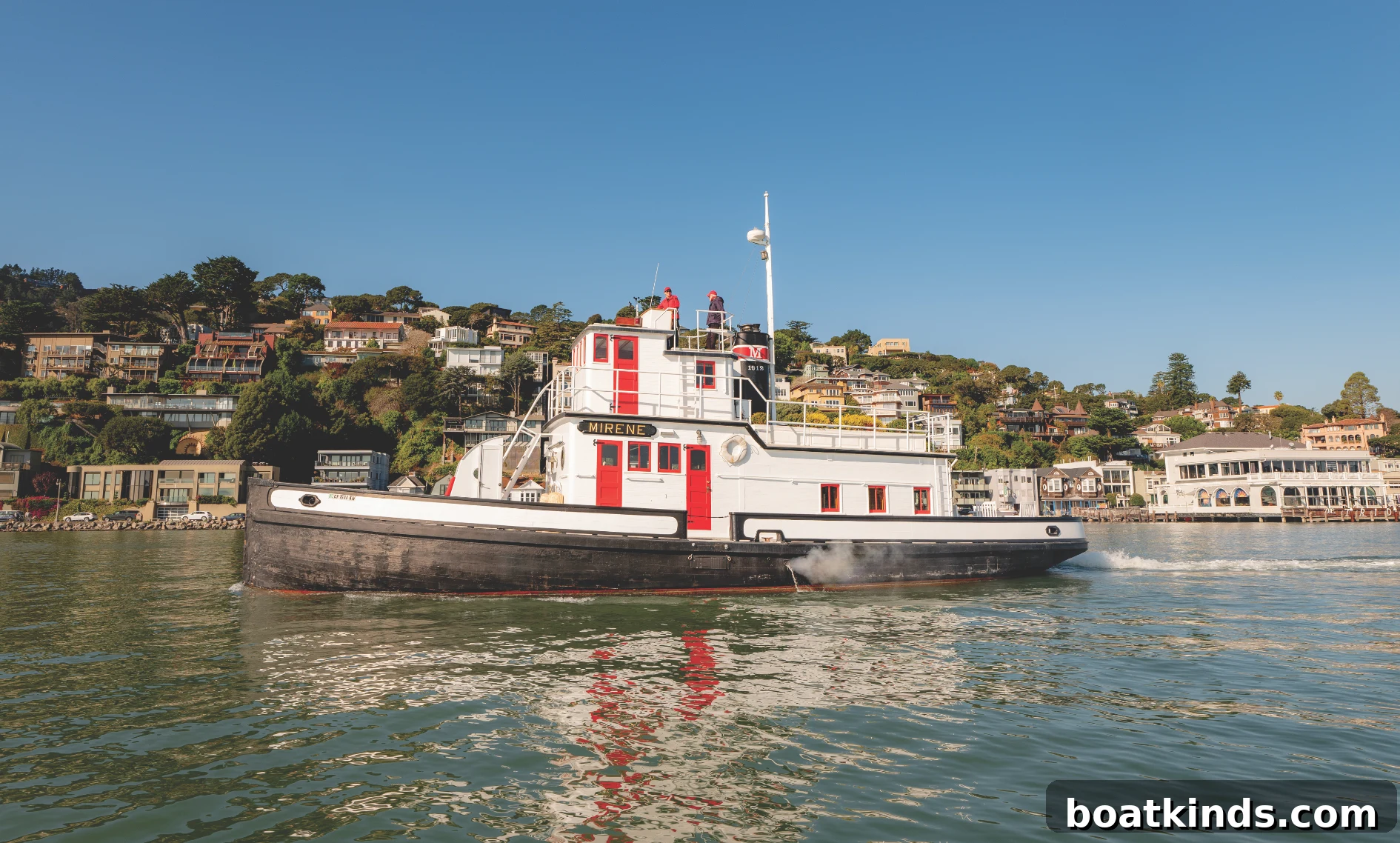
Now in their later years—Brand is 85 and Phelan 72—they are ready to find Mirene a new caretaker. They no longer cruise as often, and both are occupied with other work: Brand is writing a book and Phelan is involved in wildlife conservation. They estimate they have invested several hundred thousand dollars into the vessel over the decades and plan to set a price that feels fair to both seller and buyer. Ideally, the next owner will have boating experience and, if possible, knowledge of wooden-boat maintenance. “What’s essential is that they’re not surprised by the maintenance,” Brand says. He adds that the expense was worthwhile: “worth every penny as far as having an absolutely marvelous place to live and go have adventures.”
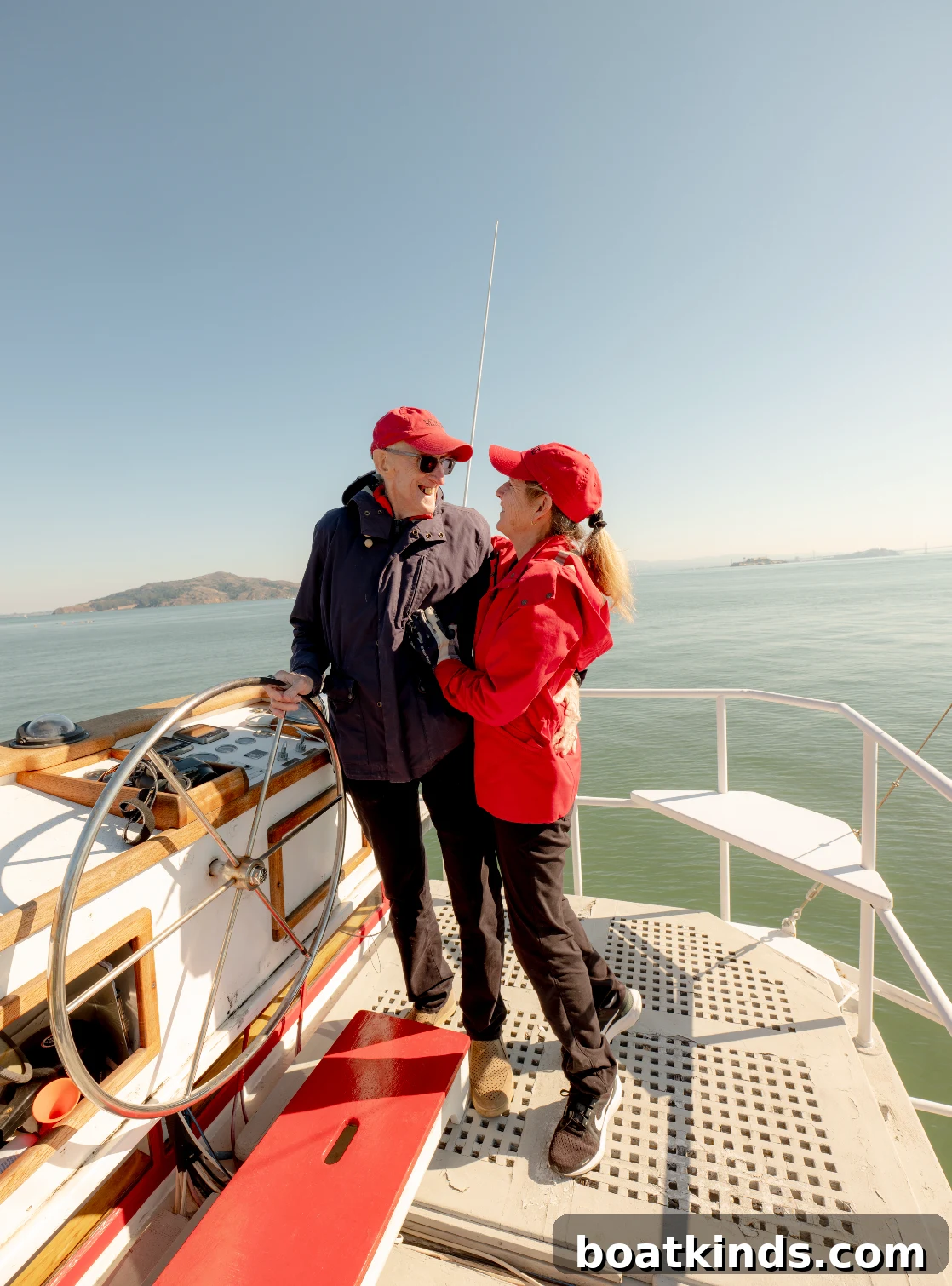
Reflecting on Mirene’s fortune, Brand shares a bit of waterfront folklore. A sister ship, the Owl, deteriorated and was eventually burned for insurance. “One of the guys on the waterfront who saw what we were doing said, ‘Some boats have all the luck,’” Brand remembers. “Ours had all the luck, and now somebody else needs to be the luck.”
This article was originally published in the October 2024 issue.