
Egg Harbor 33 Sedan: A Classic Twin-Engine Family Cruiser
Founded in 1946, Egg Harbor Yacht Co. emerged as a key player in the post-war boatbuilding boom centered in southern New Jersey. Supported by abundant offshore fishing and cruising opportunities, builders in this region established a reputation for producing well-crafted vessels, and the Egg Harbor 33 Sedan became one of the company’s most recognizable models.
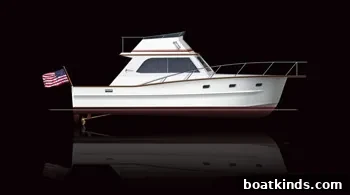
Design and Appeal
Introduced in 1971 as Egg Harbor’s first fiberglass production boat, the 33 Sedan combined an imposing profile with clean lines and polished brightwork. It was conceived as a twin-engine family cruiser designed to deliver comfortable overnight accommodations and a welcoming, home-like environment aboard. The layout and styling appealed to boaters seeking both performance and livability for weekend cruising and coastal passages.
Accommodations and Layout
The 33 Sedan features a two-stateroom arrangement that became a widely accepted standard for family cruisers. A V-berth forward provides the primary sleeping area, while a smaller cabin aft to starboard contains over-and-under bunks suitable for children or guests. The head is located to port across from the forward accommodations, and the galley is placed in the main saloon in the original galley-up configuration, allowing for a bright, open living space.
Later versions offered a galley-down option and a reconfigured head that included a separate stall shower for increased comfort and convenience. The lower helm sits to starboard with a settee aft of it, and the galley or sitting area to port creates an efficient use of space for underway operations and socializing. Flybridge models expand the interior arrangement further by adding a dinette to the saloon area, improving seating and dining capacity for extended cruising.
Construction and Performance
Early 33 Sedans combined a solid fiberglass modified-vee hull with mahogany deck and superstructure elements, reflecting Egg Harbor’s wooden-boat heritage while taking advantage of fiberglass durability. In 1978 the builder shifted to all-fiberglass construction, streamlining production and reducing maintenance associated with wood components.
Powered originally by twin Crusader gasoline inboard engines, the 33 Sedan offered a cruising speed in the range of 17 to 18 mph and could reach a top speed around 25 mph, depending on installation and load. Later production models were available with 210-hp Caterpillar diesel engines, providing owners with a diesel option for fuel efficiency and long-range cruising. The twin-engine arrangement and modified-vee hull gave the design predictable handling characteristics suitable for coastal waters.
Production History and Legacy
The Egg Harbor 33 Sedan enjoyed solid market success and remained in production until 1981, marking it as one of the company’s most enduring models of its era. In 1982 Egg Harbor introduced a newly designed 33 with an updated hull form that improved cruising efficiency and top speed; that redesigned model continued in production through 1989. Across both iterations, the 33 retained a reputation for practical family cruising, solid construction, and a layout that balanced onboard comfort with offshore capability.
Why the 33 Sedan Still Matters
Today, the Egg Harbor 33 Sedan is appreciated by owners and restorers who value its classic lines, sensible accommodations, and the solid construction methods of its time. Whether used for weekend getaways, family outings, or as a project boat, the 33 Sedan represents a notable example of mid-20th-century American recreational boatbuilding—an intersection of traditional craftsmanship and the shift to fiberglass production that defined a generation of cruisers.
This article originally appeared in the September 2016 issue.