
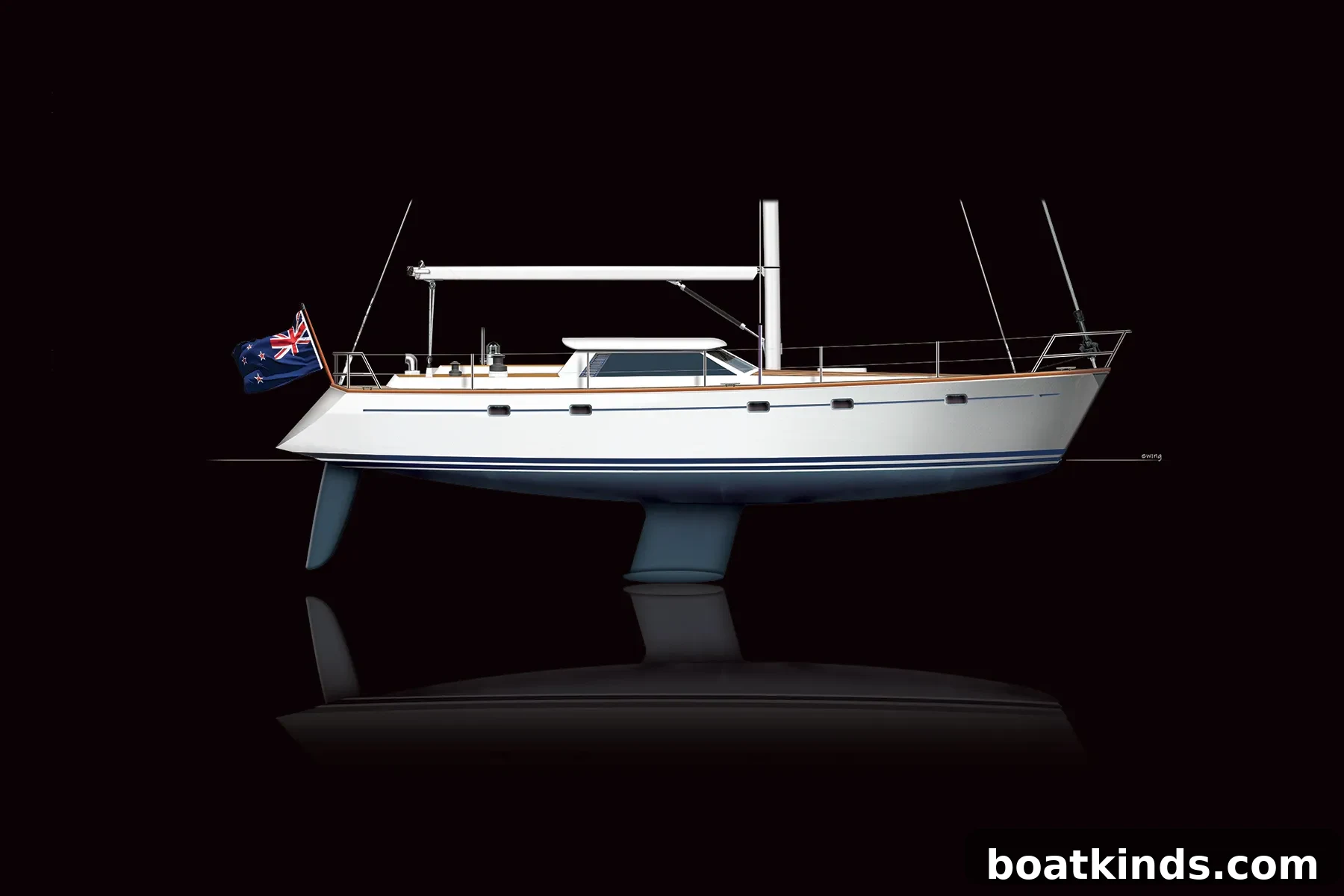
Farr 50 Pilot House: A Classic Pilothouse Sailing Yacht
For many years pilothouse sailing yachts often looked ungainly—salons that rose awkwardly above the deck and interrupting otherwise sleek offshore lines. The Farr 50 Pilot House, Design #373 by Bruce Farr and his team, introduced in 1997, changed that perception. This design combined true offshore capability and racing-bred performance with a pilothouse layout that felt integrated, purposeful and elegant. The result set a new standard for pilothouse cruisers and raised expectations for owners who wanted reliable bluewater performance without sacrificing comfortable, well-organized living spaces.
Only 25 examples of the Farr 50 Pilot House were built, all by BSI Marine in Lysekil, Sweden, and sold through Boat Sales International UK. The limited production run and high-quality construction have kept these yachts in demand on the brokerage market worldwide. That interest is no surprise: Farr’s designs have a long history of success in offshore racing and serious cruising, and the 50PH channels that pedigree into a practical, ocean-capable cruiser.
Hull and appendage geometry emphasize both speed and seakeeping. The sheerline is gently stepped forward, and the foredeck is well crowned. The pilothouse is low and streamlined so it complements the deck line rather than dominating it. At the waterline the stem has a modest rake that soon transitions into relatively sharp forward sections, which progressively widen to a substantial midship beam of 15 feet 5 inches. That beam creates noteworthy interior volume while preserving efficient underwater lines. A fin keel with full-chord wings carries 13,200 pounds of ballast and gives the boat a draft of 7 feet 6 inches. A single, high-aspect rudder and a displacement of about 37,400 pounds support steady tracking and control. In typical conditions the Farr 50 can deliver daily runs around 200 nautical miles—roughly an 8-knot average—making it a true offshore cruiser.
The pilothouse and salon are among the most striking aspects of the design. Large safety-glass windows provide broad, protected views and excellent light for the raised, wraparound settee, which seats up to six and centers on a substantial dining table. The pilothouse layout balances social space and navigational visibility, so crew can maintain watch and guests can dine or relax in comfort.
Accommodations aboard the Farr 50 are comfortably arranged for long-distance cruising. The full-beam aft master stateroom features a queen-sized island berth, a settee, a hanging wardrobe and an ensuite head with a separate shower. Access to the master is via a portside passageway that preserves privacy. Forward arrangements vary: some boats provide two private cabins served by a single head, while the original concept envisioned a single forward guest stateroom with an ensuite head plus a small day head to starboard at the base of the forward companionway. These flexible layouts reflect the builder’s willingness to adapt interiors to owner preferences while maintaining functional circulation and storage for offshore voyaging.
Construction by BSI Marine followed high standards, with careful attention to structural integrity and finish—factors that contribute to the model’s longevity and resale appeal. The Farr 50’s combination of a performance-oriented hull, thoughtful pilothouse ergonomics and practical cruising accommodations makes it a good choice for owners who want to sail decisively offshore without compromising onboard comfort.
Although the Farr 50 Pilot House is no longer in production, Bruce Farr and Associates continues to design custom pilothouse yachts in much larger sizes, and BSI Marine has produced other pilothouse models such as the 56PH and 63PH. The 50PH remains a desirable, proven example of how racing-born naval architecture can be translated into a capable, comfortable bluewater cruiser—an enduring solution for sailors who demand both speed and security at sea. — John Wooldridge
This article was originally published in the November 2022 issue.