
Havana Harbor and El Morro: A Maritime Portrait
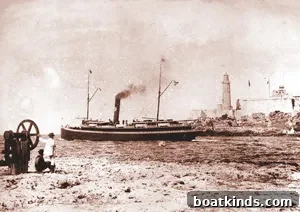
A U.S.-registered steamer makes its way out of Havana, skirting the iconic Castillo de los Tres Reyes Magos del Morro, commonly known as El Morro. This massive fortress has dominated the entrance to Havana harbor since the late 16th century, erected by the Spanish to protect the city and its vital maritime approaches. In earlier centuries a heavy chain was once stretched across the water from El Morro to the opposing fort at La Punta as a defensive barrier against intruders. Over time the stronghold evolved beyond pure defense: in the 19th century a lighthouse was added and the site even hosted a school for lighthouse keepers, serving as a practical aid to navigation as well as a historical landmark.
Throughout the 20th century, Havana transformed into an international maritime hub. Its proximity to rich offshore waters and a lively coastal culture attracted anglers, sailors and boaters from around the region. Among the most famous figures drawn to these waters was novelist Ernest Hemingway, whose passion for big-game sportfishing helped popularize Havana as a fishing destination. Hemingway frequently took to the sea in his boat Pilar, a 35-foot Wheeler Playmate, and his exploits on the water became part of the city’s maritime lore. Pilar is now preserved on land at Finca Vigía, Hemingway’s hilltop residence in San Francisco de Paula overlooking Havana, where the boat serves as a tangible reminder of those years.
Havana’s appeal extended to the social and competitive worlds of yachting and powerboating. Wealthy patrons and avid sportsmen gathered at exclusive venues such as the Miramar Yacht Club and the elegant Havana Biltmore Yacht and Country Club. These clubs provided settings for spirited competition, social events and a shared enthusiasm for life on the water. One memorable example was the 1928 Habana Yacht Club Regatta, held March 24–25, which drew an international field of powerboats racing across five classes. The event was typical of the era’s regattas—part sporting contest, part social spectacle—where competitors and spectators alike celebrated speed, engineering and seamanship.
At the 1928 regatta, Gar Wood’s Miss America V, piloted by Phil Wood, emerged as the fastest entry. Wood won both 10.5‑mile heats in his class, besting competitors including noted female racer W. J. Conners and her boat Miss Okeechobee. Organizers arranged the course close enough to shore that the action could be followed easily from the shoreline, and spectators gathered along the water’s edge to watch the high‑speed races. Contemporary reports described the scene as lively, with crowds intently following the boats as they thundered past—a vivid display of the sporting spirit and public interest that characterized Havana’s waterfront life.
Boating writer Earle Grimm, summarizing the atmosphere around such events, emphasized both the attraction of the competition and the hospitality awaiting participants ashore. He highlighted the combination of exhilarating on‑water racing and the warm welcome extended by the Cuban hosts, along with the fine setting of the Habana Yacht Club facing the blue expanse of the Gulf of Mexico. These elements together made the annual spring regatta a much‑anticipated and popular affair.
Today, the interplay of historic architecture, nautical tradition and literary association continues to define Havana’s maritime identity. El Morro remains a powerful symbol at the harbor’s mouth, Hemingway’s legacy endures in stories of the sea and the preserved Pilar, and the memory of regattas past recalls an era when Havana’s waterfront buzzed with international yachting activity. Together they weave a picture of a city shaped by its relationship to the water—defended, navigated, contested and celebrated across centuries.
This article originally appeared in the July 2015 issue.