
Bertram 31 “Phoenix”: How a Father-and-Son Team Rebuilt a Classic into a High-Performance Sportfish
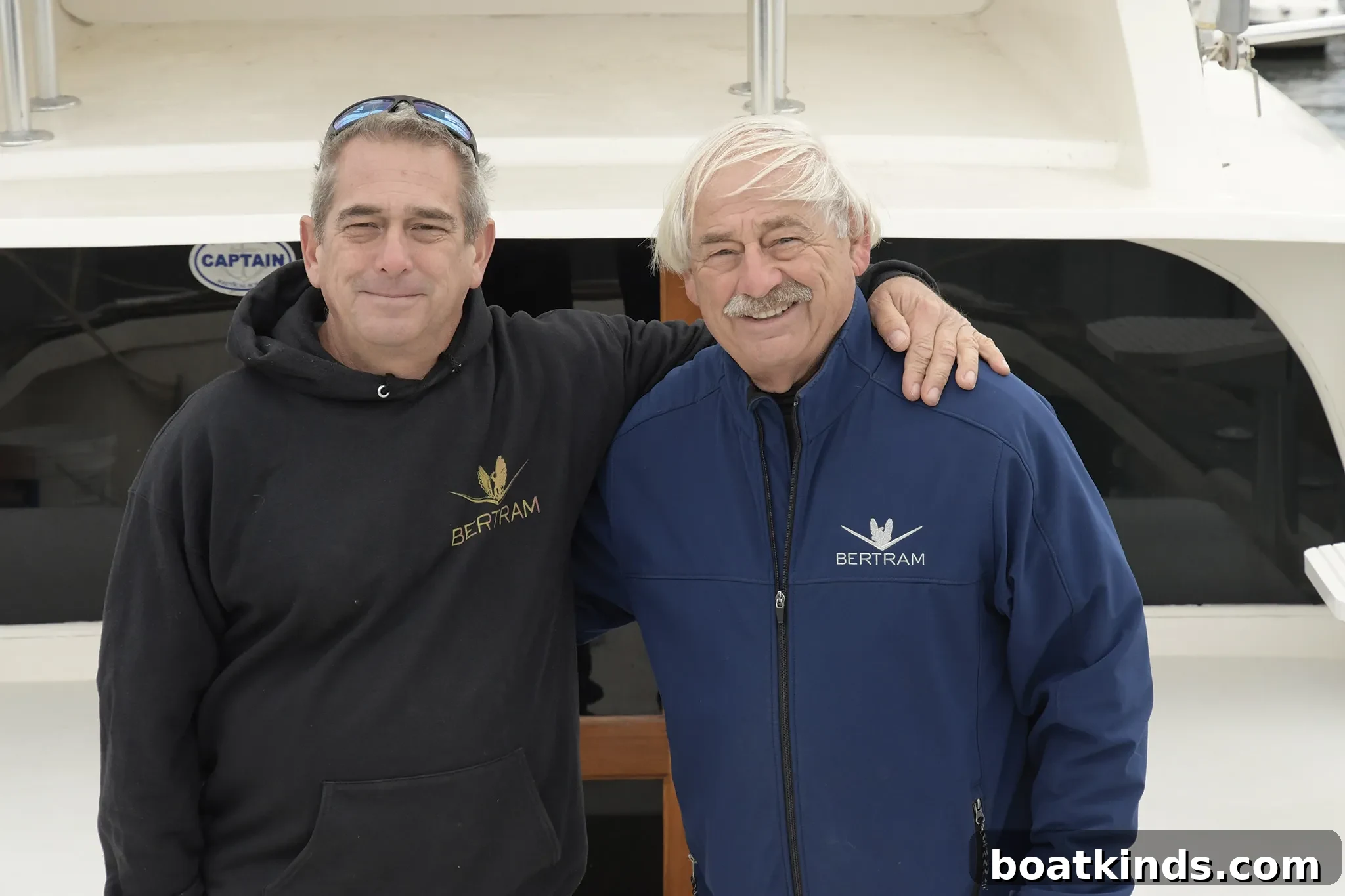
Never tell Bob Lico it can’t be done — to him, that’s not a suggestion, it’s a provocation. Bob, 78, grew up on the shores of Great South Bay on Long Island and owned his first boat at age six. A union electrician by trade, Bob is a hands-on restorer of boats and cars. He has owned 14 classic Corvettes, operated a fleet of offshore race and fishing boats, and holds a 100-ton master’s license, which he uses for part-time charter work.
His son Anthony, 54, was raised the same way — a lifelong boater with a knack for fabricating nearly anything the two of them imagine. When father and son teamed up to restore a 1973 Bertram 31 sportfisher, their complementary skills turned the project into a standout boat on both looks and performance.
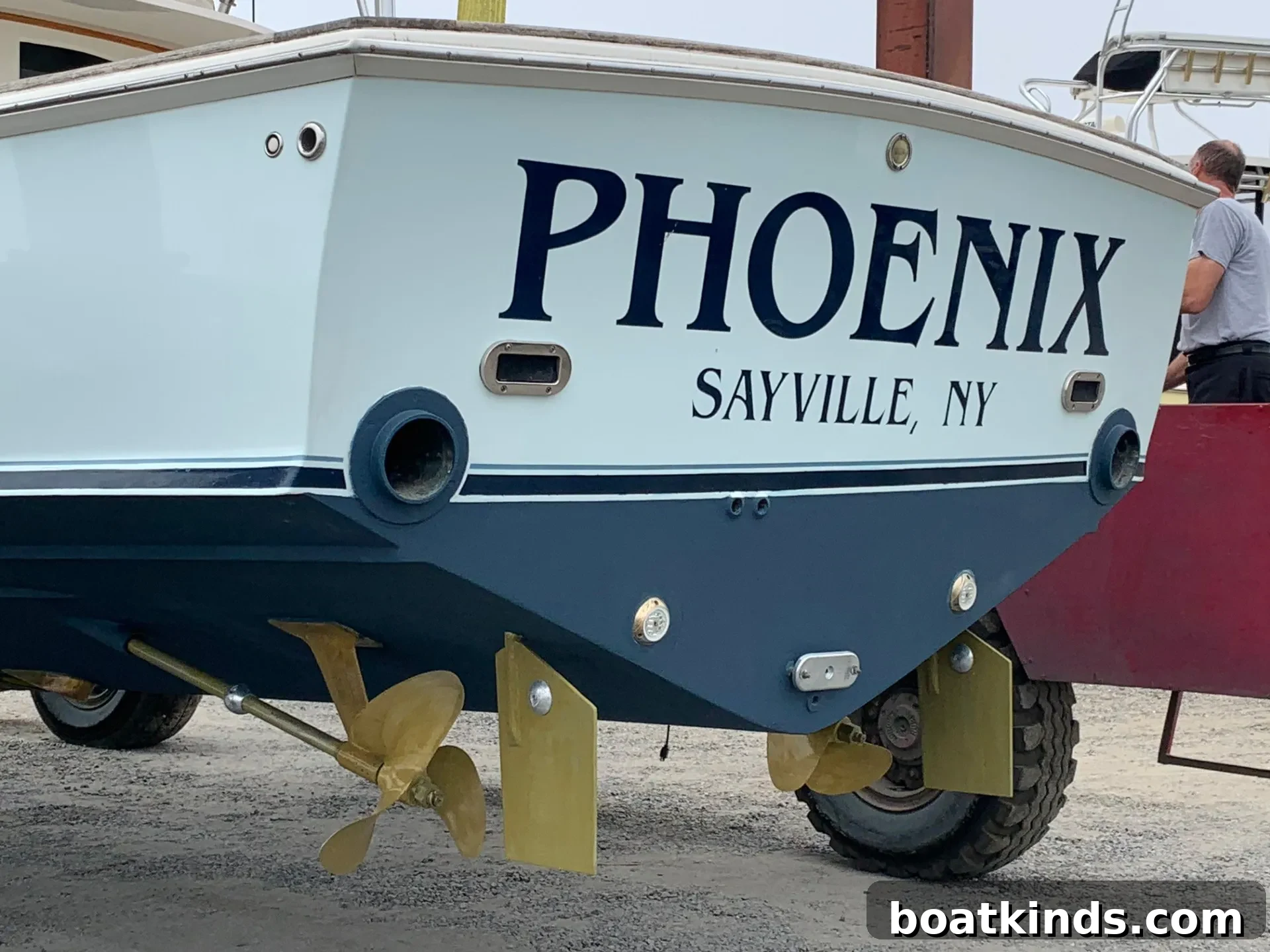
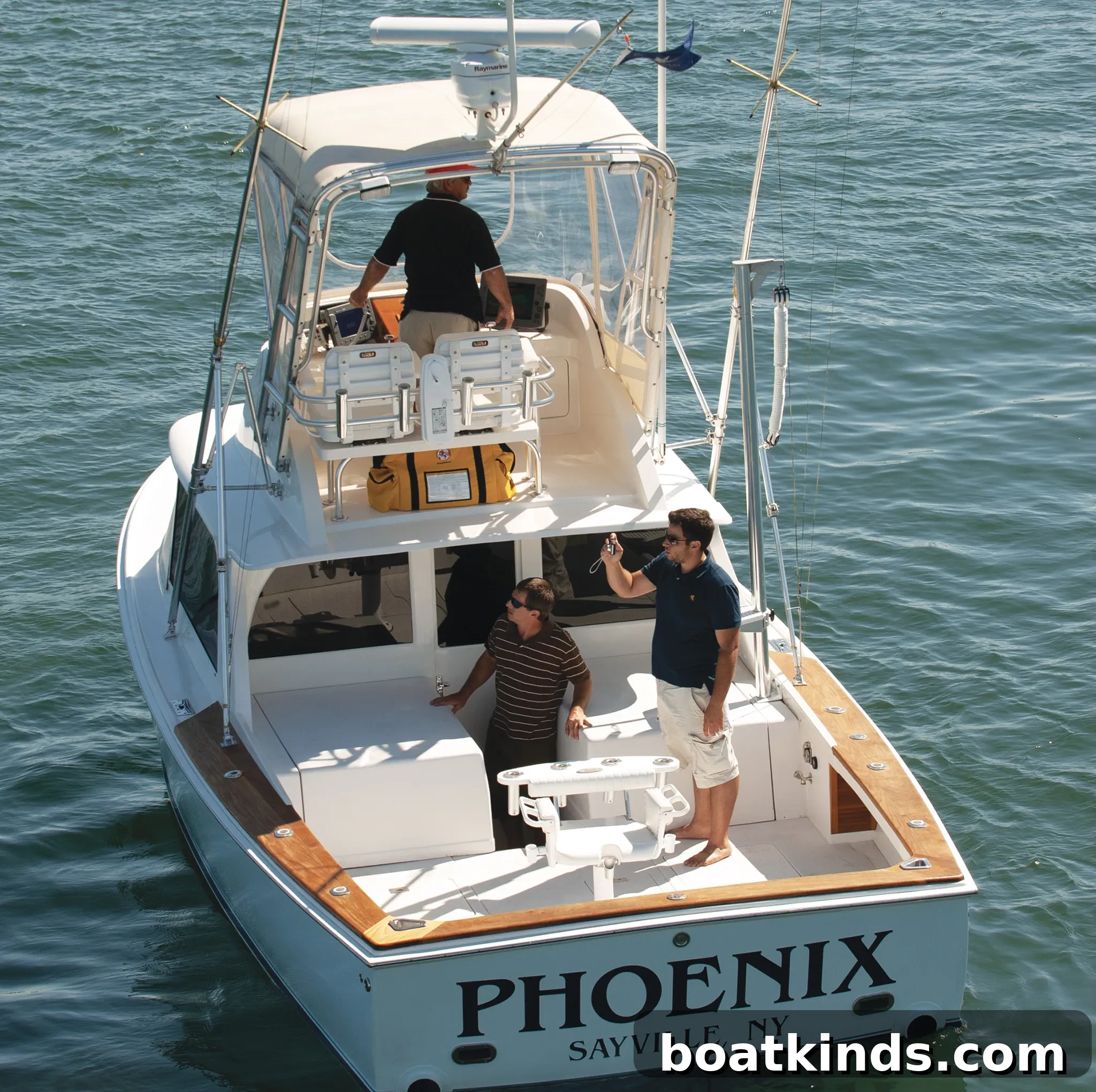
I first met the Licos in Montauk in 2008 during a Bertram 31 Club rendezvous at Snug Harbor Marina. Dockside, Bob was regaling other owners from the cockpit of his freshly restored boat, Phoenix. The transom bore the name in bold black letters, and the boat’s appearance was striking: a blue hull, gleaming white house and bridge, polished brightwork, custom helm seating and a one-off Bimini-style top and enclosure. Phoenix looked refreshed, functional and thoughtfully modernized.
At the club photo shoot the next day, Phoenix proved it was more than just good looks. On the water she stood out for speed, stance and handling, running like a waterborne sports car — carving tight turns and surging past other 31s with remarkable ease. Over the years the Licos continued refining the boat while using it for family cruising and offshore fishing, and wherever Phoenix goes she draws attention.
Where the Restoration Began
Bob had been looking for a Bertram 31 in 1999 after tiring of his Hydra-Sport center console. He found the eventual Phoenix in an Oakdale Yachts brokerage listing and set about transforming it. What began as a purchase led to six years of substantial structural and mechanical changes.
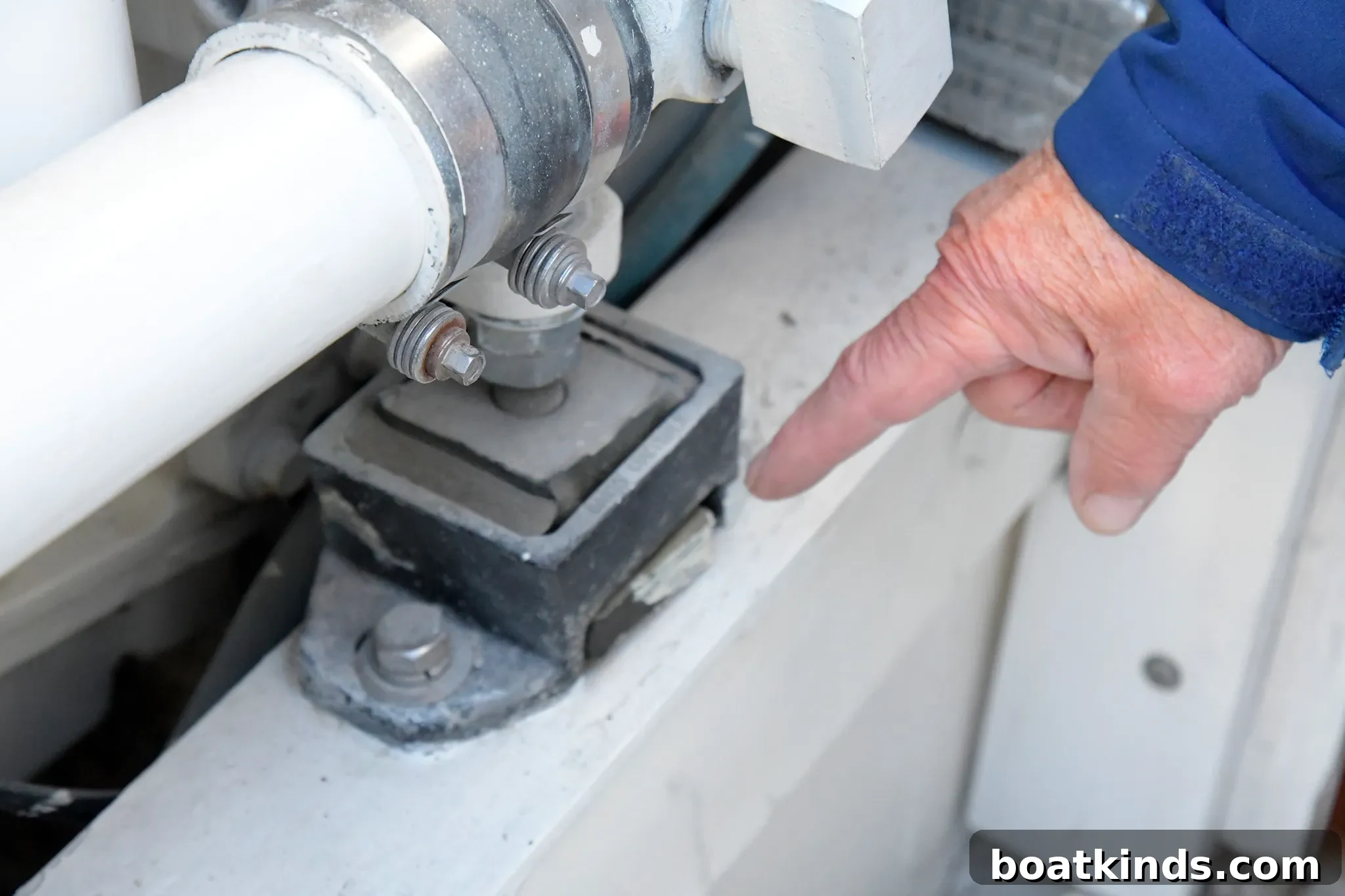
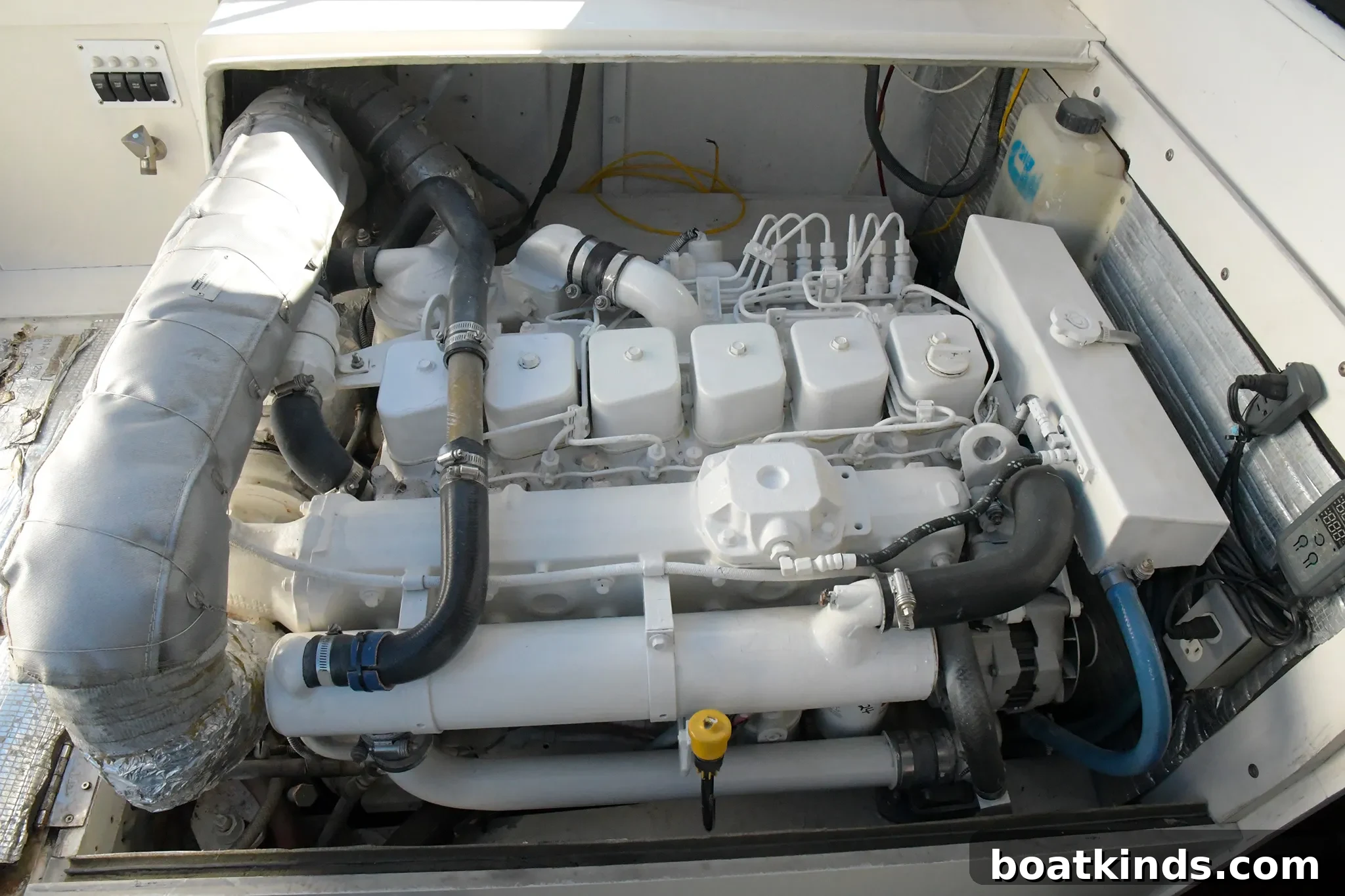
When Anthony arrived the day his dad called, the original engines were already removed and sitting on the dock. The Licos installed a pair of remanufactured 330-hp Cummins diesels and repositioned them — set back five inches and dropped deeper into the hull — to lower the center of gravity and optimize the boat’s running angle. Those motor mounts were nonstandard: titanium mounts repurposed from the mounts of an F-14 fighter jet found in an aircraft graveyard.
That engine relocation required altering the prop shaft angle two degrees higher, accomplished through precise fiberglass work the pair did themselves. They also relocated engine service points to centerline for easier maintenance and built custom thermostatically controlled block heaters and an improved oil-change system. The engines live under redesigned cowlings with removable side panels for service access.
Propellers, Exhaust and Torque-Focused Design
Power is transferred through ZF transmissions to stainless shafts fitted with special seals and bushings, turning custom props Bob designed to match the Cummins’ torque characteristics. The 21-inch Nibral props were reworked from 23-inch blanks to add a pronounced cup — a rare feature on inboard boats — an idea that initially met resistance from a prop expert but ultimately succeeded. The cupped props deliver stronger bite, quicker acceleration, higher top speed and improved cruising economy, while also improving tight-turn traction.
Bob chose the 330-hp Cummins over higher-horsepower variants for one key reason: torque. “It’s all about torque, not horsepower,” he said. The engines in that Cummins family share a similar torque curve regardless of peak horsepower; using the torque more efficiently meant similar or better performance with less horsepower, less internal strain, longer engine life and better fuel economy.
To help the engines breathe, the Licos designed a cold-air intake system that routes fresh cockpit air through oversized K&N filters directly into the engines, avoiding the stock gunwale clamshell vents that can also draw in moisture and salt spray. They added 6-inch-diameter exhausts feeding MiniMax mufflers to dramatically reduce back pressure, eliminating the need for surge tubes. These changes boosted engine output by nearly 20 percent and kept the engine compartments dry and corrosion-free after 16 seasons.
Steering, Balance and Structural Upgrades
Handling was improved with a HyDrive hydraulic steering system and oversized rudders that Bob designed, which required a reworked rudder post support. The combination of prop and rudder design allows Phoenix to carve turns like a slalom skier. To reduce roll and lower the center of gravity, batteries were centralized under the companionway step, the freshwater tank was repositioned, and an older hot-water heater was replaced with a lighter modern unit. A reverse chine also helped stabilize the hull.
The transom features a pair of Gemlux scuppers. Electrical wiring was redone with braided silver-plated cabling, and the bilge was divided into a wet aft bilge and a dry forward bilge under the cabin sole, preventing moisture and mildew under the cabin deck. The dry bilge is fitted with a pump, float switch and high-water alarm, though they’ve never been required.
Flybridge, Deckwork and Practical Upgrades
The flybridge helm was redesigned with custom captain’s chairs, a teak helm pod and a Bimini-style soft top and enclosure whose clear panels remove for warm weather. Bob and Anthony designed the top; Dorimar Canvas in Sayville fabricated it. The top’s pipework is raked and symmetrical with no crossbars to block the forward view. A pair of outriggers and a custom gin pole — which doubles as a quick step to the bridge — replaced the original awkward ladder system.
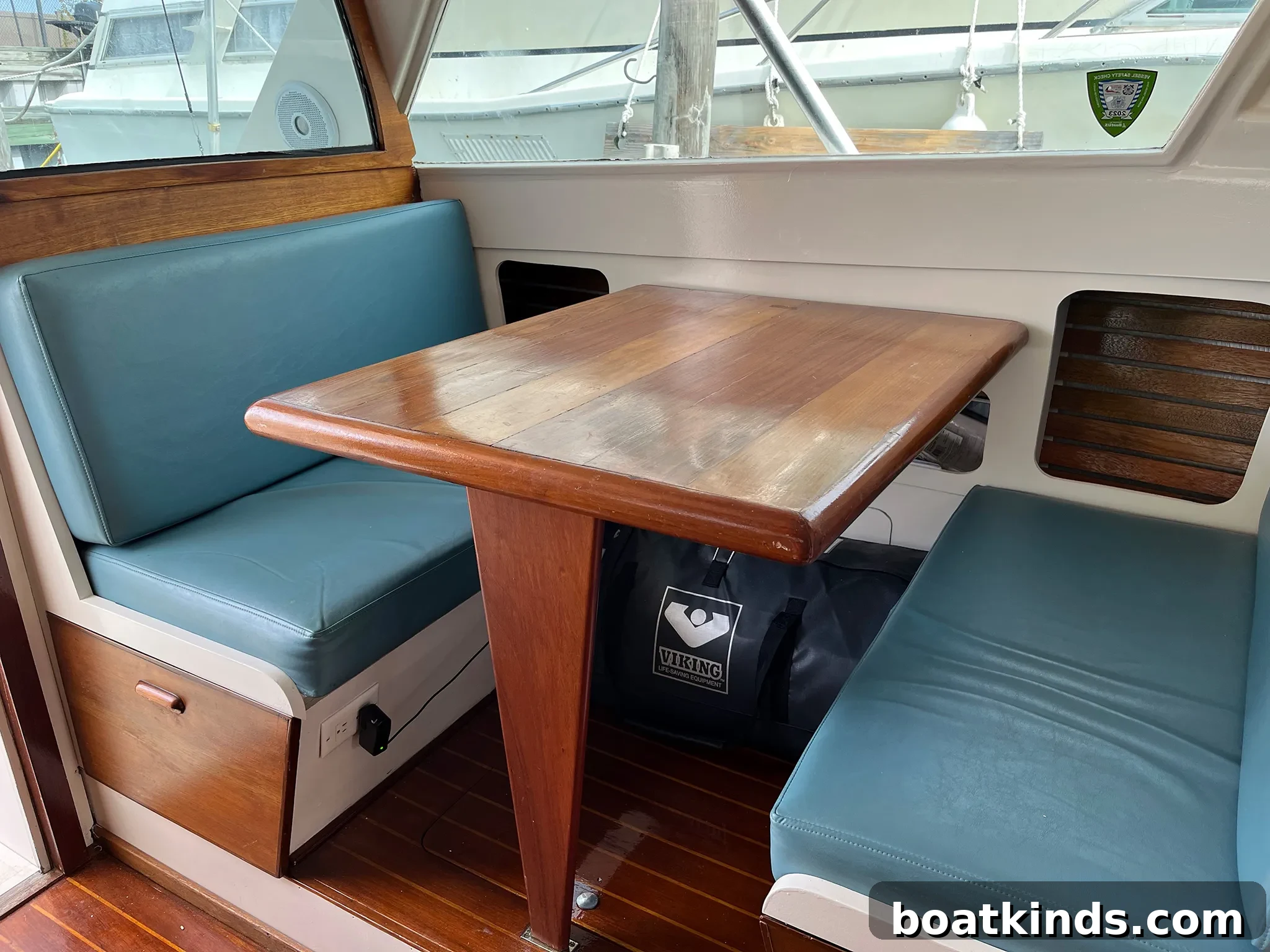
Additional modifications over the years have focused on cosmetics, comfort and fishability. Anthony led a major cabin refit that included new mahogany and Ipe flooring, a handmade teak-and-holly table with bench seating, a renovated head with a Jabsco porcelain toilet, and a simplified galley with a modern refrigerator, coffee maker and microwave. He installed Corian countertops, built a pocket door for the head, and replaced side and aft cabin windows with one-way tinted limousine glass with custom gaskets. The forward windshield and aluminum frames were replaced with a Homesly fiberglass kit.
Anthony also replaced the previous Glasstek cockpit deck with a custom Coosa composite deck for significant weight savings and added two large fish-box hatches with bilge and lazarette access.
Electronics, Energy and Weight Savings
In 2017 the Licos installed a large Airmar thru-hull transducer flush to centerline so it would not create drag — a job that required cutting a section of the keel and fabricating a recessed housing glassed in place. New Furuno electronics followed. They reworked the cabin headliner to create two large overhead panels that open to the electronics bay behind the helm, routing wiring through a dry central backbone space. Lighting was replaced with low-draw LEDs, allowing the removal of the old generator in favor of an inverter system with dedicated batteries capable of running everything — including air conditioning — for up to three days without recharging, while reducing overall weight.
Final Touches, Ongoing Work and Sea Trial
Anthony also fabricated a custom radiused dash with curved sun visors to shield two multifunction displays, and added teak-padded armrests and ladder-back seats to the side-by-side helm chairs. When asked whether the boat was finished, Anthony laughed: “It’s never done.” They planned to remove and rebuild the cabin’s aft bulkhead and complete a few other maintenance items before launching for the 2025 season.
On a sea trial in Patchogue Bay the two well-seasoned Cummins fired instantly, warmed by block heaters. Despite a rough, windy chop, Phoenix held steady. At a 26-knot cruise she felt level and composed, with a reduced bow rise compared with stock Bertram 31s. Bob pushed her to 35 knots, and he claims she’ll reach 38 knots with a fresh bottom. The ride was smooth, quiet and fast — proof that careful engineering and thoughtful modifications can dramatically improve an older hull’s performance and comfort.
Bob and Anthony remain active in Bertram 31 owner communities, sharing their restoration experience and helping other owners. This winter they’ll prepare Phoenix for a long-awaited self-delivered run to a Bertram 31 rendezvous in North Carolina, where the boat is expected to attract plenty of attention.
January 2025