
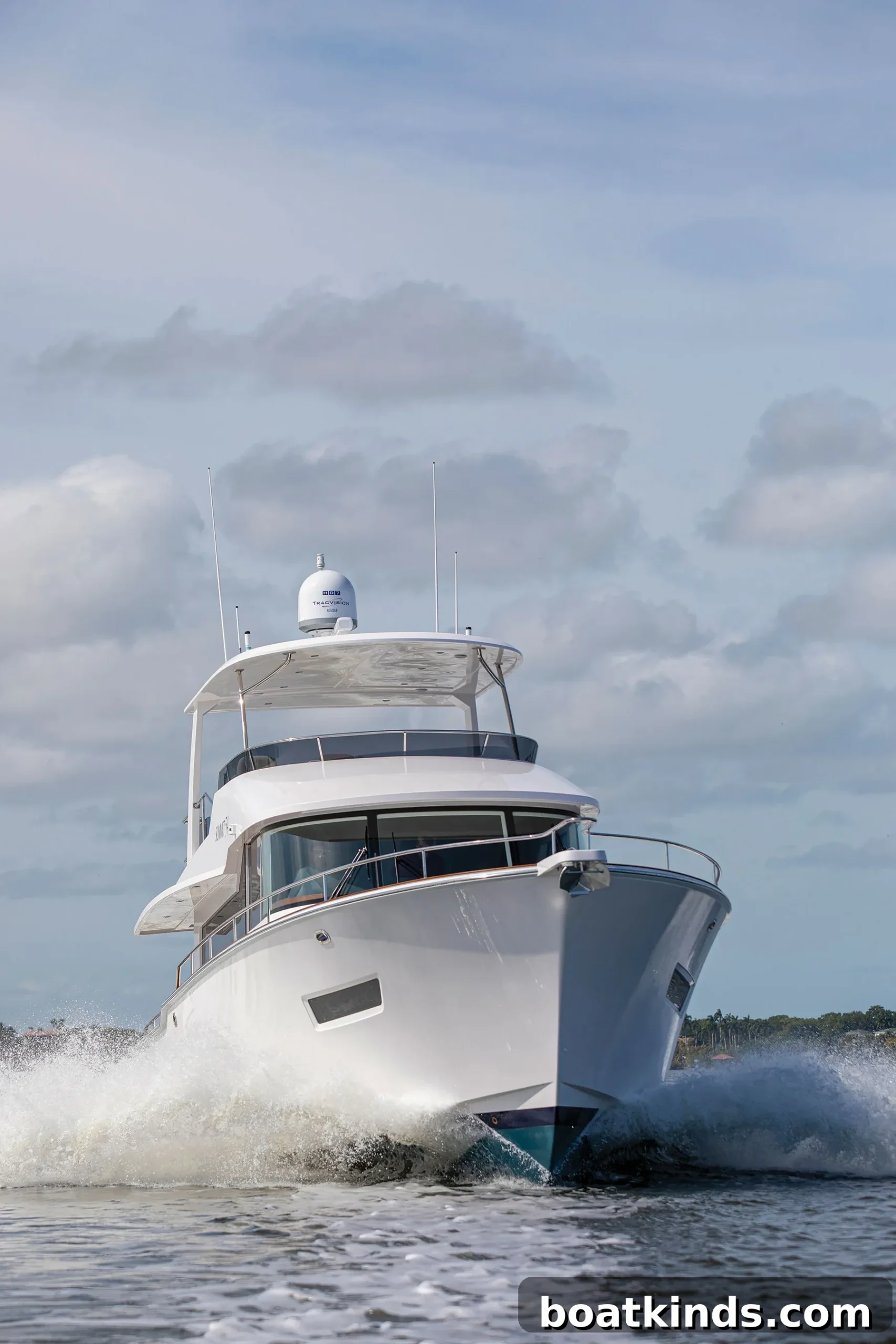
In the 1990s, choosing a passagemaking powerboat was straightforward: sail or power. For those who wanted power but worried about burning through fuel in the first few hundred miles, trawlers were the obvious answer. Their slow, fuel-sipping diesels earned them a loyal following among serious cruisers. The trade-off was speed—most traditional trawlers struggled to exceed 10 knots and were happiest between 6 and 8 knots. At least you didn’t have to manage sails.
Today the market offers more options. Full-displacement trawlers remain a sensible choice for many cruisers, but a new segment—fast trawlers or trawler yachts—has emerged. These boats retain the classic trawler aesthetic and comfortable accommodations but deliver significantly higher speeds, typically in the 13–20 knot range, often without sacrificing fuel efficiency. That raises a key question for buyers: slow and efficient or fast and flexible? To explore the trade-offs, we spoke with builders and owners of several passagemaking fast trawlers.
SUMMIT MOTORYACHTS 54
Larry Polster brings deep trawler experience to Summit Motoryachts, having worked at Kadey-Krogen after a long consulting career. Kadey-Krogen recently launched a new brand—Summit Motoryachts—and unveiled Hull No. 1 of its fast-trawler model, the Summit 54, penned by naval architect Michael Peters. The Summit 54 marks a deliberate move away from the full-displacement designs Kadey-Krogen is known for.
Polster explains the market logic: many Kadey-Krogen fans love the brand but need to cover greater distances in limited time—weekenders, professionals or those who simply don’t want to spend days getting between destinations. The Summit 54 answers that need.
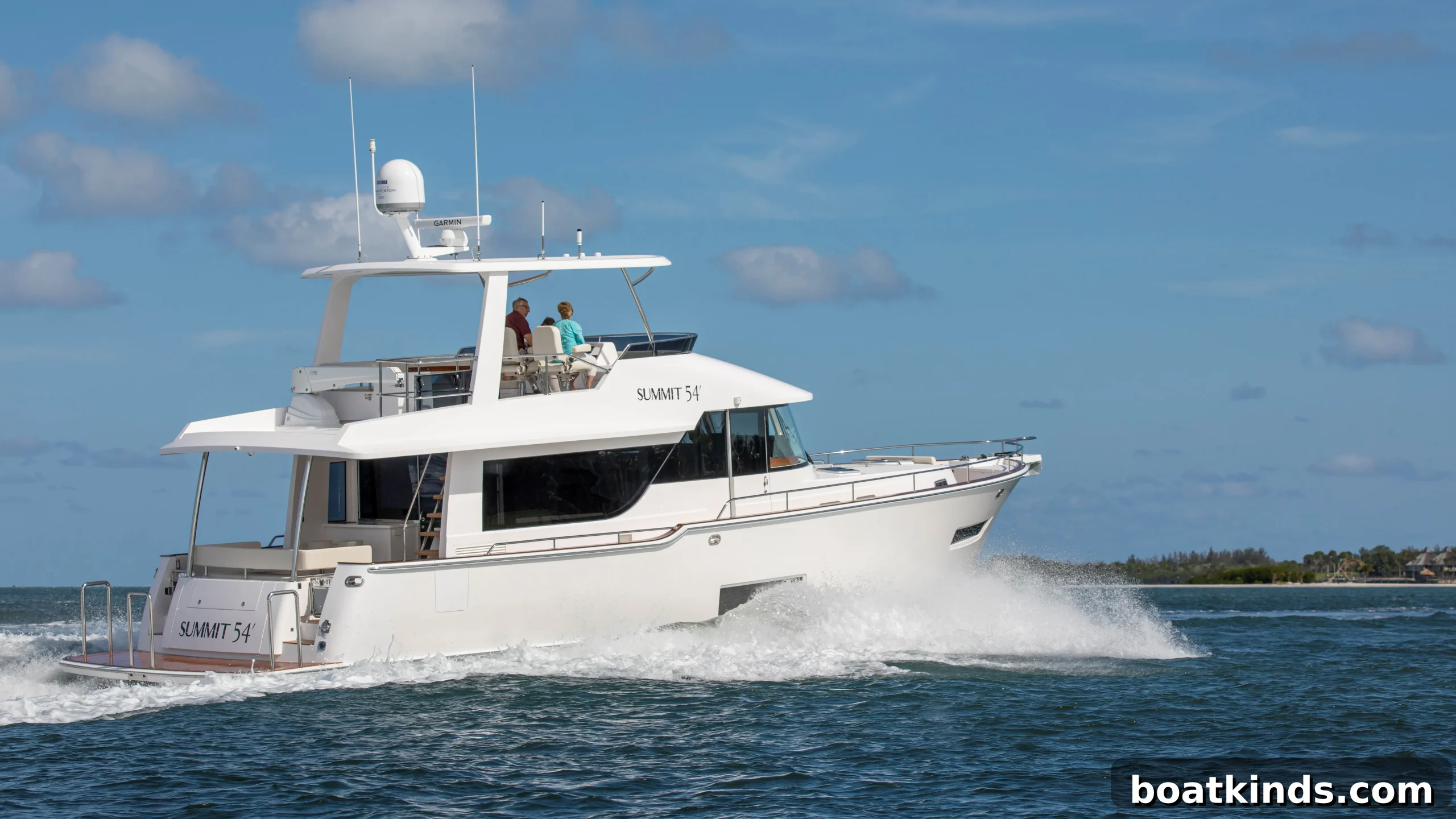
The Summit 54 uses a modified-V planing hull and twin 542-hp Cummins diesels, giving a 25-knot top speed. Practical cruising speeds range from 15 to 19 knots, while a slower 9-knot speed delivers the best fuel economy. The boat blends rugged, modern styling with trawler-like functionality.
Below, the layout includes three staterooms and two heads with enclosed showers. The main salon is arranged on two levels: the raised area houses the lower helm to starboard with a U-shaped lounge and table opposite; two steps down is a full galley with a breakfast bar and stools, open to the cockpit. Deck-wise, teak appears on the swim platform, cockpit and forward cabin trunk, and a flybridge above offers a centerline helm, lounge and sunpad—ideal for longer passages or casual entertaining.
Beneteau Swift Trawler 41
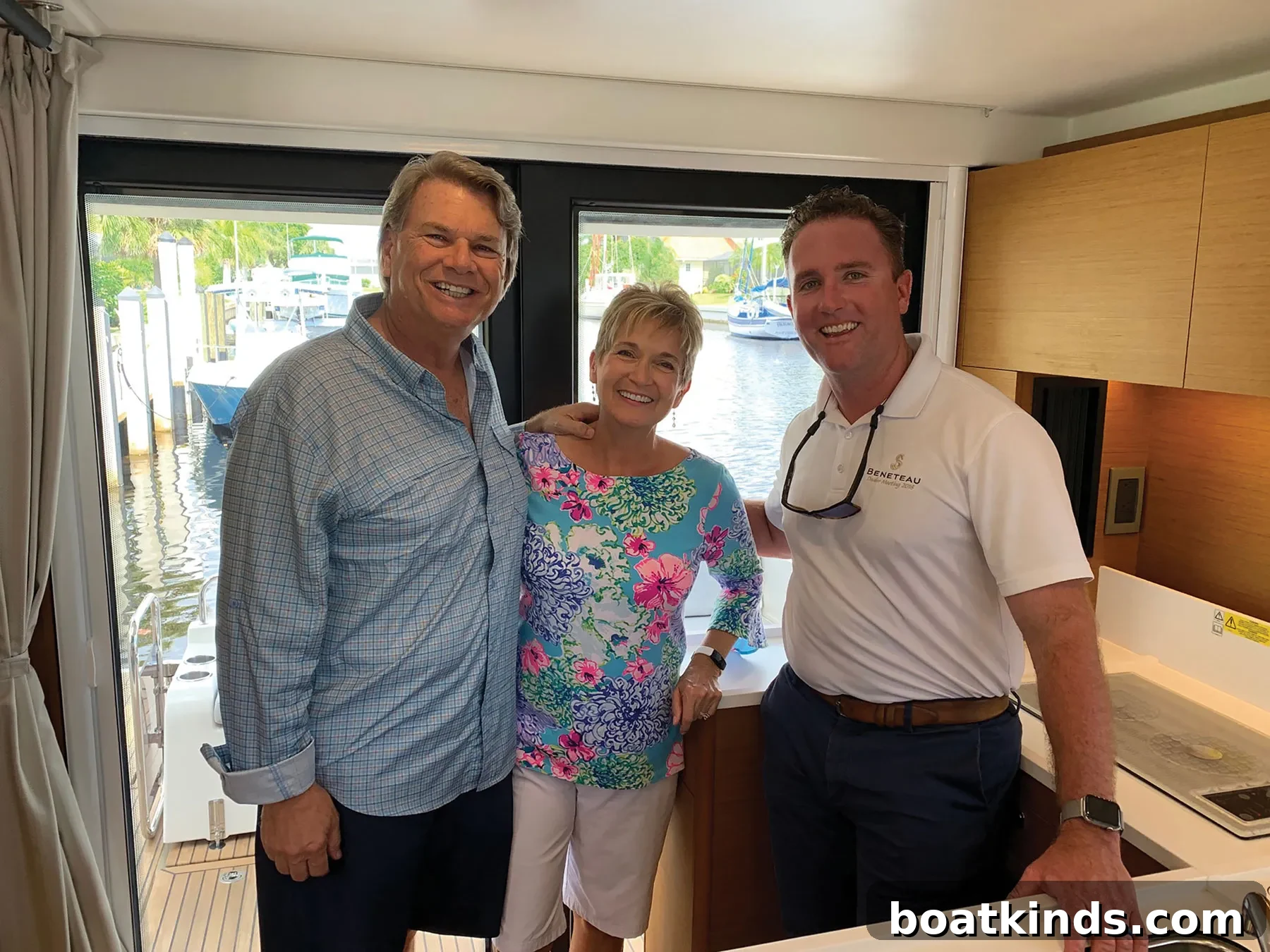
Rick and Brenda Brown moved to Punta Gorda, Florida, in 2009 after years of boating on lakes and rivers. They initially eyed express cruisers but were captivated by the Swift Trawler style after seeing a Beneteau Swift Trawler 44 Flybridge dockside. The Browns liked that the Swift Trawler gave them a comfortable mid-range speed without the complexity of high-performance boats.
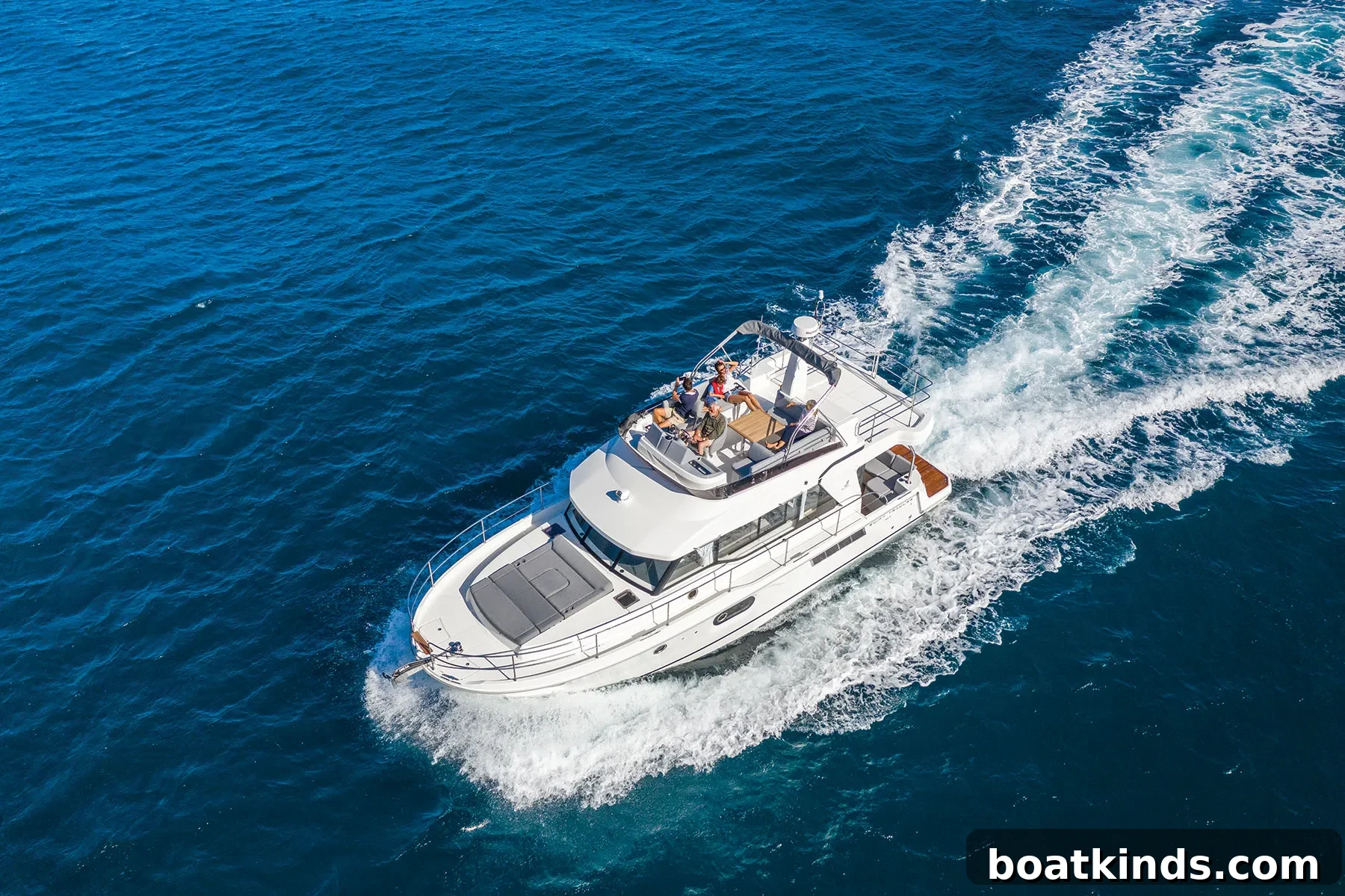
The Swift Trawler 44 they first saw used twin 300-hp diesels on a modified-V hull, topping out around 24 knots and cruising in the mid- to high-teens. After several years exploring Florida and the Bahamas, the Browns traded the 44 for a Swift Trawler 41 Flybridge, a slightly smaller, more practical fit for their cruising style.
The Swift Trawler 41 Flybridge offers three staterooms and two private heads. The main salon is bright and airy with wraparound glazing, a lower helm and aft galley. Rick highlights a sliding side-deck access door beside the helm that improves visibility and makes docking easier. Their 41 is powered by twin 300-hp Volvo Penta diesels on a modified-V, semi-planing hull. Top speed is about 24 knots, with comfortable cruise speeds between 13 and 18 knots.
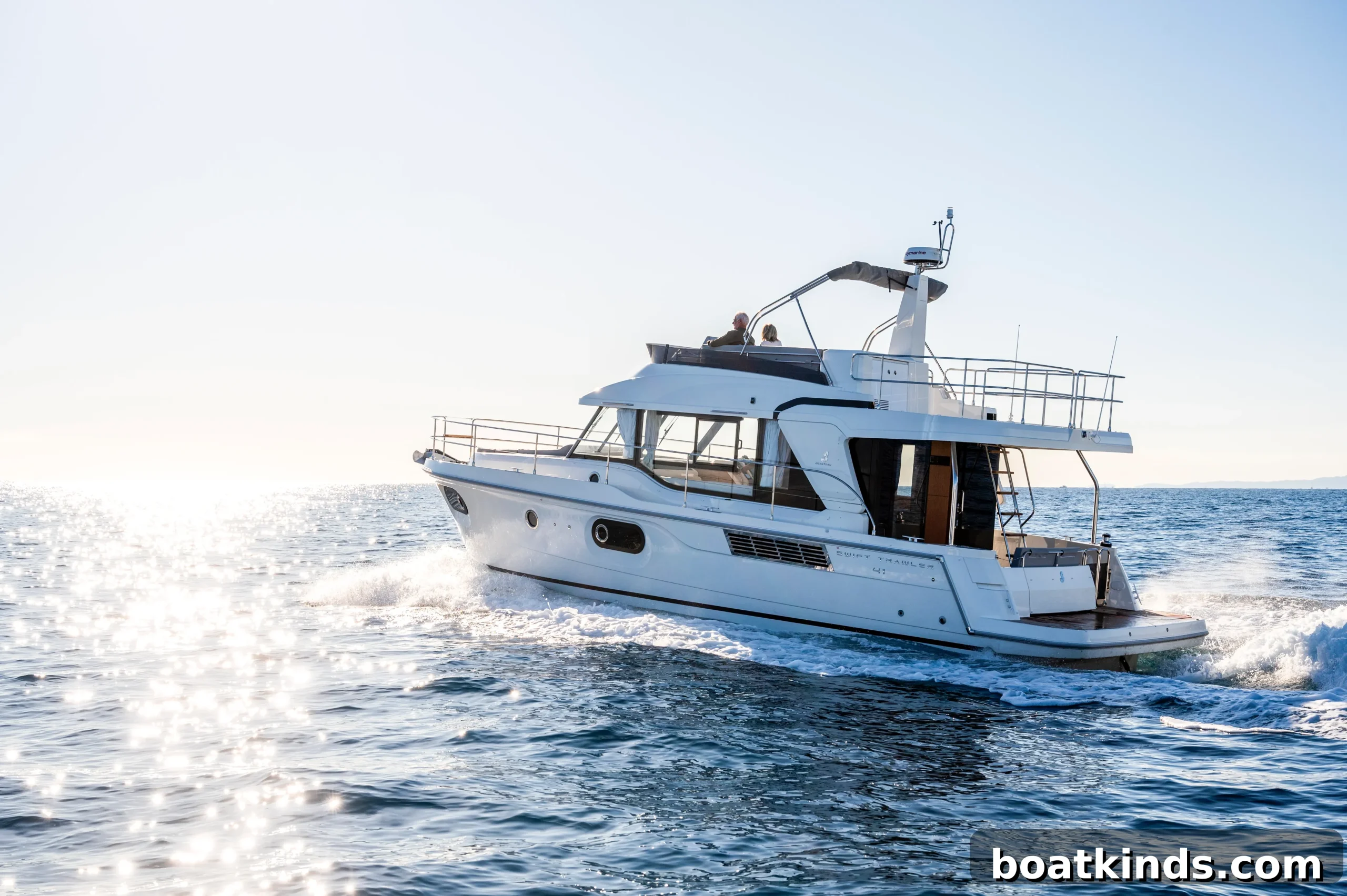
After three seasons aboard, the Browns typically cruise between 15 and 17 knots. Rick appreciates having extra speed available for weather or scheduling needs—speed that can be reassuring rather than indulgent.
OUTBACK 50
The Outback 50 is a distinctive fast-trawler developed by Andrew Cilla of Luke Brown Yachts in collaboration with John Olson of Offshore Yachts and naval architect Michael Peters. Cilla had wanted to build this boat for about a decade, and the design process revolved around a central question: at what speed should the hull perform best? The team answered with a hull optimized for 18–20 knots.
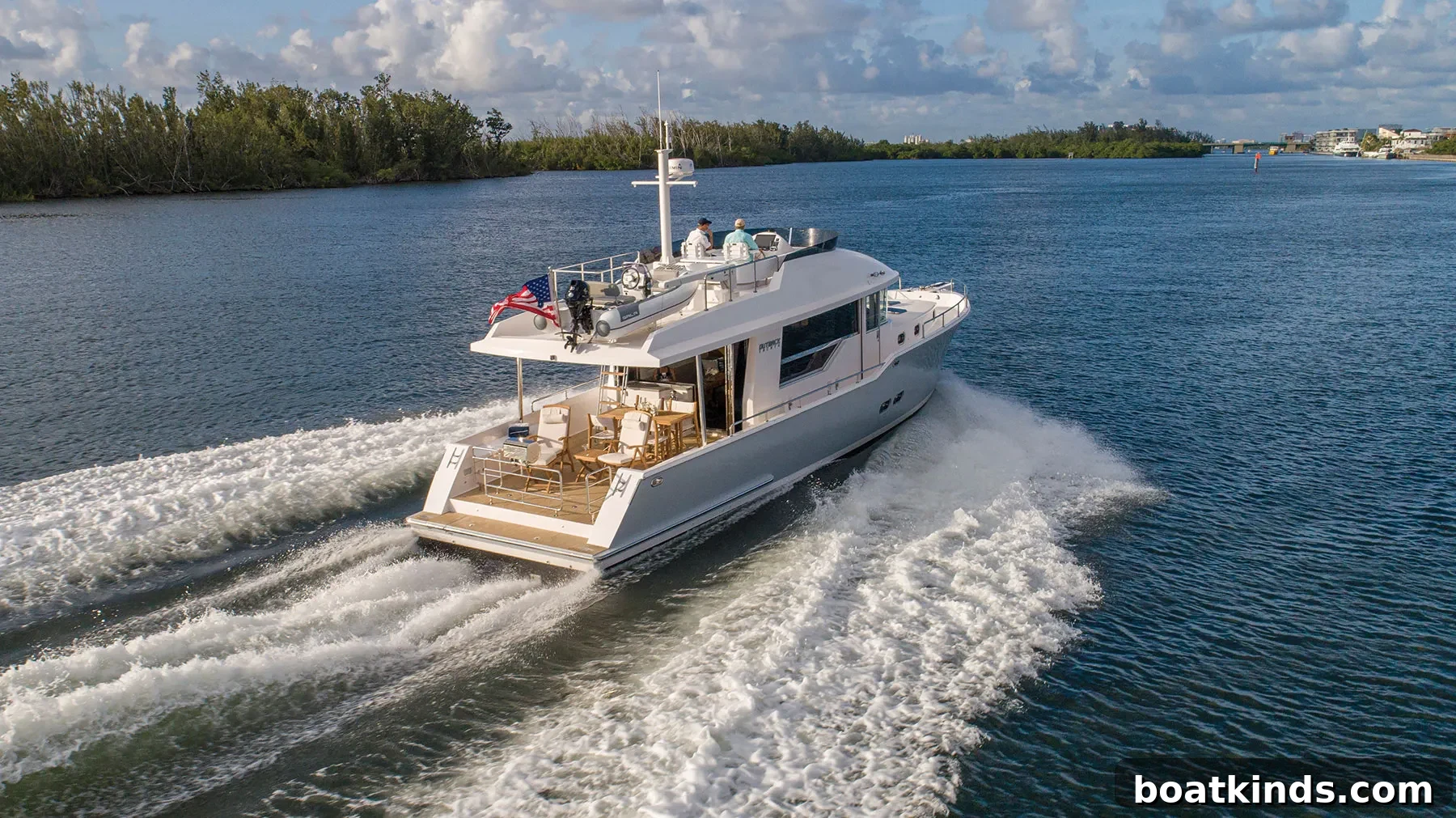
Peters’ layout places 45 feet of interior volume within a 56-foot hull and a 52-foot waterline. With optional twin 425-hp Cummins diesels, the Outback 50 reaches a 24-knot top end and comfortably cruises between 18 and 20 knots. Cilla notes the hull needs only about 500 hp to reach 20 knots, and it can be throttled back to roughly 8 knots to achieve a long-range 1,000-nautical-mile endurance—enough for substantial coastal hops.
Designed to perform like pilot boats, the Outback combines speed, seaworthiness and nimble handling. Cilla likens its feel to “driving a big center console,” emphasizing quick, confident control even in challenging conditions.
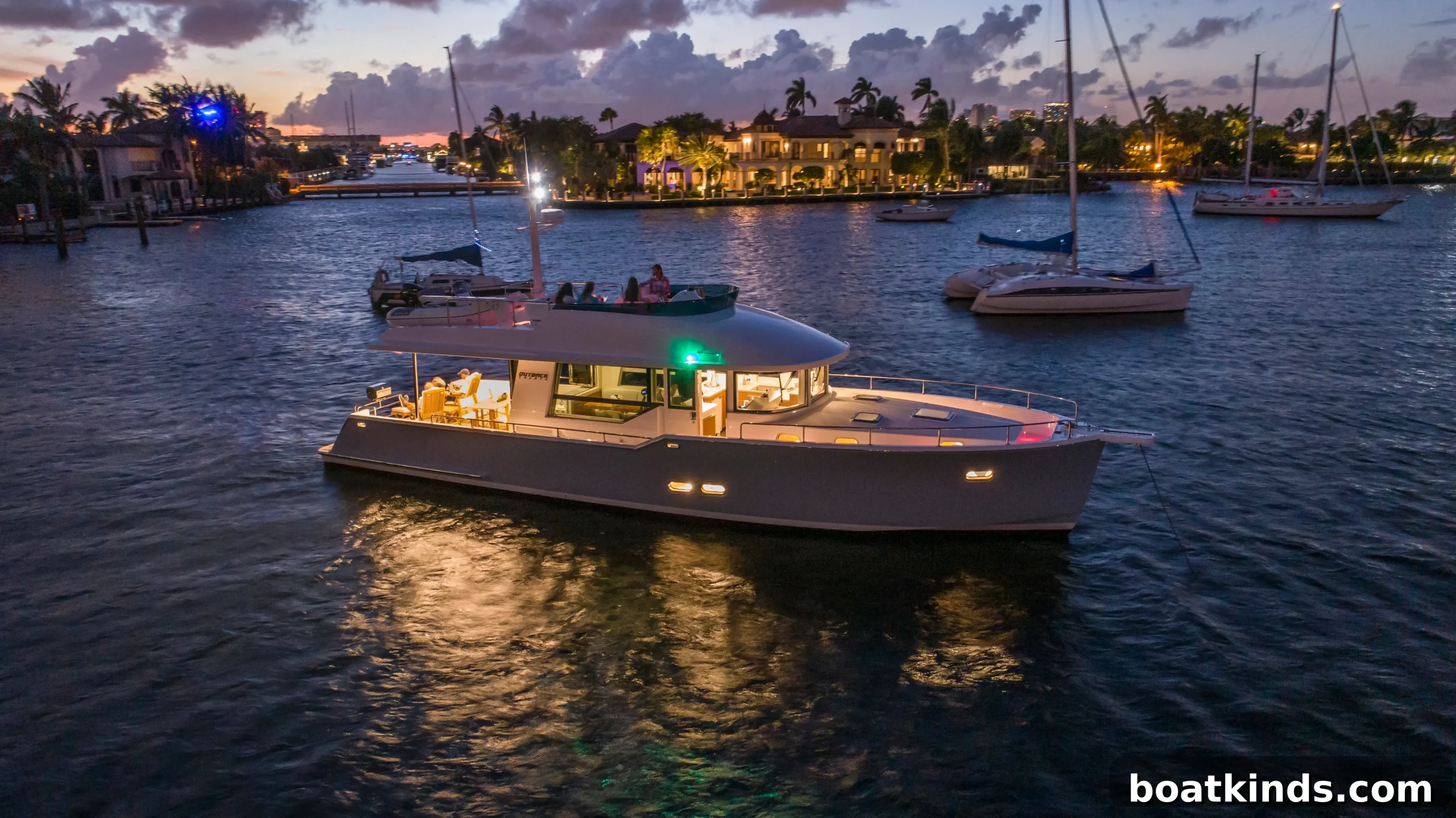
Built by Kha Shing Enterprises in Taiwan, Hull No. 1 was completed for Cilla in a three-stateroom, two-head layout; a two-stateroom option with a single head is also offered. Hull No. 1 currently resides in Newport, Rhode Island, with subsequent hulls already in production or delivered.
AMERICAN TUG 395
Bruce and Dorsey Beard cruise their American Tug 395, Esmeralde, from Jamestown, Rhode Island, accompanied by their Scottish terriers, Pepper and Mattie. Both come from sailing families—Dorsey has completed trans-Atlantic and trans-Pacific passages—yet the couple shifted toward power for practical reasons.
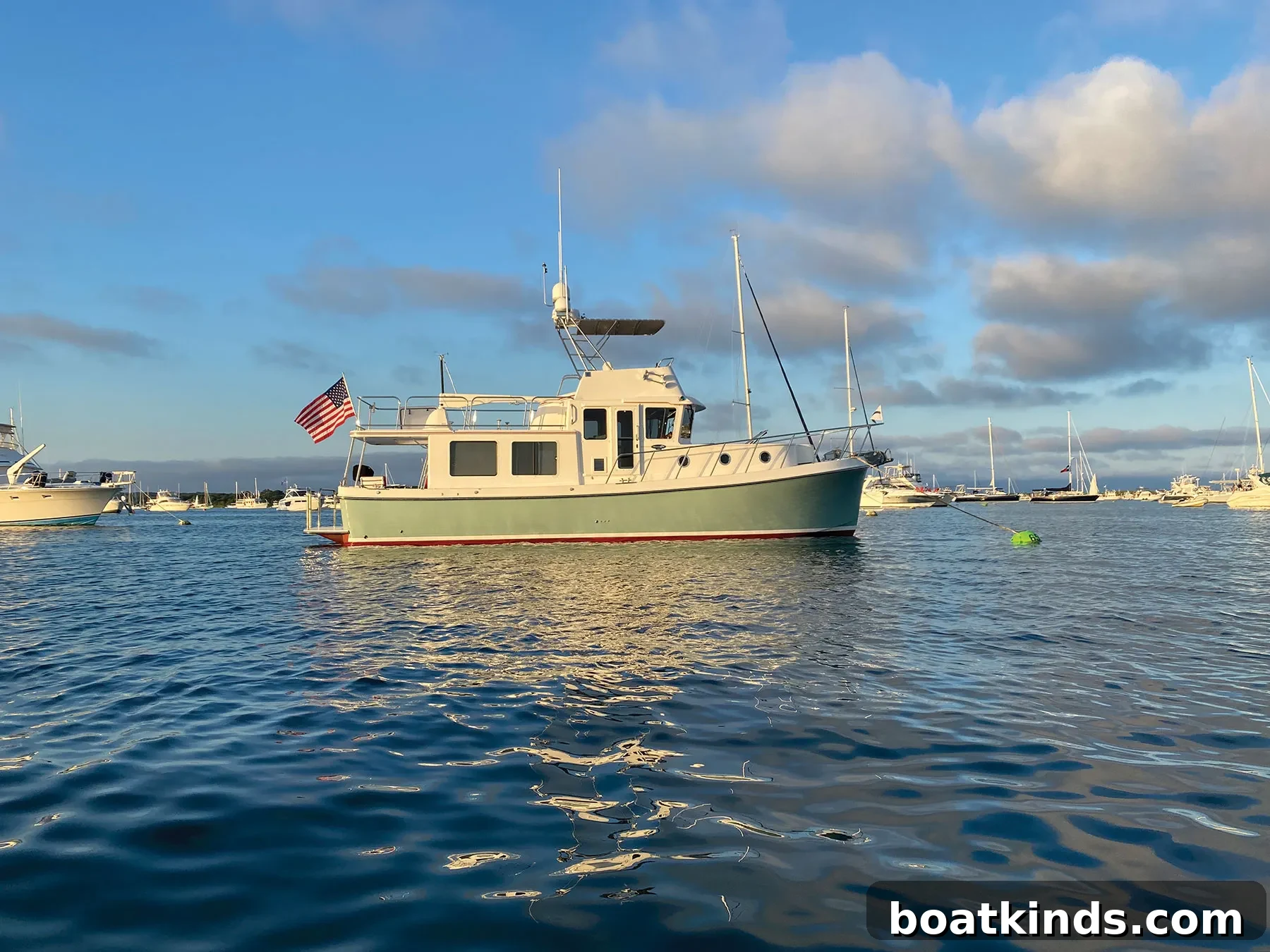
After motoring more than sailing on their previous yachts, the Beards decided a faster powerboat better matched their cruising plans. They selected an American Tug 395 with a single 480-hp Cummins diesel, which comfortably cruises at 15–16 knots and has a top speed near 19 knots; the boat’s most efficient “sweet spot” is about 13 knots.
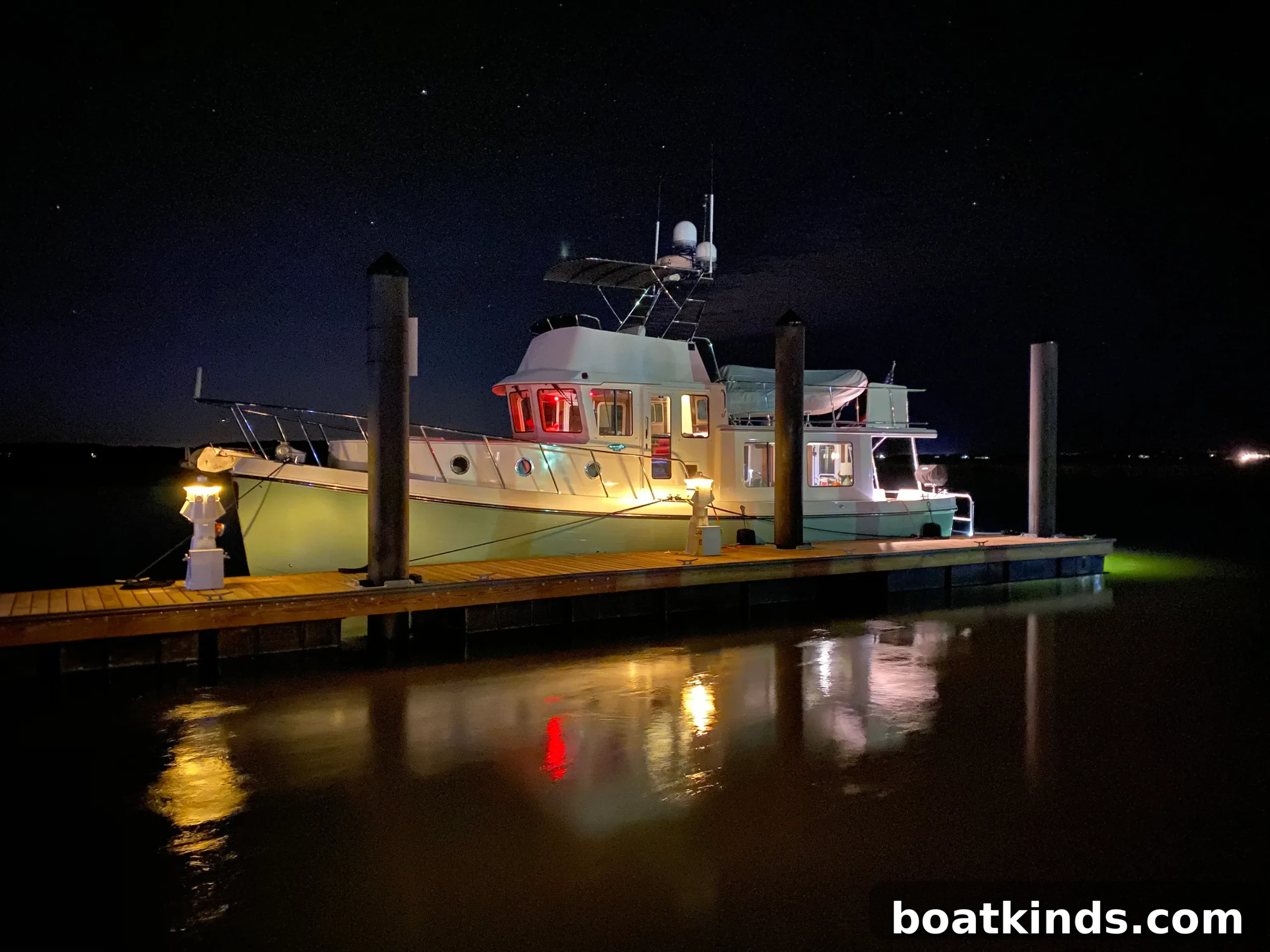
The 395’s layout includes two staterooms and a single head, with the master forward. A few steps up leads to the wheelhouse, featuring a starboard helm and bench lounges; the salon and galley sit one level down and open to a protected cockpit via a heavy-duty door.
Early on, the Beards realized speed can be a safety factor. During a shakedown cruise in the Pacific Northwest they needed to escape a deteriorating anchorage and made a 20-mile run to refuge—something a 7–8 knot displacement boat couldn’t have managed in time. Later, during the pandemic, the 395’s speed and range allowed them to move quickly between safe harbors and reach home ports when access to fuel and marinas became uncertain.
With plans to cruise Georgian Bay, the North Channel, interior canal systems and Lake Champlain, and to truck the boat back to the Pacific Northwest for future exploration, the Beards value their tug-style fast trawler for its combination of comfort, range and practical speed.
KROGEN EXPRESS 52
Brad Hurlburdt grew up on Lake Champlain and developed a lifelong appreciation for well-designed boats. After years of smaller boats, a Monk 36 trawler and long coastal runs, Brad and his wife Karen discovered the Krogen Express 52 at the West Palm Beach Boat Show in 2015 and decided to purchase a hull arriving soon after the show.
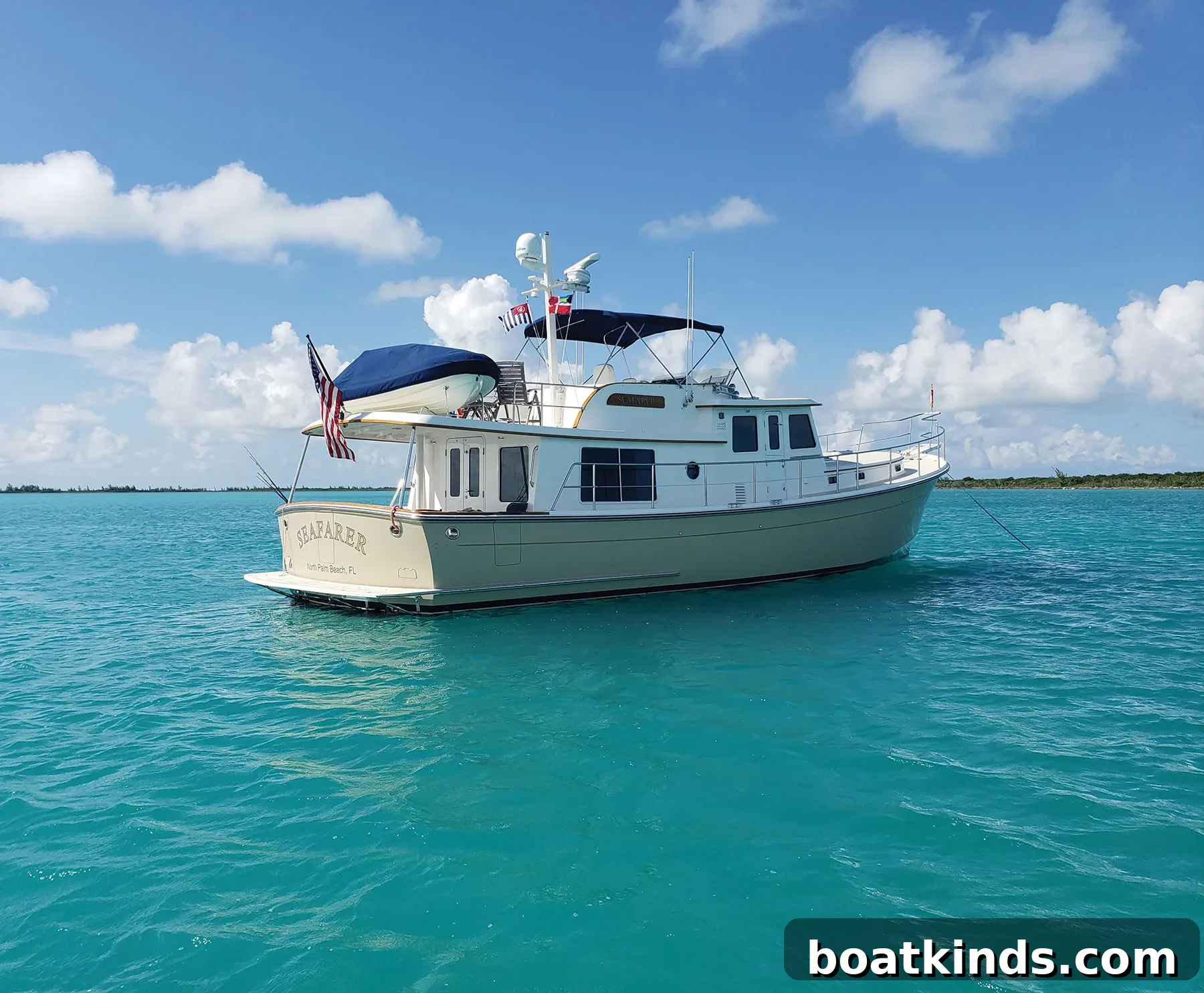
The Krogen Express 52 the Hurlburdts own is powered by twin 480-hp Yanmar diesels. The semi-displacement hull tops out near 21 knots and cruises efficiently between 15 and 18 knots. The family has made multiple trips to the Bahamas and around South Florida, and Brad appreciates the flexibility that extra speed offers—combined with stabilizers that keep the ride comfortable.
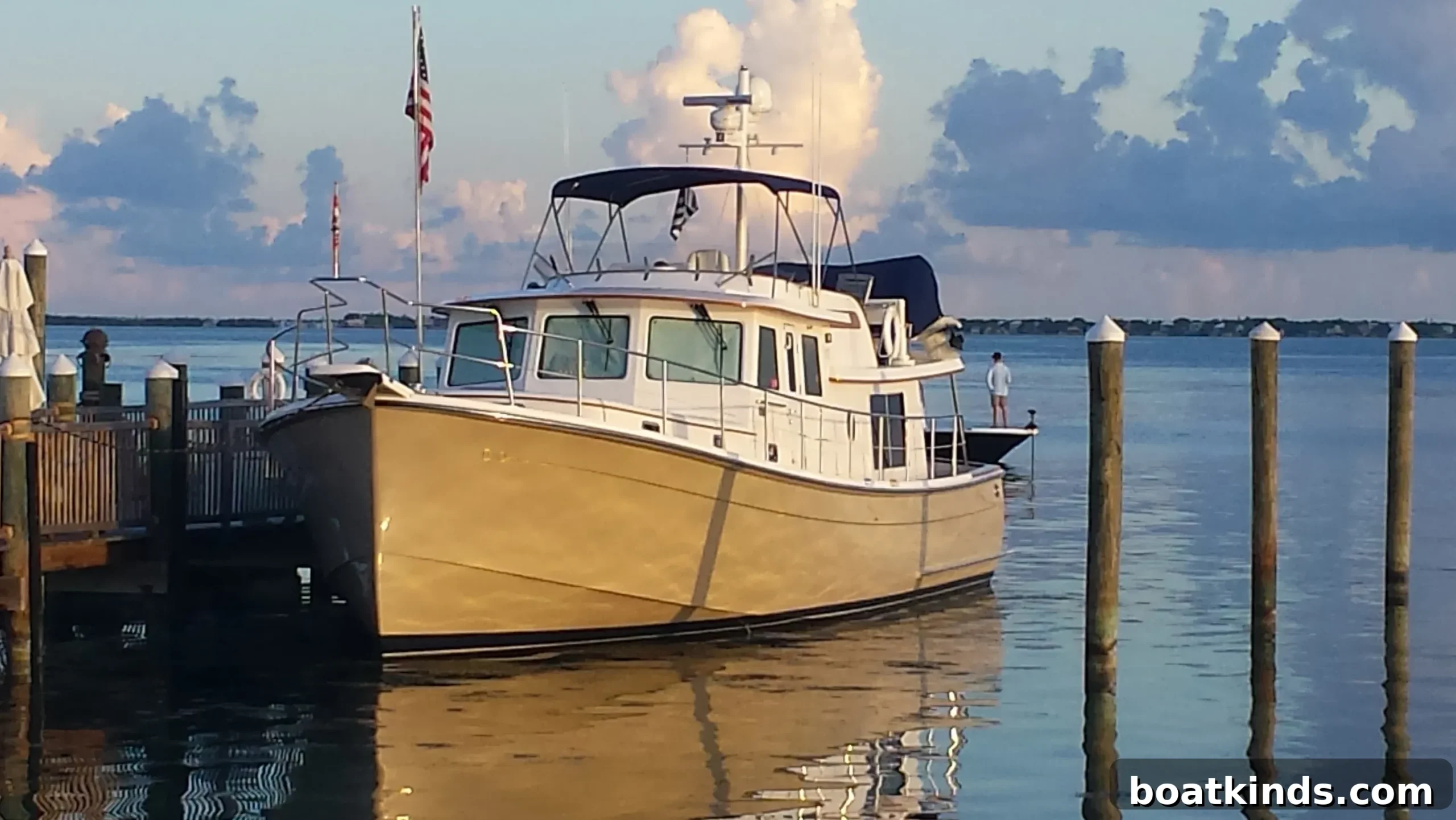
Accommodations include two staterooms with the master forward and an office-style cabin with convertible berths abaft and to starboard. The raised wheelhouse contains a centerline helm, bench lounge and side-deck access doors. The salon includes an L-shaped galley that supports comfortable liveaboard cruising.
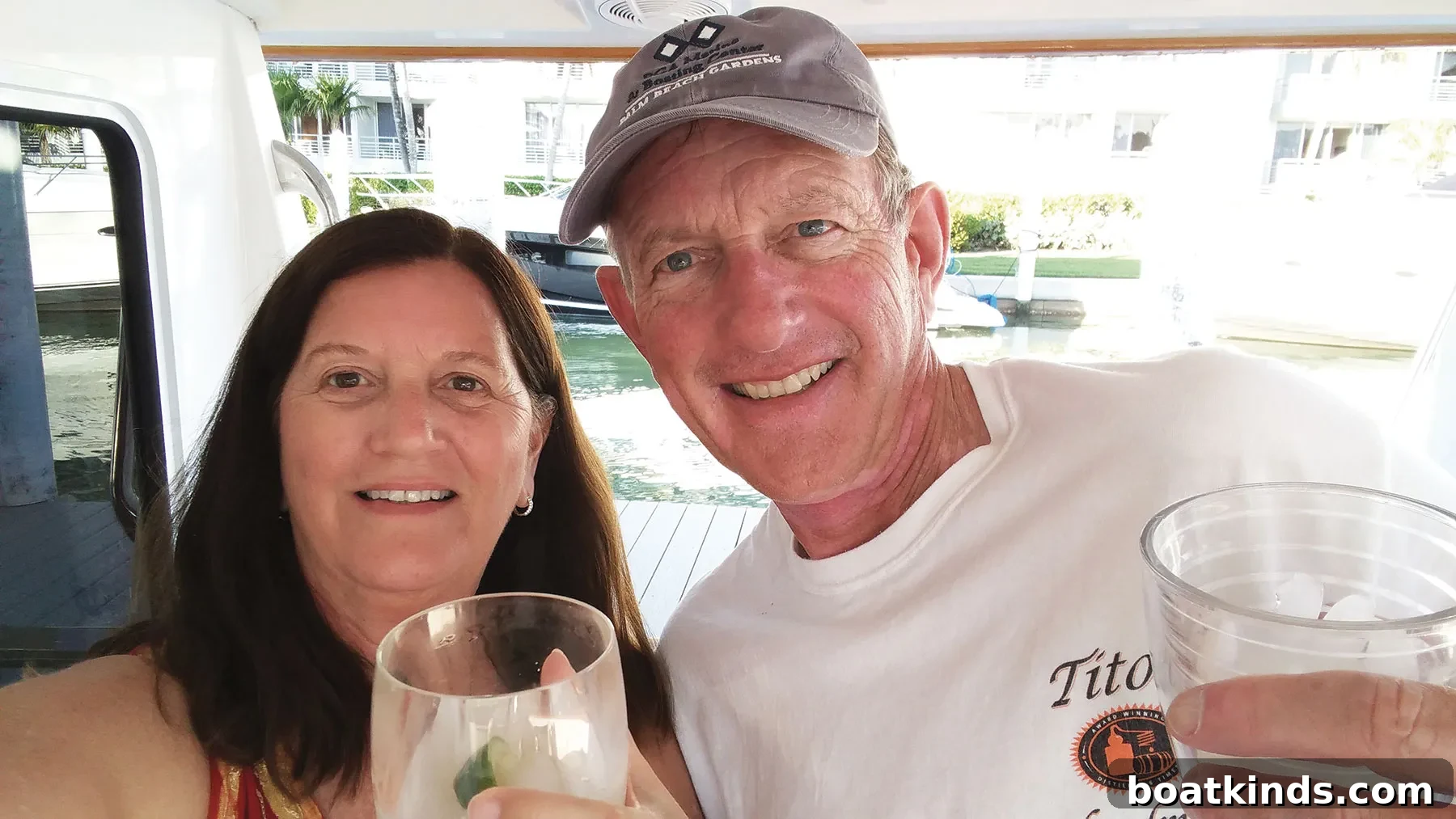
Brad and Karen are planning an extended cruise to Lake Champlain and back, allowing several weeks to explore Chesapeake Bay and its tributaries en route. The Krogen Express 52 has given them the confidence to plan longer, family-friendly voyages and enjoy more of the water with less transit time.
This article was originally published in the November 2020 issue.