
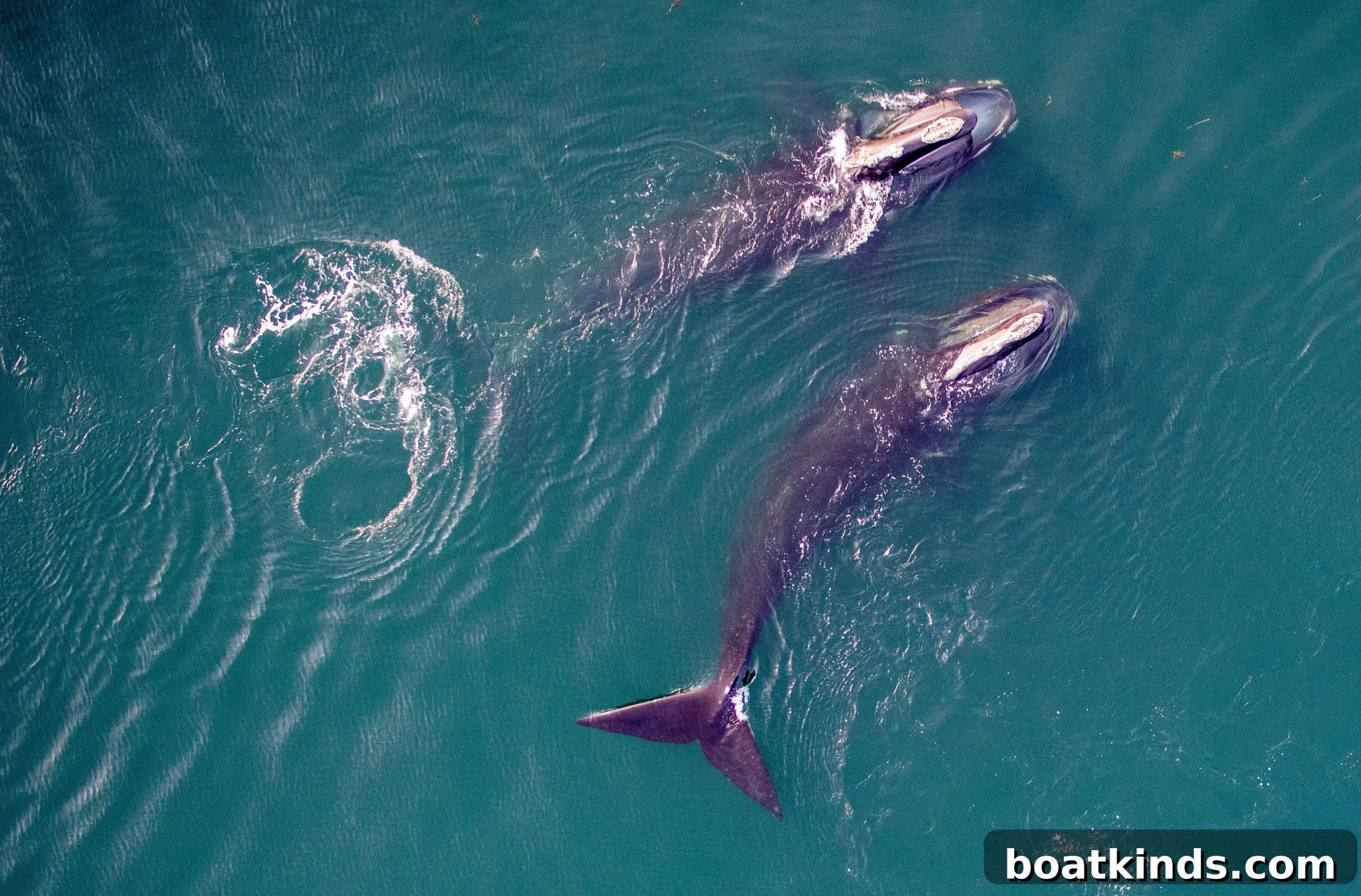
Time is running out for the recreational boating community to weigh in on the National Oceanic and Atmospheric Administration’s proposed North Atlantic Right Whale Vessel Strike Reduction Rule. This proposed rule would impose seasonal speed limits in certain coastal areas to reduce the risk of vessel strikes on endangered North Atlantic right whales.
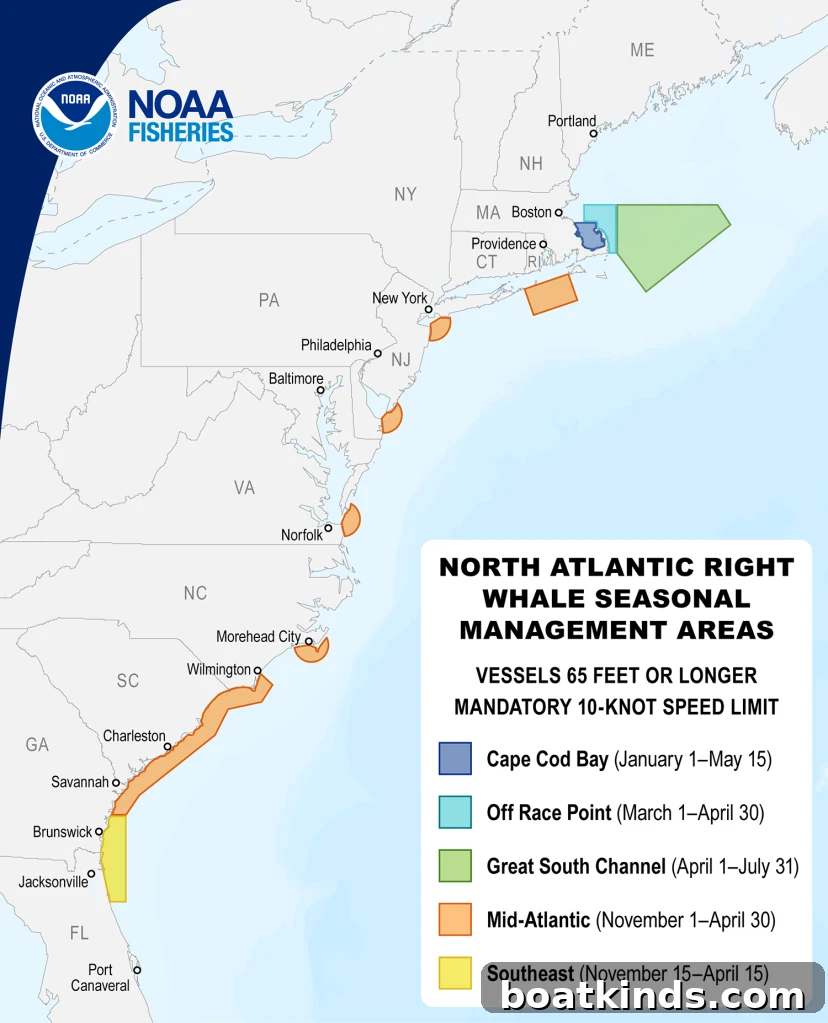
NOAA has issued a notice of proposed rulemaking and opened a public comment period for the plan. The proposal could require most vessels 65 feet and larger to slow to 10 knots in designated locations along the U.S. East Coast during specified times of the year when right whales are most likely to be present. The campaign to reduce vessel strikes is part of broader conservation efforts focused on protecting this critically endangered species.
Industry groups and recreational boaters have emphasized the need for a measured approach that recognizes differences in vessel type, operation, and available technology. A statement from the National Marine Manufacturers Association summarized those concerns:
“NOAA’s review follows the agency’s 2024 withdrawal of a sweeping 2022 proposal to expand vessel speed restrictions along much of the East Coast. The recreational boating community raised serious concerns that the proposal treated small recreational vessels the same as large commercial ships, failed to account for vessel design and operating conditions, and overlooked the growing role of marine technologies that can help reduce vessel strike risk.”
Advocates for the recreational boating sector argue that modern detection and mitigation tools—such as radar, sonar, LIDAR, thermal imaging, and artificial intelligence—can meaningfully reduce the risk of collisions without applying a one-size-fits-all speed limit. These technologies can improve situational awareness for captains and allow safer, more targeted responses when whales are detected nearby. For many operators, integrating vessel-specific risk assessment, safety procedures, and onboard systems offers a way to protect whales while minimizing unnecessary disruption to boating activities and local economies.
“This is not about eliminating protections,” said John DePersenaire, director of government affairs and sustainability for Viking Yachts. “It is about moving forward with NOAA’s preferred way of mitigating vessel-strike risk—technology. Conservation and safe vessel operation are not mutually exclusive, and the public comment process gives owners, captains and businesses a chance to explain why technology, vessel-specific risk, safety and economic impact must be part of any future approach.”
The recreational boating industry stresses that any final rule should balance whale protection with practical considerations for mariners. That includes accounting for vessel handling characteristics, visibility and operating conditions, port access and navigational safety, and the potential economic impact on marinas, charter operators, and coastal businesses. Stakeholders are urging NOAA to include flexibility that recognizes technological advances and operational differences between small recreational boats and large commercial vessels.
North Atlantic right whales migrate seasonally along the East Coast, and vessel strikes are a leading cause of injury and death for the species. Speed restrictions are one tool to reduce strike risk because lower speeds can give crews more time to detect and avoid whales and can reduce the lethality of collisions. However, the industry and some conservation partners emphasize that speed limits should be combined with detection technology, reporting systems, and targeted management measures to achieve the greatest conservation benefit with the least unintended harm to safe navigation and coastal economies.
NOAA’s public comment period is a vital part of the rulemaking process. It allows owners, operators, industry associations, conservation groups, and members of the public to share data, operational experience, and policy recommendations. Detailed, constructive comments that explain operational realities, offer technological solutions, or propose alternative mitigation measures can influence how a final rule is shaped.
Comments must be submitted by June 2. Interested parties may submit remarks through Boating United or directly through the Federal Register comment docket identified by NOAA. Those who wish to participate should prepare concise, specific comments that outline concerns, provide evidence or examples, and, where possible, suggest practical alternatives or complimentary measures that support both whale conservation and safe vessel operations.
As the deadline approaches, recreational boaters, manufacturers, and service providers are encouraged to review the proposed rule, assess how potential restrictions could affect their operations, and provide well-reasoned input during the public comment period. Engaging now ensures that a wide range of perspectives—including the role of technology and vessel-specific considerations—are considered as NOAA finalizes its approach to protecting North Atlantic right whales while maintaining safe and sustainable boating along the East Coast.