

Exhaust Temperature Alarms: Early Warning for Raw-Water Cooling Failure
Imagine you are helming through a long, dark night and a floating plastic bag or other debris gets sucked into your raw-water intake. That obstruction can quickly reduce or stop the flow of cooling water to one or more engines. While there are many possible outcomes, one key effect stands out: the temperature inside the engine’s exhaust system—elbow, hose, muffler, or other exhaust component—typically rises much faster than the engine’s internal temperature.
This behavior creates a simple, effective opportunity for an early warning system. By monitoring exhaust temperature rather than waiting for engine overheat alarms or loss of power, you can detect cooling problems sooner and take action before irreversible damage occurs. An exhaust temperature sensor and helm-mounted alarm (visual, audible, or both) can significantly reduce the risk of catastrophic failure from a raw-water cooling blockage.
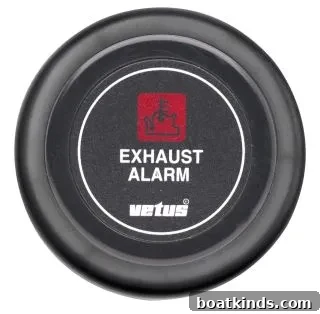
Some modern boatbuilders already fit exhaust temperature alarms as factory equipment. For boats that don’t have this feature, there are reliable aftermarket systems that provide the same protection and are usually straightforward to install. Typical installations involve mounting a temperature sensor to an exhaust hose, elbow, or muffler, running wiring back to a monitor at the helm, and connecting the sensor and monitor to the boat’s electrical system. Many systems are plug-and-play or require only simple electrical connections and secure mounting.
How these systems work is simple: the sensor measures exhaust temperature and the monitor compares it to a preset threshold. If the exhaust temperature rises quickly or exceeds a safe limit, the alarm alerts you so you can reduce engine load, shut down the affected engine, or take other corrective steps. Because exhaust components respond faster to loss of cooling water than the engine block or head, these alarms provide precious extra minutes to prevent serious damage to pistons, cylinder liners, and other critical components.
Aftermarket exhaust alarms come in different styles and levels of sophistication. Some systems offer basic single-zone monitoring and an audible/visual alarm; others provide multi-zone monitoring for twin or multiple-engine installations, logging, or integration with existing engine displays. When choosing a system, consider compatibility with your engine type (diesel or gasoline), the number of engines, and the locations where sensors can be mounted safely and accurately.
Sensor placement is important. Mount the sensor where it can reliably sense exhaust temperature changes—commonly on the exhaust hose, exhaust elbow, or on the muffler body—following the sensor manufacturer’s recommended locations and mounting methods. Avoid locations that may give false positives from external heat sources, and make sure wiring is routed and secured using marine-grade components and connectors. For reliability, use corrosion-resistant fittings and follow recommended torque specs for any clamps or fasteners.
Routine maintenance and testing are also essential. Verify alarm operation during sea trials, check wiring and sensor mounts regularly for chafe or corrosion, and make part of your engine checks a quick inspection of the raw-water strainer, impeller condition, and exhaust system integrity. A working exhaust alarm is only one layer of protection—good preventive maintenance and attentiveness at the helm remain vital.
Vetus, for example, manufactures exhaust temperature sensors designed to clamp to exhaust hoses or mount on mufflers and offers alarm units suited to marine applications. Many owners report that installing a simple exhaust alarm delivers peace of mind and an effective way to catch cooling problems early, especially during night passages or when visibility is limited.
In summary, an exhaust temperature alarm is a relatively low-cost, high-value addition to a boat’s safety systems. It provides early detection of raw-water cooling failures by monitoring components that respond quickly to cooling loss. Whether fitted at the factory or added as an aftermarket upgrade, a properly installed and maintained exhaust alarm can prevent severe engine damage, reduce repair bills, and increase confidence when underway.
This advice previously ran in Power & Motoryacht magazine.