
Formula 387 CCF: Formula’s Return to the Center Console Market
Writing about boats and fishing for a living is a great job. It has its less glamorous moments, but I’ve always thought I was lucky. That impression got seriously tested the first time I stepped aboard Formula’s first center console since the 1980s and met Abe Haines, the product specialist who played a major role in designing the 387 CCF.
Haines is based in Indiana, where Formula constructs its boats. Indiana isn’t exactly synonymous with saltwater fishing, but you’d never guess that from the 387. This center console is packed with fishing-focused features and a deck layout designed to give anglers plenty of room to fight big fish. In short, it doesn’t look like a boat conceived in the Midwest.
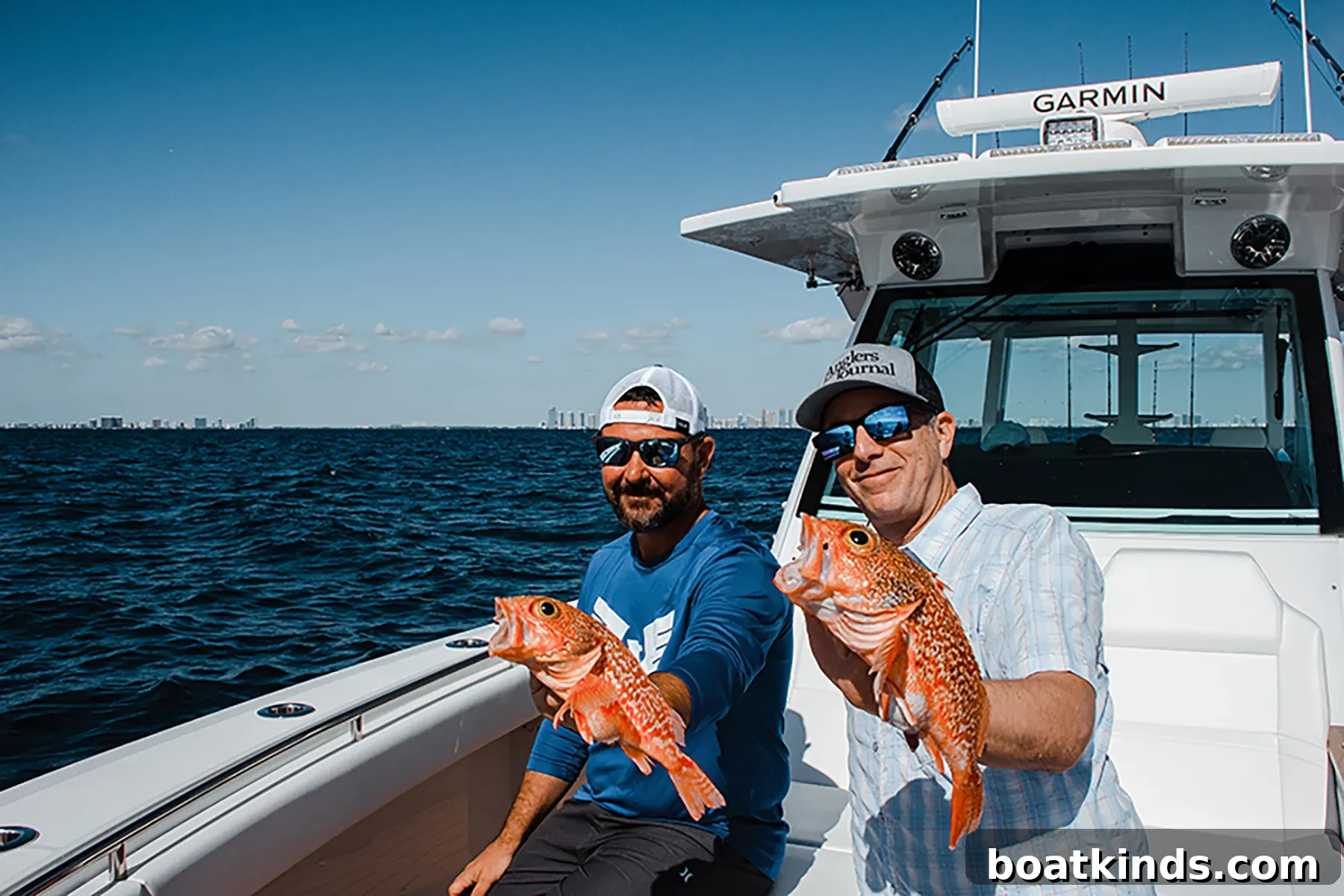
“Do you do a lot of saltwater fishing?” I asked Haines. “I do now!” he replied.
When Formula decided to re-enter the center console market, the company put Haines and other product developers through an intensive, multi-year learning tour. They fished in Louisiana, the Florida Keys, along the Carolinas and as far north as Cape Cod. Each region taught them different styles of fishing and boat usage. That hands-on research shaped the 387’s layout and fishability, and it highlights Formula’s methodical approach to boatbuilding.
“We had a factory in Miami for many years,” Formula President Scott Porter noted, referencing his time operating the Miami plant from 1981 to 1986. “I did a lot of fishing down there, but we knew things had changed. It was valuable for our team to get out and learn what they could.”
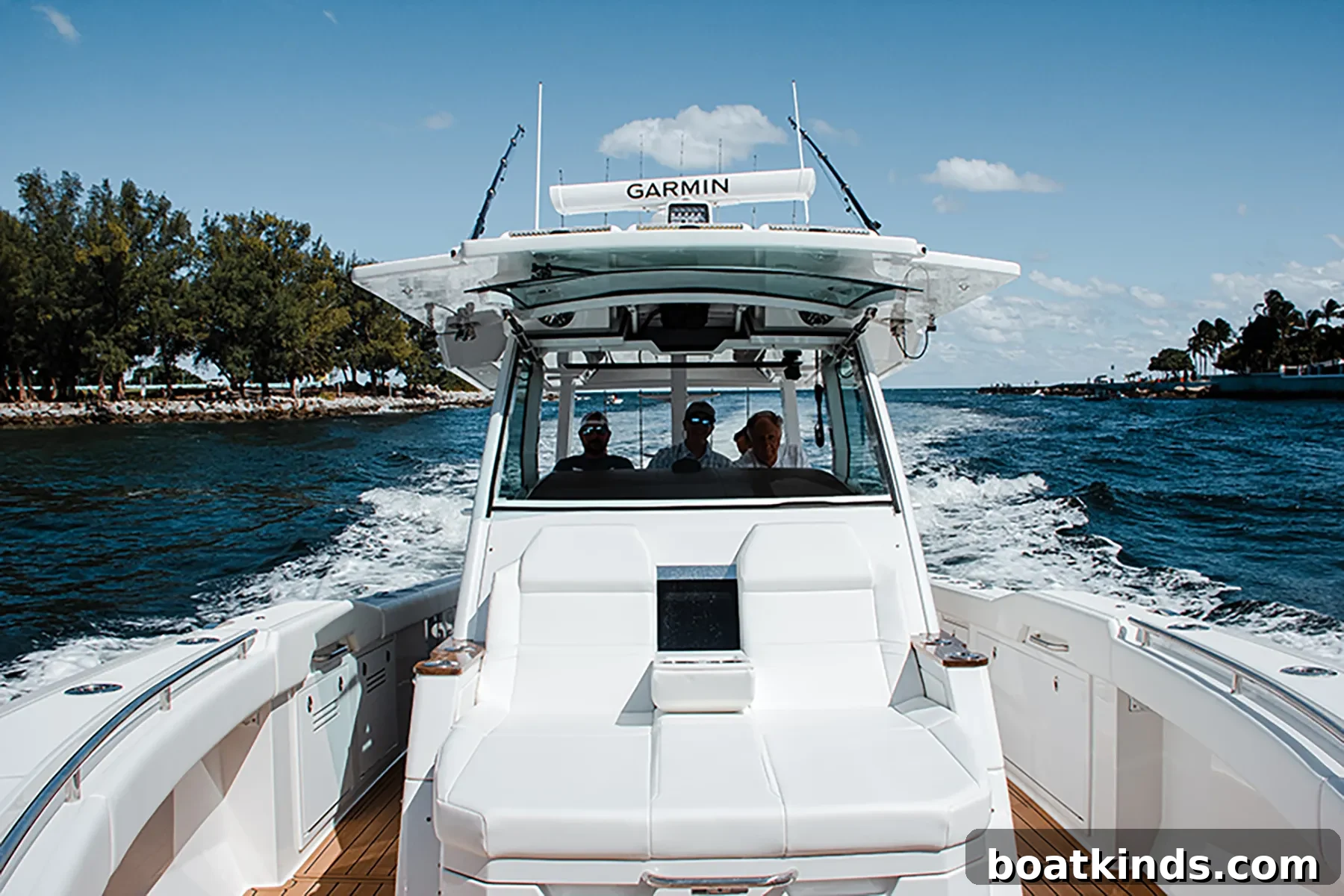
Design: Practical, Durable, Angler-Focused
Offshore fishing is a gear-driven pursuit. One day you might be trolling lures along the edge of the continental shelf, and the next you’re hauling hundreds of live baits. A center console must carry a full arsenal of rods—from light spinning outfits to heavy conventional rigs—while remaining stable and quick. Formula tackled that challenge by building a life-size plywood mock-up in their prototype shop. The team rehearsed in the mock-up, complete with hardtop and outriggers, to refine spacing, rod clearance and placement of small but important details like cupholders and phone chargers.
The 387’s hardtop is substantial, providing sun protection and a mounting point for electronics and outriggers, but its length could interfere with rod tips if not carefully positioned. By spending hours in the mock-up, the designers found the right balance so anglers won’t be constantly bumping rods. The result is thoughtful integration of features that anglers use every day.
On the Water: Ride, Speed and Handling
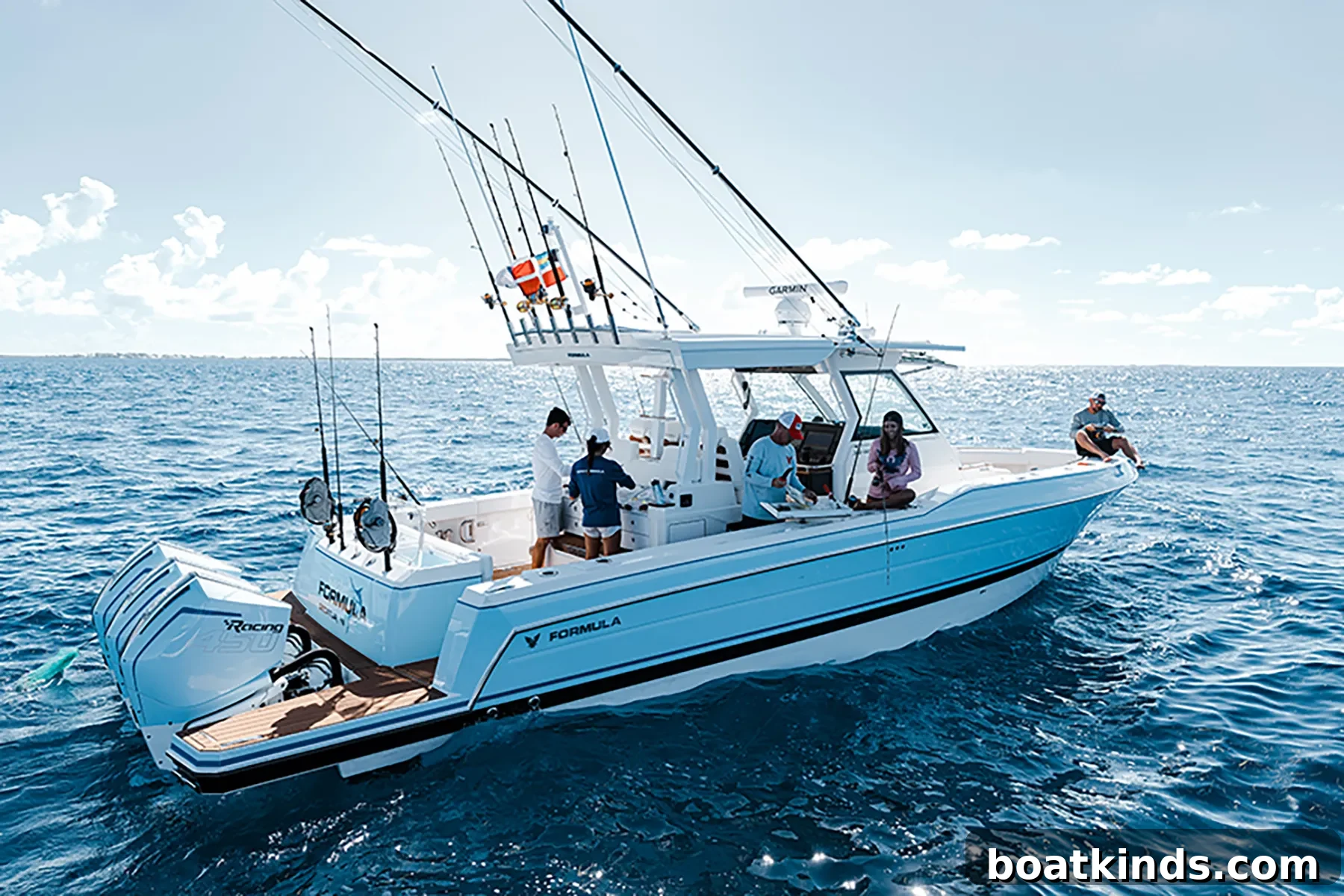
We took the 387 CCF for a half-day workup off Miami and launched into a north wind with 3- to 4-foot seas. The 387’s loaded weight—about 23,000 pounds—helped the twin-stepped hull eat the chop and land softly. With the triple 450-hp Mercury Racing outboards cruising at roughly 75 percent load, we comfortably held 35 knots without spray on the windshield. The windshield opens at the push of a button to let in a breeze, and the helm’s air-conditioning vents keep the crew comfortable when it’s closed.
The cockpit is the operational center of any center console, and the 387’s cockpit is roomy and smartly laid out. The mezzanine/tackle center is one of the best I’ve seen for a boat this size: drawers and tray storage, a rigging countertop with a sink and a cutting board that fits neatly over the sink’s lid. The countertop converts to mezzanine seating with a cushion and even includes A/C vents aimed at the lower back. A massive cooler drops out at the press of a button to serve as a step or footrest, easing access to the mezzanine and hardtop ladder.
Offshore we trolled with Gemlux carbon-fiber outriggers, taking advantage of Formula’s collaborative relationship with the Jacksonville-based hardware and accessories maker. One particularly handy feature: clips on the outrigger halyards that let the crew move outriggers from the hardtop to the gunwale in seconds.
Fishing Performance: Livewells, Electric Reels and Bottom Fishing
The 387 comes equipped with two lighted, pressurized livewells in the transom; we kept live pilchards in one for bait. The extended wing decks beside the triple outboards provide extra walking and boarding space, and the cockpit’s full-beam bench folds away when it’s time to fish. Formula pre-rigged electric reel plug-ins on both sides of the boat, making deep-dropping straightforward. We deployed an electric reel in a port rodholder and ran a five-hook chicken rig baited with squid chunks to the bottom in about 800 feet. The boat held its mark with little effort, thanks to wind and current balance and the Seakeeper 3 gyro minimizing roll, and we quickly landed a dozen blackbelly rosefish in the fish box chilled by a plate system.
Practical Amenities and Seamless Handling
After fishing we ran back toward Miami and stopped at Whiskey Joes on Virginia Key for lunch—an easy option when civilization is close and you’ve got 1,350 horsepower pushing you. The 387 features a bow thruster integrated with the joystick outboard control, allowing tight, intuitive turns and effortless docking.
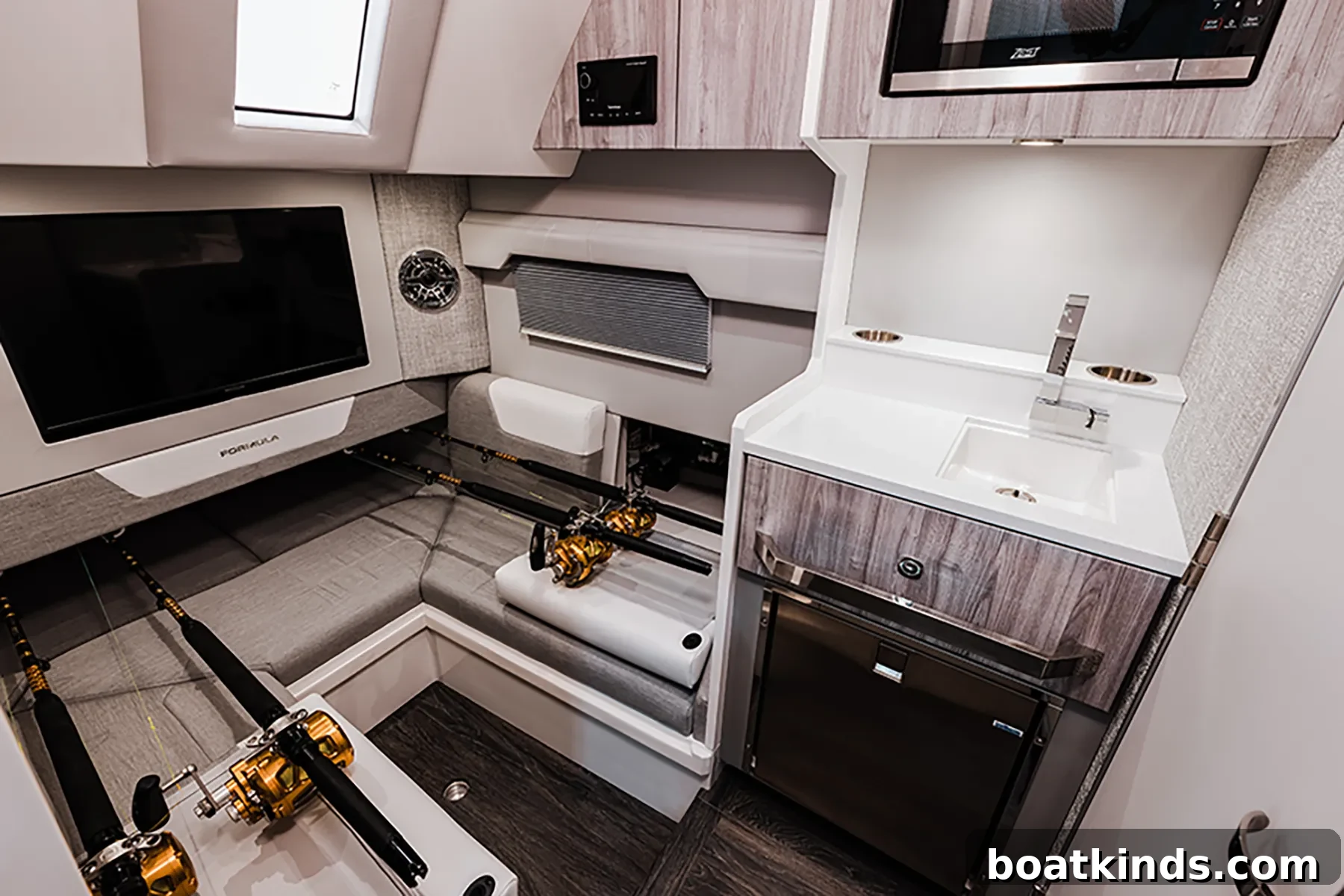
The cabin is more spacious than it looks from the deck, with an overhead hatch and side windows that provide natural light. The wet head offers full standing room and a shower. A small but thoughtful detail I appreciated was the hidden drawer built to store the V-berth filler cushions, preventing loose cushions from cluttering the cabin.
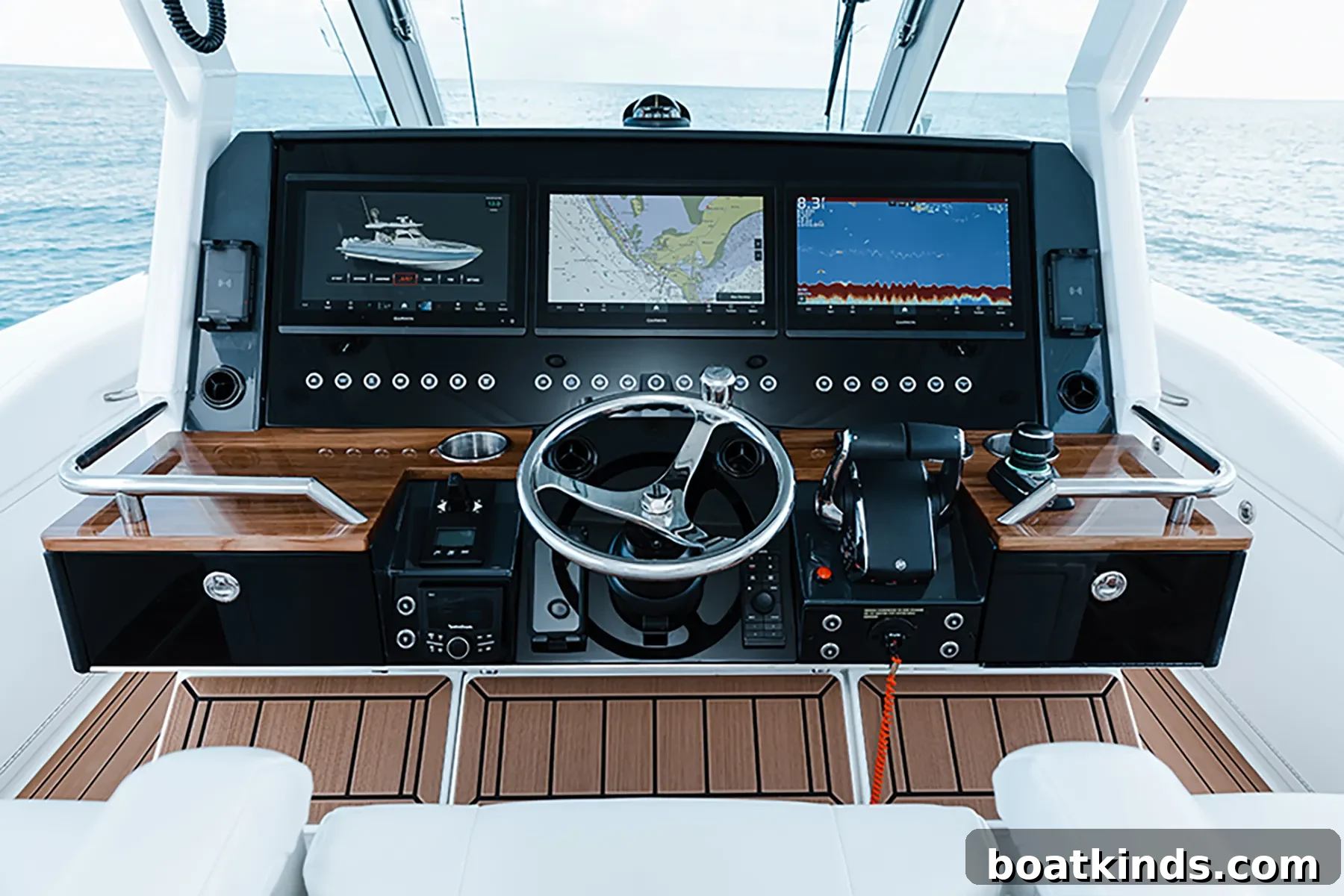
At the helm I pushed the throttles to see how the stepped hull and Mercury outboards performed. The 387 surged like a performance car, holding tight through turns; we recorded 53 knots at wide-open throttle without touching trim. For cruising I settled on 27 knots at 4,000 rpm—comfortable and efficient for the conditions—but the boat clearly had more speed and reserve to spare.
Construction and Customization
Formula builds with a structural grid similar to aircraft construction: components are chemically bonded and encapsulated in foam so the hull becomes a single, solid unit. The result is a silence and solidity rare in many production boats. “This is the most solid boat we have ever built,” Haines said.
The 387 CCF launched Formula’s return to center consoles and was quickly followed by a sport model that trades livewells for additional seating and a hi-low bow table. Through Formula’s flexible options program, owners can select the layout and gear that match their needs—an approach that reflects the company’s research-driven design process and attention to how real anglers use their boats.
This article was originally published in the March 2023 issue.