
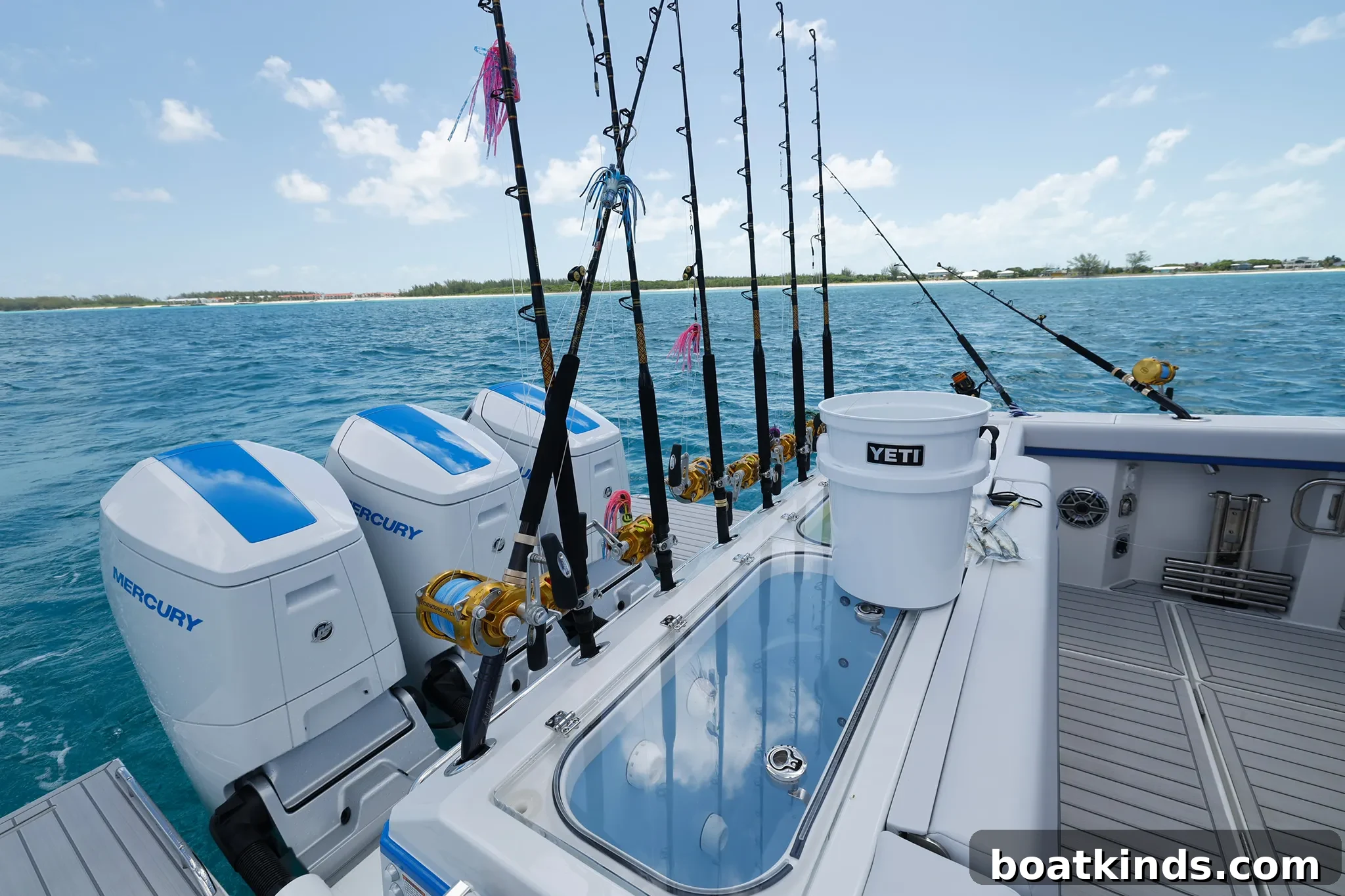
When time is tight, it helps to have three 600-hp Mercury Verado outboards and a 50-gallon baitwell full of lively pilchards. That combination proved useful the morning I boarded the Formula 457 CCF. It was well past 9 a.m., and if we wanted any shot at finding life along the reef edge, we needed to move quickly.
Every time I sea trial a new Formula I look for thoughtful design, clever space usage and practical fishing features. My first pleasant surprise came as I stepped aboard. The 457 CCF was tied broadside to a bulkhead, and the gunwale above the portside dive door folded over to make boarding easier. Midway down the dive door, a flip-out step provided an extra boost into the cockpit—simple, effective and a smart use of space.
Given all the fishing-focused details on the 457 CCF, it’s easy to forget Formula builds boats in Decatur, Indiana—far from mahi, striped bass and tuna grounds. But Formula has clearly done its homework. The company reintroduced a center-console model in 2022 with the 387, available in fish and sport configurations. That model proved popular with anglers and tournament teams, and lessons learned from the 387 informed this flagship. The 457 expands on that success with more deck space, extra seating, greater fuel capacity and larger fish and cold-storage options—more range and more utility across the board.
We fired the outboards and pointed toward Miami’s Haulover Inlet, planning to run offshore to about 800 feet of water—roughly four miles—and work south looking for weed lines or diving birds. I had to be back at the dock by 2:30 p.m. to catch a train, so the trip was efficient by necessity.
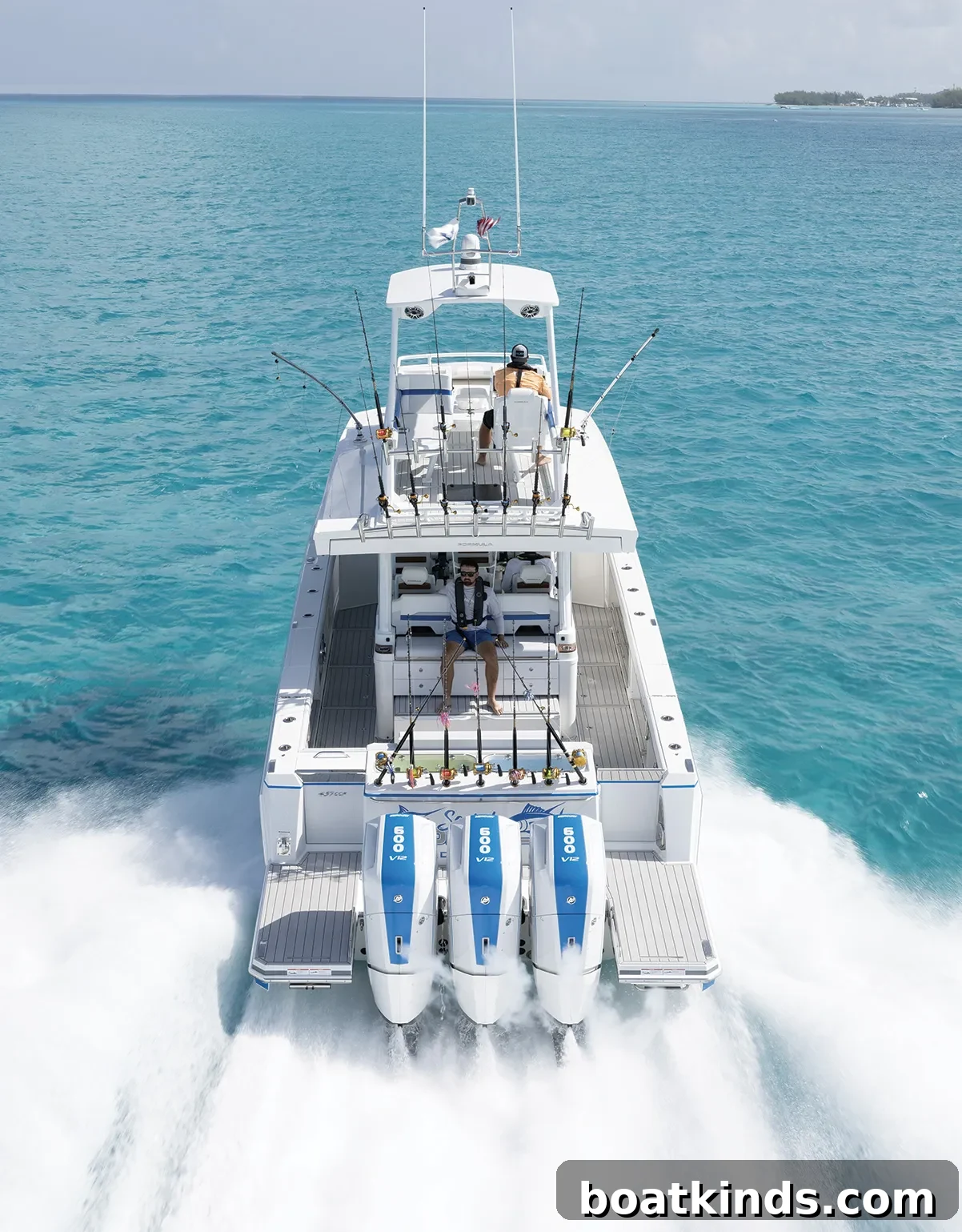
At roughly 36,000 pounds, the 457 isn’t lightweight, so it doesn’t leap out of the hole. It took about 15 seconds to reach cruising speed, but the payoff was a comfortable, soft ride. Facing a 2- to 4-foot chop, the boat rose cleanly over waves without shuddering, slamming or taking on spray. We cruised comfortably at 37 knots while recording about 0.43 mpg, and the boat’s top end is close to 50 knots. Formula’s product specialist Abe Haines even reported running from Bimini to Miami in about an hour and 20 minutes.
The twin-step FAS3Tech hull tracks straight and stable—no bow steering or wandering—and the boat holds a heading with minimal input. It also turns tightly and predictably. Once we set a waypoint I engaged the autopilot via the Mercury joystick, leaned back and enjoyed the dash and seatback AC. The helm is a pleasure to drive.
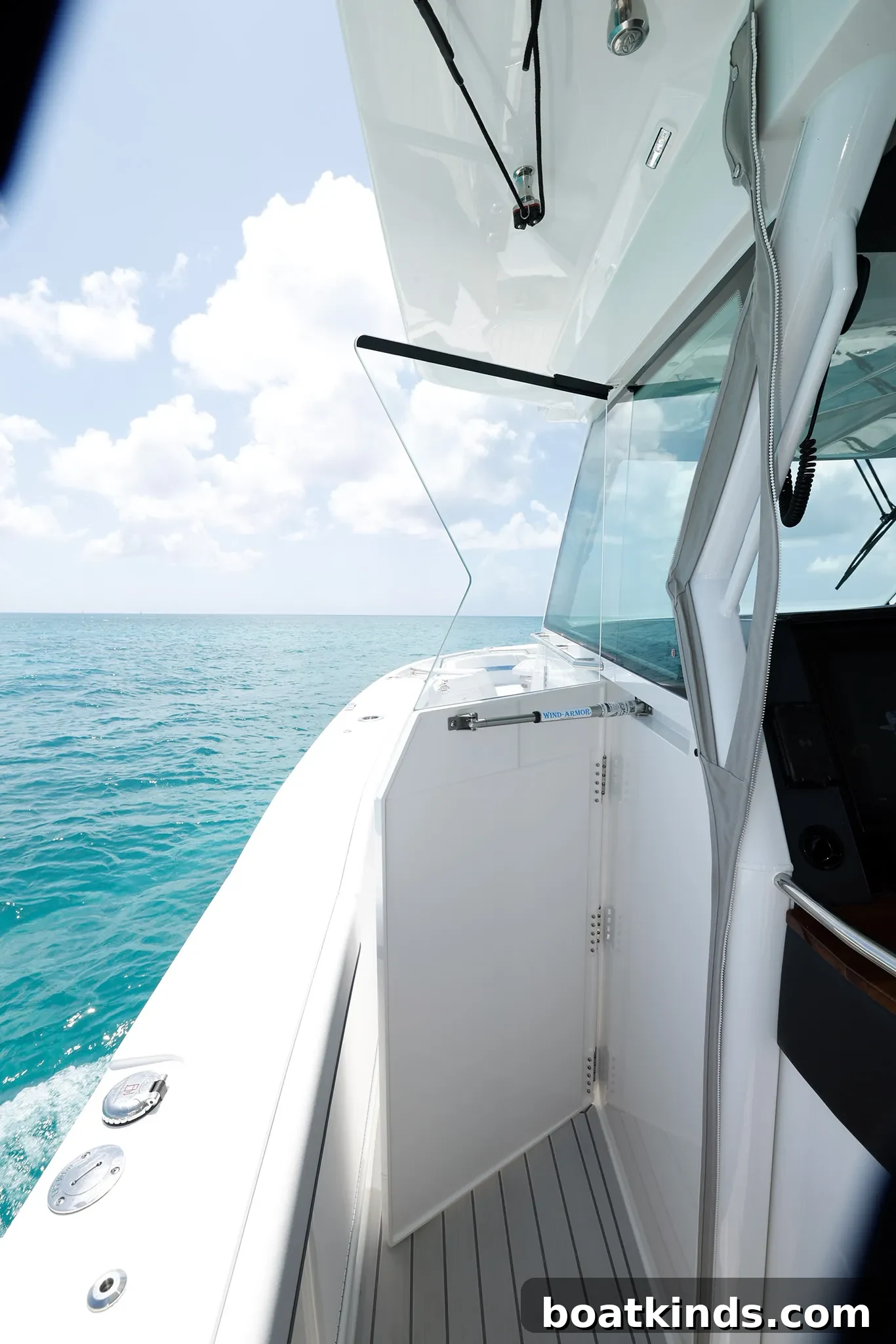
Another standout are the Wind-Armor weather doors that open and close electrically from the console to the gunwale. They dramatically reduce wind and noise, and because they operate from the helm I never had to leave my seat. With the doors closed at nearly 40 knots, the cockpit stayed quiet enough for easy conversation and worry-free cruising.
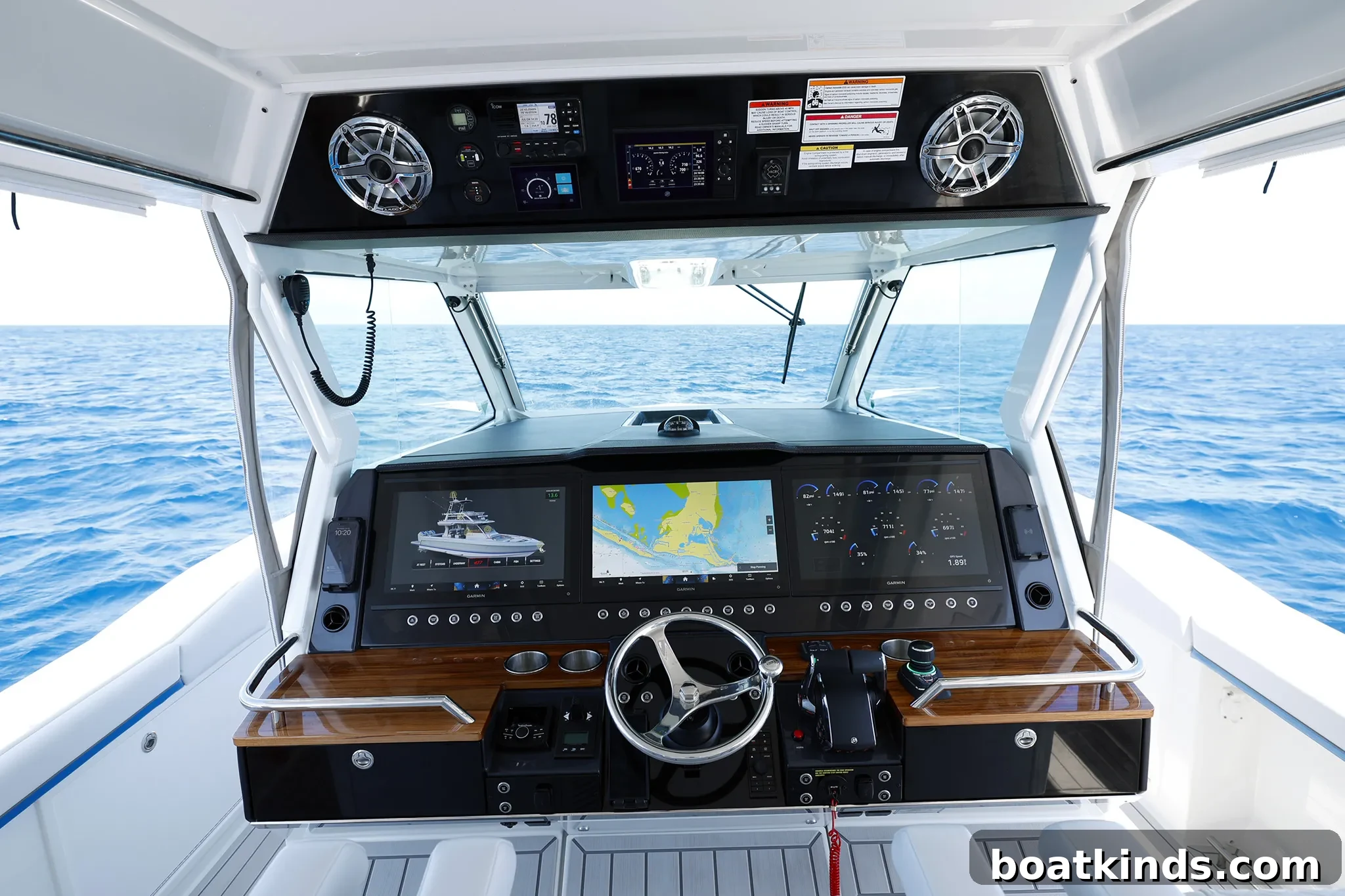
The centerline helm offers exceptional visibility through a single-piece windshield that opens on electric rams. We left it open while idling in the ICW but closed it once we exited the no-wake zone. The helm layout includes three 22-inch Garmin displays: navigation and sonar on one, engine data on another, and a live FLIR camera feed of the engines behind us on the third. That rear camera adds a useful safety perspective—you can monitor guests or children without turning away from the controls. The fish model’s helm mirrors the sport version but replaces the bench with a second row of captain’s chairs.
One of the biggest differences between the 457 Fish and Sport models is the substantial upper station mounted on the 18-foot hardtop. It functions more like a flybridge than a traditional half-tower and seats up to four, with the helm to starboard. Storage is integrated into the seating for covers and canvas, and the wide sightlines make spotting birds or structure much easier. Antennas sit on a motorized mount that folds for bridge clearance. A generously sized power-out cooler serves as a step to reach the upper station and doubles as tailgate-ready refrigeration.
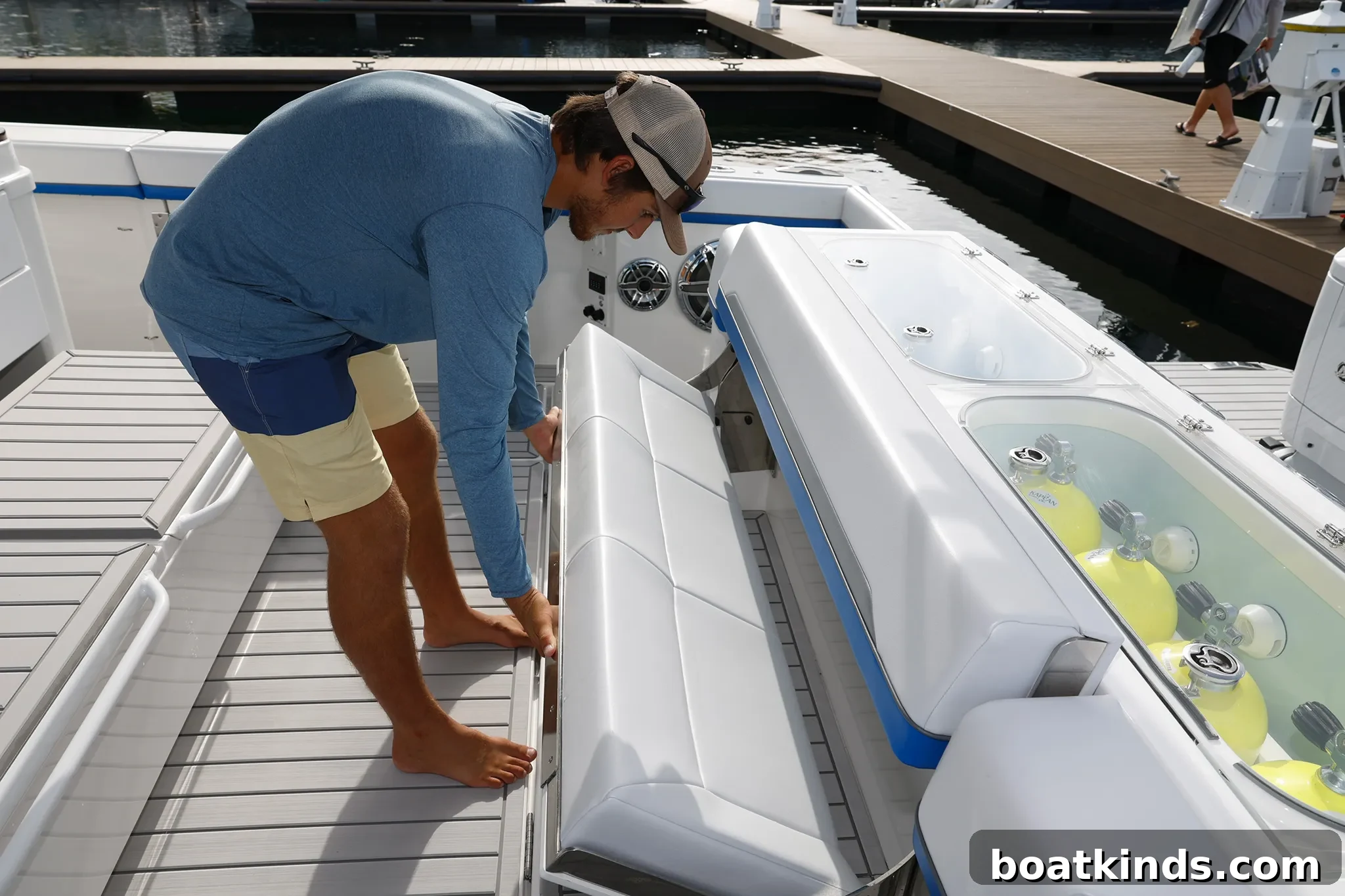
The transom on the CCF version differs from the sport layout with two 50-gallon live wells—one configured with an insert to secure dive tanks—an electric grill on the port side and a transom door to starboard for easy access to the outboard corridor. The swim-and-engine area is spacious, making water access simple for snorkeling or swimming.
Onboard fishing amenities are robust. The in-deck fish box includes an ice maker that produces more than 20 pounds of ice per hour and freezer plates to preserve the catch. A foldaway aft bench increases cockpit space, while the leaning post functions as a tackle workstation with drawers and storage. Rod holders are within reach from almost anywhere on deck, including a rocket launcher above the extendable aft shade deployed from the hardtop. Cupholders are numerous and illuminated, and the JL Audio system supplies powerful sound for entertaining. Close to 40 charging ports keep electronics powered. Below, a large hatch provides clean, accessible bilge access where the Seakeeper 6 and Fisher Panda genset are installed.
The cabin layout on both 457 Sport and Fish models is nearly identical. The air-conditioned cabin features a U-shaped lounge that converts to a double berth, a compact galley with refrigerator and microwave, and a head with a stand-up shower. Skylights bring natural light into the space and improve livability for longer trips.
With a 700-gallon fuel capacity, the 457 CCF offers a cruising range close to 270 miles at a steady cruise speed, opening up possibilities for extended offshore runs, overnight trips to the Bahamas or long days chasing fish on the edge of the shelf. The combination of fuel capacity, living amenities and fishing-focused features makes the 457 CCF a highly capable offshore center console for anglers and family cruisers alike.
Specifications for the Formula 457 CCF
LOA: 49’1”
Beam: 13’9”
Draft: 4’6”
Displ.: 33,250 lbs. (dry)
Fuel: 700 gals.
Water: 90 gals.
Power: (3) 600-hp Mercury Verado Outboards
Price: $2.6 million
December 2024