
Improving E15 Warning Labels to Protect Boaters and Outdoor Equipment Owners
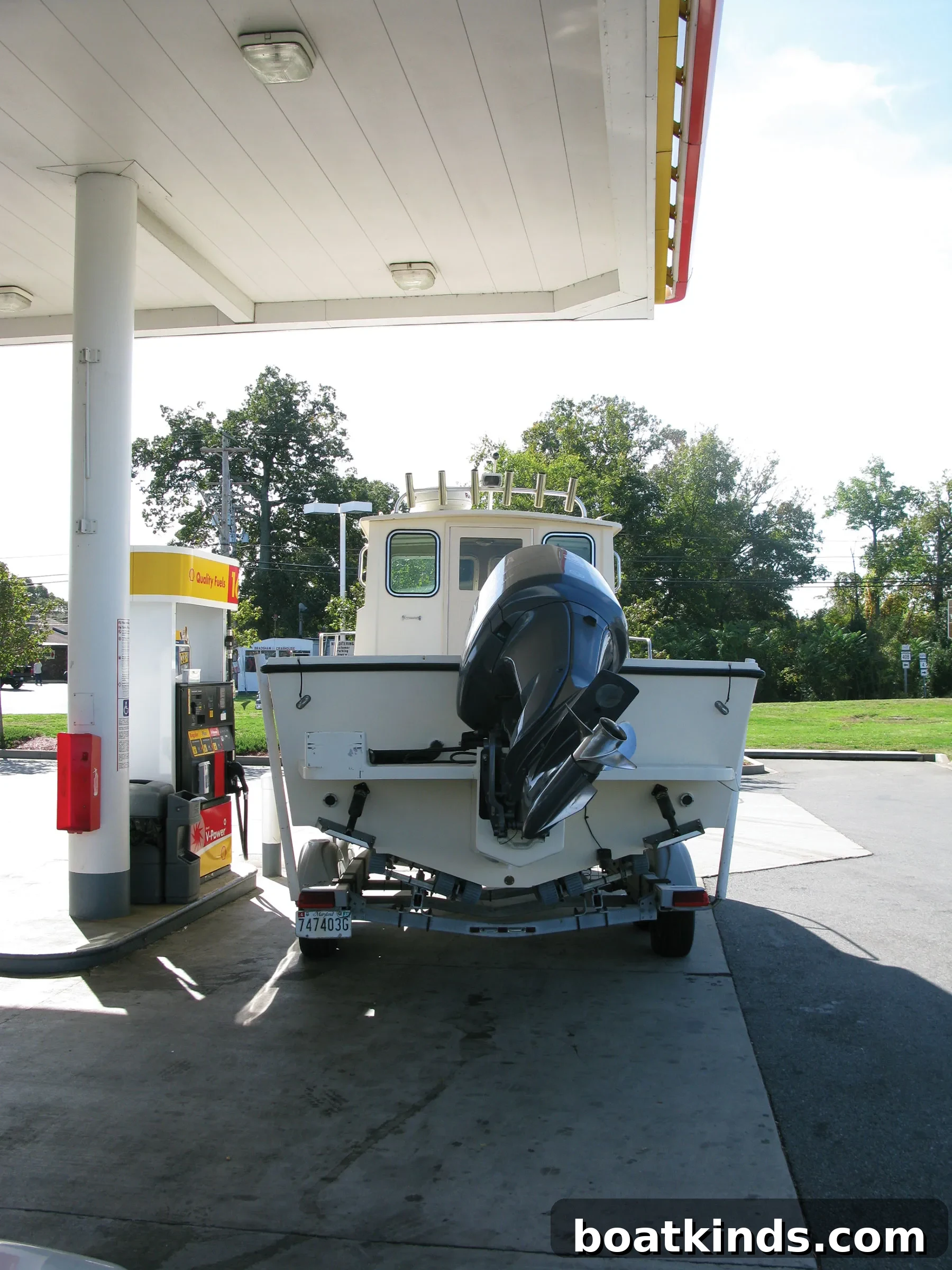
As newly elected officials arrive in Washington, D.C., marine-industry advocates are presenting fresh data to push the Environmental Protection Agency (EPA) for clearer consumer warnings about ethanol-blended fuels. The focus is E15—the gasoline blend that can damage marine engines and many types of small engines if misfueled.
Callie Hoyt, director of federal government relations for the National Marine Manufacturers Association (NMMA), says the push is long overdue. “It’s been a long time coming,” she notes. Industry groups and consumer advocates have long argued that the current E15 labeling at gas pumps is insufficient and fails to prevent the misfueling problem many boat owners and outdoor equipment users face.
The NMMA and its partners are now armed with survey data intended to guide regulators toward more effective labeling. The study, released in early December, was conducted in collaboration with the American Motorcyclist Association and the Outdoor Power Equipment Institute. It follows a nationwide Harris Poll in early 2020 that found most consumers believe the small orange E15 labels at the pump are inadequate and want stronger government action to protect consumers.
Survey Findings Point to Simple, Effective Changes
The NMMA survey tested new label prototypes and measured public preferences. Respondents were more than four times as likely to prefer a redesigned label over the current one. Large majorities—between 77 percent and more than 80 percent—preferred red as the label color and favored icons combined with text rather than text-only warnings. These results indicate that straightforward design changes could significantly improve consumer understanding of E15 risks.
“What we’re trying to show is that there are very basic steps that can be taken to inform consumers,” Hoyt says. “It doesn’t have to be costly or complex.” The study’s goal was not to mandate a specific logo, but to demonstrate that involving focus groups and professional designers can produce labels that communicate risk more clearly.
Industry Proposals and Practical Options
David Kennedy, government affairs manager for BoatU.S., agrees the current E15 label is ineffective. He compares the situation to past changes made when vehicles shifted from leaded to unleaded gasoline. “They actually changed the size of the fuel nozzles so you couldn’t put leaded fuel into a car that was made for unleaded fuel. It was a physical barrier,” he explains. Kennedy suggests practical options such as a pump keypad confirmation that requires the user to acknowledge they are selecting fuel that could damage certain engines—another way to reduce accidental misfueling.
Yet the simplest and least costly improvement could be a better warning label: one that uses clear wording, a consistent placement on pumps, a bold warning color like red, and intuitive icons that quickly convey the risk to boaters and owners of lawn and outdoor equipment. Currently, the label says “attention” rather than “warning,” appears in inconsistent locations on pumps, and is easily overlooked among other signage and visual clutter at service stations.
Regulatory Path and Legislative Efforts
The EPA has asked for more evidence from industry groups demonstrating why label changes are needed. The NMMA survey provides the additional data regulators requested and can be used in discussions with EPA decision-makers. The agency holds regulatory authority to update pump labeling standards.
Last year, marine-industry advocates supported legislation that would have required the EPA to design a new E15 warning label. That bill may be reintroduced in the current U.S. Congress. Both the NMMA and BoatU.S. plan to back renewed legislation and to continue working directly with EPA regulators to push for improvements. “Hopefully we can move the needle on this to make sure that the consumer perspective will remain a priority,” Hoyt says.
Stronger, clearer labeling for E15 would help reduce accidental misfueling of marine engines and small outdoor engines, protect consumers from costly repairs, and ensure that people who rely on boats, motorcycles, lawn equipment and other power tools understand the risks associated with ethanol-blended fuels.

This article was originally published in the February 2021 issue.