
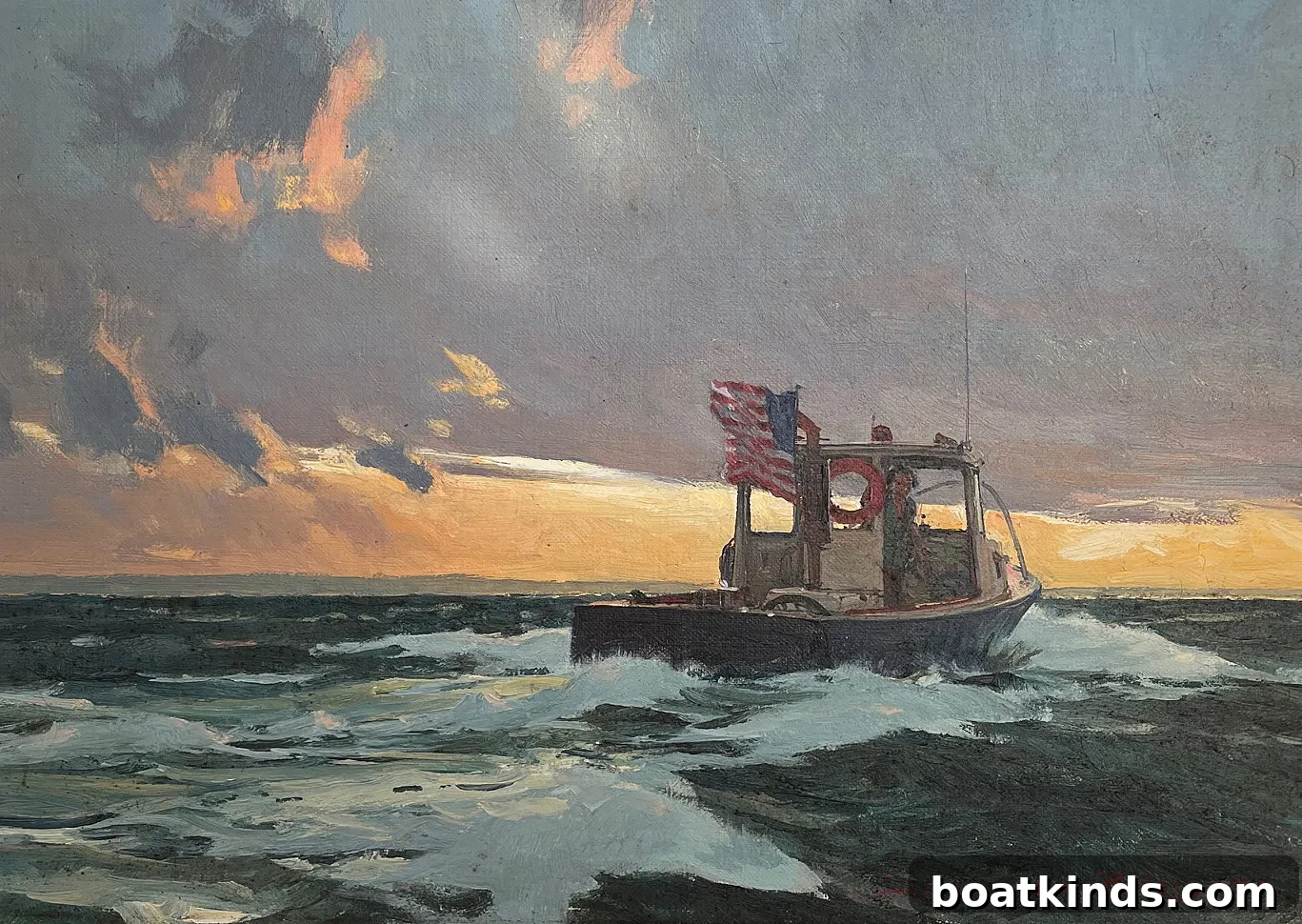
Stepping into the compact maritime gallery on Water Street in Stonington, Connecticut, visitors are immediately transported by evocative paintings of ships and yachts at sea—some serene, others caught in peril. J-Class yachts heel over under full sail; a lobster boat fights a frothy chop; and a chilly colonial Boston waterfront is crowded with merchantmen anchored in winter. The gallery revives the era of sail, working waterfronts and steam power with a powerful sense of immediacy.
The J. Russell Jinishian Gallery is brimful with nearly 200 works—paintings, carvings, sculptures, ship models and nautical artifacts—carefully selected from the collection and eye of J. Russell Jinishian, a leading authority on maritime art. Over the last four decades, interest in marine art has reached a peak, and Jinishian and his gallery have been central to that resurgence.
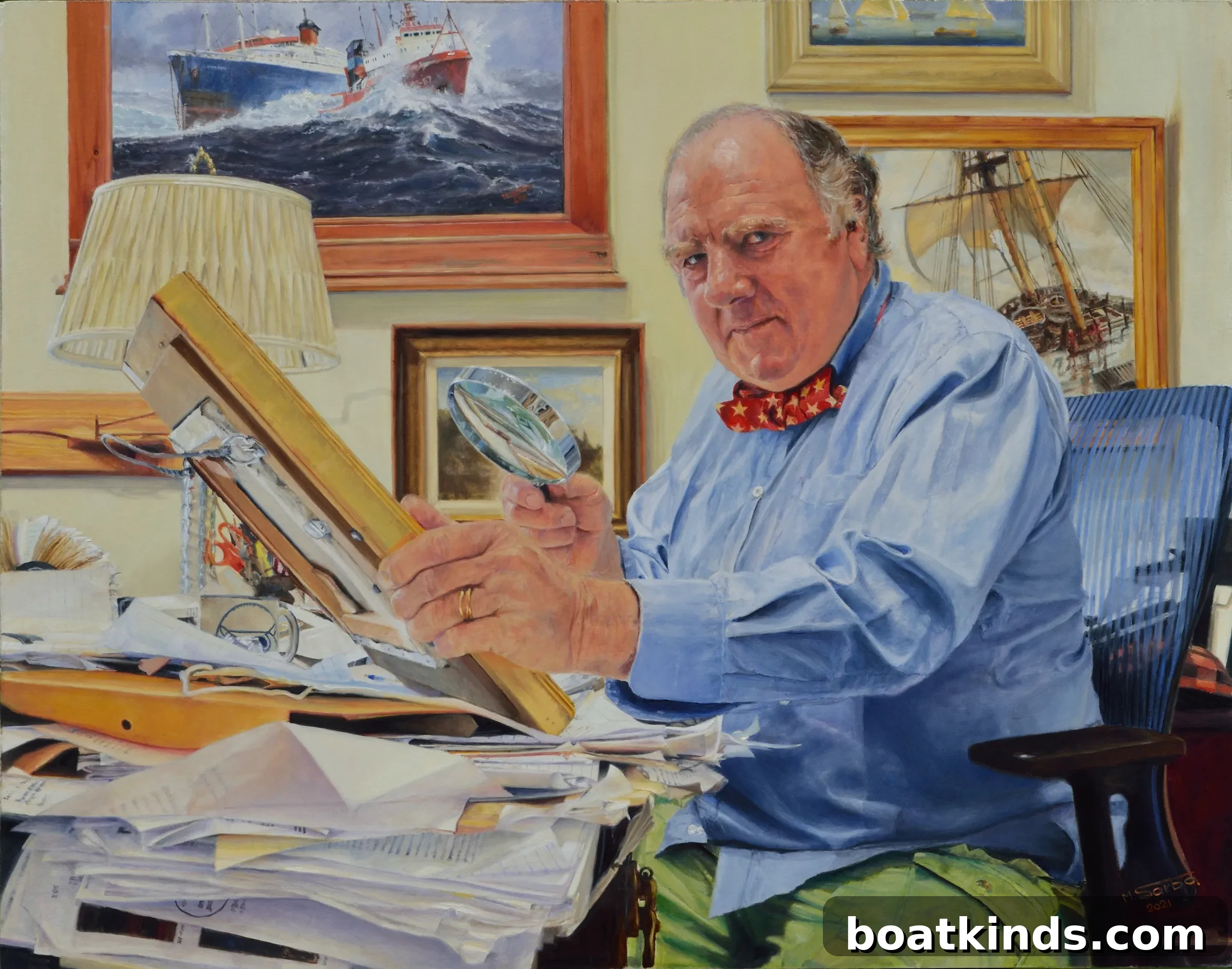
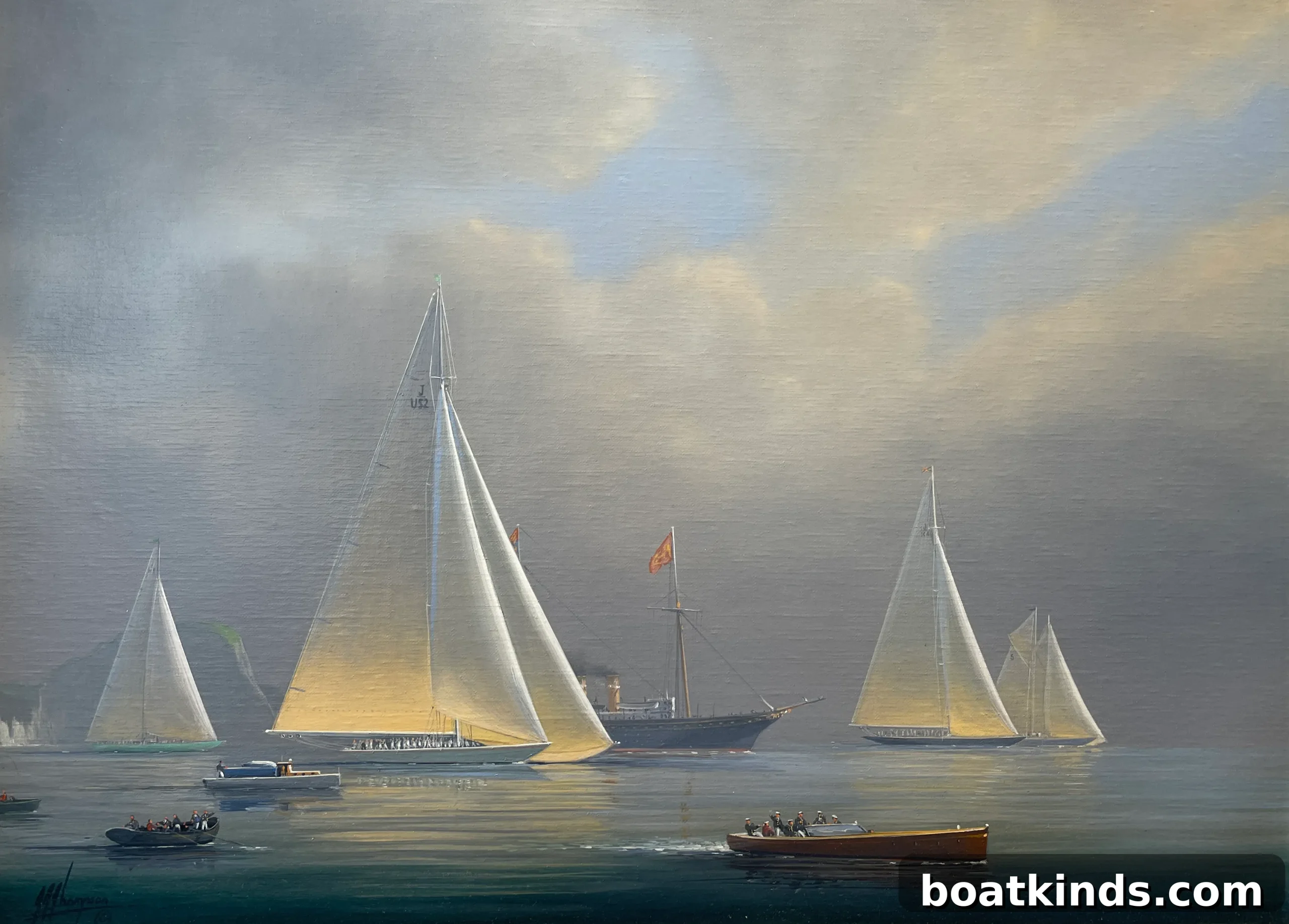
For anyone seeking relief from the rush of modern life, the gallery offers a restful immersion in scenes of life on the water rendered by masters of the genre. Familiar names hang on the walls—Stobart, Demers, Blossom, Sarba, Mecray and many others—each contributing to a varied and rich vision of maritime life.
“The pool of marine art that exists today is larger than at any time in history,” Jinishian observes, noting that many well-regarded works held in private collections are coming back to market as collectors age. He traces part of the renewed public fascination with the sea back to 1976: Operation Sail and the nation’s bicentennial sent sixteen tall ships and hundreds of other vessels parading along the East Coast, creating a powerful, shared moment that opened many eyes to the romance and craft of sailing.
Painter Don Demers remembers that summer in Newport, Rhode Island, sketching the tall ships and cataloging every detail—length, rig, flag—while naval architects were simultaneously creating some of the era’s most beautiful boats. That combination—booming pleasure boating, designers producing iconic yachts and rising public interest—helped shape a generation of marine artists and collectors.
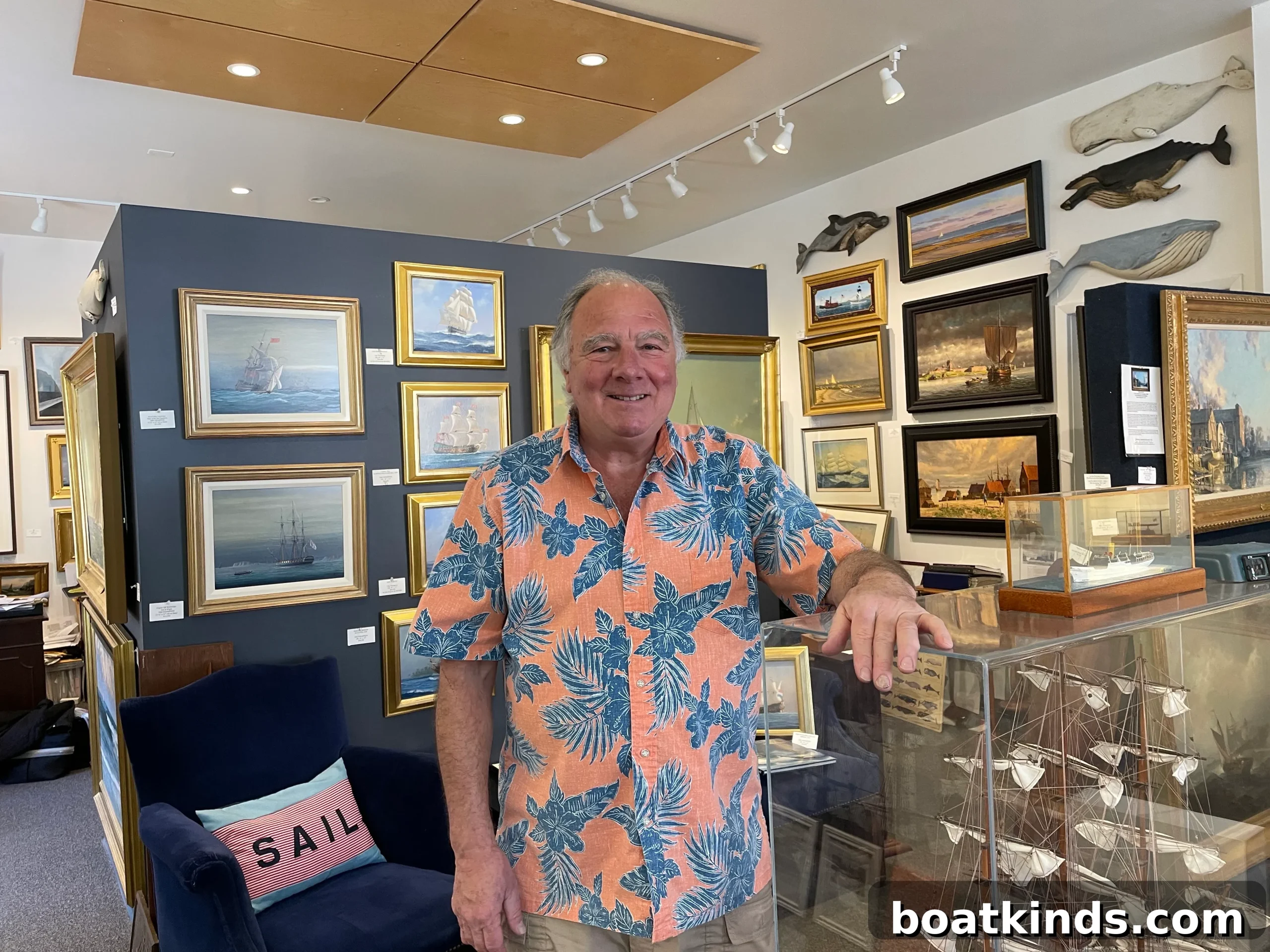
Jinishian, now in his seventies, breaks the stereotype of the aloof art dealer. Wearing a Hawaiian shirt, shorts and colorful socks, he greets visitors with warmth and plainspoken clarity. Artists like Demers and Marek Sarba praise his ability to connect with collectors and to recognize artistic quality. “He understands human beings,” Demers says. “There’s not a lot of baloney in that guy.” Sarba adds that Jinishian developed an exemplary taste and knows “what’s good and what’s bad.”
Raised in Old Greenwich, Connecticut, Jinishian’s lifelong affinity for the sea grew alongside his art education. He studied at the Sir John Cass School of Art in London and earned a bachelor’s degree in fine art from Cornell University. His career has included roles as an art critic, program director for the Silvermine Guild of Artists and director of the Mystic Maritime Gallery at Mystic Seaport Museum. He published Marine Art Quarterly for thirteen years and ran his Fairfield gallery for 22 years before moving the business to Stonington in 2019.
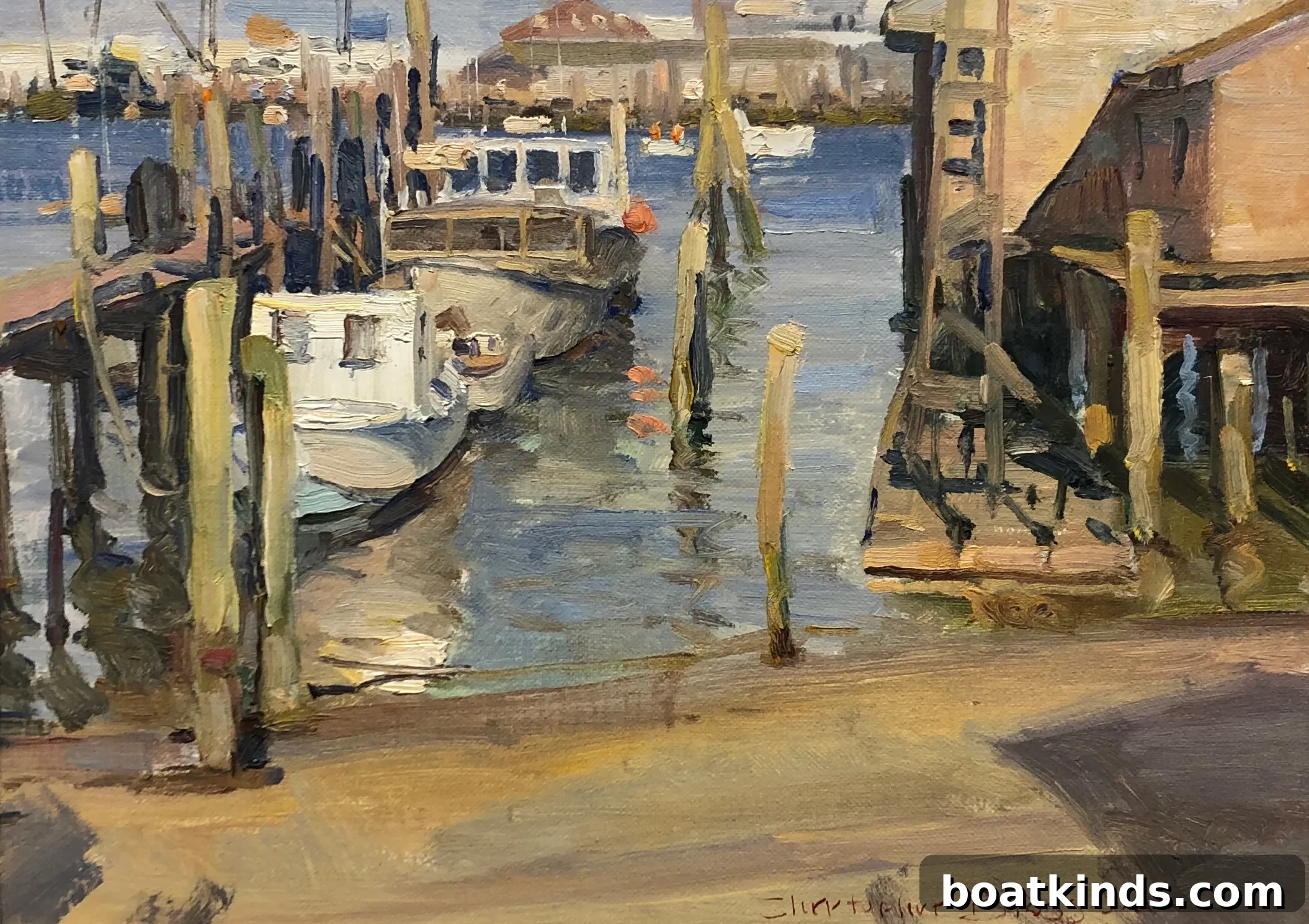
Jinishian knows the practical demands of an artist’s life: skill, dedication, work ethic and resilience. “It’s work,” he repeats. He seeks artists who are committed to improving, who question themselves and treat every aspect of their creation with care. That perseverance is central to a career in marine art, where the craft of rendering water—its motion, reflections and interaction with hulls—poses a particular challenge. “There are infinite ways to paint water,” he says. When water is painted poorly, it is immediately obvious even to a casual viewer.
Demers and Sarba, both longstanding collaborators, credit Jinishian with shaping their careers and introducing them to collectors. The gallery owner’s networking and deep knowledge helped build markets and foster lasting relationships between artists and patrons.
Despite this flourishing period, Jinishian and his peers recognize changing demographics may affect future demand. As the baby-boom generation ages, the market may shift, and some fear a gap in the next generation of marine collectors and artists. “I’m almost the last guy left focusing on marine art,” Jinishian acknowledges, while Sarba calls him “the last Mohican.” Still, the artists remain driven by compulsion more than commerce. “I paint. I have to paint,” Sarba says. Demers jokes, “I’m going to die of a brush stroke.”
What keeps collectors returning, Jinishian says, is the emotional pull of great work. He recounts calls from people who remember a painting they saw years ago and cannot forget it. “No one says I was in Home Depot a year ago and do you still have that refrigerator?” he notes. A painting can “fill a little hole,” he adds—capturing something the viewer needs and demonstrating the enduring power of art.
Forty years of friendships and collaborations have shaped Jinishian’s life and the gallery’s identity. “Working with all these creative people has been great,” he reflects. “We’ve sort of grown up together over 40 years. I’ve known them all. They’re all my friends. I’ve had an enjoyable life. I’ll keep working until I stop.”
This article was originally published in the July 2024 issue.