
For millennia, East Algonquin tribes paddled their canoes out to Monhegan as an offshore base for swordfish hunting. They called it Monchiggon, meaning “out-to-sea island.”
Monhegan truly lives up to that name. The island sits in the Atlantic, about ten miles off Maine’s Pemaquid Peninsula. Even though I’ve lived across from it for five years, I’d never taken my own boat there. I had reasons: my rigid-inflatable boat was small, the harbor is exposed, holding ground is poor, there are only a few moorings and no dinghy dock. So I always took the ferry.
I love Monhegan for its quiet and beauty. There’s no airport, the roads aren’t paved, cars are rare, and year-round residents number only about sixty to seventy. In summer, ferries from Boothbay, New Harbor and Port Clyde bring a couple of hundred visitors a day, but the island is large enough to absorb them without losing its character.
Ferries are convenient but limiting. In high season you must reserve ahead, which can leave you at the mercy of poor weather. Ferries also don’t circle the Atlantic headlands, and they won’t detour to linger around whales, seals or porpoises. Having my own boat would let me pick fair-weather days, cruise the cliffs from the water and get closer to marine life.
Mostly, it bothered me that I’d never made the trip under my own power. Riding the ferry felt like a personal boating failure. So when a calm summer day arrived with light wind and small seas, I launched my 16-foot RIB and headed out.
Fifteen minutes into the crossing I saw three harbor porpoises. Then a disturbance caught my eye: an enormous whale slowly surfaced, took a long breath, dove, surfaced twice more, and then disappeared. Twenty minutes after that I reached Duck Rocks just off Monhegan, where a couple dozen seals swam and played. I eased the RIB close and waited. At first they spy-hopped from a distance; then they crept closer, slipped below the surface and kept me entertained for half an hour before I continued toward the harbor.
Monhegan’s harbor lies between Monhegan and the smaller Manana Island and has two entrances. The southwest entrance is wide and easy to enter but faces the Atlantic, making overnighting there risky. The northern entrance through Herring Gut is narrow but closer. I waited for a ferry to clear the channel and slipped in through the north side.
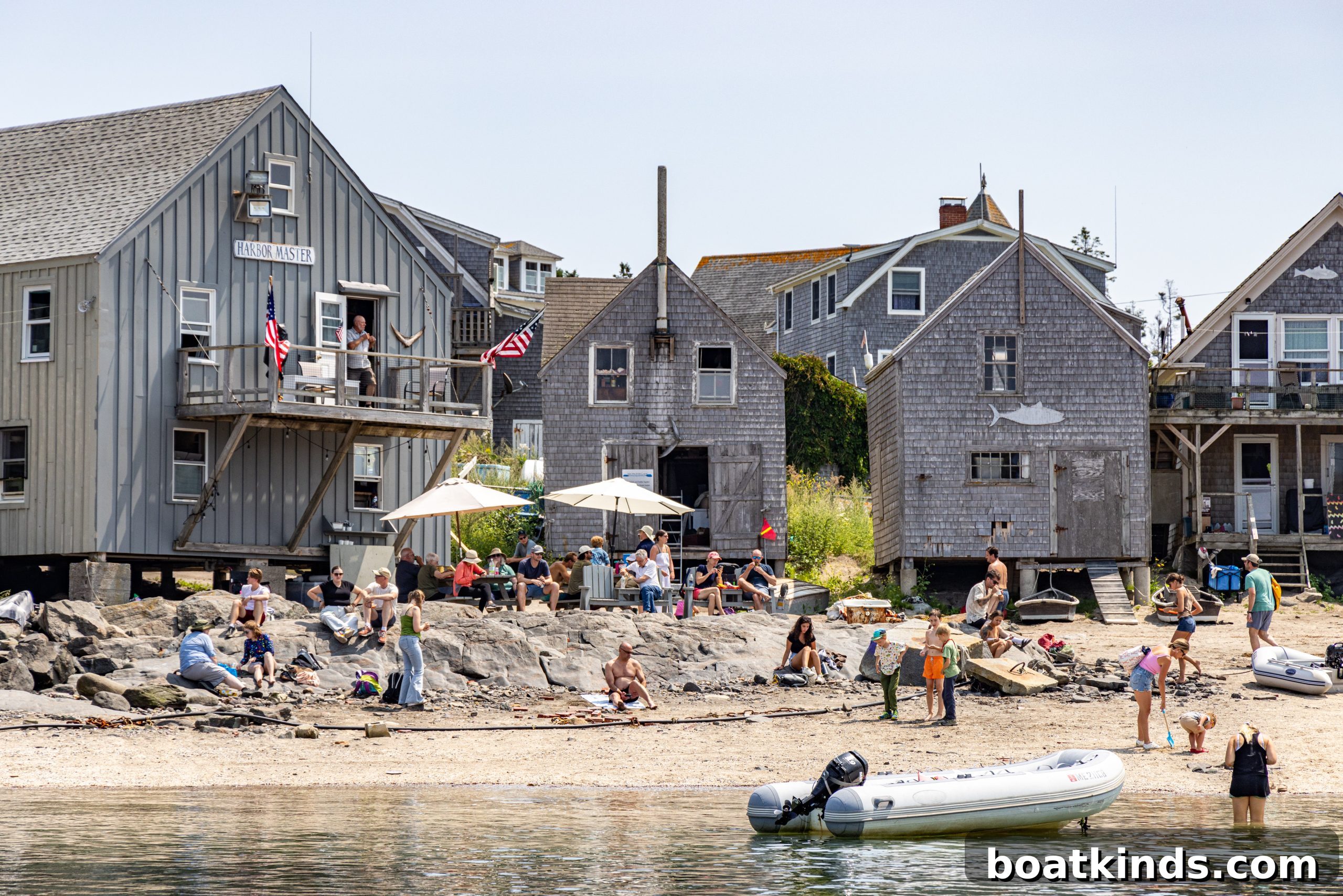
At the only dock the Capt. Ray O’Neal from Rockland was pumping heating oil while people dove off the pier. Someone asked if I had seen any gannets; Monhegan is a favorite stop for migrating birds, with more than 336 species observed since Samuel de Champlain charted the island in 1604. I hadn’t seen gannets but mentioned the whale and its long surface rests. “You saw a fin whale,” someone said. “They spend a long time up top.”
I was told the harbormaster, known as Shermie, was likely out tuna fishing and that Fish Beach would be my best bet to land. Unfortunately I’d arrived at high tide: the beach was almost gone and crowded with children. With limited beach and the risk of being left high and dry for hours, I decided to tour the island by water first.
Monhegan is smaller than it looks—about 1.7 miles long, 0.7 miles wide and under a square mile in area. I slipped out of the southwestern end of the harbor and set a counterclockwise course. Along the southeast side a half-dozen boats were anchored, fishing for bluefin. The captain of Carmyn and Calleigh from Cushing told me the giants were “jumpin’” that morning but refusing to bite.
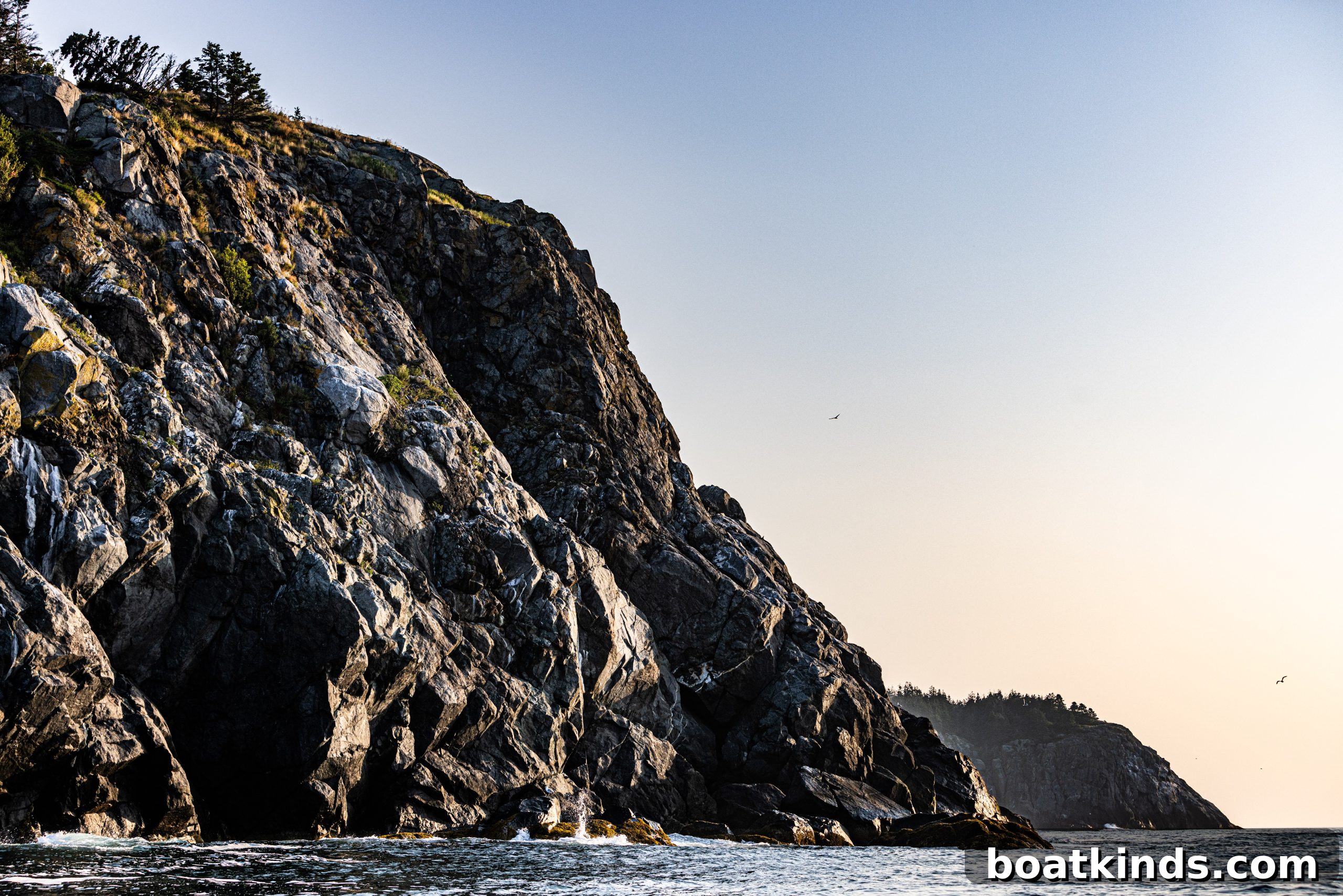
Along the east side I followed the contours of Burnthead, Whitehead and Black Head, the island’s tallest headlands. Hikers stood a hundred and sixty feet above me taking in the view; a couple of fishermen had scrambled down and one stood very close to the water’s edge. In shallow pockets, gray seals poked their heads up. Double-crested cormorants shrieked and fussed on guano-splashed rocks as they tended their young. Rounding the northern end, a pod of seals approached to within 15 feet, curious and unafraid.
On the northwest end I finally spotted the first house since leaving the harbor. In the 1950s Theodore Edison—Thomas Edison’s son and a longtime summer visitor—quietly bought 300 acres to prevent overdevelopment and formed a land trust. Today Monhegan Associates owns about two-thirds of the island and maintains roughly 12 miles of public trails.
After two hours I returned to Fish Beach to find it crowded with summer visitors, so I headed back to the mainland. Three days later, with a more favorable tide, I launched at sunrise and returned. Entering from the southwest, the island felt almost deserted. I made another circuit and, back at the harbor, saw a couple rowing across from Manana to Swim Beach. They confirmed Fish Beach would be safer for my RIB.
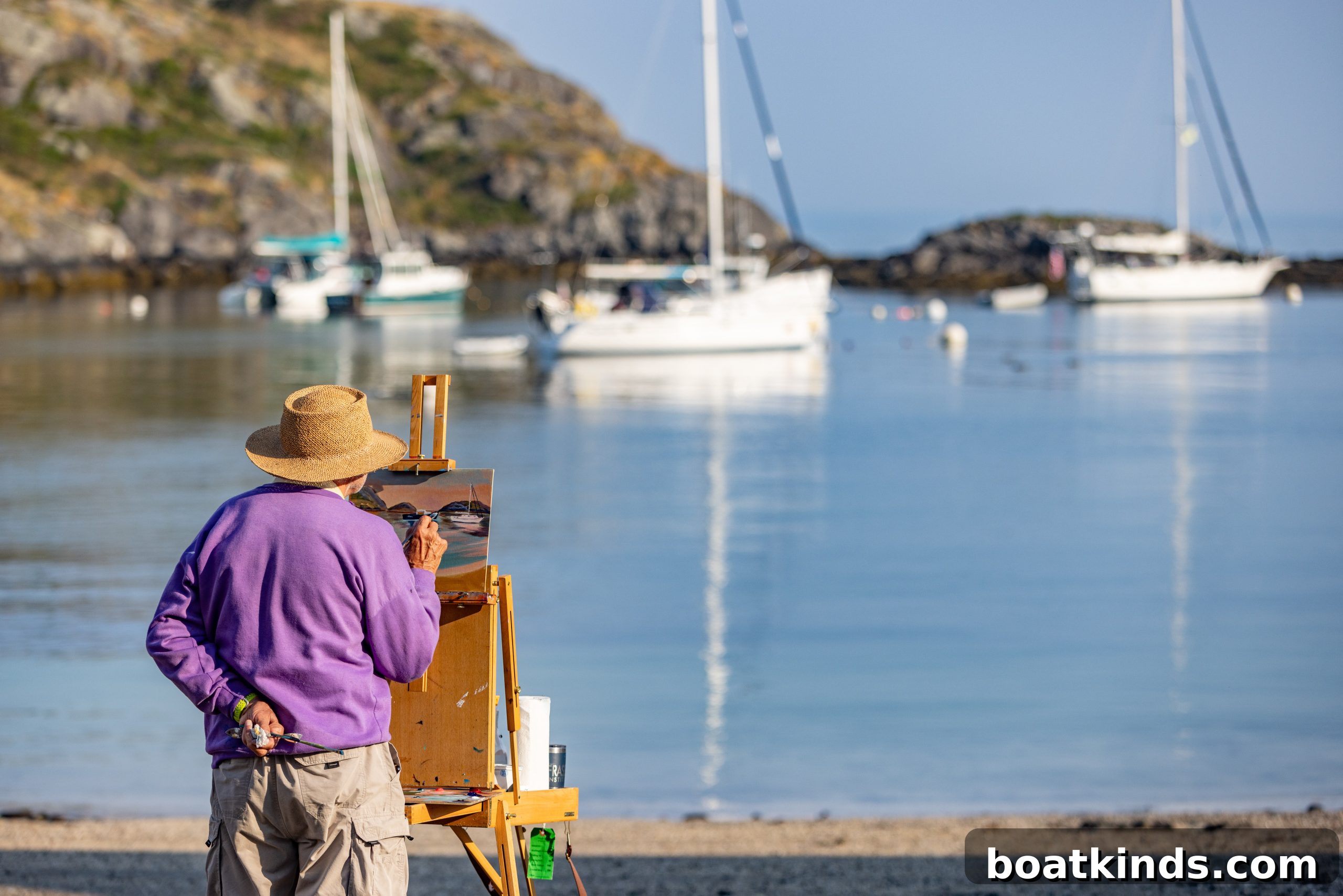
This time the beach was exposed and clear. On a falling tide I set a stern anchor, nudged the RIB onto shore and tucked a bow anchor among the rocks. A lone plein-air painter worked nearby—artists have been drawn to Monhegan since the mid-1800s. Painters like Rockwell Kent, Edward Hopper, James Fitzgerald and the Wyeth family have all spent seasons on the island.
I laced up hiking shoes and spent five hours wandering. In the village a father watched his son kick a stone down the road. Hiking up to the lighthouse and museums I ran into the woman who’d rowed earlier; she and her husband had lived on Manana in summer for decades. She was Daphne Pulsifer, an artist and sculptor who once owned the Edison Studio.
From a bench at the hilltop I took in the village, the harbor and Manana Island, spotting Pulsifer’s house and the old Coast Guard walkway. The Coast Guard station’s long-abandoned buildings were tucked out of sight. The Monhegan Museum and the Monhegan Art Museum wouldn’t open for hours, so I wandered into the woods. Passing the large bronze fog bell—famous from Jamie Wyeth’s painting Bronze Age—I ran into Pulsifer again.
A trail led me to Whitehead on the Atlantic side. The view was spectacular but, with no wind, a cloud of black flies rose and started feasting. I dashed back through the trees to the village, carrying a few flies with me. The Lupine Gallery wasn’t open yet, so I stopped at the Barnacle cafe for coffee and blueberry cake, then chatted with a Boston couple who’d spent the night on a mooring after hearing about storm damage on Matinicus. They found Monhegan’s harbor charming despite some missing cedar shakes on waterfront buildings.
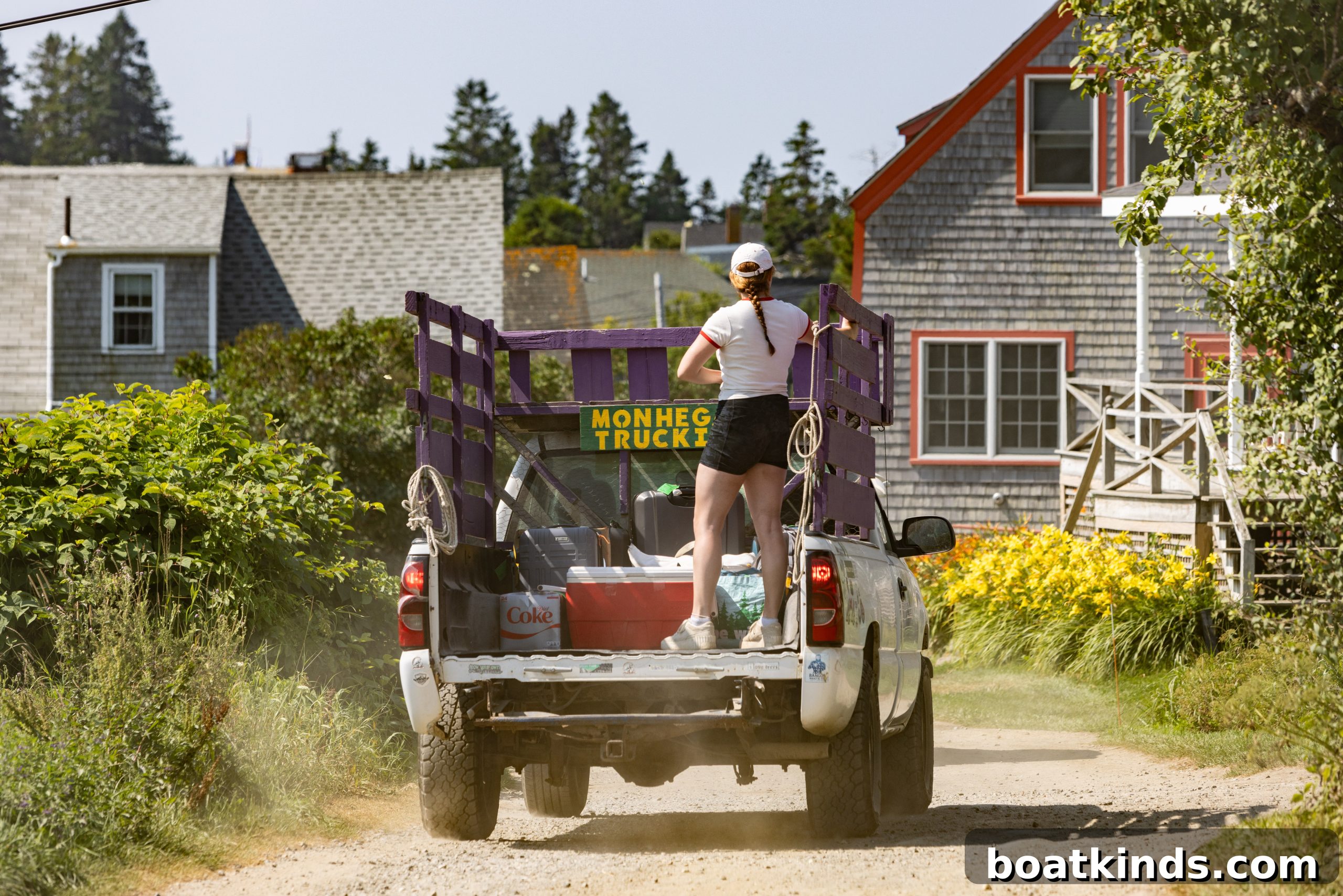
From the dock I could see my boat high on the beach and realized my Danforth anchor likely wouldn’t hold in pebbles. I swapped it for the plow I’d set among the rocks. At 10 a.m. a ferry arrived from New Harbor and four hotel trucks backed on to collect luggage. When more than a hundred passengers disembarked, the quiet dissolved into the activity of a busy summer day.
I ducked into the Island Inn to view the featured artwork and enjoy the veranda overlooking the harbor. Back at Fish Beach I peeked into the Fish House kitchen under the harbormaster’s office and found the 1824 structure’s original rough-hewn beams and a bowl of fresh shrimp—an easy lunch decision. My earlier suspicion proved right: the Danforth pulled free with a light tug while the plow dug in solidly when set as the stern anchor.
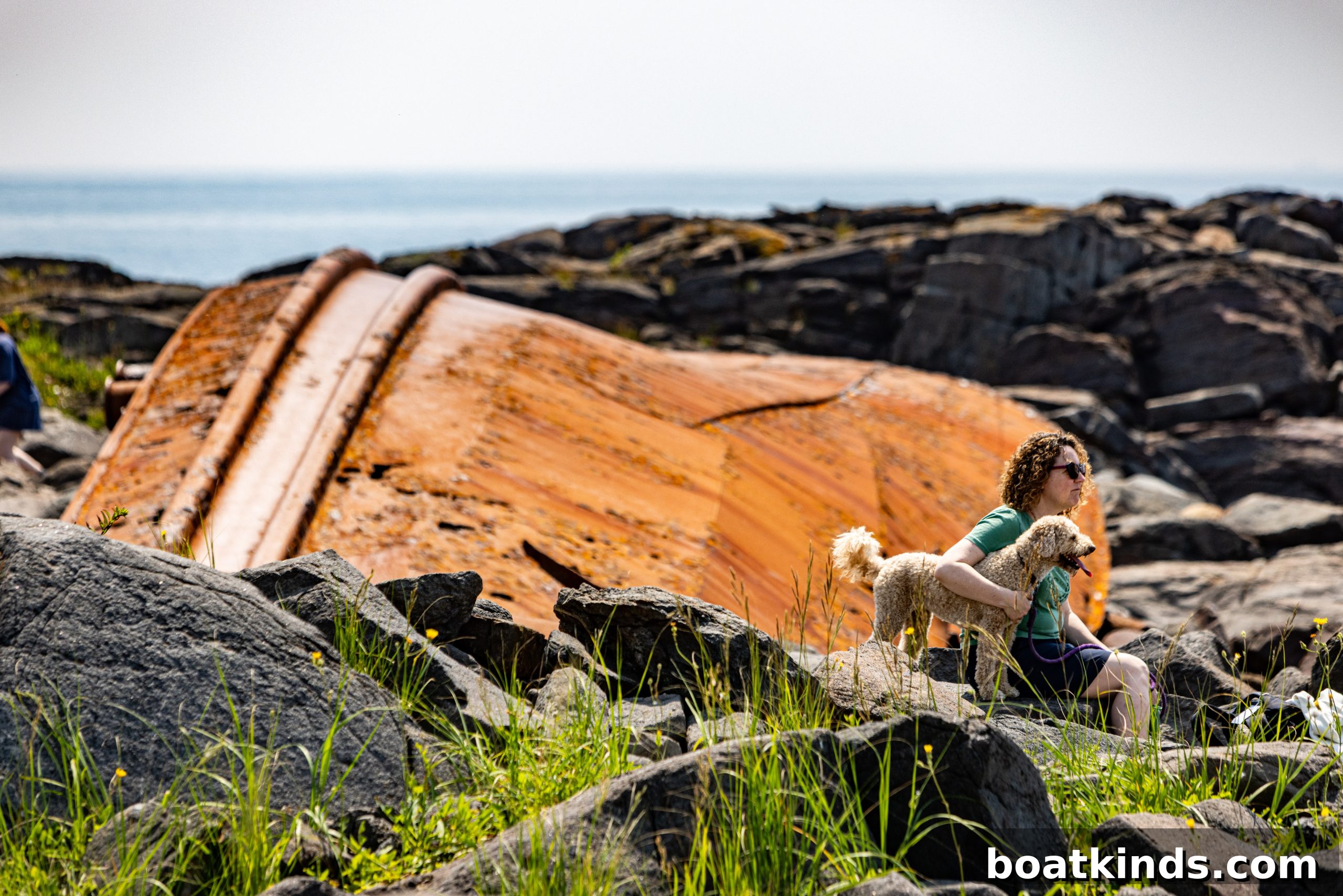
I checked out the rusting hulk of the D.T. Sheridan at Lobster Cove—the tug ran aground on the southern rocks in 1948 and remains a curious landmark. Inside the Monhegan Community Church I heard a lone flutist playing, a fittingly serene sound for the island.
At the Lupine Gallery I chatted with owners Bill Boynton and Jackie Boegel. They’ve run the gallery for decades; when I joked about retirement, Jackie suggested a celebration instead. Monhegan’s tight-knit community surfaced everywhere—on the path, in the galleries and again when I bumped into Daphne Pulsifer for the fifth time.
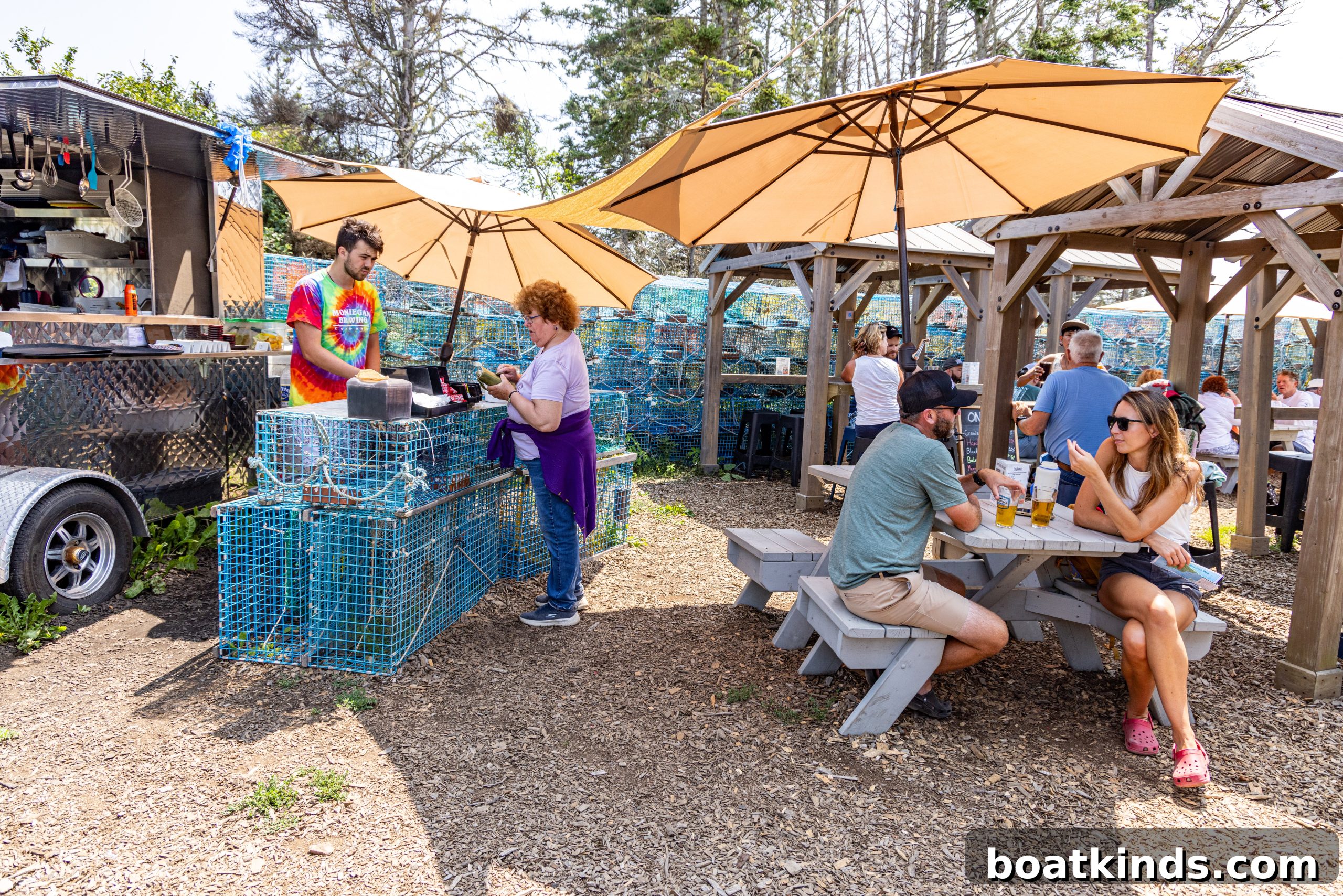
By midday the Monhegan Brewery opened but the line was long. I changed into my bathing suit in a public restroom, paid the 50-cent donation, and took a quick swim. After that I found Shermie in his upstairs office. He was fine with my beaching, explained why there’s no dinghy dock—there simply isn’t room—and described how guest moorings operate: there are no reservations, so visiting boats take an empty mooring and settle payment with him later. He also warned that the harbor’s holding ground can be unreliable and anchoring is not safe in many spots.
I lingered for shrimp tacos at the Fish House. As I finished, my boat began to float; I pulled the bow anchor from the rocks, retrieved the stern anchor and motored back to the mainland, satisfied that I’d finally made the trip under my own power. The next morning I returned with my wife—Monhegan had lost none of its charm. The spell, once broken, left us with warm memories of seals, cliffs, artists and the island’s singular seaside life.
This article was originally published in the October 2024 issue.