
Faro Blanco: Marathon Key’s White Lighthouse and Enduring Landmark
The Faro Blanco light is more than a navigational aid; it is a familiar landmark that has welcomed boaters to Marathon Key for seven decades. Perched above a busy marina, the white tower has long stood as a symbol of the Keys’ maritime culture and the region’s enduring appeal to anglers, cruisers and visitors.
In the mid-20th century, Florida emerged as a top destination for sportfishing and recreational boating. Marathon Key promoted itself as the “heart of the Keys,” a phrase that captured its growing reputation. Warm waters, predictable weather and a lively coastal scene—complete with traditional bait shops, boat rentals, roadside eateries and small marinas—made the island a popular stop for those pursuing fishing, diving or simply life on the water.
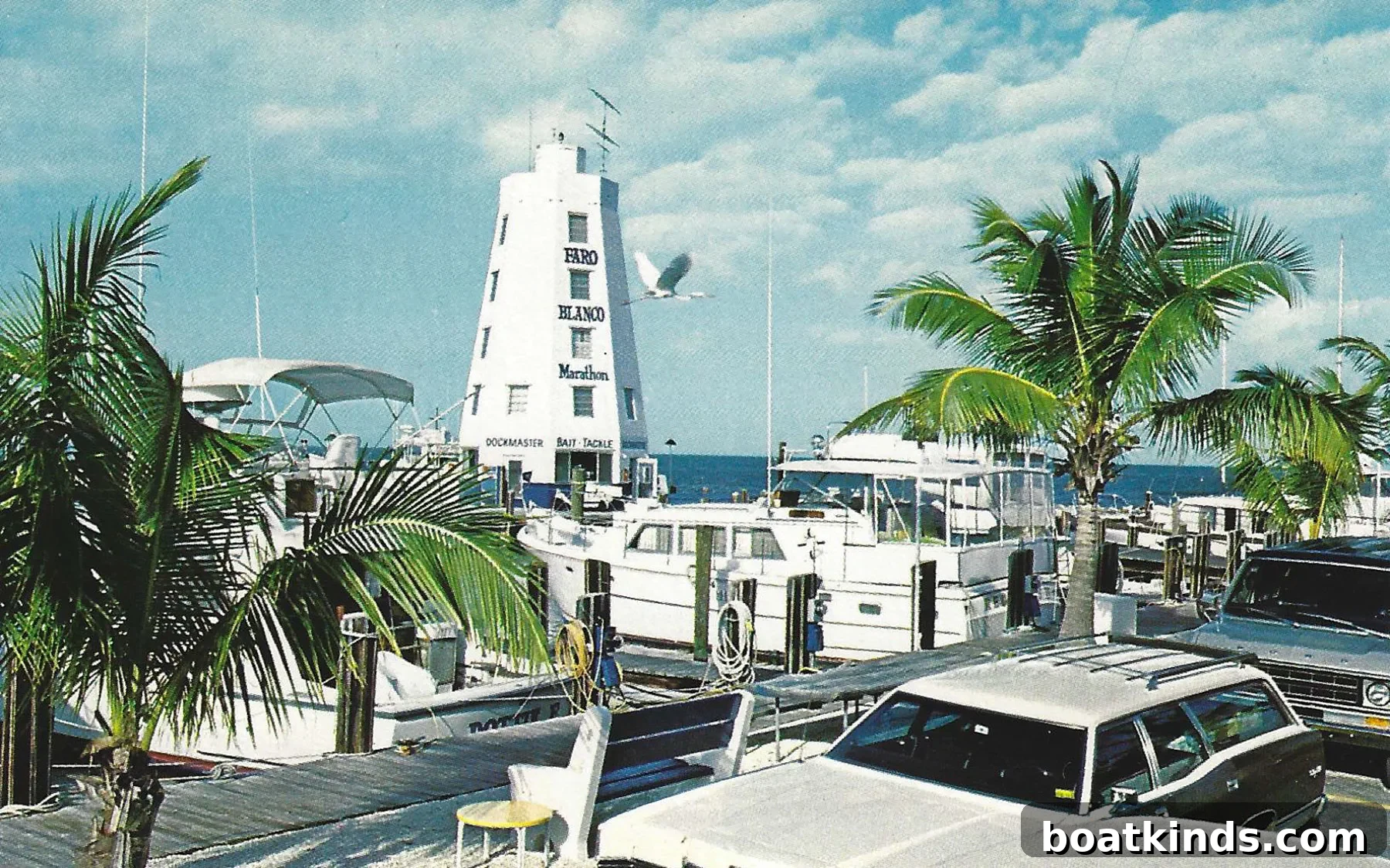
At the center of that activity was Faro Blanco. The name literally means “white lighthouse” in Spanish, and the structure became an unmistakable part of the marina’s identity. Designed by Lester Barret and built around 1950 by contractor Archie Rackley, the wooden lighthouse initially served as a private aid to navigation and as the visible heart of the marina complex. Marina founder Jim Kelsey and his family made their home there, further tying the lighthouse to the daily life of the facility.
Over the decades Faro Blanco served many practical roles for boaters and the local community. The marina offered dockage, fuel and a restaurant, and the tower itself housed a bait-and-tackle shop at times. The lighthouse also functioned as a fuel dock with a prominent Gulf Oil sign on its tower and as a dockmaster’s office. At one point the facility was known locally as Davis Docks, reflecting changes in ownership and use while the tower remained a constant visual reference for mariners.
Like many coastal structures in South Florida, Faro Blanco faced the region’s extreme weather. Hurricane Donna struck Marathon Key in 1960 and caused heavy damage to both the island and the 10-year-old lighthouse. The structure was rebuilt after that storm, only to be largely destroyed and eventually condemned following Hurricane Wilma in 2005. Each event underscored how vulnerable shoreline landmarks can be, and how much effort it takes to preserve them.
The story did not end with Wilma. About a decade after that loss, a marina developer invested in rebuilding the property and restoring the site’s role in Marathon’s waterfront life. Today the location is home to the Faro Blanco Resort and Yacht Club, which includes a 125-room hotel and a marina with more than 70 slips, alongside the restored lighthouse that gives the resort its name. The modern facility blends hospitality and marine services while retaining the historic association with the original Faro Blanco tower.
Beyond its structural history, Faro Blanco continues to represent the Keys’ combination of recreational boating, sportfishing tradition and waterfront hospitality. For generations of boaters arriving at Marathon Key, the white lighthouse has been both a navigational reference and a welcoming symbol—an emblem of the area’s long relationship with the sea.
This article was originally published in the January 2021 issue.