
David Hensel on Grand Banks: Heritage, Innovation and the Joy of Cruising
Since 2004, David Hensel has served as director of brand and marketing for Grand Banks Yachts, a name synonymous with cruising trawlers worldwide.
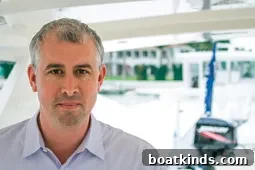
Hensel learned to sail at age six on San Francisco Bay and grew up sailing a wide variety of boats around Seattle’s Puget Sound and the nearby San Juan Islands. As an adult he spent time aboard trawlers on fishing trips to Alaska, developing an appreciation for their traditional lines and practical comforts. “Grand Banks is probably the one powerboat company I could work for and not lose the respect of all my sailing buddies,” he says.
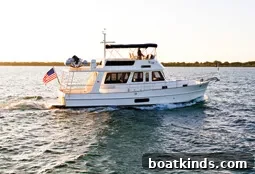
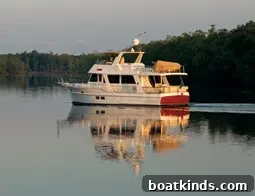
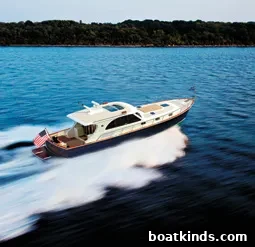
With corporate headquarters in Singapore and U.S. operations based in Seattle, Grand Banks recently displayed three of its latest models at the Yacht & Brokerage Show in Miami Beach: the 54 Heritage EU, the 43 Heritage EU and the 46 Eastbay SX. For more information, the brand can be found at www.grandbanks.com.
Hensel lives near the water in Seattle, close to the city’s commercial fishing hub. “I can tell when a fishing season is about to start because fleets of boats begin passing my window,” he notes. He enjoys watching how the lines and working details of commercial trawlers echo the design cues and heritage found in early Grand Banks yachts.
In this interview Hensel discusses how Grand Banks has evolved, what distinguishes the brand, where owners cruise, and a few of his own memorable moments aboard GB yachts.
Q: Did you grow up around boats and boating?
A: Yes. I grew up sailing throughout Puget Sound and the San Juan Islands in a variety of boats. As a young adult I often flew to Alaska to join friends on fishing trips aboard trawlers, which deepened my respect for their timeless styling and functional comforts.
Q: Do you have a favorite Grand Banks model?
A: Lately the 46 Eastbay SX has been a favorite after a recent three-day cruise around the San Juans. It’s Zeus-powered and strikes a great balance of performance and comfort. That said, favorites change based on where I’m cruising—whichever Grand Banks I’m aboard usually becomes my top pick. In 2006 I organized a three-week event for our 50th anniversary that took owners from the San Juans to southeast Alaska through the Inside Passage, and that experience reinforced why people regard those waters as some of the best cruising grounds in the world.
Q: Your website mentions “state-of-the-art equipment, meticulous craftsmanship and superior construction techniques.” Can you describe what you mean?
A: For us, “state of the art” means systems and solutions that reliably improve the onboard experience—not just new technology for its own sake. Recent examples include equipping a 54 Heritage EU with a Seakeeper gyro stabilizer and the EJS joystick control system from Twin Disc. We’ve also been pioneers with pod-drive installations, including early adoption of Zeus systems with dual-station controls.
Craftsmanship is visible the moment you step aboard—look at the joinery, the fit and finish of handmade furniture, and the care in final details. Many of our craftsmen have been with Grand Banks for decades. Superior construction combines high-quality materials and disciplined methods: for example, we use clear gelcoat below the waterline so the laminate can be inspected before epoxy barrier coating is applied. All our boats are built to ABS standards and meet NMMA and CE guidelines.
Q: What attracts buyers to Grand Banks?
A: Our legacy and reputation for building durable, desirable yachts are major draws. Grand Banks boats hold their value and inspire pride in ownership. We’ve also maintained strong financial discipline, growing cash reserves and avoiding the debts that have challenged many builders. That stability, combined with award-winning models and a clear vision for the future, reassures buyers. The new 50 Eastbay with IPS pod drives is an example of how we’re evolving a best-selling series into something more contemporary and capable.
Q: Tell us about your recent model launches.
A: Last fall we introduced two yachts: the 54 Heritage EU debuted in Cannes, followed by the 43 Heritage EU—a Zeus-powered model—introduced in Fort Lauderdale. Both sold well internationally. Later this year we’ll launch the first 50 Eastbay in SX salon express and FB flybridge versions. The 50 represents a significant step forward for the Eastbay line, notably as a pod-drive yacht with modern lines and a more assertive, contemporary aesthetic while remaining recognizably Eastbay.
Q: What direction do you expect Grand Banks to take over the next decade?
A: Expect steady evolution rather than radical change. We’ll continue to push innovation, contemporary styling and thoughtful onboard systems while preserving the timeless appeal that defines the brand. The number of models likely won’t grow dramatically, but we will refine the model mix, refresh successful lines and retire those that have run their course.
Q: Has the mission of a Grand Banks yacht changed over the last 20 years?
A: The fundamentals—seaworthiness, craftsmanship, reliability, beauty and smart design—remain the same. What has changed are customer expectations. Today’s Grand Banks yachts emphasize speed, sophisticated systems and contemporary luxury more than before. Styling is more modern, but a nautical sensibility endures across the range.
Q: Which Grand Banks models are most popular?
A: New models drive sales momentum; the 54 Heritage EU and the pod-equipped 43 Heritage EU sold quickly around the globe. That said, longstanding favorites remain strong: we celebrated delivery of the 100th 47 Heritage EU last year. Historically, the best-selling Grand Banks is the 42 Heritage, with 1,650 hulls built before it was retired in 2005—many people still picture that model when they think of Grand Banks.
Q: Where do GB owners cruise?
A: Owners take Grand Banks yachts to remarkable places: fjords in Norway, Indonesian archipelagos, Russian rivers, and long passages like circumnavigating Tasmania and voyages through Milne Bay in New Guinea. We share many owner stories in our magazine, Spray. Personally, I’ve taken part in a three-week flotilla up the Inside Passage to Alaska and cruised a 46 Eastbay through the Bosphorus into the Black Sea—unforgettable trips.
Q: What can the recreational boating industry improve?
A: Boat builders could learn from industries like luxury automotive by taking a more holistic approach to the customer experience—before, during and after the sale. Buyers today expect a brand to manage every part of that journey, and delivering consistently excellent customer experiences will be increasingly important.
Q: What defines a great yacht and a great company?
A: Greatness starts with a clear purpose, followed by creative thinking, proper investment and relentless attention to detail. Boats should be true to their design intent—consistent in character and performance. And, crucially, yachts should be fun. A boat should deliver joy every time you step aboard, and a company should nurture that sense of gratification in its people. As Hemingway put it, when you stop doing things for fun, you might as well be dead.
April 2013 issue