
Modifying a Seaview Accessory Pod for Raymarine Instruments on a 1986 Grand Banks 32
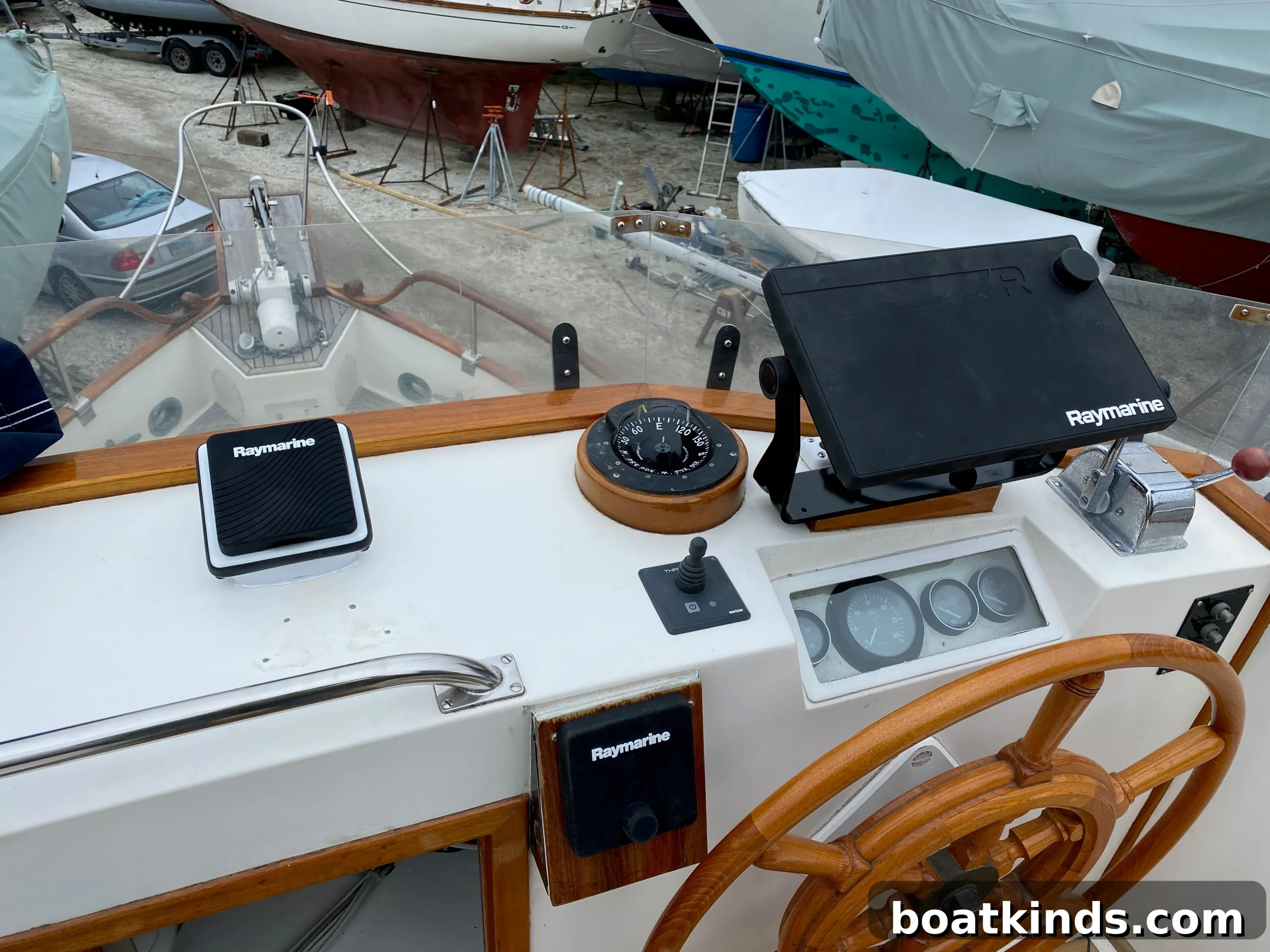
While upgrading the flybridge electronics on his 1986 Grand Banks 32, photographer and boat owner Onne van der Wal installed a 12-inch Raymarine Axiom Pro chart plotter and a Raymarine p70s autopilot controller. The p70s fit neatly into the spot where an older piece of equipment had been removed, but Onne still needed a dedicated location for a multifunction display so he could keep an eye on wind, depth, and other vital marine data.
Onne wanted a compact additional instrument—specifically the Raymarine i70s—that would be visible from the helm without cluttering the console. While browsing Seaview’s product line he noticed Seaview makes accessory pods sized for instruments such as the i70s and thought the pods could be adapted to his flybridge. The Seaview accessory pods are molded from marine-grade UV-resistant ABS plastic and are intended to be installed on Seaview Sail Pods, Deck Pods, or Rail Pods, which made them an attractive starting point for a custom installation.
Seeing the Seaview unit sparked an idea. “The moment I saw it, I said, ‘Bingo. I can modify that,’” Onne recalls. He marked the accessory pod, cut away the back at an angle on a bandsaw, and smoothed the edge on a disc sander. To create a solid attachment point, he fitted a piece of teak inside the pod to serve as a mounting block and then used marine sealant around the cut edge to seal the mod to the top of the flybridge console. The teak provides a durable pilot hole for screws and resists the moist marine environment better than many alternatives.
Careful planning of the assembly sequence was critical. Onne emphasizes that you can’t close the pod up before installing the mount because the mounting screws and wiring access must be reachable during assembly. He figures out this order of operations in advance—often while swimming laps. “I think the whole thing through while I’m swimming,” he says. “How would I make it? How would I mount it? And then I do it. The whole practical way of tackling stuff is so fun.” This practical, step-by-step thinking helps avoid backtracking and ensures that both the electronics and structural fittings are accessible until the final sealing and fastening are complete.
The modification kept the console tidy while adding a second multifunction display within clear view of the captain. With the Raymarine Axiom Pro serving as the primary chart plotter and the added i70s-style instrument providing wind, depth, and other readouts, the flybridge gained useful redundancy and improved situational awareness. Using a molded accessory pod as the starting point shortened fabrication time and preserved a neat, factory-like appearance once the work was finished.
Onne’s approach highlights several practical considerations for similar projects: choose materials that tolerate UV and salt exposure (marine-grade ABS for the outer pod and teak for internal blocking), plan the assembly order so fasteners and wiring are reachable, use quality marine sealant to keep water out of modified openings, and test-fit components before final sealing. The result should be a robust installation that blends with the vessel’s existing lines and provides reliable instrument mounting for years of service.
Onne documented his process to show the sequence of marking, cutting, sanding, internal blocking and final sealing, demonstrating how a ready-made accessory pod can be adapted to accept a wide range of marine instruments. The video documentation shows the hands-on stages of the job, from initial layout to the completed installation, and is useful for anyone considering a similar upgrade on a classic cruising boat.
This modification is a good example of combining off-the-shelf marine components with modest woodworking and finishing skills to achieve a clean, functional result. Whether you are upgrading an older vessel or customizing a new helm layout, thoughtful planning and attention to materials and access make the difference between a temporary fix and a long-lasting, professional-looking installation.