
Onne van der Wal remembers how sailors navigated in thick fog off the coast of South Africa in the 1970s. Back then, coastal navigation relied on paper charts and simple radio bearings.
“We used a small navigation book by Mary Blewitt that focused on radio direction finders,” Onne recalls. “You’d leave Cape Town on a known radio frequency, head 60 miles to the next station at Robben Island, and then to Dassen Island. There was often heavy fog. You tuned into a station, noted the bearing when the signal peaked, and triangulated that against another station to plot your position on the chart. Then you’d tell the boat owner, ‘This is where I think we are.’”
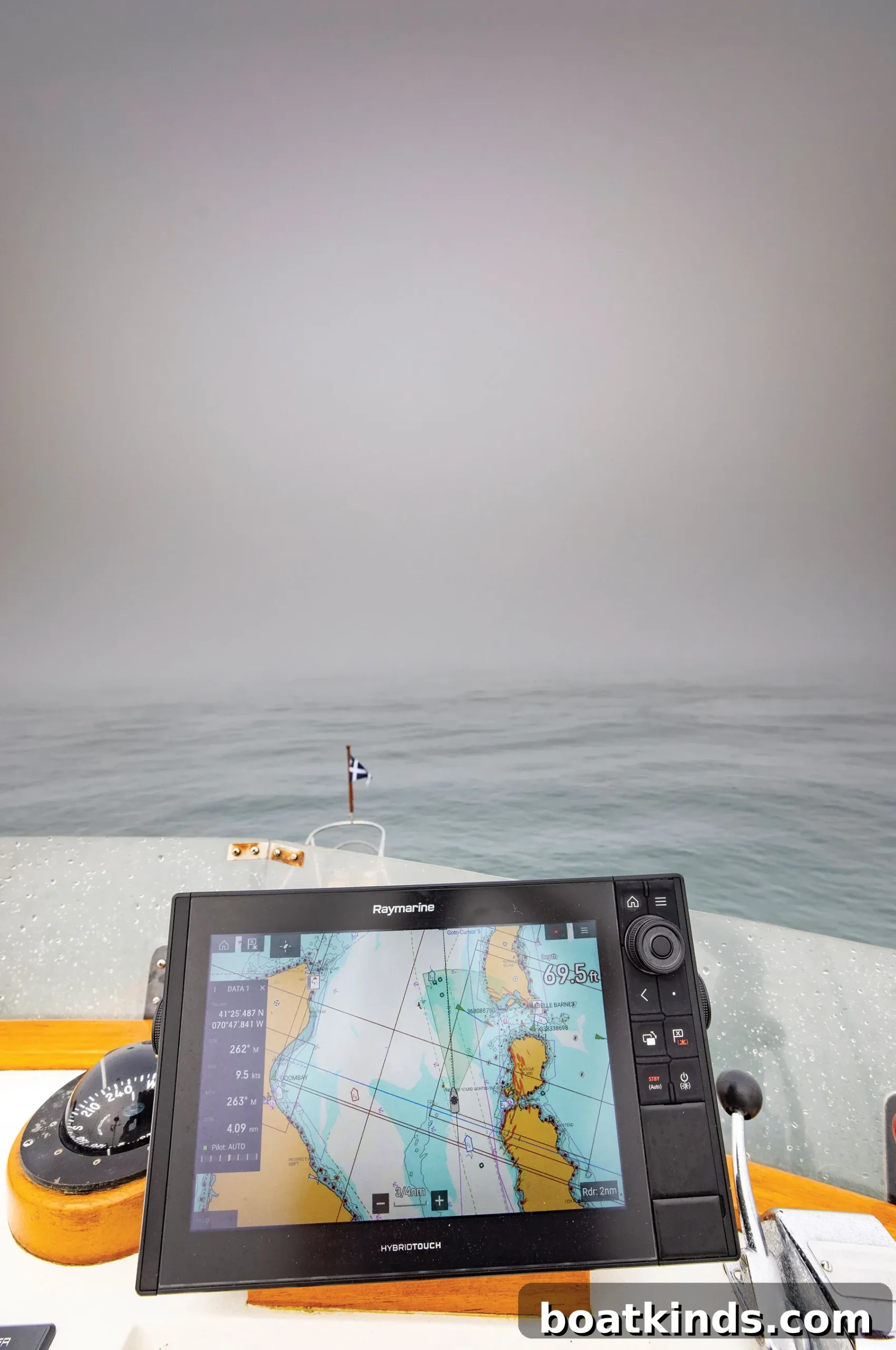
There was no Loran and this was long before GPS, so dead reckoning and experience were essential. “You tracked progress with a pencil and parallel rule, used the log and depth sounder, and listened for the sound of surf or a breakwater,” Onne says. One memory from those early days remains vivid.
“I was about 19, returning from Saldanha Bay,” he remembers. “We were in the soup without an engine, dead reckoning. A clanging sound grew louder and suddenly we were alongside a massive anchored ship. An African man on the bow was tapping the lid of a garbage can with a pipe to announce the vessel’s position. That was navigation in my early years.”
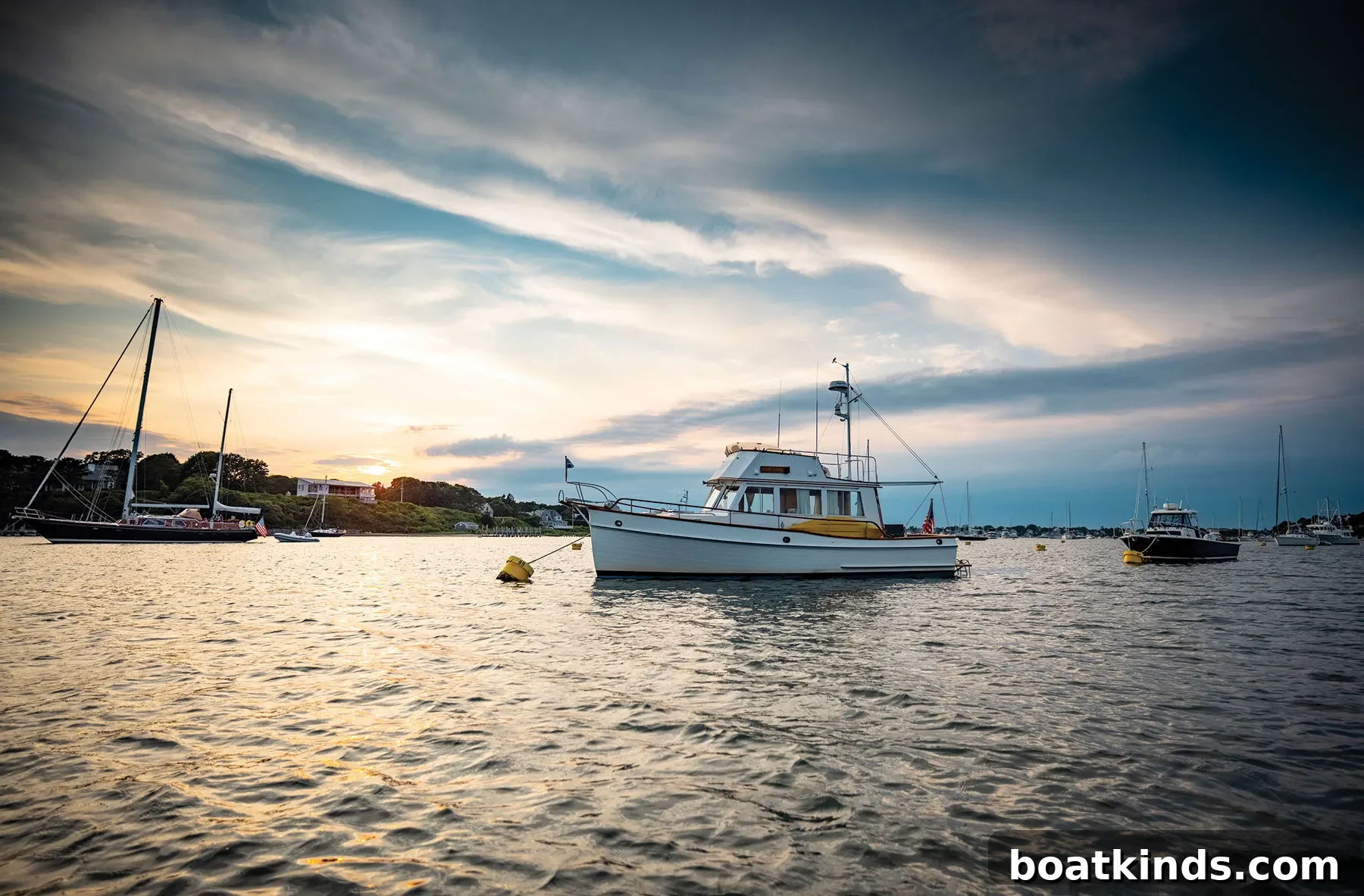
More than four decades later, Onne approaches fog with far less anxiety. His restored 1986 Grand Banks 32, Snow Goose, carries a modern Raymarine electronics suite that helps him see through murk. The system includes a 12-inch Axiom Pro 12 RVX multifunction display in the wheelhouse and another on the flybridge, an RV320 RealVision 3D transducer set, a Quantum 2 Doppler radar, an AR200/CAM210 Augmented Reality Pack with CAM220IP camera, a FLIR M232 thermal camera, a Ray90 VHF radio, an AIS700 Class B transceiver, an i70S multifunction instrument display with Wind Bundle Pack, and an EV400 Power Auto Pilot Kit with a p70Rs controller. Onne installed most of the gear himself, with guidance and final calibration from Adam Hobgood, lead service technician at Cay Electronics in Portsmouth, Rhode Island.
That electronics package proved invaluable on Onne and his wife Tenley’s first extended overnight run aboard Snow Goose. After a photo workshop in Nantucket, they enjoyed an easy passage in light breeze from Nantucket to Lake Tashmoo on Martha’s Vineyard. The following morning Lake Tashmoo was shrouded in fog, and Onne expected the entire trip back to Jamestown, Rhode Island, would be “in the soup.”
With no wind and a calm sea, he relied on instruments rather than sight. He had already practiced operating the radar and the plotter overlay in clear weather, so he felt comfortable using them in limited visibility. “I trusted my equipment and the AIS was working perfectly,” he says.
A major advantage of the Raymarine plotter for Onne was the real-time tidal information. Snow Goose typically cruises at about 8 knots, but with more than two knots of favorable current through Vineyard Sound he was often making more than 10 knots over ground. The plotter’s clear graphical tide arrows allowed him to seek the strongest flow and optimize his route. “I still checked the Eldridge Tide and Pilot Book, but seeing a live display on the plotter made the trip much easier,” he says. “When your head’s in the soup you don’t want to have your head in a book.”
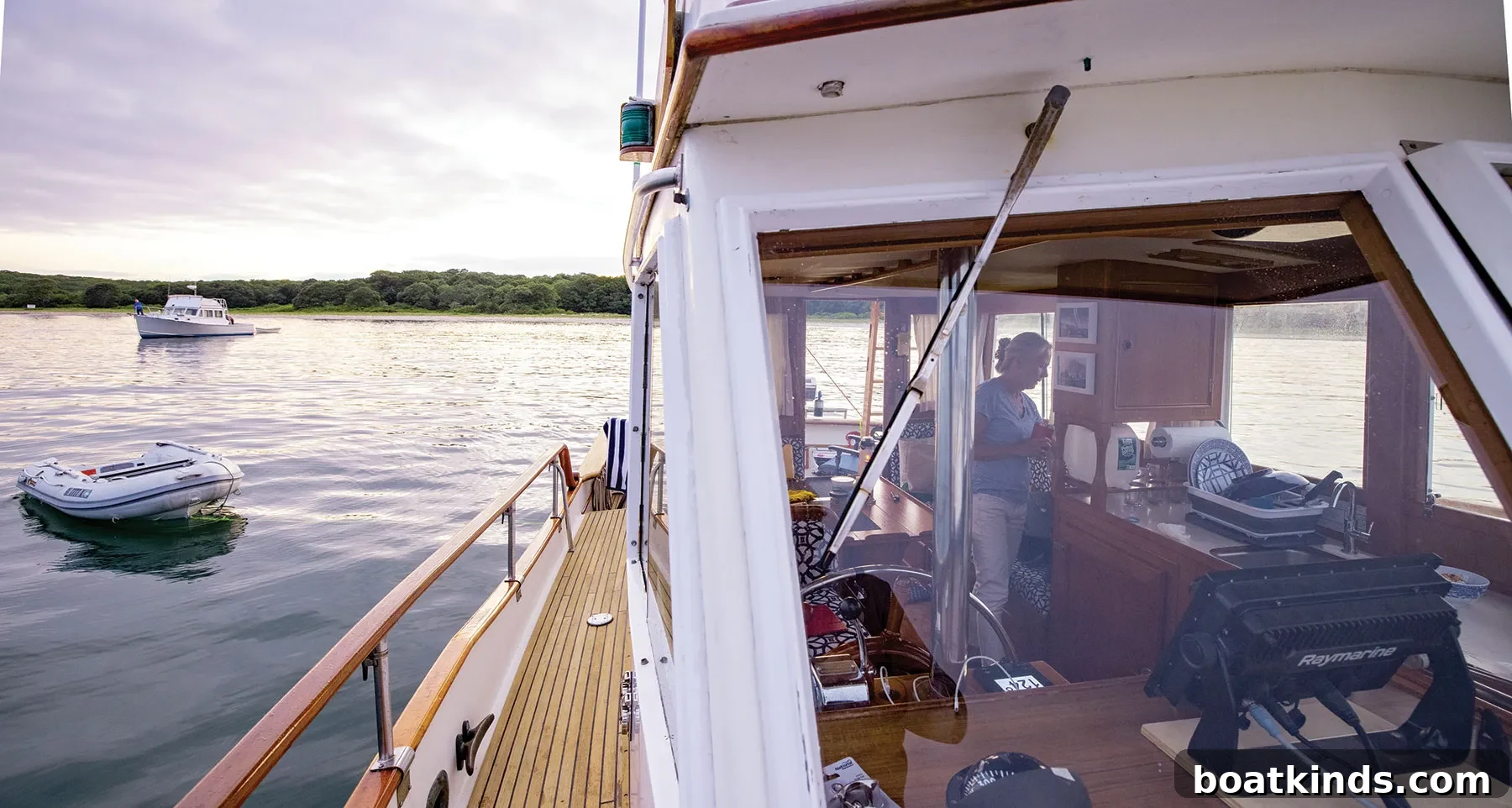
Exiting Lake Tashmoo was straightforward despite the narrow inlet. Once he turned north and west the fog closed in, and the radar became his primary means of detecting non-AIS traffic. The plotter gave him a precise position while the radar provided contact confirmation. “When you get an AIS ping and a red radar return in the same spot, you know where that vessel is,” he says. Small red blips on radar often turned out to be center-console boats drifting while fishing—these small craft frequently don’t carry AIS.
While crossing Vineyard Sound in pea-soup visibility, Onne got a VHF call from the Quonset-to-Vineyard Haven ferry. He told the captain he would hold course; the ferry passed at high speed and the captain’s awareness of Snow Goose’s exact position provided extra reassurance. The AIS also showed commercial fishing vessels leaving New Bedford and threading through Quicks Hole, and larger yachts transiting to the north. “Knowing professionals are out there and hearing them talk to each other is comforting,” Onne says.
Visibility varied from about 200 feet to nearly a half-mile at times. He sighted the R2 bell south of Brenton Reef and later spotted Castle Hill Light—the first clear view of land for Tenley, who had been sitting on the bow. “I told her to look to the right,” he laughs. “She said, ‘Oh my God, we’re already here.’ I knew exactly where we were, but she didn’t.”
The two helm stations on Snow Goose feature identical electronics, so Onne could move between the flybridge and the lower helm while keeping full situational awareness. On the Grand Banks 32 the galley is immediately adjacent to the lower helm, allowing him to prepare lunch while still monitoring course and the chartplotter. “When I step below, my eyes don’t leave the plotter,” he says. “I can make a cup of tea and still keep watch.”
Onne has used the augmented-reality overlay only a few times; it superimposes a live video view ahead onto the multifunction display. The FLIR thermal camera has mainly been used while at anchor to scan the surroundings—its 360-degree pan and zoom features make it especially useful overnight. “The equipment gives you so much confidence in the dark, in fog, and in rain,” he says. “It’s a huge aid and something to lean on. I’m only scratching the surface—when I go gunkholing in Maine it’s going to be amazing.”
Reflecting on how navigation has changed, Onne contrasts modern systems with his early experience. “I remember rounding Cape Point and navigating almost by braille—by smell, sound, and feel,” he says. “When you’re tired and cold you can easily make a mistake. Today the data is loud and clear, integrated on a single screen. You can still make mistakes, but there’s no excuse. The difference between when I was 19 and now is night and day.”
This article was originally published in the November 2021 issue.