
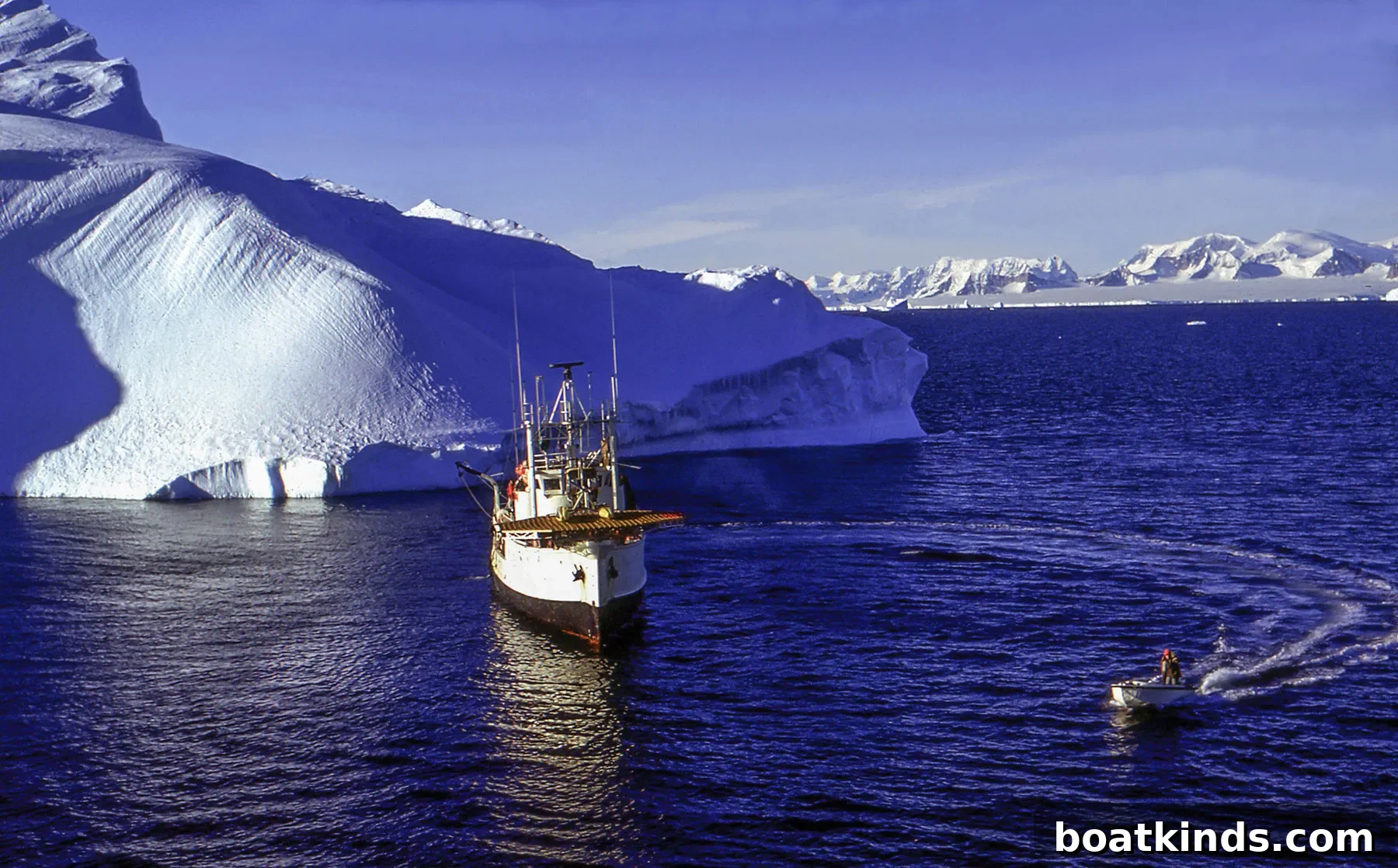
Cousteau’s 1972–1973 Antarctic Expedition Aboard Calypso
In 1973, legendary French explorer Jacques-Yves Cousteau was concluding a four-month scientific and film expedition to Antarctica aboard the 141-foot research vessel Calypso, a former British Royal Navy minesweeper converted for oceanographic work. Departing Marseille in September 1972, the expedition combined scientific observation, wildlife study and pioneering cinematography to document the frozen continent from sea, air and land.
Cousteau and his team used a variety of platforms to study and film Antarctica’s unique environment. The expedition employed a helicopter and a hot-air balloon for aerial observations and landscape cinematography, and the small diving saucer SP-350 Denise for underwater exploration. The mission’s goals were both scientific and cinematic: to observe Antarctic fauna and ice formations and to capture rare footage of the polar marine environment.
Although Cousteau described Antarctica as one of the least polluted places on Earth, his team still recorded disturbing signs of contamination. Analyses found traces of pollutants in the water and detected insecticides and heavy metals accumulating in local wildlife. In addition to chemical contaminants, Cousteau noted other threats to the region’s fragile ecosystems, including litter left by human visitors, the presence of sled dogs, increased helicopter traffic that disturbed wildlife, and the overhunting of whales and seals. Despite these concerns, he remained deeply moved by the landscape. He praised the stark beauty of the ice, the sea and the penguins, and he remarked that Antarctica’s clear atmosphere reminded him of the pure air of his childhood.
The expedition also underscored how hostile and unpredictable the Antarctic environment can be. On February 9, while anchored in Hope Bay, Calypso was caught in a sudden and violent storm. Heavy snowfall quickly reduced visibility to zero as the ship became surrounded by icebergs. Within minutes, wind speeds rose from calm to hurricane-strength gusts, and a blizzard engulfed the vessel. Ice floes struck Calypso twice, punching a two-foot hole in her hull and breaking the port propeller shaft. For three harrowing days the ship drifted near shore in winds up to 80 knots, carrying roughly 30 tons of ice and snow that accumulated on deck during the storm.
When the weather finally moderated, the crew managed to navigate Calypso under difficult conditions to King George Island and then across the Drake Passage toward the tip of South America—operating on a single propeller and managing the damage as best they could. After securing the vessel in Argentina to continue filming along the Chilean coast, Cousteau flew to the United States to report on the expedition and its findings.
Cousteau preserved the expedition’s discoveries and dramatic imagery in his 1976 film Voyage to the Edge of the World, which was the first feature to include extreme-depth footage of Antarctic waters. The film brought the remote polar seascape to wider audiences, highlighting both the continent’s grandeur and its vulnerabilities.
Cousteau’s firsthand observations and the evidence collected during the voyage helped shape his later advocacy for Antarctic protection. In 1990 he launched an international petition to safeguard the continent, arguing that Antarctica is an invaluable natural treasure that must be preserved intact for future generations. His campaign emphasized the need to protect Antarctica’s unique plant and animal life from pollution, overexploitation and human disturbance.
Cousteau’s Antarctic expedition remains an important chapter in polar exploration and environmental awareness. The mission combined daring fieldwork, innovative underwater filming technology and early environmental monitoring, drawing public attention to the fragile state of polar ecosystems. Though the landscape inspired awe, the expedition’s findings served as a reminder that even the most remote regions are vulnerable to human impact.
This article was originally published in the February 2022 issue.