
Icebreakers on the Great Lakes: How They Keep Winter Shipping Moving
When winter settles over the Great Lakes, the landscape changes from open water to a frozen expanse that can dominate the region from December well into spring. Some seasons are especially severe: in 2015 more than 80 percent of the lakes’ surface water froze, and Lake Erie reached 94 percent ice cover in March of that year. In the winter of 2013–14, ice persisted on Lake Superior into June. These conditions transform harbors, bays and anchorages into hazards for commerce and navigation, and that’s when icebreakers become essential.
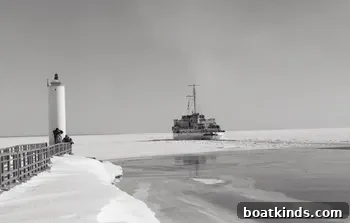
Ice on the lakes doesn’t stay still. Strong winds and currents push floes into bays and narrow channels where they collide and pile up. Sheets, blocks and bergs as thick as five feet can stack and crush against piers, bridges and vessels, turning once-clear anchorages into a jagged white maze that can trap ships for weeks. When freighters are iced-in and commercial ports are choked, the regional economy and the delivery of critical commodities such as grain and coal are at risk.
Icebreakers are purpose-built for this demanding work. A typical Great Lakes icebreaker combines heavy steel construction with powerful propulsion: two 2,500-horsepower diesel engines driving a large propeller, an inch-thick steel hull designed to take repeated impacts, and enough maneuverability to work in confined, ice-clogged waters. While these ships can reach speeds up to about 14 knots in open water, raw speed is rarely the key; controlled power and technique determine success when a ship meets an ice floe.
Breaking ice is a practiced art rather than simple battering. For thick, heavy ice the vessel will ride up onto the floe and use its own weight to crack and fracture the sheet into large pieces. Once broken, the pieces are further pulverized in the prop wash and by repeated passages. A maneuver called sallying—rocking the ship from side to side—creates alternating pressure and waves that help break locked-in ice. Icebreakers may also perform race-tracking, making overlapping loops through a pack to fragment ice into sizes small enough for currents to carry away. When a navigable channel is established, crews carefully shave the edges to avoid breaking off a floe that could later drift back and cause a new blockage.
These techniques require experienced helmsmen, coordinated bridge teams and a clear understanding of local weather and ice conditions. Icebreaking operations are often timed around tides, wind shifts and forecasted freezes so that cleared channels remain usable as long as possible. In busy ports such as Detroit, Chicago and Cleveland, maintaining those corridors is vital to keep cargo ships moving throughout the winter months.
There are nine icebreaking vessels serving the Great Lakes region, tasked with keeping major commercial ports open and ensuring the flow of bulk freight during cold months. Their work supports essential shipping lines that transport grain, coal and other commodities that would otherwise be delayed or stranded by ice. The crews who operate these ships are skilled at balancing aggression with finesse—pushing through ice when necessary but also knowing when to back off and protect infrastructure from further damage.
Beyond commercial missions, some historic icebreakers have found a second life as museums and educational platforms. The Coast Guard icebreaker Mackinaw, often called the “Queen of the Great Lakes,” is preserved in Mackinaw City, Michigan. The vessel is open to visitors for tours, educational programs and overnight encampments, offering the public a direct look at icebreaking technology and maritime life in a harsh environment.
Icebreaking on the Great Lakes is an annual, often unseen effort that blends engineering, seamanship and local knowledge to keep vital shipping lanes functional when winter conditions become extreme. Operating in heavy ice demands specialized ships, experienced crews and careful planning; together, they ensure that commerce continues when the lakes are at their harshest.
This article originally appeared in the February 2017 issue.