
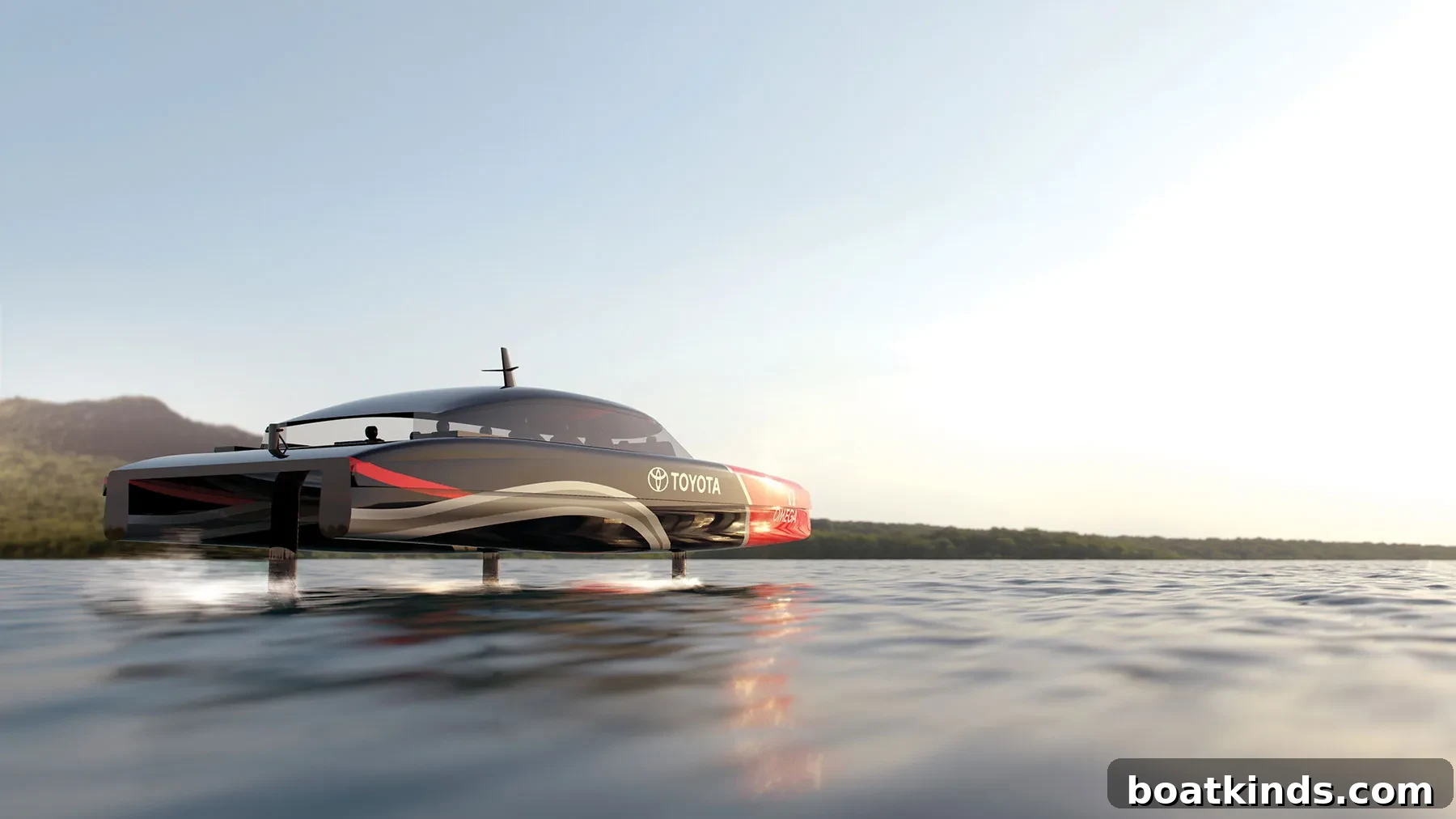
Hydrogen is rapidly emerging as one of the most promising propulsion options for marine applications. Paired with fuel-cell technology, hydrogen delivers a clean, efficient electric powertrain that can spin propellers quietly and with high efficiency. Advances in electrolysis now make it possible to produce hydrogen from seawater, and combined with on-board solar generation, this points toward a future where vessels can generate significant portions of their own “green” fuel while at sea.
Batteries have dominated headlines in recent years but remain heavy and limited in range for high-speed, high-drag vessels. That is why Emirates Team New Zealand, defender of the 37th America’s Cup, has invested heavily in hydrogen for its chase-boat fleet. Chase boats need to maintain speeds near 50 knots to support modern foiling race boats, and hydrogen fuel-cell systems offer a compelling blend of power, range and refueling time compared with battery-only solutions.
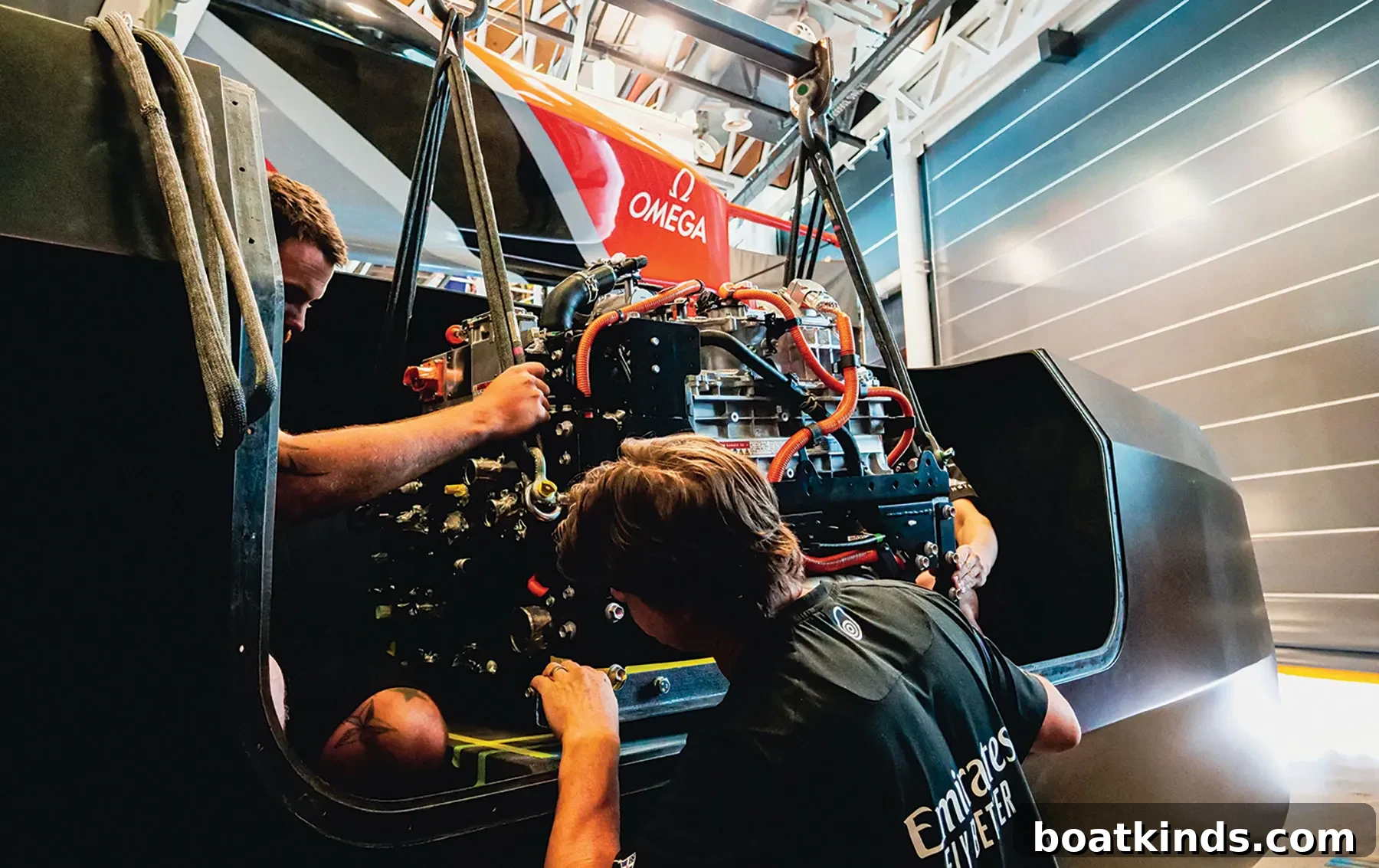
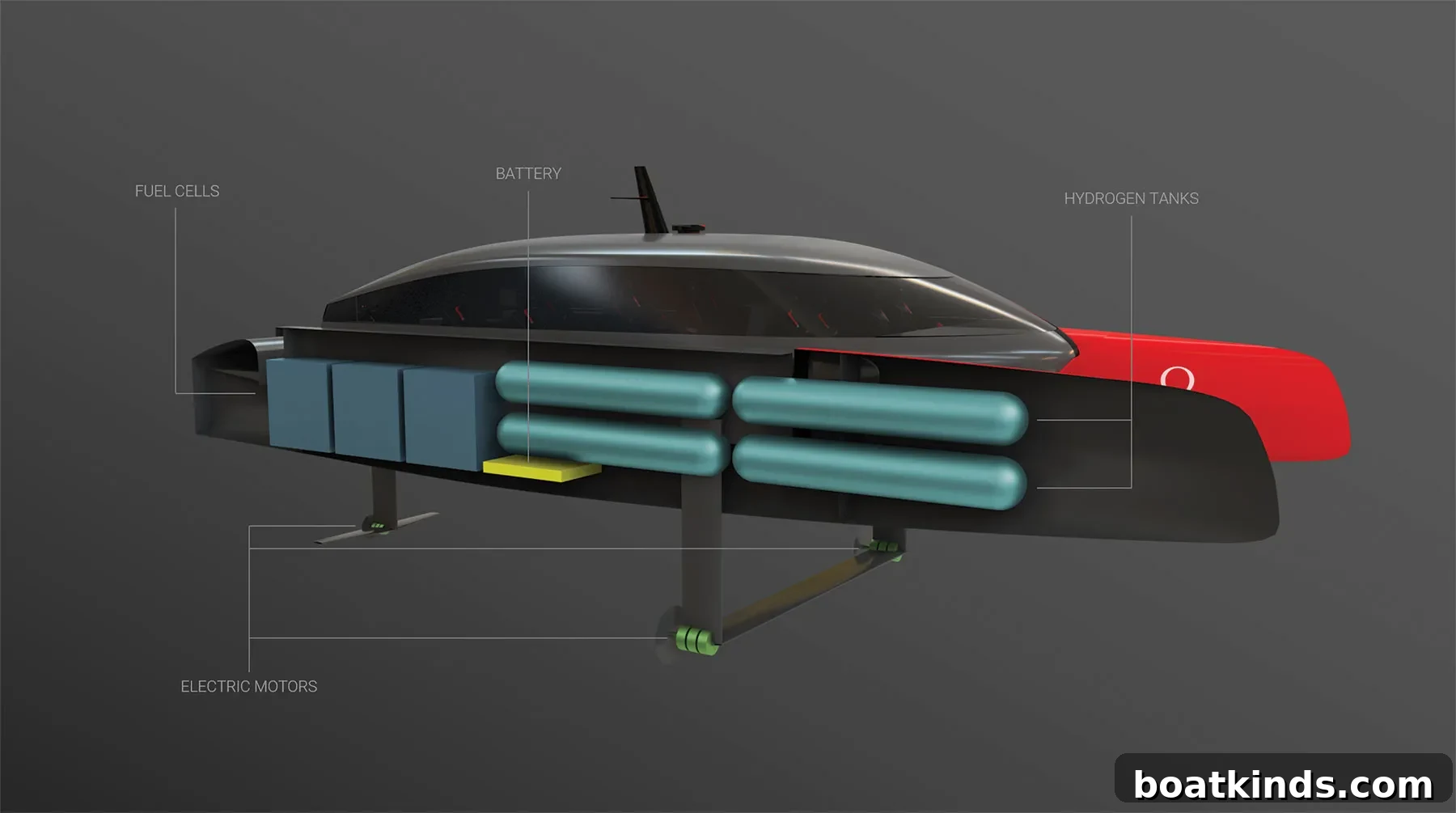
The team’s experimental hydrofoiling catamaran, Chase Zero, represents a major step forward in hydrogen-powered marine design. This 33-foot, six-passenger craft can reach a top speed of 50 knots and cruise comfortably at 35 knots, with a stated range in excess of 112 nautical miles. Belowdecks are four composite fuel tanks, each holding 73 gallons and storing hydrogen at 5,100 psi. The fuel-cell system, adapted from Toyota’s second-generation Mirai, powers a pair of 400-volt electric motors that together produce about 600 horsepower, delivering the instant torque and quiet operation needed for high-performance foiling.
Sea trials off New Zealand have exceeded expectations. Crucially for practical use, the hydrogen powertrain has shown remarkable reliability and low maintenance needs during testing. The boat’s drivetrain and foil-flap mechanisms have required minimal repair; inspections revealed little wear, and both systems can be disassembled and inspected within a four-hour window—demonstrating that overnight maintenance cycles are feasible for operational fleets.
SOUNDINGS: We were impressed by the footage showing Chase Zero covering 150 nautical miles using hydrogen and electric power. What is the current status of the program?
Hamish Hooper: To date we’ve logged over 80 hours of runtime, continuously pushing the boat in a range of conditions. Chase Zero has performed comfortably in seas with over 30-knot winds and three-foot waves. The top speed recorded during trials is 52.4 knots. Autopilot and control development have progressed well, which also helps with parallel development work on Emirates Team New Zealand’s AC40 raceboat autopilot.
SO: Any surprises since putting the Toyota hydrogen system into service?
HH: The hydrogen powertrain’s reliability has been outstanding. Historically, new powertrains often show initial teething problems, but this system has been faultless from the start, giving us strong confidence in hydrogen as a practical marine fuel.
SO: Has the team moved closer to producing “green” hydrogen from renewables like solar?
HH: Our hydrogen infrastructure partner continues to explore advanced production methods, and Chase Zero runs exclusively on green hydrogen. The ability to combine renewable electricity and electrolysis—potentially even using on-board or nearby solar arrays—remains a key part of hydrogen’s long-term appeal for sustainable marine operations.
SO: How has Chase Zero been received by the sailing community and the public?
HH: Representatives from other top America’s Cup teams, including INEOS Britannia and Luna Rossa Prada Pirelli, have taken rides and been very impressed. The boat turns heads when it passes other vessels: it’s fast, quiet, and produces very little wake when foiling. The interior offers expansive glass views, and because the hull flies roughly a meter above the water, passengers experience remarkably smooth rides with reduced lateral G-forces during banked turns. The common reaction after a run is “I want one.”
Emirates Team New Zealand’s authority as Cup defender also allowed it to influence safety and sustainability requirements for the following competition. Under the America’s Cup Deed of Gift, the defender sets certain rules for the next event, and that influence has helped push hydrogen chase-boat technology toward broader adoption across the sport.
Industry response has been swift. Sanlorenzo Yachts’ Bluegame brand has contracted to build two hydrogen-powered hydrofoil chase boats for New York Yacht Club’s American Magic team, aiming to have them operational for the 37th America’s Cup in Barcelona. Sanlorenzo also projects the launch of a pioneering 50-meter hydrogen-powered superyacht, indicating growing commercial interest in large-scale hydrogen marine applications.
Chase Zero demonstrates how hydrogen fuel cells can deliver high performance, extended range and practical serviceability for demanding marine roles. As electrolysis and renewable power generation advance, hydrogen-powered boats—especially hydrofoiling chase boats and larger superyachts—are likely to play an increasingly visible role in both competitive sailing and private yachting.
This article was originally published in the January 2023 issue.