
I was livid. Stranded on I‑5 with a flat tire, missing a critical part, I had to call for a tow — not just for the delay but for the humiliation of asking someone to rescue me. That sense of helplessness is exactly what Derk Wolmuth faced at sea, only his problem was far worse than a flat: a rapidly worsening infection that nearly killed him during the Singlehanded TransPacific Yacht Race, the 2,200‑mile solo run from San Francisco to Kauai.
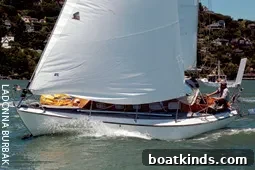
Derk Wolmuth, 42, of Victoria, British Columbia, is the sort of sailor who prefers self‑reliance. A trained shipwright and artist who has sailed since boyhood, he earned early renown by circumnavigating Vancouver Island at 19 in a Skerry cruiser without an engine or radio, and by single‑handing a spidsgatter around the Queen Charlotte Islands. For Wolmuth the TransPac was the opening leg of a planned voyage into the South Pacific and beyond. “This trip has been a dream of mine since childhood,” he says. “After my father passed away there was no reason to fuss around anymore.”
His boat, Bela Bartok, is a Swedish‑built Vindö 40 named for the Hungarian composer whose work inspires him. The 31‑foot cruiser, built in the 1970s, was one of the slowest in the 23‑boat TransPac fleet, but it’s comfortable and seaworthy: a fiberglass hull, wooden cabin top, deck‑stepped mast, long keel and a Monitor vane self‑steering system that would later play an important role.
Under way and into trouble
Wolmuth made a solid start after the June 30 race start, but a few days in he developed a sore spot on his left buttock — a common occupational hazard for bluewater sailors who sit in damp foul weather gear. The sore turned into a painful boil and became infected. An appropriate antibiotic course could have stopped it, but Wolmuth hadn’t packed antibiotics. He tried to contact other racers for help without success, then slowed his pace to concentrate on rest and nutrition.
On July 14 the infection escalated dramatically. “I had no idea it would reach the severity it did,” he told Latitude 38. “It happened very quickly and very dramatically. One minute I was OK. The next I felt a black line of ants crawling up a vein in my abdomen.” Realizing the danger, he sent a mayday on single sideband radio around midnight. When that drew no reply, he activated his EPIRB.
The U.S. Coast Guard picked up the distress signal and requested assistance from the 30,000‑ton Matson freighter MV Mokihana, about 80 miles away and en route from Honolulu to Oakland. The choice of the Mokihana proved fortunate: her captain, Tom Crawford, 51, of Lopez Island, Washington, is both a seasoned merchant mariner and a cruising sailor who owns a Pacific Seacraft Mariah roughly the same size as Bela Bartok and fitted with a Monitor vane. Crawford briefed his crew and established radio contact with Wolmuth while planning a transfer from a 31‑footer to an 860‑foot freighter in open ocean.
Rescuing the sailor, sparing the boat
Crawford knew the risks — rescuing a person often means abandoning the vessel — and he resolved to try to save both. Weather cooperated for a time: winds were 12–15 knots and a moderate swell, though conditions deteriorated a day later to 35 knots and 12‑foot seas. Those shifts confirmed the urgency; had the rescue been delayed another day, Wolmuth’s chances would have been far worse.
When the Mokihana sighted Bela, Crawford directed Wolmuth to set the boat on a comfortable point of sail and, in his weakened condition, to rig the Monitor vane for self‑steering under jib alone. “Keep your PFD on and don’t touch anything,” Crawford advised as he prepared the ship’s crew for a hazardous approach. They had to come alongside on the starboard side because the port side hull was hot from fuel tanks and hoses for the ship’s livestock discharge obstructed that side. With Wolmuth near collapse, the transfer would be a difficult, high‑risk maneuver.
Bela was making only about 2.7 to 3 knots while the Mokihana’s slowest speed is 7 knots, so Crawford stood on the wing of the bridge controlling the engines remotely and calling commands. The freighter’s engines must be shut down and restarted with compressed air to change between ahead and astern — a delicate, time‑critical process. As Bela entered Mokihana’s wind shadow she nearly became trapped under the freighter’s bow. Wolmuth’s boat struck and scraped down the hull, fouling on appendages and losing his passport from his back pocket in the chaos.
Crawford used the wash from the bow thruster to nudge Bela away from the freighter’s belly and toward the ship’s engine‑side opening. Wolmuth, summoning the last of his strength, secured heaving lines in Bela’s cockpit while avoiding fouling the Monitor vane, and then made the leap to the freighter. He collapsed aboard once safe. “I traded my boat and my dignity for antibiotics,” he later said.
Crawford, who is also an EMT, administered seven shots of antibiotics and stood by, prepared to perform more extensive medical care if necessary. His quick action and medical skill undoubtedly saved Wolmuth’s life.
Finding Maui and saving Bela Bartok
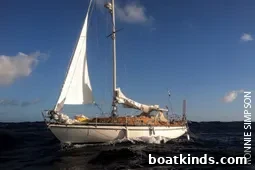
Bela was cut loose after a close call in which one line almost pulled her into Mokihana’s propeller. Helmed by her long keel and the Monitor vane, she continued toward Maui at roughly 3.5 knots with a partially furled jib. Her mandatory Yellowbrick tracker transmitted positions twice an hour, allowing friends and fellow competitors who had finished to monitor her progress and organize a recovery without attracting opportunistic salvors.
A small group of single‑handing sailors and friends coordinated the intercept. Led by competitor John Lubimir and veteran Jeff Lebesch, several racers raced to try to salvage the boat before she found shore on Maui’s north coast. Four days after Wolmuth’s rescue, in the early hours of July 19, Ronnie Simpson and Ruben Gabriel — who had been racing in Moore 24s — set out in a 22‑foot fishing boat to meet Bela 12 miles offshore.
They found Bela moving at about 3 knots. On boarding, they cleared lines, discovered one rope fouled on the prop and another wrapped around the Monitor’s paddle, which Simpson cut away. He was surprised and relieved to find the vane still functioning. Simpson and Gabriel made temporary repairs and sailed Bela to the Waikiki Yacht Club, where she was later reunited with Wolmuth.
Wolmuth is deeply grateful to everyone who helped. He credits Capt. Tom Crawford and the Mokihana crew for saving his life and preventing worse outcomes, and he acknowledges the single‑hander community that rallied to protect his boat. “Capt. Crawford went above and beyond his duty,” Wolmuth says. “After picking me up he personally administered shots of antibiotics and was prepared to do surgery. He is a hell of a good man. I am humbled and eternally grateful.” One practical lesson, he adds: carry antibiotics when heading offshore.
For Crawford, who jokes that he’s not great at video games with his grandkids but is very patient, the rescue shows how steady seamanship, careful remote‑control handling and calm persistence can save a life and a vessel. In a year marked by sailing tragedies along the West Coast, this rescue — a freighter captain and a small‑boat sailor working together to save both man and boat — is the kind of story that resonates.
Dieter Loibner is sailing editor for Soundings.
December 2012 issue