
Coast Guard Runs 47-Foot Motor Lifeboat Through Heavy Surf Training at Ocean Beach
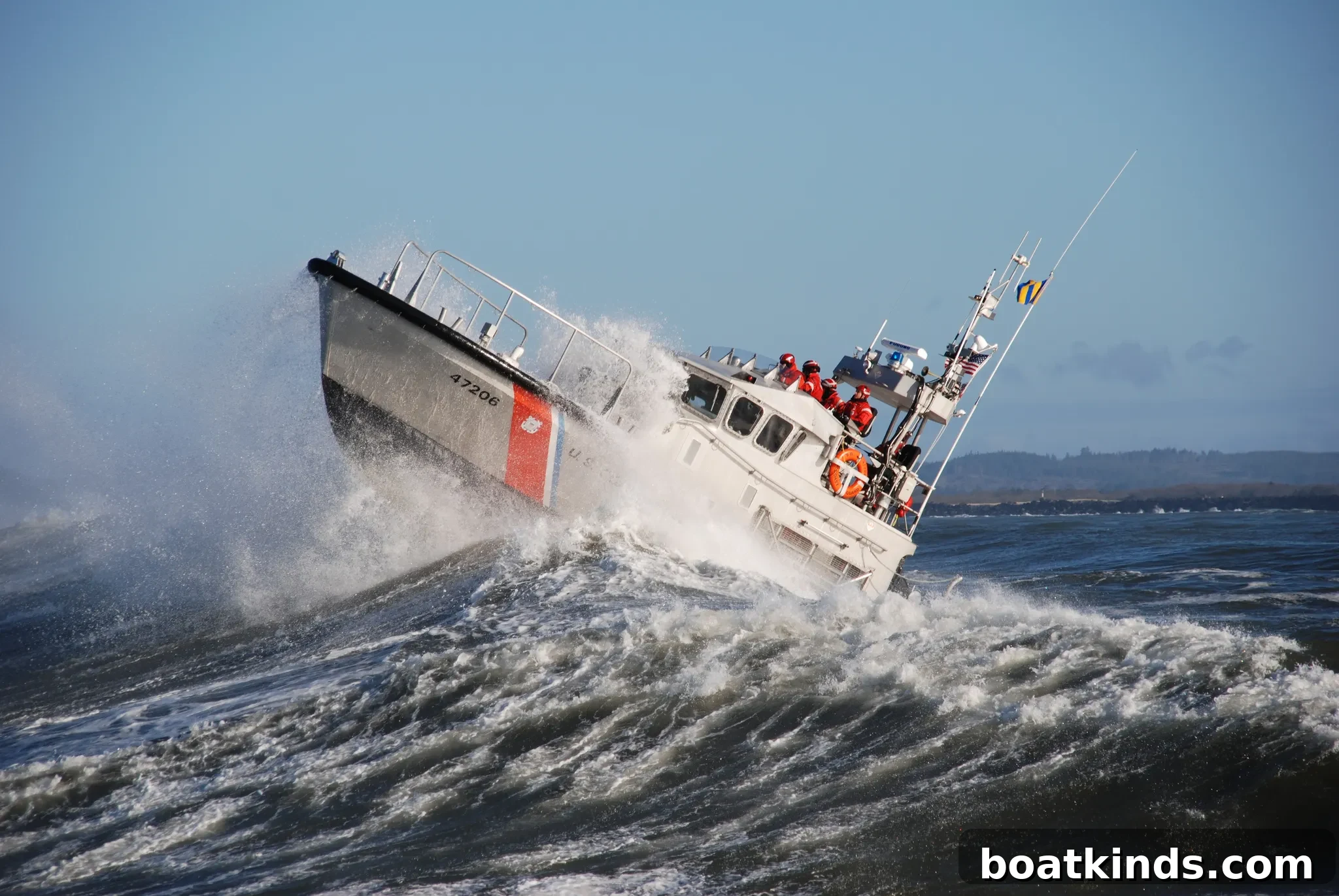
If you’ve learned any skill that demands repetition—golf, music, fly fishing—you know the value of practice. The U.S. Coast Guard applies that same principle to lifesaving work, and nowhere is practice more critical than when crews train a 47-foot Motor Lifeboat in heavy surf. Recent conditions off the West Coast provided a dramatic classroom for just such training.
A strong low-pressure system produced sustained onshore winds along roughly a 1,200-mile stretch of coastline from Canada to California, generating large surf in many areas. In some spots, individual waves reached heights in the 20- to 30-foot range, creating extreme conditions for anyone working near the water. The Coast Guard used this weather event as a real-world training opportunity to run crews through surf operations aboard the 47-foot Motor Lifeboat. Local photographer Dave Rogers captured striking images of the lifeboat meeting the waves along San Francisco’s Ocean Beach.
Photographs from that day show the lifeboat taking on massive swells, riding over and through breaking surf, and rolling onto its beam—actions that are practiced repeatedly so crews can respond instinctively when lives are at stake. These drills are not about showmanship; they are about ensuring that every crew member understands the boat’s limits and capabilities, can execute recovery and rescue maneuvers under stress, and can rely on teamwork when conditions are at their worst.
The 47-foot Motor Lifeboat entered Coast Guard service in 1997 and was purpose-built for surf and heavy-weather rescue. It is rated to operate in waves up to 20 feet and in winds up to 60 knots, and it is designed to self-right within 10 seconds after a capsize. Those engineering features—combined with rigorous crew training—make the vessel suitable for searching, reaching, and rescuing people caught in hazardous inlets, rocky shorelines, or sudden rip currents where wind and tide create dangerous, fast-changing conditions.
Today, 227 of these lifeboats are in active service with the Coast Guard, stationed where surf and strong currents make shore-based rescues difficult or unsafe. Crews assigned to these boats conduct frequent training evolutions to remain proficient in boat handling, surf etiquette, crew coordination, casualty recovery, and medical stabilization. Training in high surf is especially important because it compresses time and increases risk: decision windows shrink, equipment and crew are stressed, and the margin for error becomes smaller.
Runoff and storm-driven swell can turn routine coastal boating into a life-threatening situation for surfers, paddleboarders, and small-boat operators. The Coast Guard’s emphasis on repetitive, realistic training ensures rescue teams are prepared to respond under the most extreme sea states. Observers at Ocean Beach that day witnessed the 47-foot Motor Lifeboat repeatedly cutting into the surf, testing its seakeeping limits and offering a vivid demonstration of why practice under harsh conditions saves lives.
Photographer Dave Rogers’ images document both the power of the ocean and the steady professionalism of Coast Guard crews who train to meet it. Those photos serve as a reminder that continuous practice, the right equipment, and disciplined teamwork are the backbone of maritime search and rescue operations along America’s coasts.