
Chris-Craft Launch 25 GTe: Electric-Propulsion Prototype Debuts at Miami Boat Show
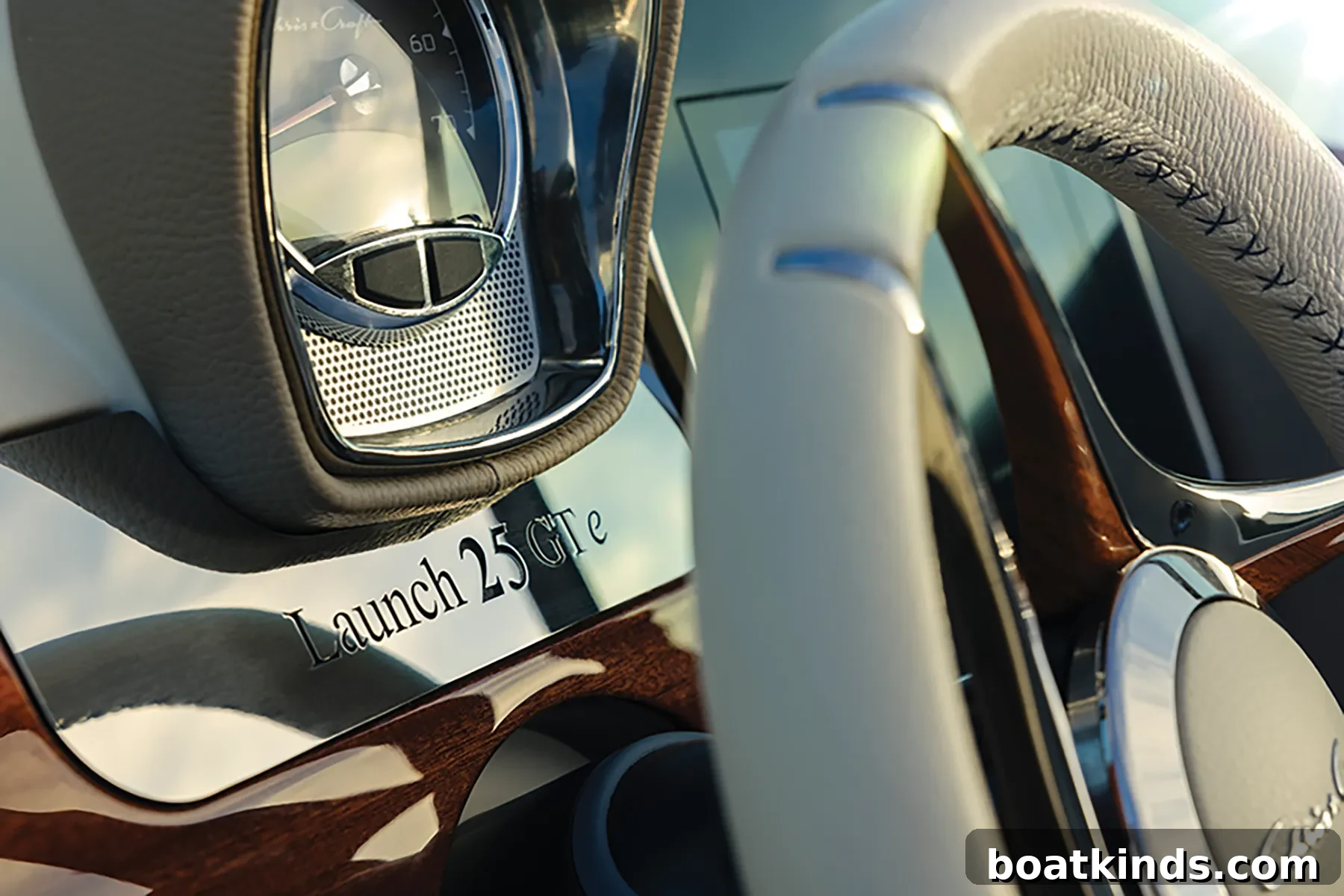
At the Miami International Boat Show in February, Chris-Craft revealed the Launch 25 GTe prototype — the brand’s first electric-propulsion boat. For many visitors, the reveal required a second look. The 25-foot vessel preserves the classic Chris-Craft aesthetic and finishes, but carries a modern electrified powertrain beneath the familiar styling.
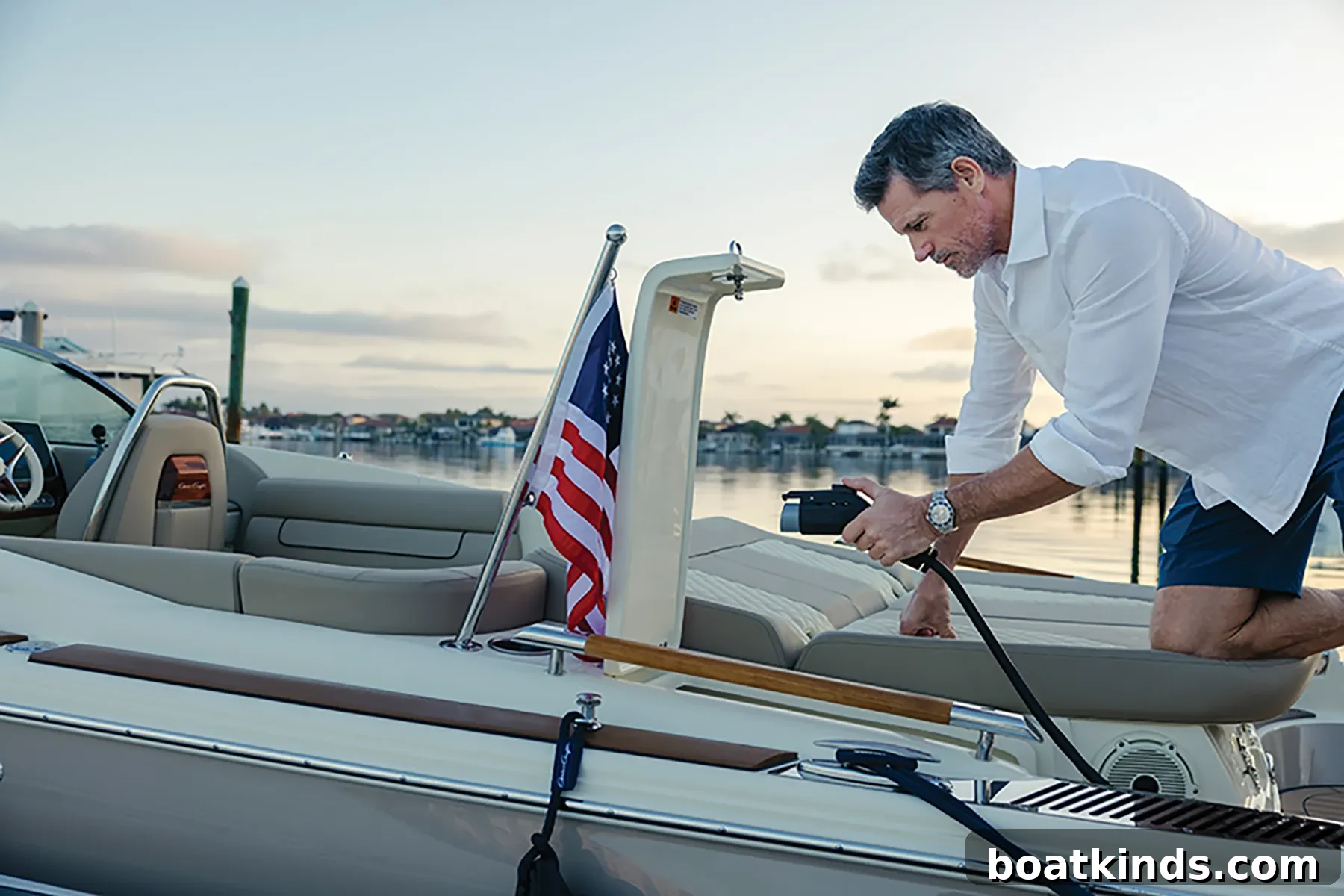
Ashis Bhattacharya, senior vice president of business development, strategy and advanced technology at Winnebago Industries (Chris-Craft’s parent company), says attendees initially didn’t realize the boat was electric because it looks like any other Chris-Craft. Only after reading the exhibit signage did many people connect the visual cues with the new powertrain.
“It looks exactly the same as a regular Chris-Craft,” Bhattacharya said. “The same finishes, teak wood and instrumentation — all the elements people expect. Then they see ‘electrification’ on the poster and it clicks.”
From e-RV to electric boat: the development path
Winnebago’s move into marine electrification grew from experience developing an all-electric, zero-emission e-RV concept. That vehicle first appeared publicly in January 2022 and evolved into a second-generation prototype shown this past January. Lessons from the e-RV program are informing Chris-Craft’s approach to its electric boats.
The company follows a deliberate, feedback-driven development process. Prototypes are built, tested in real-world conditions and refined through what Bhattacharya calls “co-creation” — gathering input from customers, dealers, employees and influencers before committing to final production specifications.
Prototype performance and battery technology
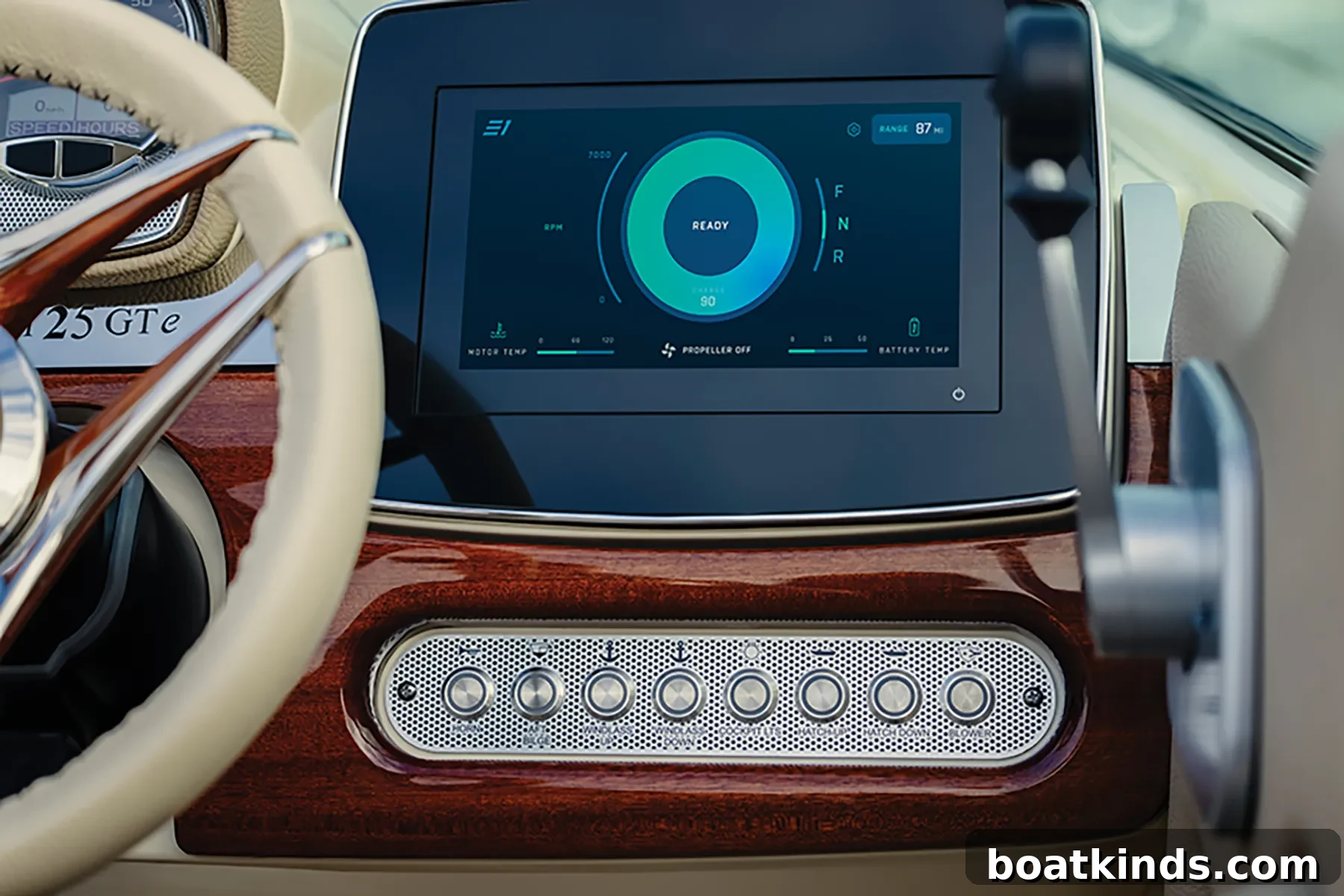
The Launch 25 GTe prototype uses an electric propulsion system equivalent to roughly 420 horsepower, with a top speed near 50 mph and a maximum continuous runtime of about two hours, according to Bhattacharya. The prototype’s battery capacity is 133 kilowatt-hours, a notable increase over Winnebago’s first e-RV prototype, which started at 84 kWh.
Chris-Craft engineers expect battery technology to continue improving rapidly, making production specifications likely to change before the boat reaches market. Ron Berman, Chris-Craft’s vice president of engineering, predicts about a 20 percent improvement in battery energy density within the next two to three years, which would directly extend range and performance.
“Think of kilowatt-hours like gallons of fuel,” Berman explained. “If you add 20 percent more energy density, you essentially increase your effective fuel tank by that amount, and that translates to more range or additional performance margin.”
Engineering, safety and certification
Electric propulsion introduces new engineering and safety complexities beyond the electric motor itself. Batteries require dedicated cooling systems, battery-management systems, onboard chargers and integrated control electronics. Berman notes that industry standards are still being established — the American Boat & Yacht Council published standards for builders only recently, and the National Marine Manufacturers Association planned third-party certifications for these boats beginning with the 2024 model year.
Those standards and certifications matter because they shape system design, service requirements and safety procedures. While electric drivetrains have fewer moving parts and could reduce maintenance, Chris-Craft’s team is deliberately assessing reliability and durability before putting a production model into the marketplace.
Customer questions and market readiness
At the show, visitors asked practical questions: How far will it go? How long will it run? How long to charge? Berman says public interest has been strong, with interaction increasing across social media and the Chris-Craft website — even attracting Tesla owner groups interested in marine electrification.
Infrastructure and charging remain important considerations. Most users will need higher-power shore power or dedicated charging at docks or lifts to recharge in hours rather than days. Berman points out that short stops, like lunch at a waterfront restaurant, won’t fully recharge high-capacity batteries; faster charging requires higher amperage and appropriate shore-side upgrades.
Speed and onboard comfort are priorities for Chris-Craft. While some electric boat designs have sacrificed amenities to save weight and extend range, Chris-Craft aims to retain the brand’s signature comfort and luxury while transitioning to electric propulsion.
Development timeline and brand commitment
Neither the Launch 25 GTe prototype nor the updated e-RV are slated for immediate production. Winnebago and Chris-Craft plan to iterate on the prototypes, collect real-world feedback and refine systems before finalizing production models. No firm production date has been announced.
“The Chris-Craft badge carries a high standard,” Bhattacharya said. “We’re taking the time necessary to ensure the product meets our brand expectations.”
Specifications (prototype)
LOA: 25’8”
Beam: 8’5”
Draft: 1’2”
Displ.: 7,755 lbs.
Power: EVOA E1 Electrified Performance System
This article was originally published in the May 2023 issue.