
NOAA Announces Voluntary Vessel Speed Restriction East of Boston to Protect North Atlantic Right Whales
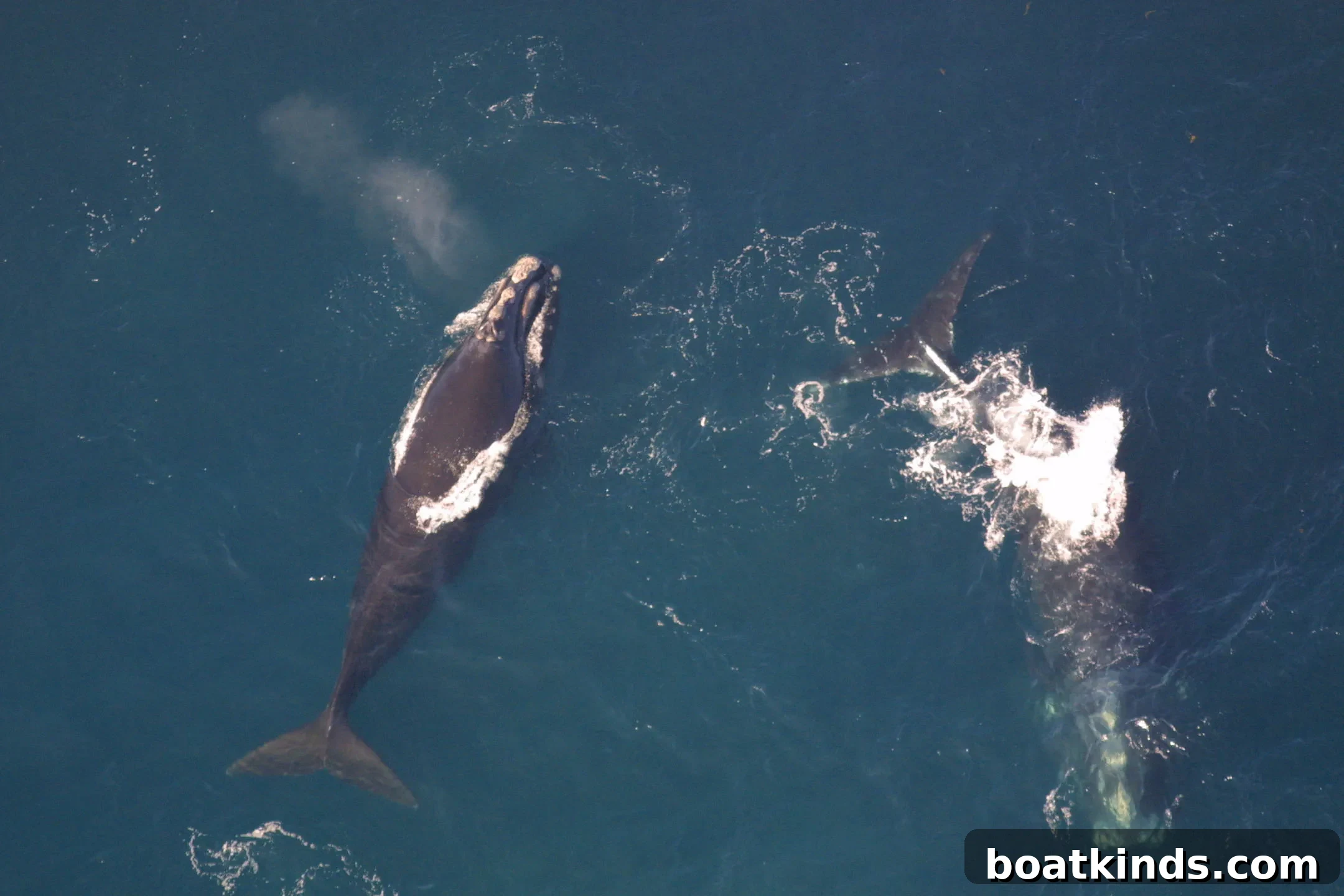
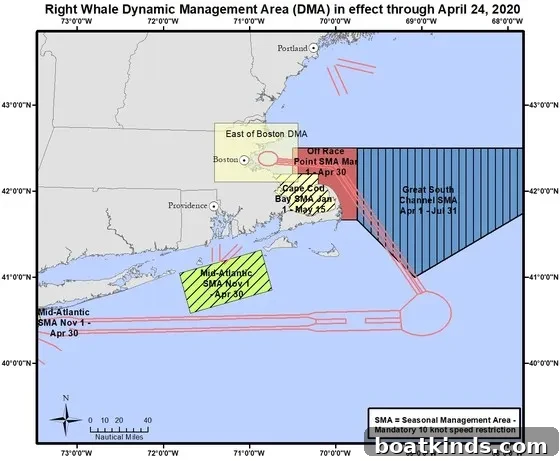
Following sightings of an aggregation of North Atlantic right whales from a Boston-area beach on April 9, 2020, NOAA Fisheries established a voluntary Dynamic Management Area (DMA) east of Boston. The DMA is in effect through April 24. Boaters are asked to slow to 10 knots or less while transiting the zone to reduce the risk of ship strikes and to help protect these critically endangered animals during their coastal migration.
North Atlantic right whales are protected under the U.S. Endangered Species Act and the Marine Mammal Protection Act. Because the species is highly vulnerable to collisions and entanglement, NOAA is urging mariners and fishermen along the Atlantic coast to be extra vigilant while whales are migrating. The voluntary DMA complements several mandatory speed restriction areas already in place to lessen the potential for injury and death from vessel strikes.
Where Mandatory Speed Restrictions Are in Effect
In addition to the Boston-area DMA, NOAA currently enforces mandatory speed restrictions of 10 knots or less in several areas along the East Coast. These include:
- Mid-Atlantic — in effect until April 30
- Cape Cod Bay — in effect until May 15
- Off Race Point — in effect until April 30
- Great South Channel — in effect until July 31
Mariners operating in or near these zones should obey the mandatory limits and remain alert for whale activity. Voluntary areas like the DMA provide additional, temporary protections where whales have recently been observed.
How Slower Speeds and Cautious Practices Help
Reducing vessel speed lowers the likelihood and severity of collisions with whales. Slower boats have more time to detect and avoid whales and the force of an impact is reduced if a collision does occur. For entanglement risks, removing unused fishing gear from the water and using gear modifications such as vertical lines with weak links can reduce the chance of whales becoming severely entangled.
NOAA is asking recreational and commercial mariners to follow straightforward precautions while whales are present:
- Slow to 10 knots or less inside voluntary DMAs and in mandatory speed-restricted areas.
- Keep a safe distance from sighted whales and avoid abrupt changes in speed or course near animals.
- Watch for surface signs of whales—blows, tails, and rolling bodies—and be prepared to alter course gradually.
- Commercial fishermen should remove unused nets and consider gear modifications to reduce entanglement risks, including the use of vertical lines fitted with weak links.
- Maintain vigilance during migration seasons when whale presence along the coast is more likely.
Why These Measures Matter
North Atlantic right whales remain one of the most endangered large whale species. Human-caused threats—primarily vessel strikes and fishing gear entanglements—have contributed heavily to their decline. Temporary speed restrictions and gear modifications are practical, immediate actions that reduce risk and buy time while longer-term conservation strategies are developed and implemented.
Voluntary DMAs play an important role because they are deployed quickly where whales are observed, providing prompt protection in addition to longer-term mandatory measures. Compliance by boaters and fishermen is a direct, measurable way to reduce harm and support the recovery of this protected species.
Practical Tips for Boaters
When operating near known whale activity:
- Plan routes to avoid areas with recent sightings when possible.
- Reduce speed well before entering a DMA or speed-restricted zone so maneuvers are smooth and predictable.
- Avoid crowding or circling whales; give them ample space to surface and travel.
- Keep a lookout and share observations with fellow mariners to increase overall situational awareness.
Maintaining cautious behavior on the water helps protect both whales and people. By observing speed restrictions and responsible fishing practices, boaters and fishermen contribute to the conservation of North Atlantic right whales and support healthier coastal ecosystems for future generations.