
Southport 33 DC Review: First Dual Console Offers Quiet, Confident Performance in Tampa Bay
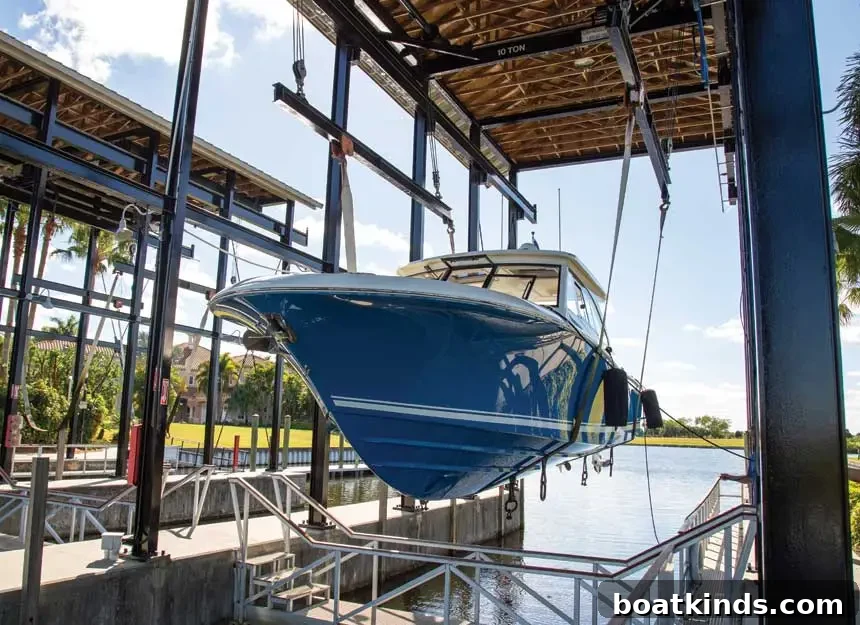
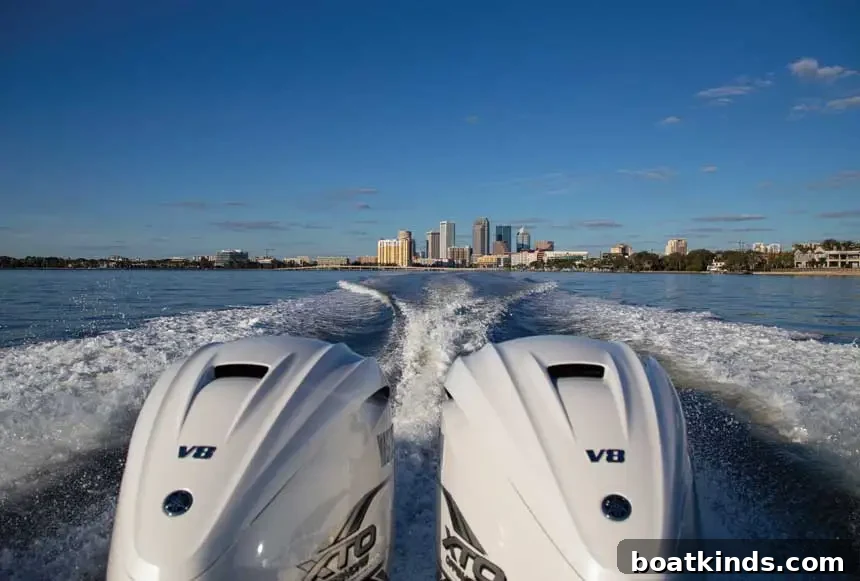
To launch Southport Boats’ first dual-console model, the 33 DC, the crew had to lift her out of a low-lying community lagoon and fly her over a spillway with overhead slings and a joystick-controlled hoist. Suspended 15 feet in the air, the hull revealed design details that speak to seaworthiness: full-length waterline chines, two lifting strakes per side (one running nearly full length, the other terminating amidships), a pronounced Carolina flare, and a 22-degree transom deadrise. From astern the twin Yamaha XF425 4-stroke outboards and a pair of Zipwake dynamic trim tabs signaled this boat is built for both power and control.
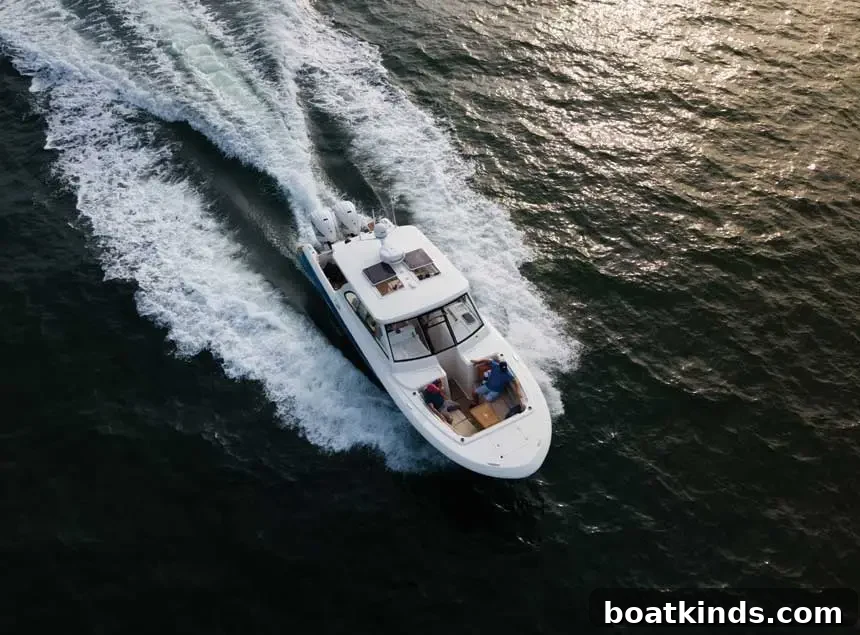
After easing through a mangrove-lined canal, co-owner Ken Pierce opened the throttles and the 33 DC leapt onto plane, the twin engines delivering a thrilling, confident surge. Southport began building boats in Leland, North Carolina, in 2003, moved production to Maine in 2011, and in 2017 Pierce and partner Mark Levy—also owners of Carbon Craft—bought the brand with the aim of evolving its lineup. The 33 DC represents their first foray into dual consoles, designed for families who cruise, entertain and fish.
The customer response has been encouraging: five hulls were ordered after the 33 DC’s debut at the Fort Lauderdale International Boat Show. Southport is tooling a new production line and plans to expand the dual-console family with both larger and smaller models. For now the standard propulsion package is twin Yamaha F300s, with options for twin F350s or the high-output XF425s fitted to our test boat.
Maine craftsmanship is visible across the deck: hand-laid teak, carefully bedded hardware and thoughtful placement of fittings create an upscale feel. On a cruise past Pine Key the 33 DC held 26 knots while burning 22 gallons per hour—about 1.4 miles per gallon. At a faster cruise near 38 knots fuel burn rises to roughly 1 mpg. Top-end testing with three people aboard and a full tank showed a 48-knot top speed, consuming roughly 71 gallons per hour (about 0.8 mpg).
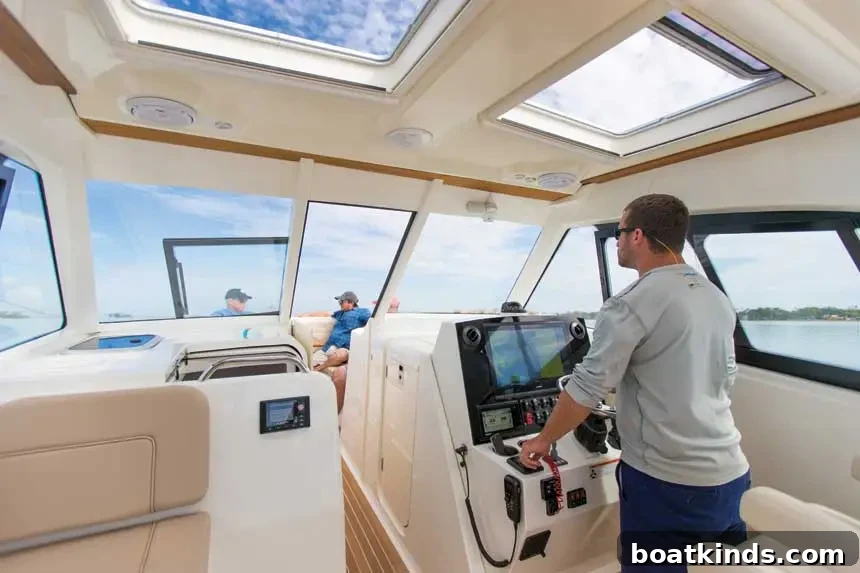
Noise control and comfort under the hardtop are major design priorities. Even with the opening windshield and side windows set open, conversation at the helm remained effortless—an important feature for entertaining and cruising. Southport’s team focused on hardtop, window, windshield and hatch design to keep spaces quiet and relaxed when the engines are up on plane.
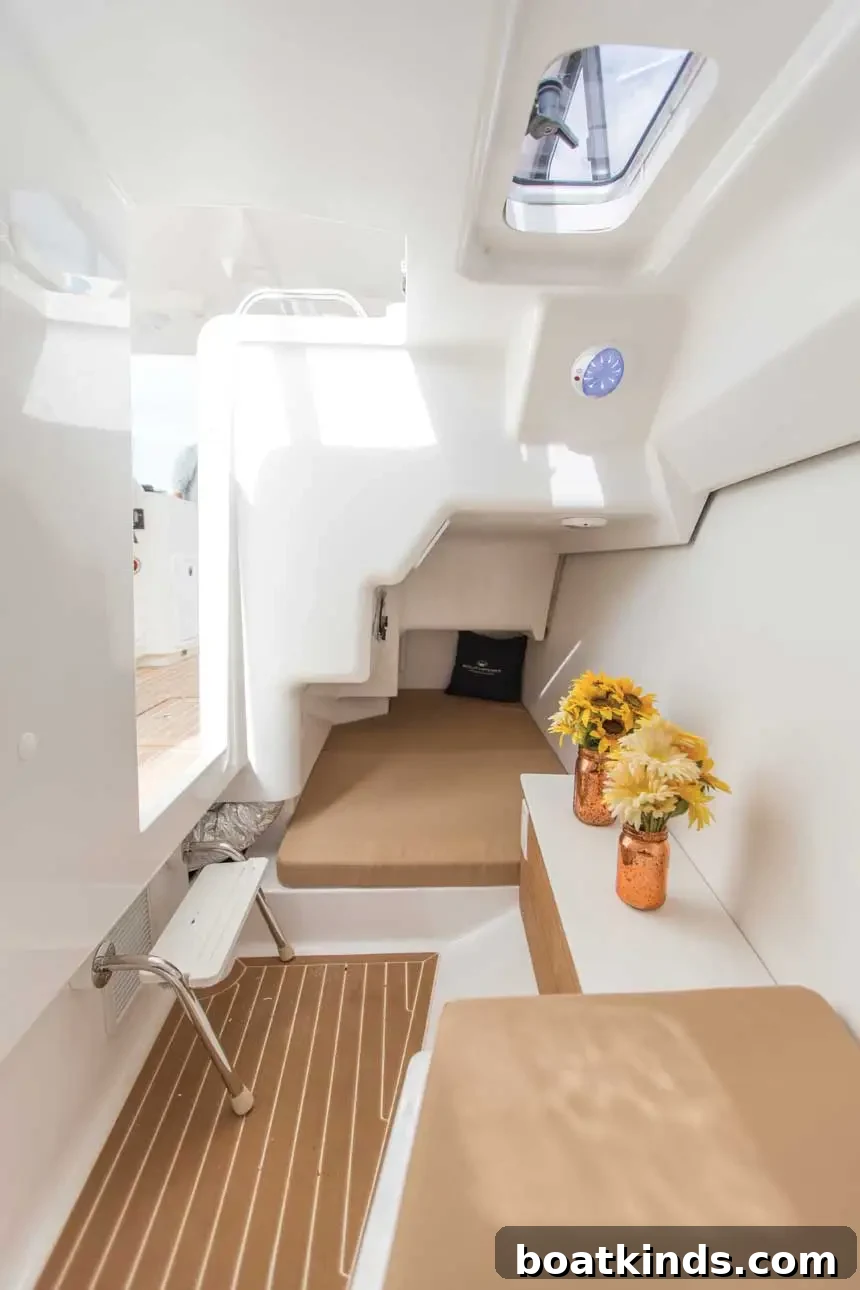
The helm centers on a flush-mounted 22-inch Garmin multifunction display and enjoys a low, forward-swept placement that improves sightlines. That packaging does reduce headroom slightly in the enclosed head forward beneath the helm, but the arrangement still affords a usable head and a two-berth stateroom beneath the port console. For many owners that compromise favors visibility and a well-integrated helm layout.
Forward, the bow lounge features two forward-facing chaise lounges, a teak table inset, and upright seating for four to six people. I was struck by the relatively high coamings, which create a secure feeling in the bow and make the space comfortable for relaxing underway at cruise speeds.
We tied up on the Tampa waterfront and enjoyed a waterfront lunch, then wandered Armature Works and grabbed coffee before heading back aboard. The 33 DC’s stereo supports three independent social zones, so guests with different music tastes can be accommodated without conflict. One entertainment zone sits in the cockpit, where upholstered seats flip up and clear space for fishing.
The boat’s fishing and utility features are practical: a transom-mounted livewell and fish box, a starboard-side dive door for hauling big fish or easy water access, and a mini galley aft of the helm with an optional electric grill, freshwater sink and a slide-out trash compartment. A slide-out refrigerator/freezer sits conveniently beside the galley for drinks and provisions.
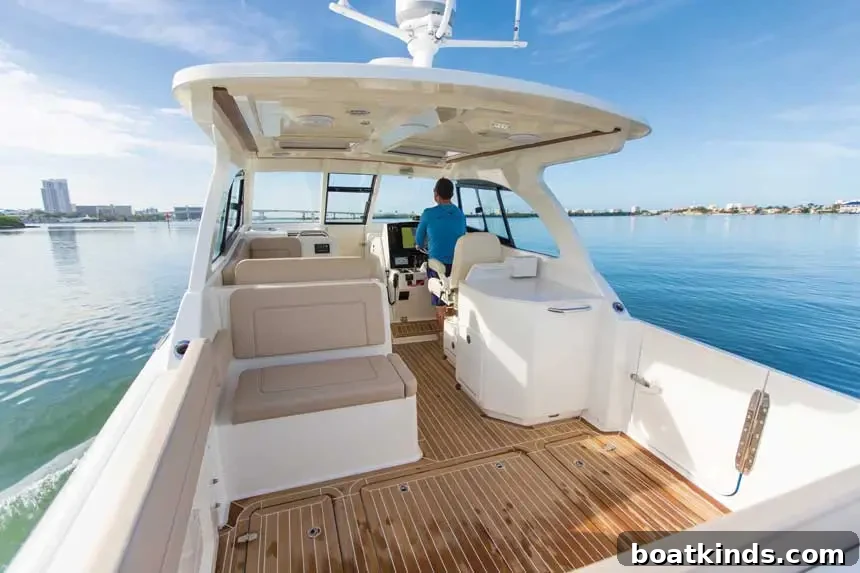
On the bridge deck an L-shaped lounge sits beside a Stidd captain’s chair, with two sliding side windows and twin overhead hatches for ventilation. The windshield’s center section opens in two parts—one slides vertically while the other folds to port—allowing fresh air into the helm area without isolating the captain from guests. The layout keeps the operator connected to the rest of the boat, whether folks are up in the bow, seated aft, or socializing in the cockpit.
On a glassy Tampa Bay I handled the 33 DC briefly, and the boat demonstrated immediate responsiveness with only a small bow rise before planing. Handling tests, including hard-over S-turns, showed how effectively the waterline chines bite into turns—the sharper the maneuver, the more the chines provide lateral grip. While the test conditions were calm, Southport’s hull form and prior experience with similar models hint at confident behavior in rougher seas.
As the sun set we eased the 33 DC into a lift at Pierce’s home, brushing away no-see-ums and finishing a rewarding day on the water. Between quiet operation, purposeful hull design, and a layout that balances entertaining, cruising and fishing, the Southport 33 DC makes a strong case as a capable first dual-console offering from a builder known for seaworthy boats. It’s the kind of boat that invites families and friends aboard—just add water.
This article originally appeared in the March 2019 issue.