
No one had invited the rat. When we discovered him, it felt like good riddance. Maybe he thought he had an open invitation, the way some people crash parties in Washington or L.A., but he didn’t. He knew he wasn’t welcome and did what rats do—he made himself at home.

Perhaps he believed he was cleverer than the average rodent and more cunning than the average person. He may have thought he could wedge a paw in the door, stake out the best place at the table, and enjoy the easiest pickings. Whatever he expected, he didn’t expect what happened next.
We were following our usual Saturday-night marina routine: a few beers and grilled steaks with friends from the neighboring boat. The grill sat on the dock—an old, inexpensive model we’d bought years earlier and never bothered to store. It was rusty, needed a propane lighter to start, but it served us well and had been the center of many good evenings. It wasn’t supposed to be a rodent refuge.
Of course, that’s exactly where he’d settled. In hindsight, it was an obvious hideout: the grill trapped delicious residual odors, had grease in hard-to-reach crevices, and offered a sturdy metal shelter above the flood plain during nor’easters. From inside, the rat had a front-row seat to our conversations and jokes, most of which I’ll spare you, though I’m sure the rat enjoyed them.
Because we prefer convenience, this was a gas grill. We hooked up the tank, turned it on and flicked the lighter. The flame came up almost instantly, but it took a minute for heat to creep into distant corners where the rat had nested. Smells began to change as the grill heated—only we hadn’t yet put the steak on. Before we realized what that strange, unpleasant meat smell was, the rat realized something was wrong.
We heard rustling and a very shrill squeal from the grill’s lower right side. The image that flashed through my mind was of raw steak, raw to a degree no one wanted. The rat bolted from the grill, dragging a smoking tail, and dashed across the dock into a nearby hole that had filled with water from a high tide. From the splashing, we assumed his smoking tail was soon extinguished.
That night taught us several things, some reminders we’d already learned the hard way. First, marinas usually have rats—real ones, not the two-legged kind. Second, you don’t need to invite them; they’ll show up if you give them any opening. Third, when a rat runs through a group of people, reactions vary—our party didn’t erupt into a frenzy, which was a relief since the picnic table might have collapsed under frantic weight. And fourth, always shake out and inspect a grill before you put food on it.
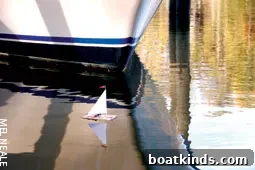
Perhaps most important: rats can swim. They’re strong swimmers and resilient. We could hear our rat paddling in the flooded hole for a good while. A few days later we saw a rat without a tail, which told us the rest of the story.
I have other rat stories from life aboard, many of them teaching the same lessons. One memorable example happened in the Abacos. Friends anchored in a busy harbor watched fishing boats return after weeks on the banks with grouper, conch and lobster. Those boats frequently hosted hordes of rats. One determined rat, short on food, dove from a fishing vessel and swam to a nearby sailboat, scampering up the anchor chain and aboard.
Rats rarely announce themselves. At first there are droppings—small, dark pellets that invite denial. As the evidence grows you find bites in fruit and other food left out, chewed wiring or damaged hoses. Rats hide in dark recesses during the day and forage at night, and you often only spot them after considerable damage has occurred.

When faced with a rat aboard, we keep large traps onboard; our friends initially hesitated on traps out of misplaced concern for cruelty and the mess. Poison is a poor choice because a poisoned rat may die somewhere deep inside the boat. So my friends set out to find the nest, turning the boat upside down for days with no luck.
Eventually the nest revealed itself in an unlikely place: the head. One morning the owner looked up into the dorade vent and saw four pink feet pressed against the screen and a clump of rat fur. The rat had nested behind the vent’s watertight partition—out of reach and out of sight. Towels stuffed into the vent bought time, but they still had to decide how to remove the intruder.
They tried spearing the rat through the screen. It was awkward and comical: the husband leaning over the vent, trying to aim a spear while the rat edged out of harm’s way. After a tense effort he finally managed to spear the rat, pulled it free, and threw it overboard—spear and all. The rat disappeared; the spear later vanished too, presumably taken by a predator.
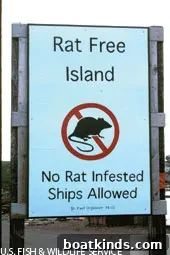
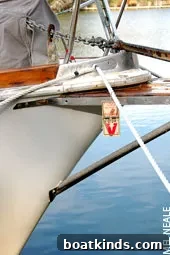
The best strategy, of course, is prevention. But even scrupulous boaters aren’t immune. Mooring-line guards can help but aren’t foolproof. The first step is accepting vulnerability and preparing accordingly. Don’t leave food or fruit in hammocks or on deck. If anchored for a while, keep garbage in a dinghy to be disposed of ashore. Avoid dirty harbors when possible and keep the boat tightly closed; seal dorade vents and other openings with towels or suitable covers.
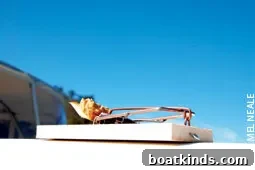
Keep several large, sturdy traps aboard and set them thoughtfully: rats prefer soft baits such as apple, bacon or peanut-butter-smeared morsels. Traps work, but be careful—don’t risk snapping fingers or toes, and handle trapped rats with tools and shoes on. When you dispose of a trapped rat, take care—it may still be alive and can paddle away on the trap if in water.
One time we watched a trapped rat frantically using the snapped trap as a raft and float off toward a neighboring yacht—one with a cat on board.

Tom Neale is technical editor for Soundings and lives aboard a Gulfstar 53 motorsailer. You can buy his book, “All in the Same Boat,” and his two-disc DVD, “Cruising the East Coast With Tom Neale,” at www.tomneale.com
This article originally appeared in the January 2012 issue.