
Pep’s Inn and Village — Lake Wallenpaupack Vintage Postcard
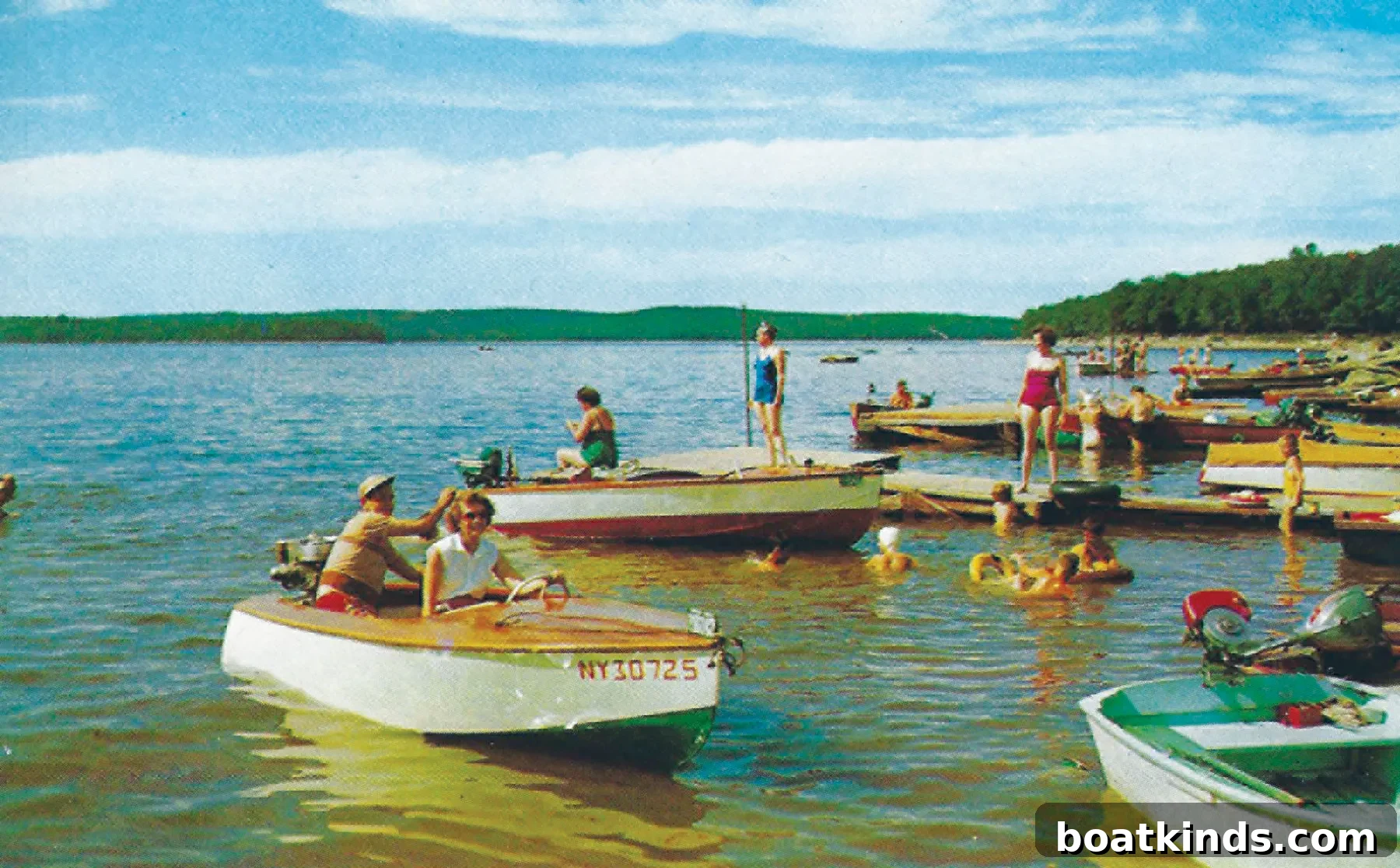
This vintage picture postcard, produced in the mid-20th century, captures Pep’s Inn and Village on the shores of beautiful Lake Wallenpaupack in Pike County, Pennsylvania. Marketed at the time as an “all-in-one” resort, the property promoted the three cornerstones of a summer getaway—fishing, boating and swimming—while also offering cottages and a colony cove plotted for future home sites. The postcard itself serves as a small window into an era when lake resorts were central to family recreation and local tourism.
For many people, memories of boating began on freshwater lakes like Wallenpaupack. Generations recall spending long, sunlit days at a cottage or camp, with a simple rowboat, runabout or sailing dinghy tied to a dock. Those hours spent fishing, waterskiing, exploring coves or simply idling on calm water forged lifelong attachments to being on the water. Family outings and childhood summers at lakeside resorts often became the origin story for people who later pursued boating as a hobby, a pastime, or even a profession.
The social landscape of American inland waters changed significantly over the first half of the 20th century. In the early 1900s, inland lakes and rivers were primarily the domain of outdoorsmen—sportsmen who fished and hunted with guides and frequently stayed in rustic hunting lodges. Women and children were less commonly present at these excursions, and the focus tended to be on pursuit rather than recreation for the entire family.
That pattern began to shift in the 1920s. Two technologies in particular—the reliable automobile and the outboard motor—opened new possibilities for family travel and lake recreation. The car made lakes more accessible to suburban and urban families, and the compact outboard made boating simpler and less dependent on professional guides. The result was a gradual transformation from single-purpose sporting trips to family-centered lake vacations. Boats evolved accordingly: canoes and guide boats gave way to designs that emphasized comfort, ease of use and suitability for teaching children the basics of boating and water safety.
Boatbuilders responded to this rising demand by producing a wide array of small craft tailored to family use. The inland waters of America filled with an eclectic mix of runabouts, small cruisers and versatile utility boats. Several models from that period have earned classic status and continue to be celebrated by collectors and enthusiasts today, including the Lyman Cruisette, the Penn Yan 16-foot Baltic, the Thompson Sea Coaster and the Larson All-American. Each of these designs reflects the practical, user-friendly approach to boating that helped turn lakeside recreation into a widespread family activity.
Those boats were not just tools for transport; they were vessels of memory. Time on the water—whether trout fishing at dawn, teaching a child to steer, or gliding across the lake on a summer afternoon—created narratives that people returned to for decades. Resorts like Pep’s Inn and Village were part of the ecosystem that made these memories possible, providing accommodations, community and convenient access to boating and swimming. Even a single postcard can evoke the sights, sounds and rhythms of those summers: the creak of wooden docks, the smell of varnished planks, and the laughter carried across open water.
Preserving vintage postcards, photographs and the boats themselves helps keep that shared cultural history alive. They remind us how technological changes and shifting social priorities shaped leisure and family life, and how simple pleasures—fishing, boating and swimming—remain central to many people’s idea of a perfect summer. The scene shown on this postcard is a small but evocative chapter in the larger story of American lake culture and the enduring appeal of freshwater boating.
This article was originally published in the October 2020 issue.