
Sirius Signal Introduces Coast Guard-Compliant Battery-Operated SOS Distress Light
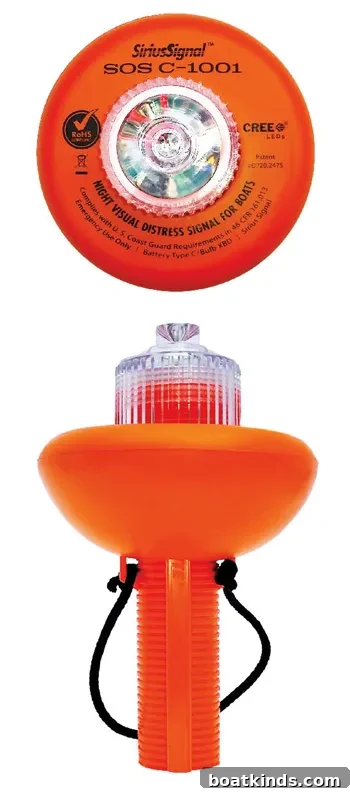
Sirius Signal says its new battery-operated SOS Distress Light is the only Coast Guard-compliant alternative to pyrotechnic flares. Designed for boaters, mariners and recreational water users who want a reliable, modern visual distress option, the device combines long-range visibility with durability and ease of use.
Key Features and Compliance
The SOS Distress Light uses a high-intensity LED engineered to provide visible signaling up to 10 miles under appropriate conditions. Unlike traditional pyrotechnic flares, this LED-based device does not expire, eliminating concerns about shelf life, disposal of hazardous materials, or the need to carry replacement pyrotechnics. It is submersible and buoyant, ensuring visibility and function even if it becomes submerged, and its lightweight construction makes it easy to store and deploy in an emergency.
Importantly, the product meets the U.S. Coast Guard requirements for night visual distress signals (46 CFR 161.013). When paired with the included daytime distress signal flag, Sirius Signal states the combination satisfies all applicable federal requirements for visual distress signaling. This regulatory compliance positions the SOS Distress Light as a practical alternative for boaters and commercial operators seeking a non-pyrotechnic option that adheres to federal standards.
Practical Advantages Over Pyrotechnic Flares
LED-based distress lights offer several practical advantages. They remove risks associated with handling and storing explosive pyrotechnics, such as accidental ignition or degradation over time. Because the Sirius Signal unit does not have an expiration date, owners do not need to track replacement intervals or dispose of expired flares, simplifying maintenance and reducing environmental impact. The buoyant and submersible features mean the device can remain operational after contact with water—an important consideration for man-overboard or capsizing scenarios.
The lightweight design also benefits small craft, kayaks, and personal watercraft where storage space is limited. Its ease of activation makes it suitable for rapid deployment under stress, and the long-range visibility helps increase the chances of detection by nearby vessels or search-and-rescue teams at night.
Who Should Consider This Device
Any recreational boater, commercial operator, sailor, or offshore worker looking for a Coast Guard-compliant, non-pyrotechnic visual distress option may find the SOS Distress Light appealing. It is particularly relevant for operators who prefer reusable, low-maintenance equipment or those who face restrictions on carrying pyrotechnic devices in certain jurisdictions, on specific vessels, or in certain storage conditions.
Specifications and Use
Key specifications highlighted by Sirius Signal include:
- High-intensity LED providing up to 10 miles of visibility in appropriate conditions
- No expiration date, reducing the need for periodic replacement
- Submersible and buoyant construction for use in wet or emergency maritime situations
- Lightweight and compact for convenient stowage on small craft
- Compliance with night visual distress signal requirements under 46 CFR 161.013
Users should follow the manufacturer’s instructions for activation and maintenance, and keep the included daytime distress signal flag accessible for compliance during daytime emergencies. As with all safety equipment, regular checks to ensure the unit is operational and stored correctly are recommended.
Manufacturer and Availability
Sirius Signal, based in San Diego, markets the SOS Distress Light as a Coast Guard-compliant alternative to traditional flares. For product information and inquiries, contact Sirius Signal at (888) 526-0005 or visit siriussignal.com. The company emphasizes the product’s regulatory compliance and practical benefits for modern boaters and professionals who demand safer, longer-lasting distress signaling options.
This article originally appeared in the September 2015 issue.