
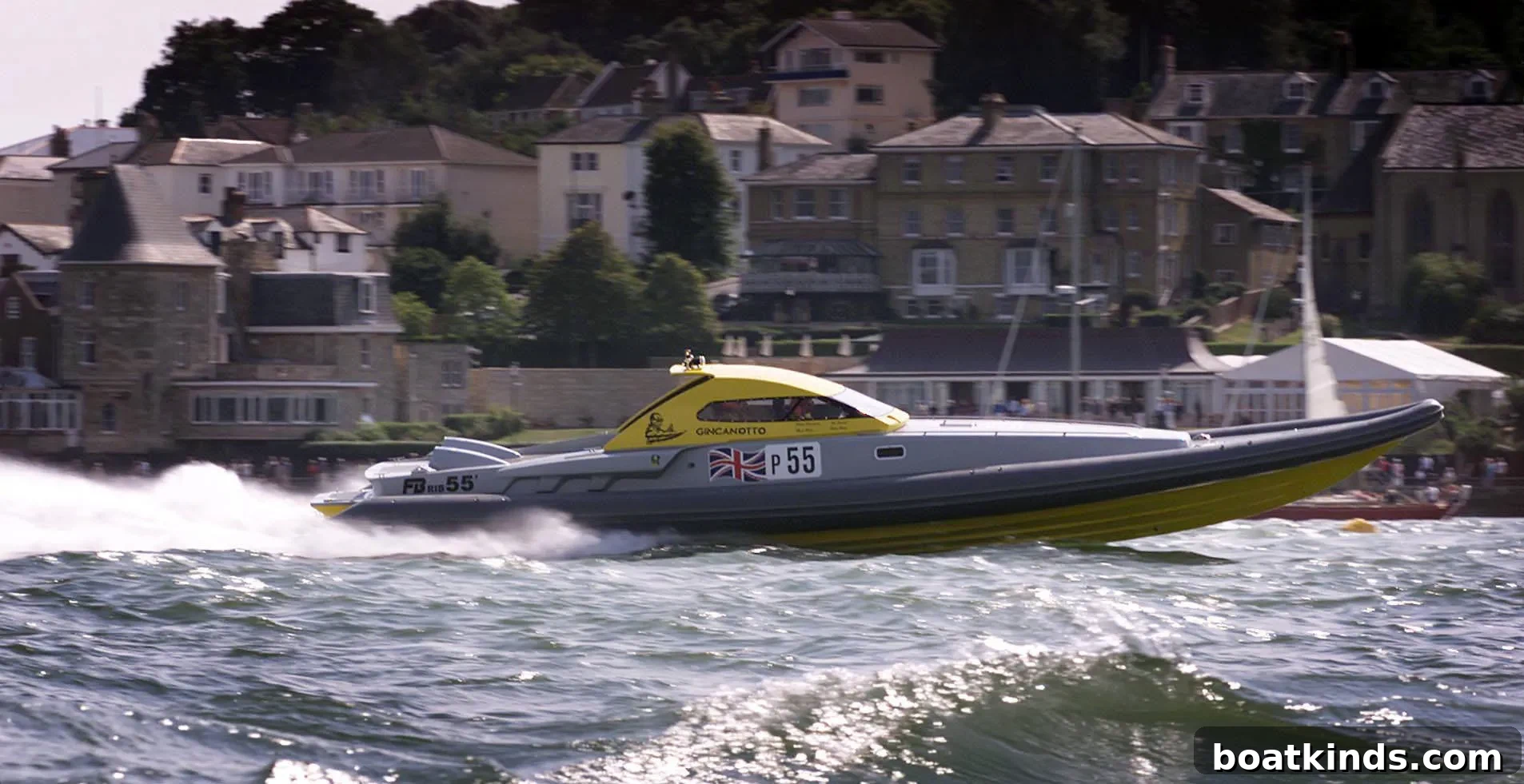
From Miami to Cowes: How Gincanotto Sealed a Long-Awaited Victory
The origins of modern offshore powerboat racing trace back to Miami, a city that played a pivotal role in popularizing high-speed offshore competition. In the late 1950s, John William Maxwell Aitken witnessed one of the early Miami–Nassau races. That experience helped shape his vision for racing in Europe. After participating himself in the Miami–Nassau event, Aitken launched the Cowes–Torquay–Cowes race in Britain in 1961, effectively creating the first major offshore powerboat competition on the European stage. The event quickly became a focal point for designers, builders and drivers seeking to test speed, endurance and seamanship in challenging coastal waters.
Tim Powell’s Long Quest for Victory
British racer Tim Powell devoted much of his life to the Cowes–Torquay–Cowes race. He entered the event repeatedly during the 1960s and 1970s, starting in 19 consecutive runnings, yet a first-place finish eluded him for decades. Powell’s persistence exemplified the dedication common among offshore racers: a blend of courage, technical skill and a refusal to let setbacks determine a career.
Enter Fabio Buzzi and Gincanotto
In 2001, the long story of Powell’s near-misses took a dramatic turn. Italian designer and racer Fabio Buzzi, whose FB Design company had earned international recognition for fast, competitive boats and for setting world speed records, invited the 63-year-old Powell to join him on Gincanotto. The boat was a 55-foot rigid-inflatable (RIB) powered by four inboard diesel engines delivering a combined 3,120 horsepower—a formidable package designed for speed and reliability.
Powell and Buzzi shared driving duties for the 190-nautical-mile Cowes–Torquay–Cowes race. On paper and on the water, Gincanotto looked like a favorite. Over the course of the round trip, the boat averaged 76.54 mph, a remarkable pace given the distance and the demanding conditions typical of offshore courses.
Close Call, Clever Repairs, and a Hard-Fought Win
The race nearly slipped from their grasp just a few miles from the finish. Approximately two miles out, an electrical failure extinguished the onboard navigation system, forcing the crew into quick, improvised repairs while the boat remained underway. In the tense moments during the fix, the team inadvertently passed on the wrong side of a race buoy and had to backtrack along their wake once the navigation was restored. That detour could have cost them the race, but the crew kept their composure and pushed on.
Despite the setback, Gincanotto crossed the finish line first, delivering Powell the victory that had long eluded him and confirming FB Design’s reputation for building winners. British media celebrated the achievement with headlines commemorating Powell’s long-awaited trophy and Buzzi’s engineering prowess.
Legacy and Later Years
Tim Powell continued to be deeply involved in the offshore racing community after his victory. He spent decades both competing in and organizing the Cowes–Torquay–Cowes event, ultimately serving as commodore and president of the United Kingdom Offshore Boating Association. His commitment to the sport extended well beyond a single win, encompassing leadership and advocacy for offshore racing in the UK.
Fabio Buzzi remained a major figure in powerboat design and racing until his death in 2019. While attempting to set a new world speed record off the coast of Italy, his boat struck barriers used to prevent flooding in Venice. The impact reportedly launched the hull some 100 feet into the air, resulting in a fatal crash that claimed Buzzi and two other crew members. He was 76 years old.
The story of Gincanotto, Powell and Buzzi highlights the blend of human persistence, technical innovation and risk that defines offshore powerboat racing. From Miami’s early races to Europe’s first offshore competitions, the sport has evolved through the dedication of designers and racers who push performance limits while confronting the sea’s hazards.
This article was originally published in the August 2022 issue.